
Dubai Collector's Guide: How to Choose a Leather Jewellery Box
Choosing a Leather Jewellery Box in Dubai: From Travel Case to Heirloom Trunk
In a city defined by the curation of exceptional assets, the question of how one stores fine jewellery transcends mere organisation. For the discerning Dubai collector, choosing a leather jewellery box (or, in American spelling, a leather jewelry box) is not simply a matter of buying a container; it is the choice of an environment engineered to protect irreplaceable heirlooms from the region’s demanding climate. The journey from a simple travel case to a commissioned trunk is one of escalating precision, where material science becomes inseparable from the preservation of legacy.
This guide outlines the critical considerations for selecting a jewellery case that meets the standards of both a dynamic, global lifestyle and the long-term stewardship of a valuable collection.
Guide to This Commission
- The SIRAE Benchmark: Distinguishing Asset-Grade Materials
- The Dubai Lifestyle: Selecting for Travel and Daily Use
- Beyond Storage: Defining a True, Climate-Resistant Heirloom Cabinet
- Curating in Dubai: Commissioning Your Private Collection Space
The SIRAE Benchmark: Distinguishing Asset-Grade Materials
Technical Verdict: True asset protection is governed by material stability, not surface aesthetics. The critical benchmarks are a substrate of Kiln-dried hardwood to prevent warping in high humidity, and an interior lined with chemically inert, Tarnish-resistant microsuede to inhibit oxidation and prevent micro-abrasions.
The Vulnerability of Standard Luxury Materials
Many readily available luxury boxes prioritise appearance over structural integrity. A common weakness is the use of standard wood composites or improperly cured timber, which are susceptible to warping and distortion when exposed to the Emirates' fluctuating humidity and ambient heat.
Similarly, while visually appealing, materials like PU Leather or standard dyed velvets can pose a long-term risk. Over time, chemical agents used in their production can off-gas, creating a micro-environment that accelerates the tarnishing of silver and the degradation of delicate watch components. This is a fundamental compromise that is unacceptable for safeguarding serious collections.
The Physics of Structural Preservation
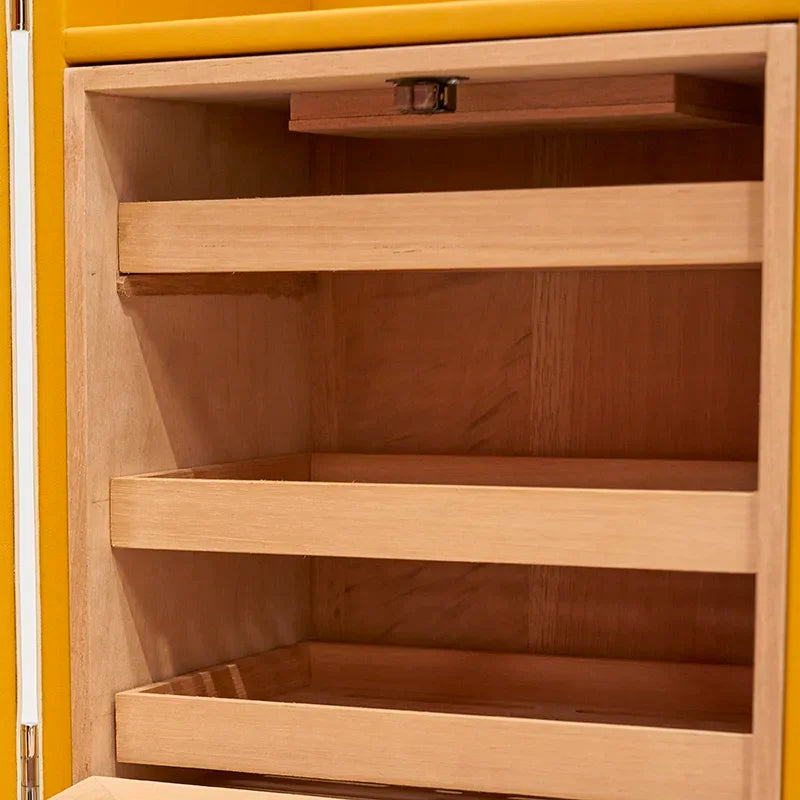
An Heirloom-Quality jewellery cabinet begins with its frame. The use of kiln-dried solid hardwood is non-negotiable. This process reduces the wood's moisture content to a precise equilibrium, rendering it exceptionally stable and resistant to the expansion and contraction that plagues lesser materials in a coastal desert climate. This structural fortitude ensures that precision-fitted drawers and doors maintain their seamless operation for generations.
The Chemistry of an Inert Interior
The interior lining is the first and last line of defence for your collection. A purpose-engineered, tarnish-resistant microsuede provides a sanctuary that is both mechanically soft and chemically pure. Its dense, non-abrasive pile cushions gemstones against shock and prevents the fine scratches that dull the finish of polished metals and watch casings. This focus on material science ensures the cabinet is not merely a box, but a passive preservation system.

Leather Grades for a Jewellery Box: Gulf-Climate Comparison
Not all leather behaves the same way in a coastal desert climate. The table below summarises how each grade typically performs for a leather jewellery box kept in Dubai’s heat and humidity.
| Leather grade | Durability | Gulf-climate suitability | Best for |
|---|---|---|---|
| Full-grain | Highest; develops a protective patina | Excellent — breathable yet resilient to heat and humidity when paired with a stable wooden frame | Heirloom and travel pieces meant to last decades |
| Top-grain | High; sanded surface, slightly less robust than full-grain | Good — handles humidity well but the finish can crack with extreme, repeated heat exposure | Daily-use boxes where a uniform finish is preferred |
| Bonded | Low; reconstituted leather scraps on a backing | Poor — prone to peeling and delamination in high humidity and heat | Short-term, budget use only; not for valuable collections |
| Vegan / PU | Variable; depends heavily on the coating quality | Fair to poor — can off-gas and may degrade or become tacky under sustained heat | Cruelty-free preference where the box is not a long-term store of value |
Choosing a Leather Jewellery Box for the Dubai Lifestyle: Travel and Daily Use
The Bottom Line: For frequent travel, a leather jewellery box constructed from microfiber leather with a rigid internal structure offers superior durability compared to soft PU alternatives. For daily use within a villa, the emphasis shifts to modular internal layouts that can be adapted as a collection evolves, protecting assets from incidental contact and dust.
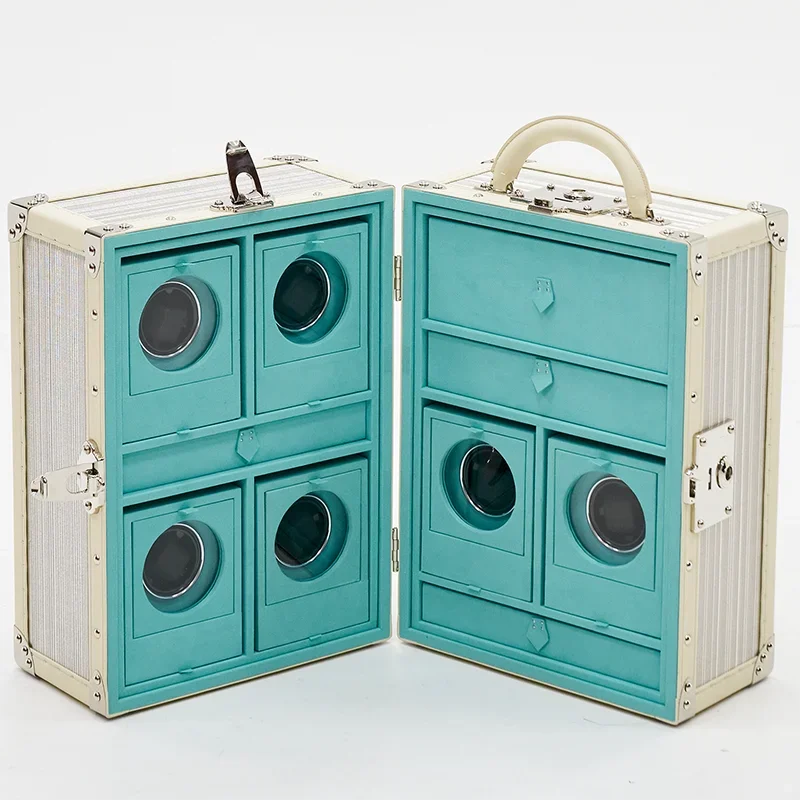
A life lived between Dubai, London, and the Alps requires storage solutions that are both portable and protective. A well-designed travel case is not a miniature version of a home vault but a purpose-built instrument. Its value lies in a reinforced structure that resists compression within luggage and a meticulously partitioned interior that prevents items from colliding during transit. For this brief, two pieces in the SIRAE collection are purpose-built: the Heritage Print · The Maison Hand-Carry Jewelry Case - Monochrome for the carry-on, and the structured Heritage Print · The Refined Travel Jewelry Case - Noir for longer itineraries.
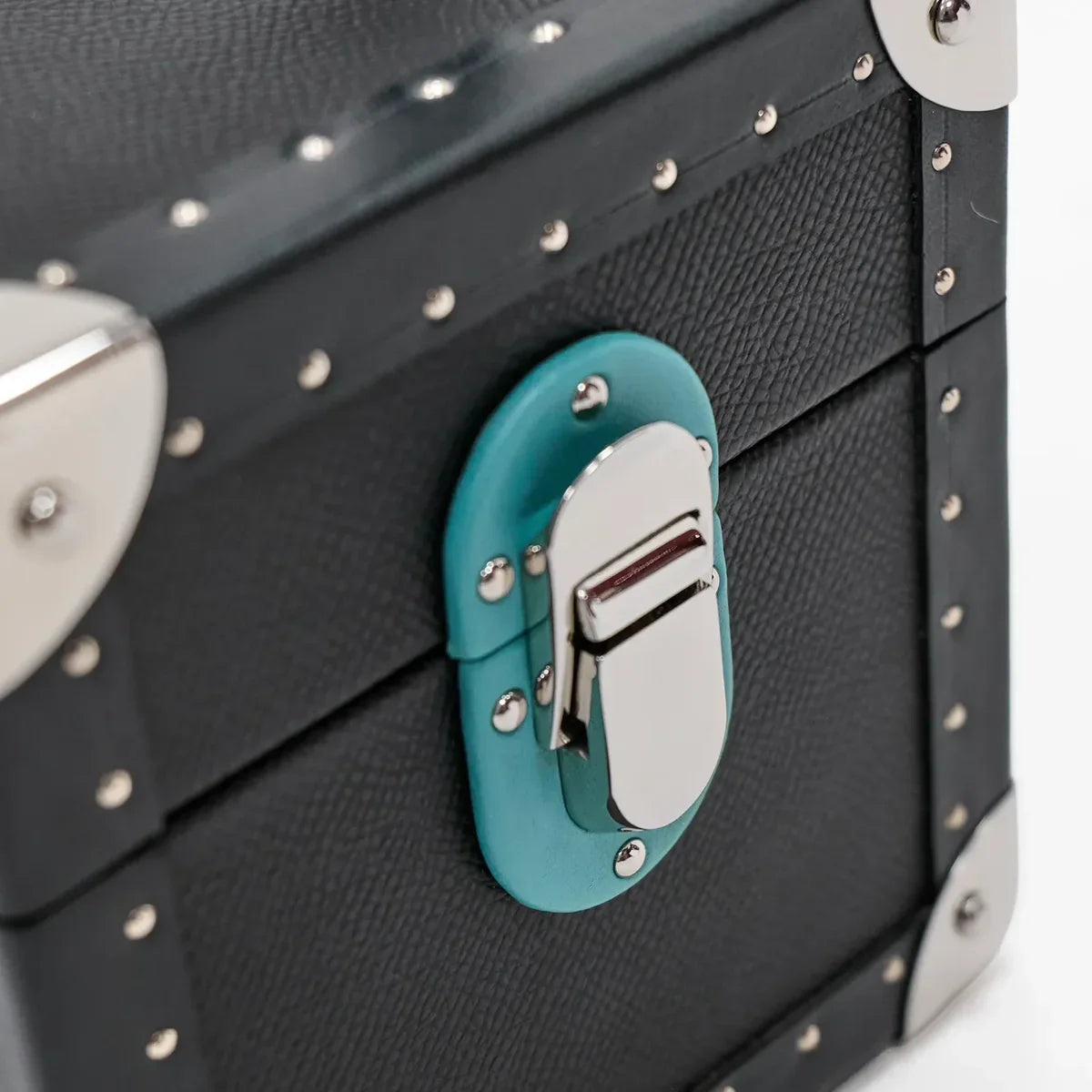
For the residence, a larger chest or vanity-top leather jewellery box serves as the daily ritual’s centrepiece. Here, accessibility and organisation are paramount. Look for designs with varied compartment sizes—deep wells for cuff bracelets, narrow channels for rings, and open trays for statement necklaces—to ensure each piece is housed without stress or entanglement. The Heritage Print · The Timeless Jewelry Box - Noir is a representative example of this category, pairing a microfiber leather exterior with a tarnish-resistant lining.
Beyond Storage: Defining a True, Climate-Resistant Heirloom Cabinet
Technical Verdict: An authentic heirloom jewellery cabinet is defined by its ability to create a stable microclimate, mitigating the effects of ambient temperature and relative humidity. This is achieved through a combination of a warp-resistant kiln-dried hardwood frame, precision-sealed joinery, and chemically inert interior linings that actively safeguard against tarnish and degradation.
The transition from a mere storage box to a commissioned piece of heirloom furniture is marked by a profound shift in philosophy. It is no longer about simple organisation, but about long-horizon preservation. In Dubai's climate, this distinction is critical and is rooted entirely in material science. A Nappa leather exterior may offer a luxurious touch, but its protective value is nullified if the underlying wooden structure warps, causing seams to gap and allowing humid air to ingress.
True preservation-grade cabinetry provides a sealed, stable environment. The interior must serve as a sanctuary. While materials like Alcantara are known for their durability in automotive applications, for fine jewellery and watches, a chemically stable, tarnish-resistant microsuede is technically superior. It provides an inert barrier, ensuring the atmosphere within the cabinet does not contribute to the slow, silent process of chemical decay that can diminish the value and beauty of a collection over decades.

Curating in Dubai: Commissioning Your Private Collection Space
The Bottom Line: The Dubai market offers a spectrum of customisation, from the surface-level branding of mass-produced boxes by suppliers like Al Zaytoon to the deep, architectural commissioning of collection-grade cabinets by a specialist house such as SIRAE, where every material and dimension is selected for asset preservation.
The Difference Between Personalisation and Commissioning
It is important to distinguish between personalisation—often involving the application of a monogram or logo to a pre-existing design—and a true commission. While many vendors can offer customised packaging, a commissioned programme involves a consultation to design a storage solution from the ground up, tailored to the specific dimensions, materials, and protective needs of your individual collection.
This process considers the unique vulnerabilities of each piece, from the delicacy of antique pearls to the complex mechanics of a grand complication watch, ensuring the final cabinet is an instrument of preservation as much as a piece of fine furniture.
The SIRAE Proposition: Handcraft and Heritage on Jumeirah Beach Road
For those seeking the pinnacle of this discipline, specialist ateliers provide a solution that transcends catalogue offerings. At the SIRAE showroom on Jumeirah Beach Road, clients can explore alternatives to conventional European designs, such as cabinetry finished in a proprietary woven copper-wire fabric. This precise woven-metal construction creates a modern heirloom with deep roots in Eastern artistry.
Unlike mass-produced luxury goods, each commissioned piece is a numbered work, created as a singular project. This approach answers the collector’s deepest need: not just for a unique design, but for a meticulously engineered environment that ensures the long-term integrity and value of the assets it is built to protect. This is the ultimate expression of material science in service of legacy.

The quiet discipline of preservation is an investment in continuity, ensuring that the collections curated today will carry their full significance and value for the generations to follow.
Leather Jewellery Box FAQ
Is a leather jewellery box good for Dubai's humidity?
Yes, provided the leather is full-grain or top-grain and the box has a stable, kiln-dried hardwood frame and an inert, tarnish-resistant lining. Quality leather is breathable and ages gracefully, but the structural frame and lining are what actually protect your pieces from Dubai’s humidity and heat. Bonded and low-grade PU "leather" should be avoided for valuable collections, as they can peel, delaminate, or off-gas in the Gulf climate.
Full-grain vs top-grain leather for a jewellery box?
Full-grain uses the entire, unsanded hide, so it is the strongest, most durable choice and develops a protective patina over time—ideal for an heirloom or travel leather jewellery box. Top-grain is sanded for a more uniform finish and is slightly less robust, making it a fine option for daily-use boxes. For a piece meant to last decades in Dubai, full-grain is the benchmark.
How do I care for a leather jewellery box in the UAE?
Keep it out of direct sunlight and away from air-conditioning vents to avoid drying and cracking, wipe it gently with a dry, soft cloth, and condition the leather two to three times a year with a quality leather balm. Maintain a stable indoor temperature and use silica gel sachets to buffer humidity, and never store the box in a closed car or near a window in peak summer heat.

Leave a comment
This site is protected by hCaptcha and the hCaptcha Privacy Policy and Terms of Service apply.