
Which Coffee Table Material Survives the UAE Climate? Marble vs Wood vs Glass vs Metal (2026)
Which Coffee Table Material Survives the UAE Climate? Marble vs Wood vs Glass vs Metal (2026)
Choosing the right coffee table material is the single decision that separates a centrepiece that ages well in Dubai from one that shows its cracks — sometimes literally — within two Gulf summers. This guide gives you an honest, side-by-side account of the four most-searched materials — marble, solid wood (walnut), glass, and woven copper-wire metal — tested against the UAE's specific combination of intense air-conditioning, coastal humidity, 45°C+ summer peaks, fine desert dust and the indoor–outdoor cycling that no European furniture factory engineers for. We do not sell marble, wood or glass coffee tables at SIRAE. We are telling you what happens to each material in this climate so you can make the right call, not the prettiest Instagram one.

The UAE Climate Problem That No Furniture Brochure Mentions
Quick Answer: Dubai's interior climate is more hostile to furniture materials than almost any market on earth, not because of heat alone, but because of the swing — air-conditioning pulls interiors to roughly 25% relative humidity (RH) while coastal summer mornings regularly hit 80–90% RH outdoors, and every opened front door, balcony slide and villa corridor crosses that gap repeatedly each day. The UAE's National Center of Meteorology publishes the daily measurement data that confirms these ranges (ncm.gov.ae), and any material that responds dimensionally to moisture — stone, wood, adhesive joints, glass sealant — will cycle under that load year-round.
The specific failure sequence is predictable once you know the mechanism. Natural materials absorb moisture when outdoor air enters and release it when AC takes over; the cumulative expansion and contraction produces micro-cracking, delamination, edge lifting and joint loosening, usually over 12–24 months rather than immediately. Fine Gulf dust compounds the damage because it carries silica particles that score sealants and finishes every time a surface is wiped dry rather than damp. The material that performs best in these conditions is not necessarily the one with the most impressive showroom ticket — it is the one whose structural and surface behaviour is indifferent to moisture cycling, heat load and abrasive cleaning.
The Full Material Comparison: Marble, Wood, Glass and Metal in the UAE
Technical Verdict: Woven metal (copper-wire) is the only coffee table material among the four that is genuinely dimensionally stable in the UAE — it does not absorb moisture, does not expand or contract with temperature, and does not depend on adhesive joints or sealant continuity to maintain its form. The other three materials can work beautifully, but each carries a specific maintenance contract that most buyers do not read until the warranty period has passed.
| Material | UAE climate risk | Typical failure mode | Maintenance burden | Indicative price band (AED) | Long-term verdict |
|---|---|---|---|---|---|
| Marble (natural stone) | High — porous, stain-absorbent, thermally shocking | Etching from acidic drinks, hairline cracking near AC vents, darkening at grout lines | High — seal every 6–12 months, no acidic cleaners, pad all objects | 8,000–60,000+ | Beautiful at purchase, demanding over time |
| Solid walnut wood | Moderate–High — hygroscopic, moves seasonally | Surface checking (micro-cracks), joint loosening, warping in high-humidity rooms near entry doors | Moderate — oil or wax annually, humidity management (humidifier in AC rooms) | 5,000–35,000 | Warm and repairable but not passive |
| Glass (tempered) | Low–Moderate — stable but fingerprint-intensive | Smear visibility at 45°C+ (thermal haze), sealant at base cracks in humidity cycling, edge chipping | Moderate — daily wiping in a dusty city, rubber-foot inspection | 2,500–18,000 | Dimensionally stable but high visual maintenance |
| Woven metal / copper-wire | Low — dimensionally stable, no moisture absorption | Patina development (aesthetic, controllable), dust settling in weave texture | Low — microfibre wipe, annual wax; no sealing required | 6,000–28,000 | Best passive performer in UAE conditions |
Three clarifications the table cannot carry:
Marble etching is permanent. A wine glass, a citrus slice or a lemon-scented cleaning spray left on an unsealed marble surface will etch the calcite and leave a dull ring that no polishing compound fully reverses. In a home that entertains, this is not a risk — it is a near-certainty within the first year.
Wood in UAE air-conditioning is a humidity management problem, not a material flaw. Kiln-dried walnut is a stable material in a stable environment. A Dubai apartment with AC running at 22°C reduces interior RH to 20–30%, which is below the equilibrium moisture content any wood can maintain without checking. A room humidifier on the AC-facing wall helps; specifying oil-finished rather than lacquered surfaces gives the wood somewhere to breathe.
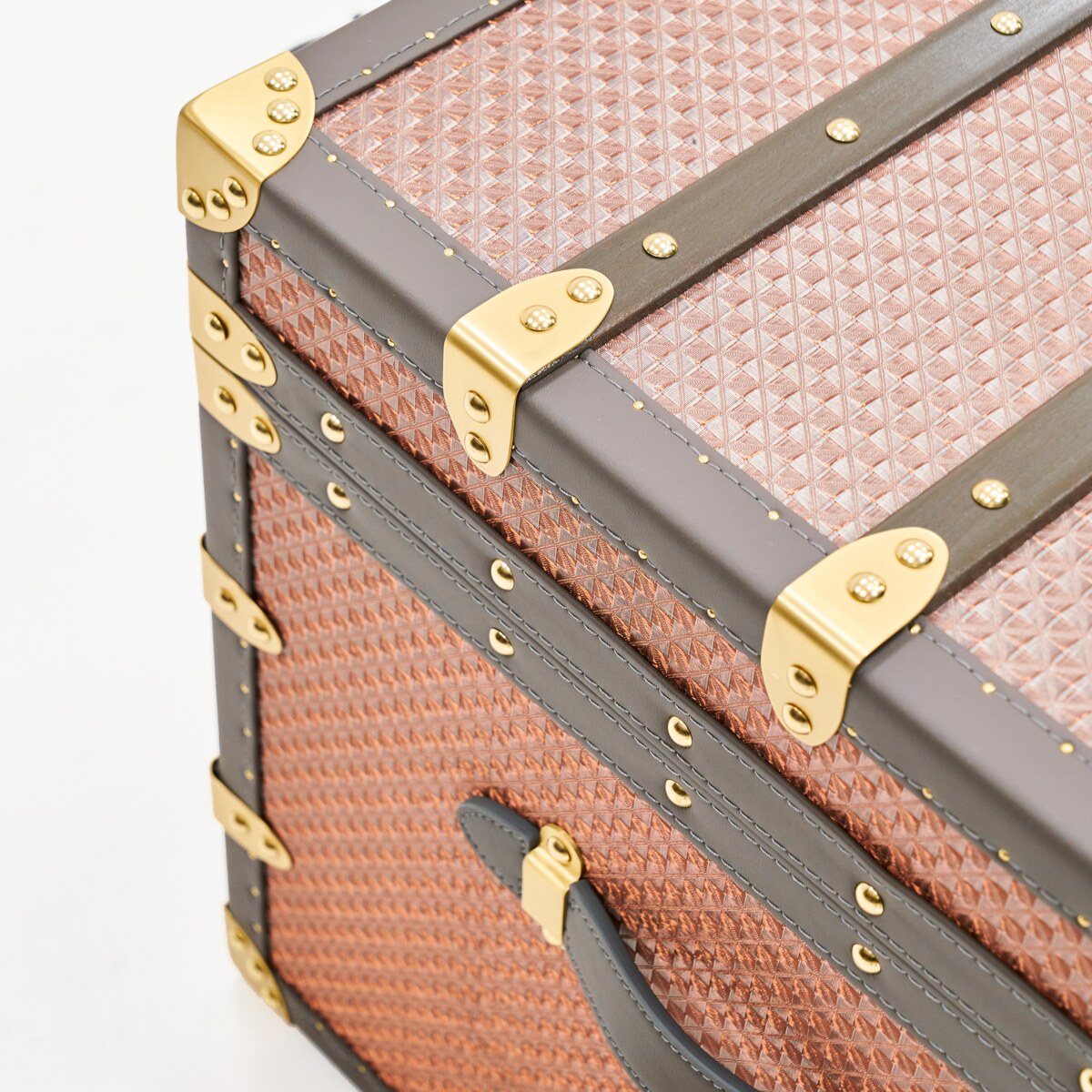
Woven copper-wire develops a living patina, not corrosion. The warm amber shift that aged copper acquires is oxidation of the surface layer — it is stable, it does not propagate to structural failure, and many buyers consider it an improvement. If you prefer the brighter tone, a paste wax applied twice a year keeps it consistent.

How to Choose Your Coffee Table Material by Priority
The Bottom Line: No material is objectively correct — each is the right answer for a different set of priorities. Use the decision table below to match your actual household to the material that will ask the least of you over five years.
| Your primary priority | Best material fit | What you trade away |
|---|---|---|
| Zero daily maintenance | Woven copper-wire metal | Warmth of natural stone or wood grain |
| Warmth and organic texture | Solid oiled walnut | Requires humidity management; not fully passive |
| Visual lightness / floating aesthetic | Tempered glass | Daily fingerprint and smear visibility in dusty interiors |
| Maximum visual drama / luxury statement | Natural marble | Highest maintenance contract; etching risk in entertaining use |
| Outdoor-adjacent or terrace use | Woven metal only | All other materials degrade in direct outdoor Gulf conditions |
| Longevity with no specialist upkeep | Woven copper-wire metal | None at equivalent price point |
The honest summary: if your living room is heavily air-conditioned, you entertain regularly, children or pets share the space, and you do not want to manage a sealing or oiling schedule, woven metal is the passive choice. If natural material texture is the non-negotiable, oiled walnut with a room humidifier is serviceable. Marble and glass both perform acceptably when their specific maintenance is followed consistently — but in a UAE household where that maintenance lapses, both show the neglect faster than the alternatives.
What Makes Copper-Wire Weave Structurally Suited to the Gulf
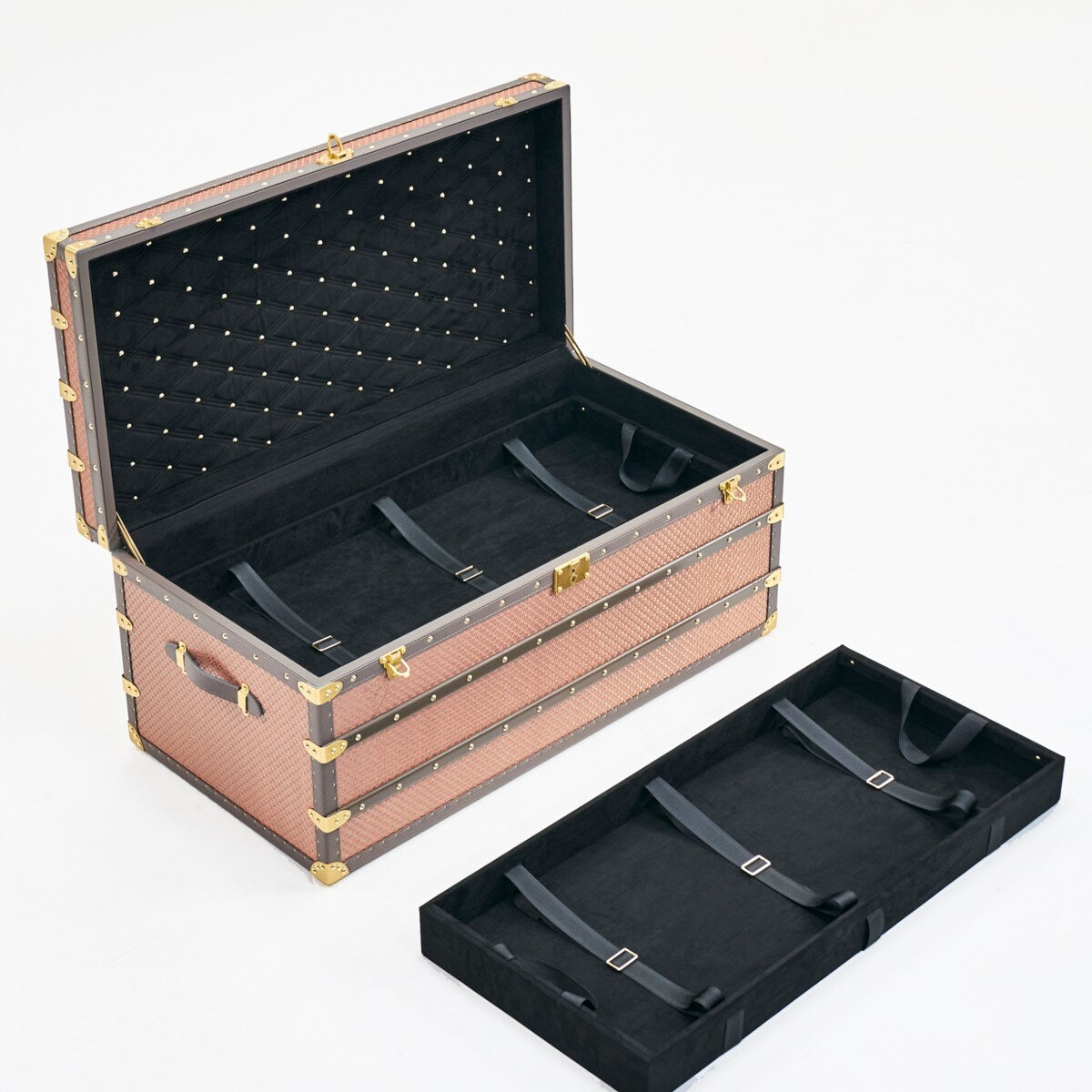
The engineering logic behind the Aurum Wire Coffee Table – Antique Copper is the same logic that makes woven metal the recommended material in the comparison above: a machine-woven copper-wire facade is a rigid structural skin with no adhesive joints to delaminate, no veneer to lift at edges, and no sealant continuity to crack. The weave itself ventilates, which means interior pockets of trapped humid air — the condition that drives mould and odour in closed furniture — do not form. The Aurum Wire Coffee Table – Monochrome applies the same construction in a cooler palette for interiors where the warm copper register reads too warm. If your preference runs to upholstered surfaces with the same structural approach, the Heritage Leather Coffee Table – Royal Amethyst combines a woven-metal base with microfiber leather top panel — the leather requires the same annual conditioning that walnut does, but the structural frame beneath it is as passive as any copper piece.

Placement Rules That Apply to Every Material
Quick Answer: Where a coffee table sits in a UAE room matters almost as much as what it is made of. The four universal placement rules — regardless of material — are: keep the piece at least one metre from a direct supply-air outlet (AC airflow accelerates drying and surface checking in wood and stone); keep it out of direct west-facing afternoon glazing (surface temperatures on dark furniture in west-facing Dubai rooms can exceed 50°C); allow 40–45 cm of clear walking clearance on the long sides; and anchor rugs beneath the piece rather than running them edge-to-edge, so daily dust is captured in the rug rather than accumulating in furniture joints and weave.
For marble specifically: temperature shock from a cold glass condensing on a hot marble surface that has been baking in afternoon sun is one of the underdiscussed drivers of hairline cracking. A marble coffee table on the west side of a Dubai living room is a higher-risk proposition than the same table in a north-facing room.
Frequently Asked Questions
Is marble a good choice for a coffee table in Dubai? Marble is a high-drama choice that performs well if you seal it every six to twelve months, use coasters consistently, avoid any acidic cleaner or citrus contact, and keep it away from direct AC outflow and west-facing afternoon sun. In a busy entertaining household — or one without a consistent maintenance schedule — the etching and staining risks accumulate quickly. Marble is not a low-maintenance material in the UAE; it is a high-reward material that asks for attentive ownership.
Does solid wood warp in Dubai apartments? Yes, it can — and the cause is almost always air-conditioning rather than heat. UAE AC systems reduce interior RH to 20–30%, which is below the equilibrium moisture content solid wood needs to remain dimensionally stable. Kiln-dried wood with an oil or wax finish (rather than film lacquer) handles the cycling better, and a room humidifier on the AC-facing wall reduces seasonal movement. Engineered-core construction with real wood veneer is more stable than solid construction in high-cycling environments, though veneer edges are a separate vulnerability.
How do you clean a copper-wire woven coffee table without scratching it? Use a dry or lightly dampened microfibre cloth to lift dust from the weave — never a paper towel or abrasive pad, which will score the wire surface. For fingerprints and light smears, a microfibre cloth with a small amount of furniture paste wax buffs clean without leaving residue in the weave. Annual waxing with a soft cloth maintains the tone and fills micro-scratches in the copper surface. No chemical cleaner or spray polish is needed, and none should be used.
Can a glass coffee table be used outdoors in the UAE? Tempered glass panels themselves tolerate the temperature range, but the metal or wood frame elements, rubber feet and sealant joints in most glass coffee table designs do not. The combination of direct UV, 45°C+ heat, fine silica dust and humidity cycling degrades non-glass components quickly outdoors. For any terrace or outdoor-adjacent placement in the Gulf, woven metal is the only material in this comparison that holds up without specialist intervention.
See These Materials in Person Before You Decide
Photographs resolve colour but not surface behaviour — the cool weight of a marble slab and the structural tension of a machine-woven copper facade feel entirely different from what either looks like on screen. To handle both side by side and discuss placement against your specific floor plan, book a private viewing at the SIRAE showroom, Al Shafar Complex, Umm Suqeim 1, Dubai. Call +971 55 886 6180 or write to info@siraecasa.com, and our team will walk you through the full coffee table collection and the material logic behind each piece.
%0AChoosing%20the%20right%20coffe...)
Leave a comment
This site is protected by hCaptcha and the hCaptcha Privacy Policy and Terms of Service apply.