
Console Tables & Sideboards for Dubai Entryways & Living Rooms (2026)
Console Tables & Sideboards for Dubai Entryways and Living Rooms (2026)
A console table in a Dubai entryway does more work than any other piece of furniture in the home — it forms the first impression a guest receives before a single word is exchanged, and it absorbs the practical load of daily arrivals and departures. Buy the wrong proportion and the foyer reads cramped or bare; buy the wrong material and Gulf humidity undoes the finish within two summers. This 2026 guide covers how to proportion a console or sideboard to a wall, when to upgrade to a full sideboard, how to combine pieces with mirrors and media cabinets, the differences between Dubai apartment and villa entryways, climate-resistant materials, and a buying framework to ensure the piece you choose still looks correct in 2036.

Console Table, Sideboard or Display Island: Which Piece Does Your Space Actually Need?
Quick Answer: A console table suits narrow entryways and sofa-back positions where depth is under 40 cm — it reads light and architectural without eating floor space. A sideboard earns its place when you need storage drawers or closed doors, and when the wall can absorb 45–55 cm of depth. A display island steps in when the piece must be finished on all four sides and visible from multiple angles. Choose by depth available, not by price or surface area.
The three formats are often confused because they share a height band of roughly 75–95 cm, but they serve different spatial logic. A console is a shallow, often leggy piece whose primary role is visual punctuation — a surface for a vase, a lamp, a tray of keys — with no closed storage. A sideboard is a deeper case piece with drawers and doors that adds genuine concealed capacity while filling a dining or living room wall; in a bedroom the same job belongs to dressers and chests. A display island is finished on all sides and sits in open space as a room anchor rather than against a wall.
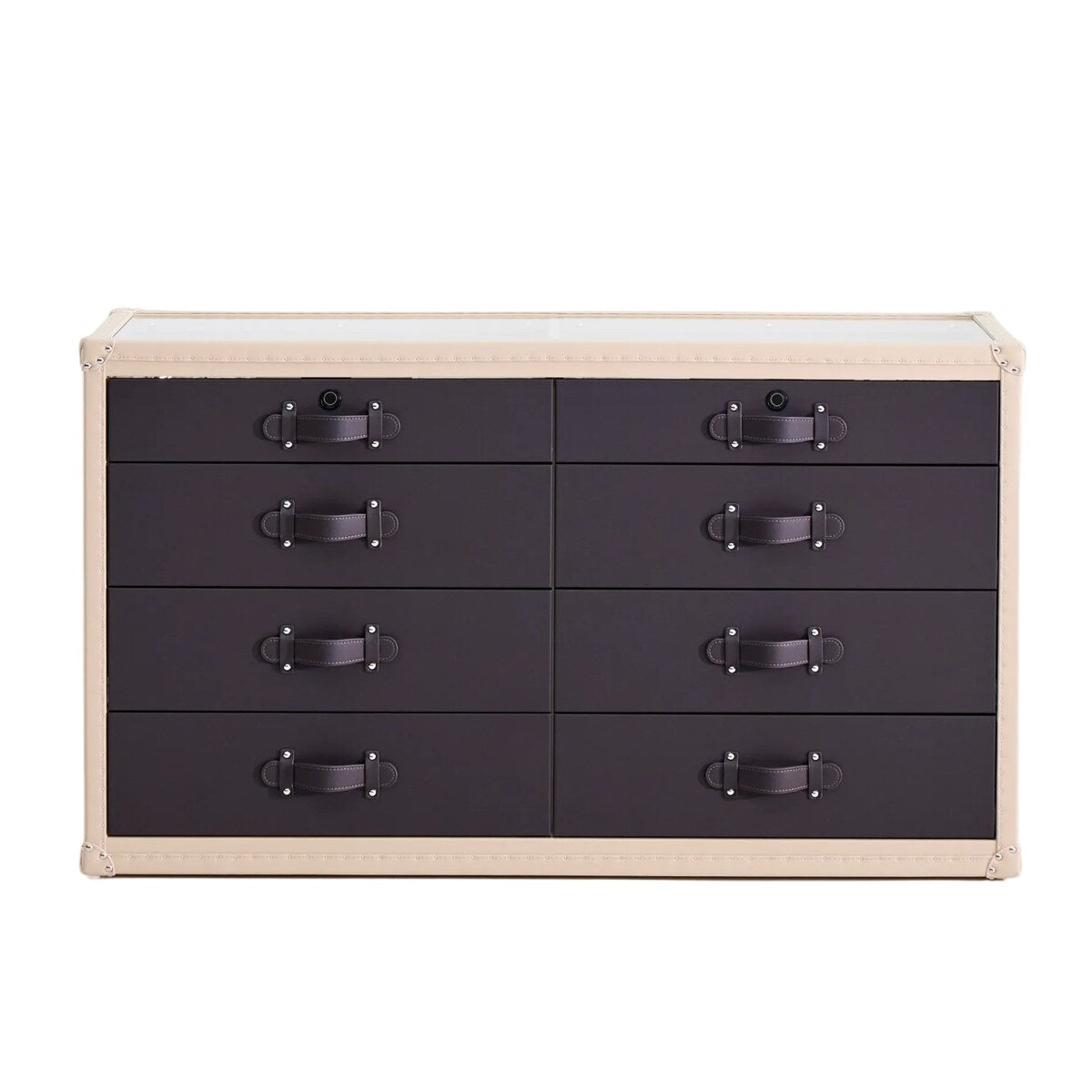
The entryway test is simple: if the foyer corridor is under 1.8 m wide, a console table with legs is the right choice — its open undercarriage keeps the space feeling walkable. If the corridor opens into a reception hall over 2.5 m wide, a half-depth sideboard can sit flush against the wall without impeding movement, and it adds the storage that a narrow console cannot. At SIRAE, our woven copper-wire construction applies across both categories: the Heritage Leather Side Cabinet – Noir & Crème is proportioned as a sideboard-depth statement piece for villa foyers and living room walls where a shallow console would read as under-scaled.
| Format | Typical depth | Best placement | Primary function | Storage capacity |
|---|---|---|---|---|
| Console table | 25–40 cm | Narrow entryway, sofa-back, hallway | Visual punctuation, surface display | Minimal — surface only |
| Sideboard | 40–55 cm | Living room wall, dining room, wide foyer | Display + concealed storage | Medium — drawers and doors |
| Display island | 40–55 cm, four-sided | Open-plan room centre, behind sofa | 360° display, room divider | Low-to-medium — open shelves |
| Half-depth buffet | 30–40 cm | Narrow dining room, apartment foyer | Dining storage, art wall anchor | Medium — shallow drawers |
Proportioning a Console or Sideboard to the Wall
Technical Verdict: The piece should span 55–75% of the wall's visible width — wide enough to ground the vignette, narrow enough to preserve breathing room at each end. Height should sit between 80 and 90 cm to align with door handle height and read as furniture rather than architecture. Anything taller than 95 cm in a standard 270 cm ceiling crosses into cabinet territory; anything shorter than 75 cm reads like a coffee table with ambitions.
Width proportion is the mistake most commonly made in UAE apartments, where imported European pieces are sized for narrower rooms and look stranded against the generous wall spans of a Dubai living room. The proportioning rule works in both directions: a 120 cm console placed against a 280 cm wall needs either a large-format mirror centred above it or flanking elements — a tall candlestick, a plant — to fill the visual field. The alternative is to choose a longer piece from the outset. A sideboard at 150–180 cm reads confidently on a 220–260 cm wall; a console at 90 cm requires deliberate styling to avoid looking lost.
The height rule has a secondary benefit in Dubai apartments: at 85–90 cm a console table sits below the standard window sill of most DAMAC and Emaar developments, so it can run continuously under a full-width glazed wall without blocking light — a proportion that a 100 cm credenza would violate.

Console and Mirror Combinations: How to Style the Entryway Vignette
The Bottom Line: A console table and mirror pairing works when the mirror is 60–80% of the console's width, centred above it, with its base sitting 10–15 cm above the console surface. Wider mirrors create gallery-wall weight; narrower mirrors read like they were hung independently and never paired intentionally. The mirror height should reach 185–210 cm from the floor — eye level for a standing adult, and high enough to reflect light across the ceiling rather than into the wall.
The proportioning relationship between console and mirror is one of the strongest visual rules in entryway styling, and it rarely fails when followed. What disrupts it is mismatched frame language: a heavily gilded mirror over a clean-lined copper-wire console competes rather than completes. At SIRAE the material bridge is the brass and copper family — our woven copper wire, the brass hardware on the Heritage Leather Side Cabinet – Monochrome, and aged-brass mirror frames all share the same warm metallic reference, so the pairing feels designed rather than assembled.
For living rooms where the sideboard sits on a wall adjacent to the media unit, the console-and-mirror logic extends into a three-piece wall composition: sideboard at 85 cm, mirror centred above, and the Aurum Wire · The Maestro Media Bar Cabinet - Noir at matching height on the adjacent wall. Each piece holds its own vertical axis, and the copper-wire construction ties them as a family without requiring identical finishes.
Dubai Apartment vs Villa Entryway: What Changes
Quick Answer: Apartment entryways in Dubai are typically 1.5–2.2 m wide and open directly onto the living area with no lobby — the console table must work hard and stay shallow. Villa entryways are often 3–4 m wide with double-height ceilings, where a shallow console reads under-scaled and a full sideboard or even a pair of matching pieces flanking the door is the correct response. Scale up proportionally, not decoratively.
The difference is not just size — it is ceiling height and the presence of natural light. Most JBR, Marina, and Business Bay apartments have 270–290 cm ceilings and a foyer that is functionally a widening of the corridor. A console table at 90–110 cm wide with a slim profile and legs is the right answer: it implies architecture without competing with the limited floor area. A mounted mirror above, no lower furniture, and a single disciplined surface edit keeps the space from reading cluttered on first entry.
Villa entryways in Emirates Hills, Al Barari, or Jumeirah change the calculus entirely. With ceiling heights of 4–6 m and a genuine lobby measuring 15–30 m², an 90 cm console is dwarfed. The correct response is either a single sideboard at 180–220 cm, two matching cabinets flanking the door, or a display island anchored in the centre of the entrance hall — the last option is how a piece like the Aurum Wire · The Vivienne Display Island - Blossom Pink works: a 360° finished island that becomes the sculpture at the centre of a double-height entrance, rather than a flat piece pressed against a wall.
| Entryway type | Typical width | Ceiling height | Recommended piece | Max depth |
|---|---|---|---|---|
| Apartment corridor foyer | 1.5–2.2 m | 270–290 cm | Slim console, legs preferred | 30–35 cm |
| Apartment open-plan entry | 2.2–3.0 m | 290–320 cm | Console + mirror, or compact sideboard | 35–40 cm |
| Villa lobby (medium) | 3.0–4.0 m | 340–400 cm | Full sideboard (150–180 cm) or pair of cabinets | 45–50 cm |
| Villa lobby (grand) | 4.0 m+ | 400 cm+ | Display island or paired full sideboards | 45–55 cm |
| Living room sofa-back | N/A — open plan | Any | Console or half-depth sideboard | 30–40 cm |
| Dining room wall | Wall-defined | Any | Full-depth sideboard | 45–55 cm |
Which Materials Survive Dubai's Climate on a Console or Sideboard?
Technical Verdict: The UAE's humidity swing — from roughly 25% RH in air-conditioned interiors to 80–90% RH on humid summer mornings recorded by the UAE National Center of Meteorology (NCM) — creates the same material risk for console tables and sideboards as it does for any case furniture: veneer lifts, plated hardware pits, and lacquer hazes at the edges where indoor and outdoor air meet near the front door.
The front door is the aggravating factor for an entryway console specifically. Every time a villa or apartment door opens in July or August, a slug of 40°C, 85% RH outdoor air meets the 24°C conditioned interior. Over time, the hinge side of any door-fronted sideboard in the entryway zone experiences more humidity cycling than the same piece placed in the interior living room. The material response is identical to what we document for bar cabinets: avoid thin veneer on entry-zone door fronts, specify solid brass or stainless hardware, and prefer a woven-metal or solid-hardwood facade that is dimensionally stable rather than a film or lacquer finish that depends on adhesion.
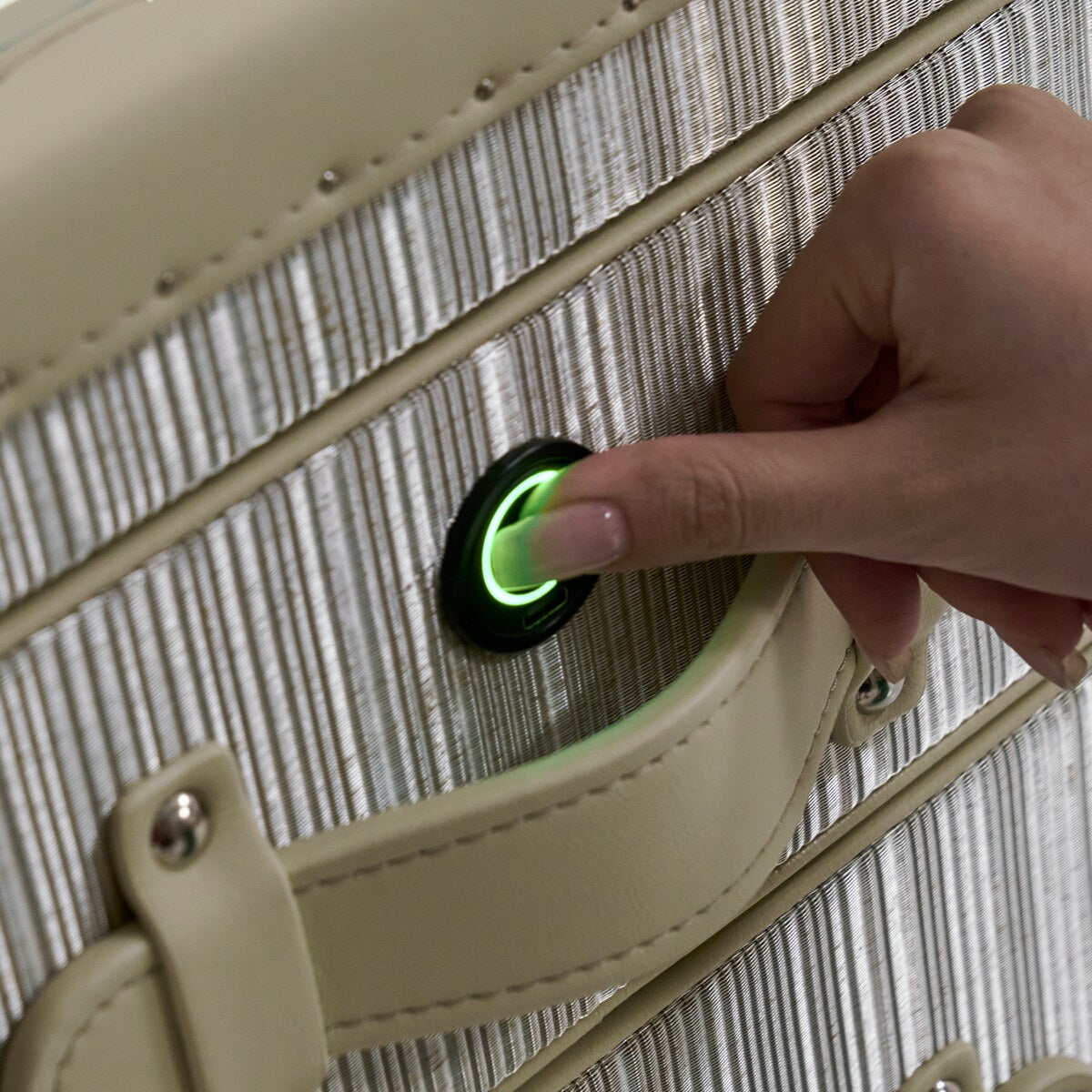
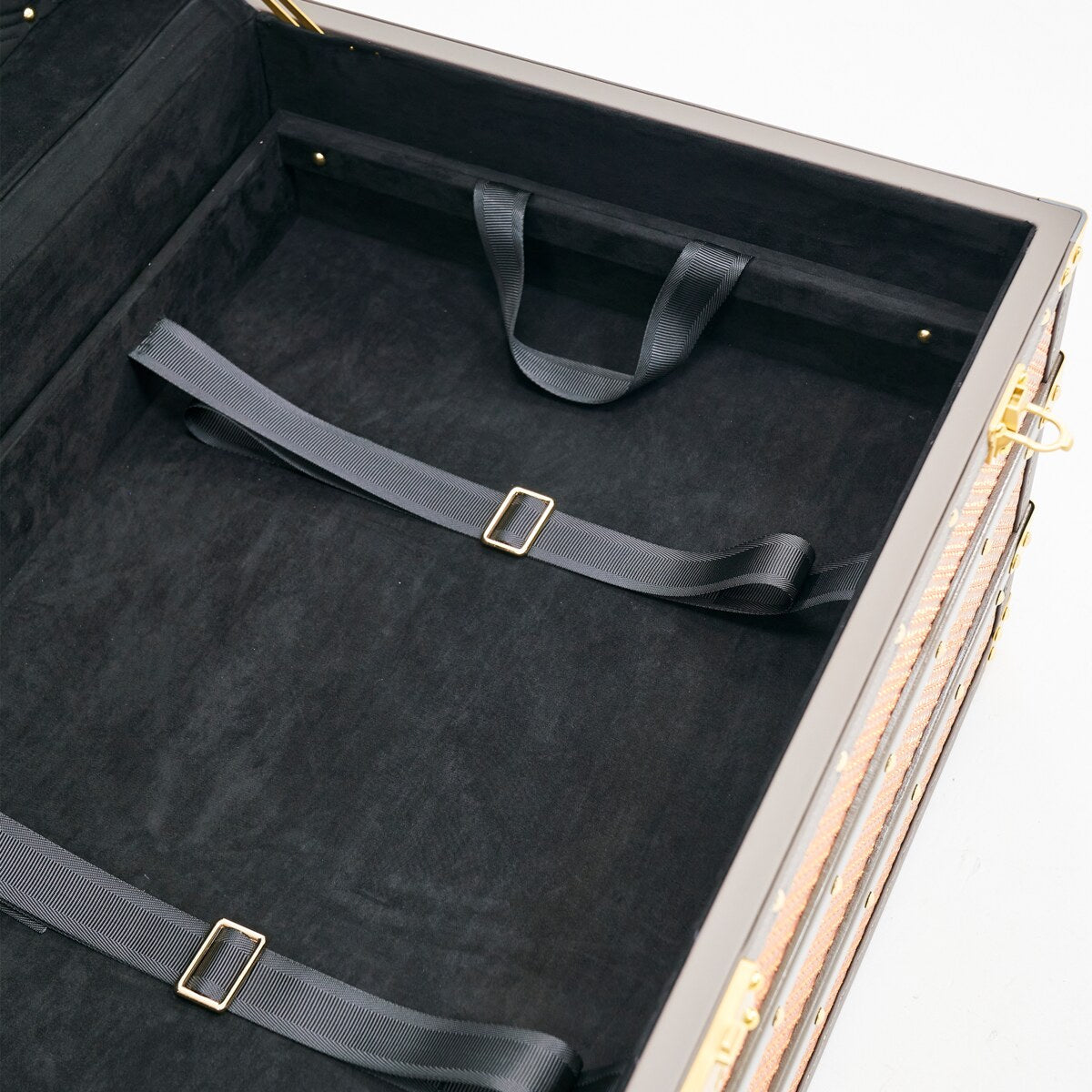
SIRAE's copper-wire construction was developed for this environment. The woven metal facade is thermally and dimensionally stable — it does not expand, contract, or delaminate regardless of the humidity cycle — while the internal leather and suede lining protects whatever is stored against the same dry-air tarnish risk that affects any enclosed storage in an AC-heavy home.

Frequently Asked Questions
What height should a console table be for a Dubai entryway? Between 80 and 90 cm is the functional sweet spot for most Dubai homes. At this height the piece aligns with door handle height, sits below standard window sills in most apartment developments, and reads as furniture rather than architecture. A console below 75 cm reads like a low sideboard; anything above 95 cm in a standard-ceiling apartment begins to compete with wall art and mirrors.
Can a console table or sideboard be placed in a Dubai apartment with limited space? Yes — with two constraints. Keep the depth at 30–35 cm maximum so the corridor remains walkable at 80 cm clearance, and choose a piece with legs rather than a plinth base. The open undercarriage of a legged console keeps the eye moving to the floor and makes the foyer feel taller and wider. A plinth-base piece of the same dimensions looks heavier and reduces perceived floor area noticeably.
What is the difference between a console table and a sideboard? Depth and function. A console table is typically 25–40 cm deep, leggy, and surface-only — it exists as a display platform. A sideboard is 40–55 cm deep, has closed doors and drawers, and adds concealed storage. In a foyer, the console is the right choice when space is limited; the sideboard earns its place when a longer wall and the need for concealed storage are both present.
Does UAE humidity damage entryway furniture more than furniture placed inside the home? Yes, measurably. The entryway is the first zone to experience outdoor-to-indoor air mixing every time the door opens. This accelerates the humidity cycling that lifts veneer edges and pits plated hardware, particularly on door fronts and hardware near the entry. Specifying dimensionally stable materials — solid brass hardware, woven-metal or solid-hardwood facades, no thin lacquer on door edges — mitigates the risk. Placing a sideboard 1 m or more inside the foyer, away from the door swing zone, also reduces exposure.
Visit the SIRAE Showroom
Proportion and material quality must be experienced at full scale before committing. Photographs of a 180 cm sideboard and a 90 cm console can look identical — the wall they sit against makes the difference clear. To match a console table or sideboard to your specific entryway dimensions and ceiling height, book a private appointment at the SIRAE showroom, Al Shafar Complex, Umm Suqeim 1, Dubai. Call +971 55 886 6180 or write to info@siraecasa.com, and our team will walk you through copper-wire and leather collections, proportion options for your specific wall, and mirror and media cabinet pairing.
%0AA%20console%20table%20in%20a%20Dubai%20entryway%20does%20m...)
Leave a comment
This site is protected by hCaptcha and the hCaptcha Privacy Policy and Terms of Service apply.