
Copper & Metal Coffee Tables for UAE Homes: The Climate-Smart Choice (2026)
Copper & Metal Coffee Tables for UAE Homes: The Climate-Smart Choice (2026)
A copper coffee table is the rare centrepiece that improves with time in the Gulf — where the same climate that destroys wood grain and crazes glass edges actually deepens copper's warm patina. Dubai summers push outdoor air past 45°C and coastal humidity above 80% RH; air-conditioning then pulls interiors back to roughly 25% RH, creating the widest humidity swing of any major furniture market on earth. Most materials buckle. Woven copper wire, by the nature of what metal is, does not. This guide explains why, how SIRAE's woven copper hard-case construction is made, what maintenance it asks of you, and how it compares honestly to stone, solid wood and glass alternatives.

Why a Metal or Copper Coffee Table Outperforms Other Materials in the UAE
Quick Answer: Metal is dimensionally stable — it does not swell, warp, delaminate or crack through Gulf humidity cycles the way wood and composite boards do, and unlike glass it does not conduct heat so aggressively that direct afternoon sun through west-facing glazing risks thermal shock. Copper specifically adds antimicrobial surface properties and a living finish that grows more characterful, not more damaged, with exposure.
The core problem for most coffee tables in the UAE is dimensional instability. Solid hardwood expands and contracts measurably with every RH shift; in the Gulf's 25–90% indoor-to-outdoor swing — documented by the UAE's National Center of Meteorology (ncm.gov.ae) — that translates to top-panel movement of several millimetres across a 100 cm span. Veneered boards behave worse: the face layer and substrate expand at different rates, and the first sign is micro-blistering at the edges. Marble and travertine are less prone to movement but are vulnerable to thermal shock from direct glazing, heavyweight to reposition, and cold to the touch in air-conditioned rooms — a functional mismatch in spaces built for seated conversation. Tempered glass survives the climate reliably but offers no visual warmth and chips at edges under impact.
Woven copper wire sidesteps every one of those failure modes. The wire is already at ambient dimension after manufacture; it expands and contracts only a few hundredths of a millimetre across a 90 cm span through the entire Gulf RH range. The open weave ventilates the surface so there is no trapped-humidity zone beneath a top surface. And the material improves aesthetically: copper's surface oxidation deepens from bright penny-gold into rich antique amber over two to three years of interior exposure — a patina shift that reads as ageing in stone and damage in veneer, but reads as character in copper.
| Material | Dimensional stability (UAE RH cycle) | Thermal behaviour (45°C summer) | Fine-dust maintenance | Aesthetic ageing |
|---|---|---|---|---|
| Woven copper wire | Excellent — metal does not swell | Good — wire mesh dissipates heat, no thermal shock risk | Brush or soft cloth; open weave resists dust accumulation | Gains warm amber patina over 2–3 years |
| Solid hardwood | Poor to moderate — expands/contracts several mm across 100 cm span | Moderate — no thermal shock but finish hazes | Requires regular oiling; dust settles in grain | Can warp, check and split |
| Veneered board (MDF/HDF) | Poor — edge delamination common by year 2 in Gulf conditions | Poor — lacquer hazes under 50°C surface temps | Same as hardwood | Visibly ages within 2 Gulf summers |
| Marble / travertine | Excellent dimensional stability | Moderate — thermal shock risk at west-facing glazing | Requires sealing; dust shows on dark stone | Etches from acids and condensation rings |
| Tempered glass | Excellent | Moderate — edge chip risk under thermal gradient | Streaks visibly; requires frequent cleaning | No patina; chips at edges show permanently |
| Microfiber leather (SIRAE Heritage Leather) | Good — requires conditioning under AC outflow | Good — warm to touch, no thermal shock | Wipe clean; keep 1 m from AC outlet | Develops rich supple character with conditioning |
How SIRAE's Woven Copper-Wire Hard Case Is Made
The Bottom Line: Each Aurum Wire coffee table is built on a rigid structural frame — the hard case — finished with copper wire woven in a precise grid pattern that locks under tension. The result is a surface that is both visually open and mechanically stiff: it can be pressed, brushed and cleaned without deforming, because the weave is under constant tension against the frame rather than lying loose like a fabric.
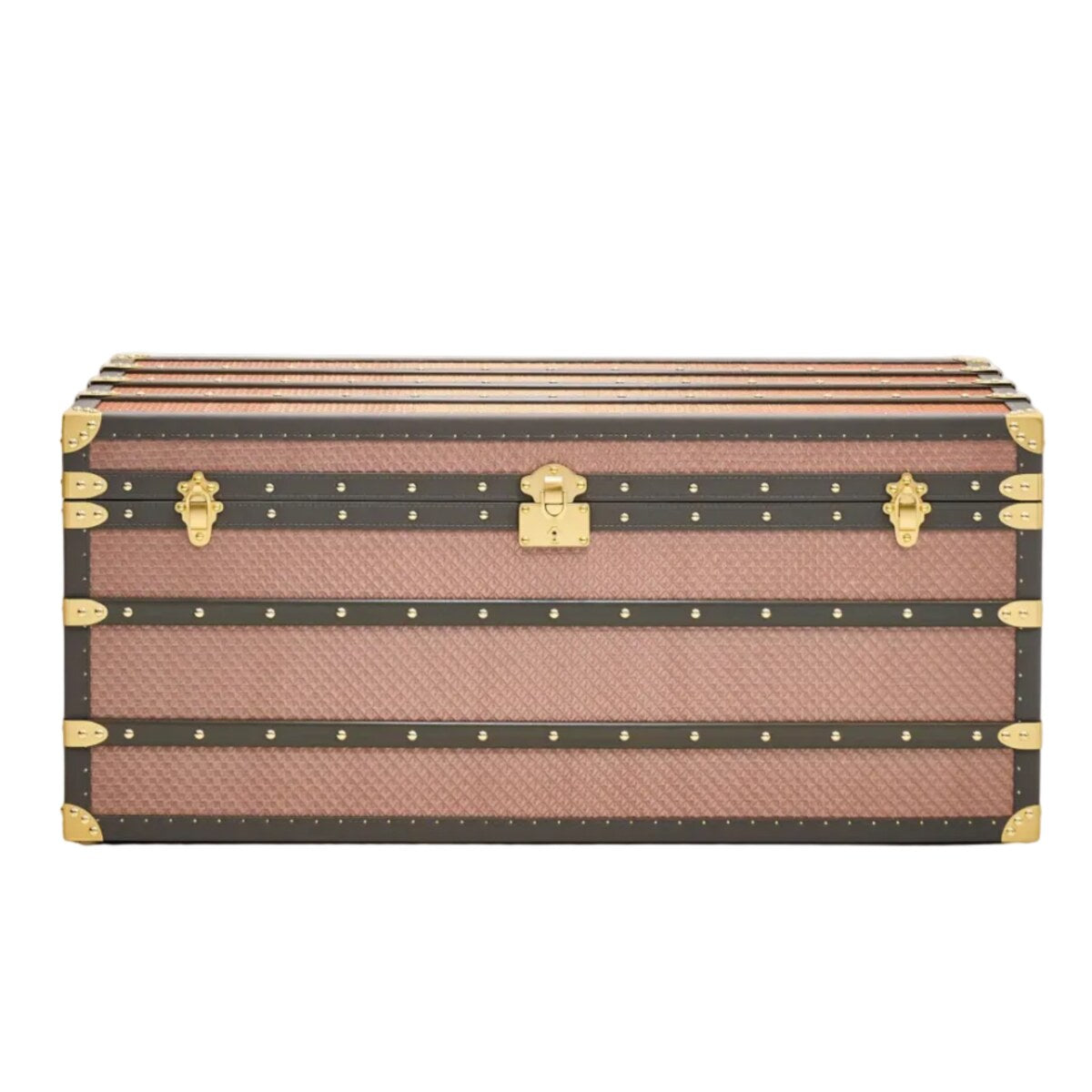
The construction begins with a steel-core armature, precision-cut to the table's finished dimensions. Copper wire of a calibrated gauge is then threaded over and under the frame wires in alternating passes — the same interlace geometry used in fine metalwork jewellery cases, which is where SIRAE first developed the technique. Each pass is pulled to a calibrated tension before the next wire is threaded, so the finished surface has a uniform spring that cushions objects placed on it without flexing. The antique copper finish on the Aurum Wire Coffee Table – Antique Copper is achieved by a controlled oxidation process applied after weaving, then sealed with a clear protective coat that arrests further change while preserving the warm amber tone. The Monochrome variant applies a matte black patina to the same woven structure for interiors that favour contrast over warmth, and the Tiffany Blue introduces a verdigris-inspired colour drawn from copper's own chemistry.

The leather alternative in the collection — the Heritage Leather Coffee Table – Royal Amethyst — uses microfiber leather wrapped over the same rigid hard-case frame, a different surface language but the same dimensional stability underneath. Both constructions share the defining trait: a rigid case that protects the object on it, not a flat surface that simply holds it.
Copper Coffee Table vs Stone, Wood and Glass: Honest Climate-Weather Comparison
Technical Verdict: In the UAE's combination of 45°C outdoor peaks, AC-controlled interiors at 22–24°C, fine Gulf khamseen dust, and west-facing glazing that drives surface temperatures past 50°C on dark furniture, copper wire is the lowest-maintenance luxury surface available. Stone is equally stable but heavier, cooler to touch and higher-maintenance against acid etching; glass is equally stable but visually marks with every fingerprint and chips at edges; wood offers warmth but demands the most environmental tolerance of any material in this list.
The honest summary for UAE buyers is that material choice is a climate decision as much as an aesthetic one. The SIRAE coffee table range acknowledges this honestly: four pieces, two material languages — copper wire and leather — chosen precisely because both are dimensionally stable, both shed fine dust without abrasive cleaning, and both develop character rather than damage in the Gulf. There are no wood, stone or glass options in the SIRAE coffee table range because those materials require tolerances the Gulf's interior climate does not reliably provide.
Caring for a Copper or Woven Metal Coffee Table in Dubai
Quick Answer: Routine maintenance is a soft dry cloth weekly and, for the copper wire surface, a gentle brush along the weave direction monthly to clear the fine Gulf dust that settles into the interstices. The sealed patina finish does not require polishing compounds — they abrade the protective coat. Position the table at least one metre from a direct AC supply-air outlet; not because the metal is at risk, but because cold-air stratification accelerates dust deposition on any horizontal surface.
Five care rules that apply specifically to the UAE context:
- Dust with a soft natural-bristle brush, not a damp cloth. A dry brush clears the open weave without wetting the wire, which avoids water-mark rings if the cloth carries any mineral content from tap water. Dubai municipal water sits at moderate hardness levels, and mineral deposits on copper are visible.
- Never use abrasive cleaners or metal polish on the sealed finish. The antique patina on the Aurum Wire pieces is sealed — polishing compounds remove the coat and expose raw wire to uncontrolled re-oxidation. Fingermarks on the wire: wipe with a dry microfibre cloth.
- Condition leather-adjacent pieces seasonally. If your coffee table sits within 50 cm of a leather sofa or the Heritage Leather variant, apply a thin conditioning cream to leather elements in October and March — the transition months when AC usage shifts and indoor humidity swings most sharply.
- Keep the table out of direct west-facing afternoon sun. Dubai's west-facing glazing can drive surface temperatures on any dark furniture past 50°C in June through August; copper itself handles this without damage, but any objects placed on the table — coasters, books, remotes — will be affected.
- Inspect the frame joints annually. The hard-case frame is metal; the joints use precision adhesive bonding with mechanical pins. A brief press-test at each corner once a year confirms the tension in the weave has not slackened. Any sign of looseness is a workmanship warranty matter.

| Maintenance task | Frequency | Method | What to avoid |
|---|---|---|---|
| Dust the woven surface | Weekly | Soft natural-bristle brush, along the weave direction | Damp cloth, abrasive pads |
| Wipe fingermarks off copper | As needed | Dry microfibre cloth | Metal polish, solvent cleaners |
| Check AC positioning | At move-in / annually | Ensure ≥ 1 m from supply-air outlet | Direct cold-air impingement |
| Condition leather elements | Twice yearly (Oct & Mar) | Thin conditioning cream, buffed dry | Silicone sprays, petroleum-based products |
| Frame joint inspection | Annually | Corner press-test; report looseness under workmanship warranty | DIY re-gluing |
| Full surface review | Every 2–3 years | Assess patina development; deep clean if needed | Waxing or lacquering over existing sealed finish |
Frequently Asked Questions
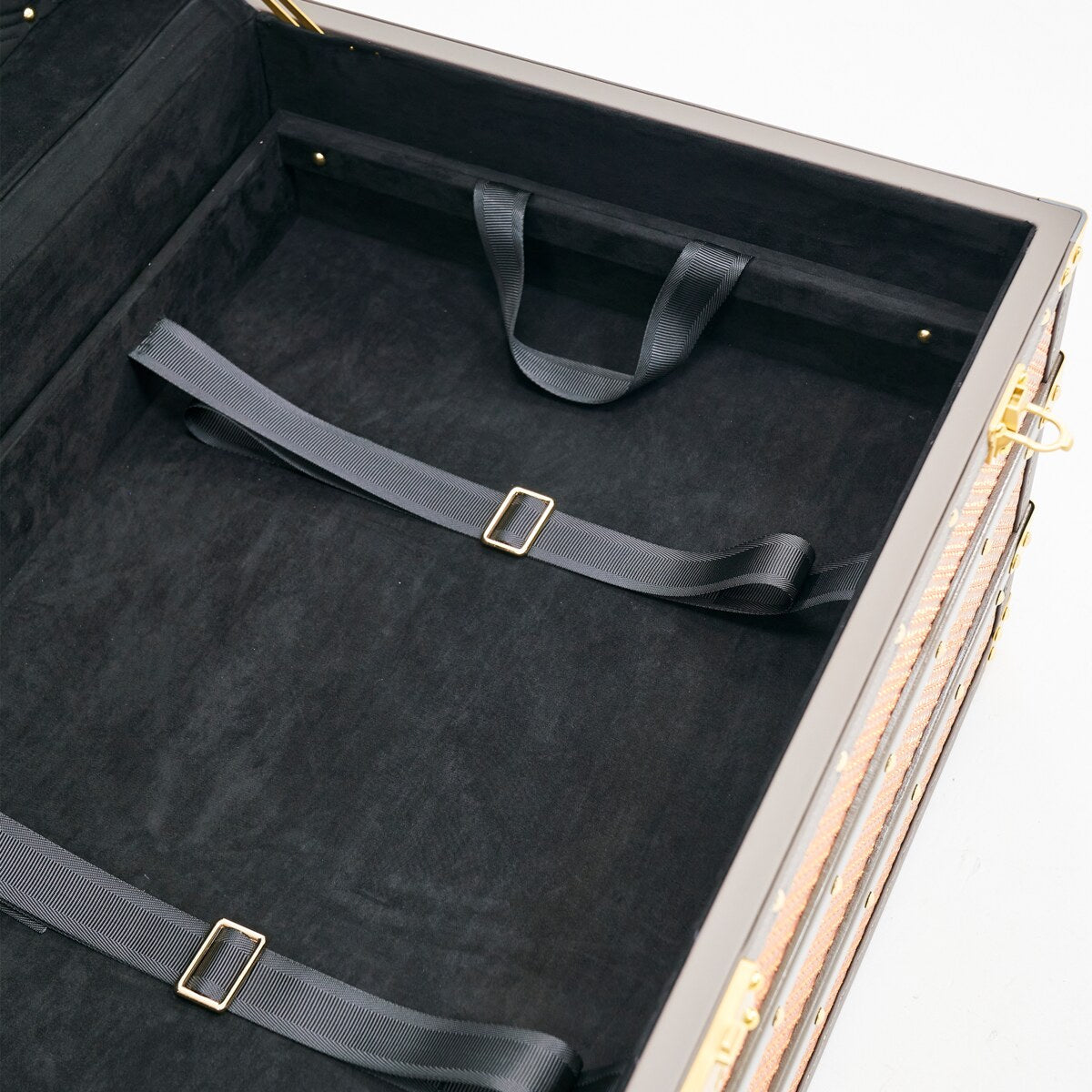
What is a Loom coffee table? "Loom" refers to SIRAE's woven copper-wire construction — the line now called Aurum Wire — so "Loom coffee table" is the legacy name for these pieces. Each one is a coffee-table-height woven-metal centrepiece whose hard-case frame opens to double as climate-stable storage. Because the body is woven copper wire rather than wood or board, it stays dimensionally stable through the UAE's wide indoor-to-outdoor humidity swing — the metal does not swell, warp or delaminate. The Aurum Wire · The Heirloom Storage Trunk - Copper Rose is the antique-copper expression of this woven-loom design.
Does a copper coffee table tarnish badly in Dubai's humidity? Not when the finish is sealed, as it is on all SIRAE Aurum Wire pieces. Unsealed raw copper tarnishes quickly in coastal humidity; a controlled oxidation plus clear seal coat arrests the process at the chosen antique tone. What changes slowly over years is a subtle deepening of the amber warmth — a patina development, not a deterioration. If you prefer the bright penny-gold tone, keep the piece away from direct sun and wipe with a dry microfibre cloth regularly.
Are copper and metal coffee tables suitable for homes with children? The hard-case construction and rigid woven frame means the surface does not flex or indent under impact the way lacquered wood can chip or glass can crack. The main consideration is the wire weave surface: small objects pushed hard into the open grid can mark. In practical terms a woven copper coffee table is more durable under daily household use than either stone-top or glass-top alternatives, and repairs to the sealed patina are possible through SIRAE's aftercare service.
How does a woven copper coffee table compare to a marble coffee table for a UAE majlis? Both are dimensionally stable. Marble reads cooler and more formal; copper wire reads warmer and more textural. In a traditional majlis with dark upholstery and brass accents the antique copper finish is the stronger contextual choice. Marble is heavier, harder to reposition without risk of floor or surface damage, and requires annual re-sealing to resist acid etching from condensation rings — copper wire does not. For a modern minimalist majlis, the Monochrome variant bridges the gap with a dark wire surface that reads close to matte black stone.
Can I place a copper coffee table on an outdoor terrace or balcony in Dubai? No — the sealed interior finish is not rated for outdoor UV or standing water exposure. Outdoor summer conditions of 45°C direct heat, 80–90% RH and khamseen dust abrasion will degrade the patina seal within one season. Keep all SIRAE coffee tables indoors and use a weather-rated side table for the terrace.
View the Full Collection in Dubai
The weight of a woven copper surface and the tension of the hard-case frame are things that photographs cannot convey. To compare the Antique Copper, Monochrome and Tiffany Blue Aurum Wire finishes alongside the Heritage Leather leather construction — and to test proportions against your actual room dimensions — book a private appointment at the SIRAE showroom, Al Shafar Complex, Umm Suqeim 1, Dubai. Call +971 55 886 6180 or write to info@siraecasa.com, and our team will walk you through placement, patina options and the full copper coffee table collection.
%0AA%20copper%20coffee%20table%20is%20the%20rare%20cent...)
Leave a comment
This site is protected by hCaptcha and the hCaptcha Privacy Policy and Terms of Service apply.