
Watch Winder for Rolex: Do You Really Need One? (2026)
Watch Winder for Rolex: Do You Really Need One? (2026)
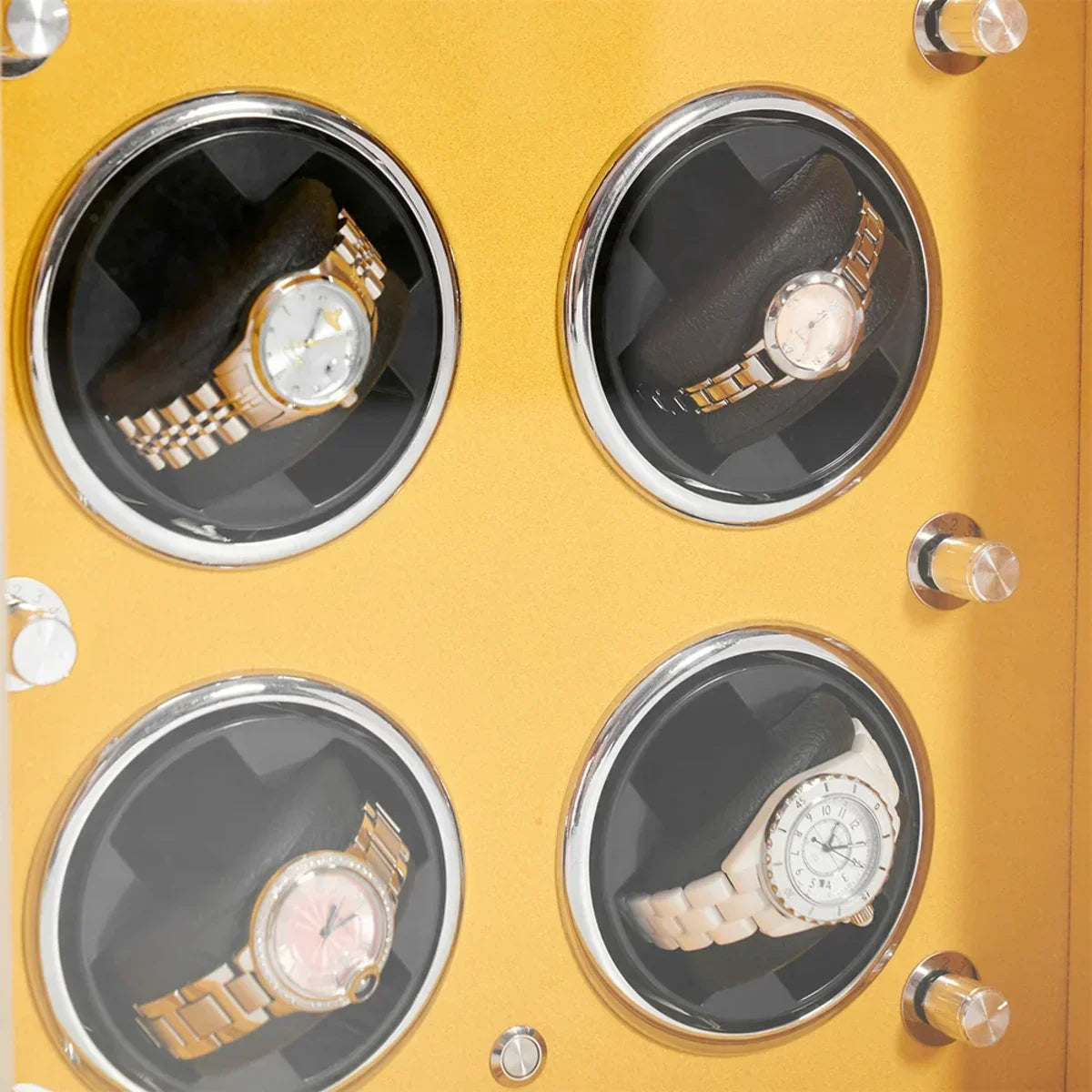
A watch winder for Rolex ownership sits somewhere between essential equipment and expensive clutter, depending on whom you ask — and in 2026 the argument is still running on every collector forum. One camp insists a stopped automatic movement suffers; the other calls winders a marketing invention. Both camps overstate their case. This guide acts as a neutral referee: each claim is tested against published Rolex movement data, and the answer resolves into a short decision tree rather than a blanket yes or no.
Do Rolex Watches Need a Winder? The Quick Answer
Quick Answer: No Rolex requires a winder — a stopped movement suffers no harm, and Rolex itself sells no winder. But a winder becomes genuinely useful in three scenarios: calendar complications (Day-Date, Sky-Dweller) that are tedious to reset, rotations of three or more watches, and pieces worn less than once every 72 hours. Convenience, not preservation, is the honest justification.
That single paragraph settles roughly 80% of the debate. The remaining 20% — the fear-based claims about oil, wear and magnetism, plus the legitimate complication-setting argument — deserves a proper hearing, because the details decide whether the device belongs on your dresser or in a drawer.

The Case For: When a Winder Genuinely Earns Its Place
Three arguments for winders survive scrutiny:
1. Calendar complications cost real time to reset. A stopped Sky-Dweller with its annual calendar, or a Day-Date showing the wrong day, takes several minutes of careful crown work to bring back — and date changes attempted in the wrong window (roughly 20:00–04:00 on older calibres) risk damaging the mechanism. A winder removes that risk by never letting the display lapse.
2. Multi-watch rotation breaks the 72-hour cycle. A collector rotating four or five pieces will routinely leave any single watch unworn for a week or more. Every return to the wrist then means winding and resetting — trivial for a Submariner, tedious for anything with a calendar.
3. Infrequent wear below the power-reserve threshold. If a specific watch is worn less than once every 72 hours, it will be dead on arrival every time you reach for it. For an "occasions-only" dress piece, a winder converts it back into a grab-and-go watch.
What Is the Rolex Power Reserve, and Why Does It Decide the Question?
The Bottom Line: The case for a watch winder for Rolex daily wearers collapses against one number: calibres built since 2015 — the 3235, 3285 and related family — hold approximately 70 hours of power reserve, up from 48 on the previous-generation 3135. Wear the watch once every three days and it never stops; a winder becomes functionally redundant.
The jump from 48 to roughly 70 hours came from the Chronergy escapement and a thinner-walled barrel housing a longer mainspring, documented across the current catalogue (Caliber Corner, calibre 3235 specifications). In plain terms: a watch taken off on Friday evening is still running on Monday morning. The generation of advice that recommended winders "so your watch never stops" was written for movements with two-day reserves; the engineering moved, and much of the advice never caught up.
Can a Watch Winder Damage a Watch? The Three Fears, Tested
Technical Verdict: A quality winder cannot overwind a Rolex — the automatic mainspring uses a slipping bridle that disengages at full tension. The credible risks are narrower: unshielded budget motors placing a magnetic source millimetres from the movement for months, and incorrect rotation settings. Modern Rolex anti-magnetic architecture neutralises most of even that residual risk.
Here is each common worry judged against the facts:
| Common worry | The claim | Factual verdict |
|---|---|---|
| Overwinding | "Constant rotation will overwind the mainspring" | False. Every automatic Rolex barrel has a slipping bridle (clutch) that releases excess tension at full wind. The overwinding myth dates to hand-wound watches and does not apply. |
| Oil ageing | "Lubricants congeal if the watch sits stopped" | Outdated. Synthetic lubricants used since the 1990s degrade by time, not by stillness. Rolex's guidance is a service roughly every 10 years — winder or no winder. |
| Added wear | "A winder puts needless mileage on the movement" | Marginally true, rarely material. A running movement does accumulate wear, but the service interval is identical either way; the effect is negligible within a 10-year cycle. Vintage pieces (pre-2000 calibres) are the exception — let those rest. |
| Magnetisation | "The winder's motor will magnetise the movement" | Low risk on modern Rolex. The Parachrom hairspring (niobium-zirconium alloy) is paramagnetic and the Chronergy escapement is nickel-phosphorus, insensitive to magnetic interference (Rolex, Parachrom hairspring). Cheap unshielded motors remain worth avoiding on principle. |
| Accuracy | "A winder keeps the watch accurate" | Misleading. It keeps the watch running. The Superlative Chronometer rating of −2/+2 seconds per day comes from the movement, not the box it sits in. |
The pattern is consistent: the catastrophic claims on both sides fail. A winder neither preserves a Rolex nor destroys one — it is a convenience appliance, and build quality matters. If you do buy one, specify a shielded motor, a programmable turns-per-day setting (around 650 TPD, bidirectional, suits Rolex calibres), and a rest cycle rather than continuous rotation.

The Decision Tree: Match the Scenario, Not the Marketing
Run your own situation down this table before spending anything:
| Your scenario | Winder needed? | Reasoning |
|---|---|---|
| One Rolex, worn daily | No | Wrist motion keeps the mainspring topped up; a winder adds nothing. |
| Time-only or date model (Submariner, Datejust), worn 2–3× weekly | No | The ~70-hour reserve bridges the gaps; resetting takes under a minute anyway. |
| Day-Date or Sky-Dweller in a rotation | Yes — strongest case | Calendar resetting is slow and carries a wrong-window risk; a winder eliminates both. |
| Three or more watches, each unworn 72+ hours | Useful | Convenience scales with collection size; pair the winder with proper static storage for the rest. |
| Vintage Rolex, pre-2000 calibre | No — avoid | Older lubricants and tolerances prefer rest; wind by hand before wearing. |
| Away from home 2–3 months (the Dubai summer case) | No — let them stop | An unattended running winder offers no benefit and adds heat/power-failure variables. See below. |
The Dubai Scenario: What About a 2–3 Month Summer Absence?
Quick Answer: Let the watches stop. Leaving winders running in an empty Dubai residence through July and August means trusting district cooling and mains power for 60–90 days while ambient outdoor temperatures exceed 45°C. A stopped Rolex loses nothing; a winder in a villa whose air conditioning fails gains you a warm motor next to your movement.
This is where the question stops being horological and becomes a custody question. The real summer risks to an unworn collection in the Gulf are environmental: an AC interruption can swing interior humidity from a dry ~25% RH toward the 80–90% RH outside air carries, and fine dust finds its way into anything unsealed. The sensible protocol for a watch winder for Rolex owners leaving for the summer is the opposite of automation — power everything down, then control the micro-environment instead:
- Wind down deliberately. Let each watch run out naturally; store with the crown fully pushed in (screwed down on Oyster cases).
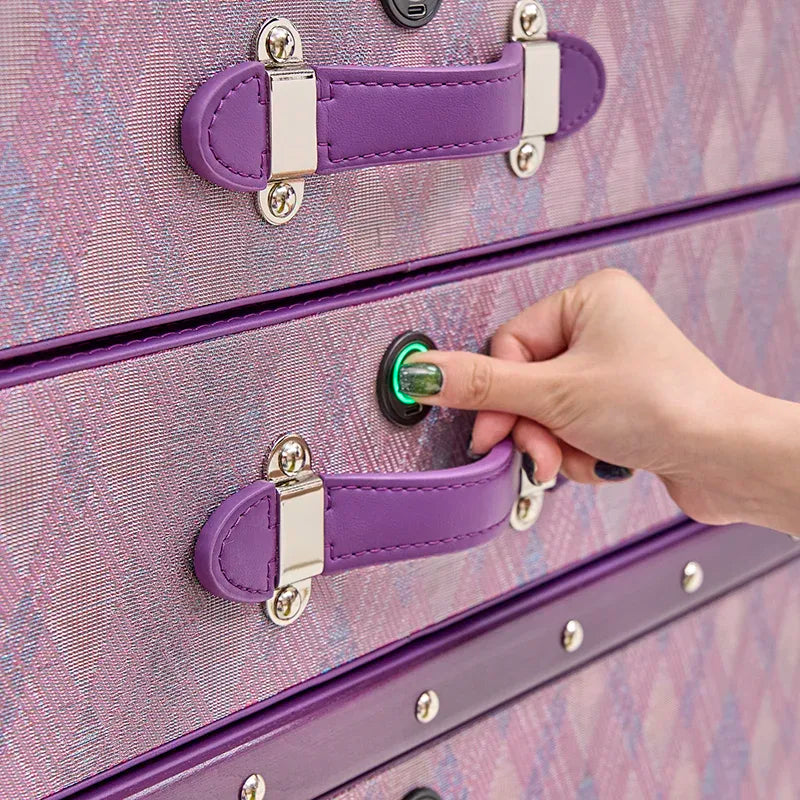
- Seal against dust and humidity swings. A hard-shell case with a tarnish-resistant microfiber suede interior — such as the copper frosted-silver luxury watch box — keeps straps, dials and bracelets in a stable pocket of air. The woven copper-wire hard case construction was specified for exactly this GCC heat-and-humidity cycling.
- Keep them off the windowsill logic. Interior, shaded placement away from exterior walls; a larger collection belongs in a dedicated piece like the copper meadow-floral watch case, which organises each head on its own cushion rather than stacked in travel rolls.
- On return: wind 20–30 crown turns by hand, set time and calendar in the safe window, wear normally. Total cost: five minutes per watch, twice a year.

Final Verdict
The 2026 ruling on the watch winder for Rolex debate reads like this: not necessary, occasionally worthwhile, never a substitute for proper storage. Buy one if — and only if — you own calendar complications or run a rotation deep enough that watches routinely sleep past their 70-hour reserve. Skip it for daily wearers and vintage pieces. And whatever you decide about motion, decide more carefully about stillness: a Rolex spends far more of its life sitting than spinning, and the quality of where it sits — humidity-stable, dust-sealed, soft-close, scratch-free — does more for its decade-to-decade condition than any motor ever will. A piece like the frosted-silver edition copper watch case is, in that sense, the unglamorous answer to a glamorous argument.
FAQ
How many turns per day does a Rolex need on a winder? Around 650 turns per day in bidirectional mode suits most modern Rolex calibres, including the 3235 family. Avoid continuous-rotation winders; a programme with rest intervals keeps the mainspring at tension without running the motor — and the rotor — around the clock.
Will my Rolex be damaged if it stops completely? No. A stopped automatic movement is inert, not deteriorating. Modern synthetic lubricants age by calendar time rather than by stillness, and Rolex's recommended service interval of roughly 10 years applies whether the watch ran daily or sat for months. Wind, set, wear.
Is the overwinding myth true for automatic Rolex watches? No. Every automatic Rolex mainspring barrel contains a slipping bridle that disengages once the spring reaches full tension, so neither wrist wear nor a winder can overwind it. The myth survives from hand-wound watches, where forcing the crown past resistance genuinely could cause damage.
Should I leave a winder running while away from Dubai for the summer? No. Over a 2–3 month absence the winder adds dependency on uninterrupted power and cooling while delivering no preservation benefit. Let the watches stop and store them in a sealed, suede-lined case placed away from exterior walls, then reset them on return — about five minutes per watch.
The honest answer to the winder question usually arrives fastest with the watches in front of you. If you are weighing a watch winder for Rolex pieces alongside the larger question of where the collection itself should live, visit the SIRAE showroom at Al Shafar Complex, Umm Suqeim 1, Dubai for a private viewing of our copper-wire and leather watch cases — call +971 55 886 6180 or write to info@siraecasa.com to arrange an appointment.

%0AA%20watch%20winder%20for%20Rolex%20ownership%20sits%20somewhere%20between%20essen...)
Leave a comment
This site is protected by hCaptcha and the hCaptcha Privacy Policy and Terms of Service apply.