
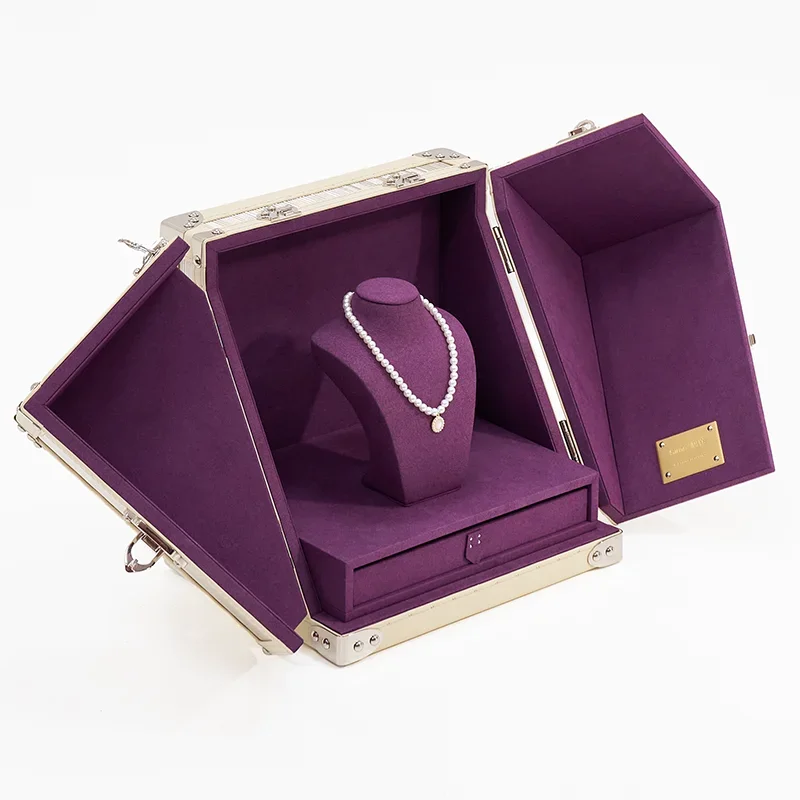
Choosing a Bridal Trousseau Vanity in the GCC: A Legacy Guide
Commissioning the Modern Trousseau: A Guide to the Bridal Vanity in the GCC
A bridal trousseau, particularly within the Gulf, is far more than a collection of possessions; it is the curation of a new life and the foundation of a family’s material legacy. At the heart of this tradition sits the dressing table or vanity, an intimate space for daily ritual and a repository for cherished heirlooms. Selecting this piece requires a level of consideration that transcends mere aesthetics, demanding an understanding of materiality, climate resilience, and long-term investment value.
This guide offers a framework for commissioning a vanity that honours tradition while meeting the exacting standards of a modern, climate-aware residence.
Guide to This Commission
- The SIRAE Standard: Principles of a Legacy-Grade Vanity
- Beyond Adornment: The Vanity's Role in a Gulf Bridal Trousseau
- Materiality and Craft for Middle Eastern Residences
- From Heritage Marques to Intelligent Commissions
The SIRAE Standard: Principles of a Legacy-Grade Vanity
Technical Verdict: A trousseau-grade vanity's value is determined by its material stability against high ambient heat and relative humidity, its capacity for discreet, climate-controlled storage, and the precision of its mechanical components, such as hardware and drawer systems.
Material Integrity in Extreme Climates
In the UAE and wider GCC, direct sunlight and seasonal humidity shifts pose a significant threat to fine furniture. A vanity intended as a generational asset must be constructed from materials engineered to resist these pressures. Standard veneered particleboard can delaminate, while improperly treated solid woods may warp or discolour under intense UV exposure.
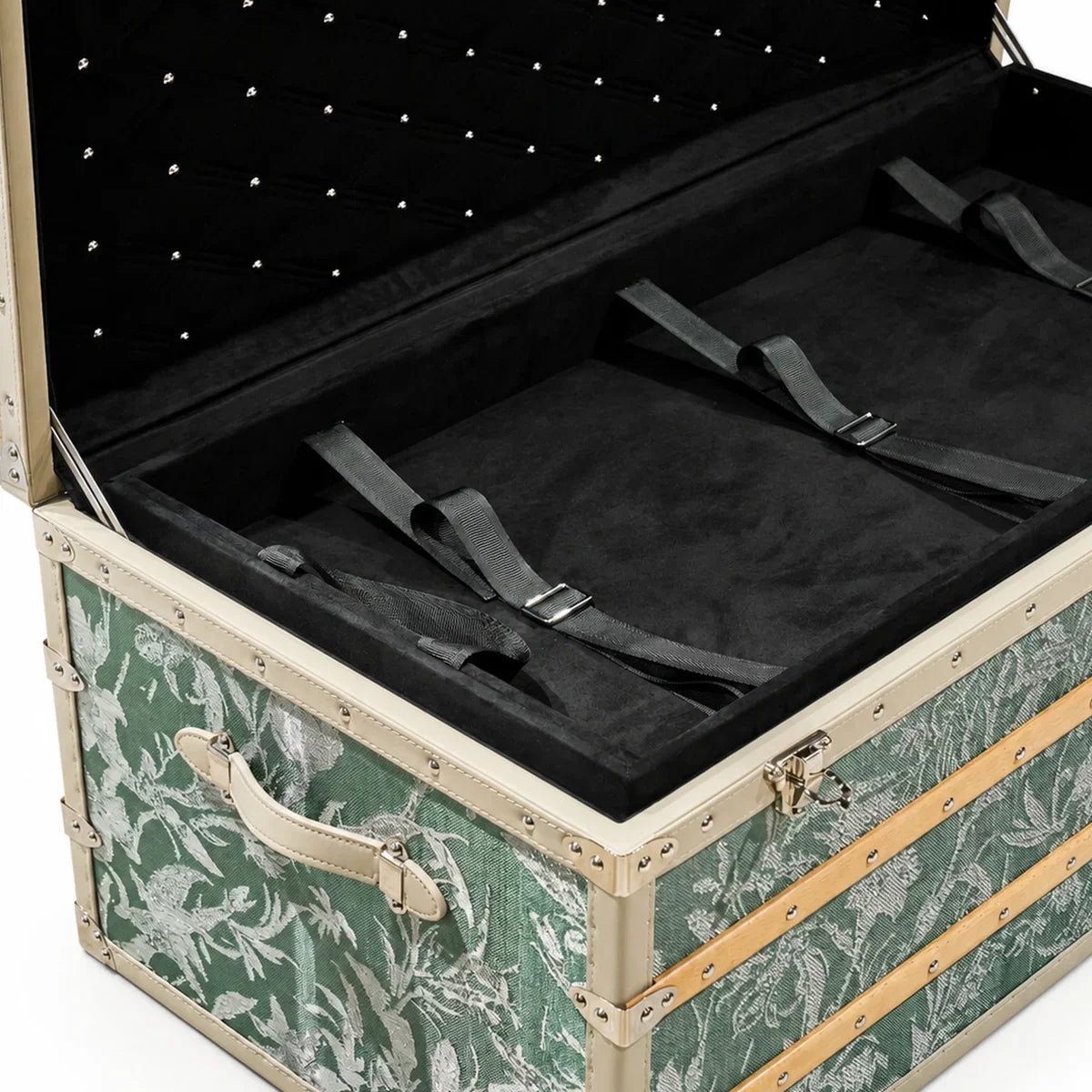
The solution lies in selecting stable, kiln-dried hardwoods finished with high-performance, non-toxic coatings that offer superior UV resistance. For residences with significant sun exposure, consider composite cores clad in resilient materials like woven metallic fabrics or high-pressure laminates, which offer greater dimensional stability than traditional wood veneers.

The Science of Preservation
The items stored within a vanity—from couture jewellery to delicate perfumes and cosmetics—are often more vulnerable than the cabinet itself. The internal environment is therefore of paramount importance.
- Lining Materials: Interior surfaces should be lined with inert, non-reactive materials. Tarnish-resistant microsuedes or archival-quality fabrics prevent chemical reactions that can damage precious metals and gemstones.
- Off-Gassing: Avoid materials with high volatile organic compound (VOC) content, as oxidation from chemical off-gassing can accelerate the degradation of delicate items.
- Mechanical Integrity: Look for precision components like soft-close drawer systems. These are not merely a luxury feature; they prevent vibrations and shock that can cause micro-abrasions on fine jewellery over thousands of cycles.
Heirloom Value and Stewardship
A true heirloom piece is defined by its capacity for graceful ageing and serviceability. This requires not only superior initial craftsmanship but also a design that can be maintained and cared for over decades. Solid brass or stainless steel hardware, for instance, can be polished and restored, whereas plated zinc alloys will eventually fail and cannot be easily repaired. Commissioning a piece from a house that values Bespoke Joinery ensures that the object is conceived from the outset as a permanent fixture in a family’s history.
Beyond Adornment: The Vanity's Role in a Gulf Bridal Trousseau
The Bottom Line: In the context of a GCC trousseau, the vanity transcends its function as furniture to become a symbol of continuity, personal sanctuary, and the first piece of a new family’s collection of heritage assets.
The dressing table has a storied history, evolving from simple cosmetic boxes in the 15th century to the elaborate boudoir centerpieces of the 18th. Today, it represents a deeply personal space—a stage for the daily ritual of preparation and a private vault for a bride’s most treasured possessions. It is the first piece of furniture that is truly her own within the marital home.
This symbolic weight is why its selection is so critical. An off-the-shelf piece addresses a temporary need, but a commissioned vanity speaks to permanence. It becomes an anchor for memory, a silent witness to a lifetime of moments, destined to be passed down with the very jewels it was designed to protect. This focus on legacy is the defining difference between acquiring furniture and curating a family collection.
Materiality and Craft for Middle Eastern Residences
Technical Verdict: Material selection for a vanity in Dubai or Riyadh must prioritise thermal and UV stability. Italian marbles offer classic gravitas, while specialised wood treatments and mother-of-pearl inlays require master-level application to prevent delamination or fading in high-sunlight environments.
French Classicism vs. Italian Modernism
When considering a statement piece for a primary suite, a common deliberation is between classic French styles, such as Louis XVI, and contemporary Italian design.
- Louis XVI Style: Characterised by elegant lines, tapered legs, and ornate yet symmetrical detailing. These pieces often occupy a smaller physical footprint but possess significant visual weight. Their investment value is tied to the quality of the marquetry and ormolu mounts, making provenance and workshop reputation paramount.
- Modern Italian Design: Often prioritises dramatic, sculptural forms and the celebration of noble materials. A vanity from a house like Visionnaire Home Philosophy might feature a cantilevered top of Italian Calacatta marble and a bold, metallic structure. These pieces command more space and serve as architectural anchors within a room, their value derived from material purity and avant-garde design.
For a residence in Riyadh, a classic French piece might complement a formal, panelled interior, while a contemporary Italian design would be at home in a modern villa with expansive glass and open volumes. Both can incorporate discreet storage for high-value jewellery, but the integration is typically more seamless and technologically advanced in modern Italian commissions.
Climate-Resistant Materials and Finishes
For a room in the UAE with unavoidable direct sunlight, material choice is non-negotiable. The best options are those that are either inherently inert or have been technologically enhanced for stability.
- Sustainable Woods: Opt for engineered wood substrates with thick, high-quality veneers from sustainable sources like reconstituted oak or walnut. These are less prone to warping than solid planks.
- Advanced Finishes: Specify marine-grade or automotive-grade lacquers with high UV-inhibitor content. These clear coats form a protective barrier that significantly slows discolouration and degradation of the underlying wood or veneer.
- Inlays and Accents: Delicate work like mother-of-pearl inlay demands exceptional craftsmanship. The inlay must be set into a stable substrate with modern, temperature-resistant adhesives to prevent lifting or cracking as the piece expands and contracts with ambient temperature changes.
From Heritage Marques to Intelligent Commissions
Technical Verdict: Leading design houses like Christopher Guy and Boca do Lobo offer distinct approaches to vanity design, with customisation options focused on either stylistic flourish or material innovation, while modern commissions integrate biometric security and professional-grade lighting.

Integrating Modern Technology
The contemporary vanity is an intelligent piece of furniture, designed for performance as much as beauty. The most impactful innovations are those that enhance the daily ritual of adornment.
An intelligent dimming LED mirror is now a prerequisite. Professional-grade systems offer adjustable colour temperature, allowing one to simulate lighting from daylight to evening interiors for flawless makeup application. This is a critical detail that differentiates a true dressing suite from a standard bedroom. When comparing marques, it is vital to ask whether the lighting is a decorative afterthought or a fully integrated, professional-grade component.
Discretion and Security
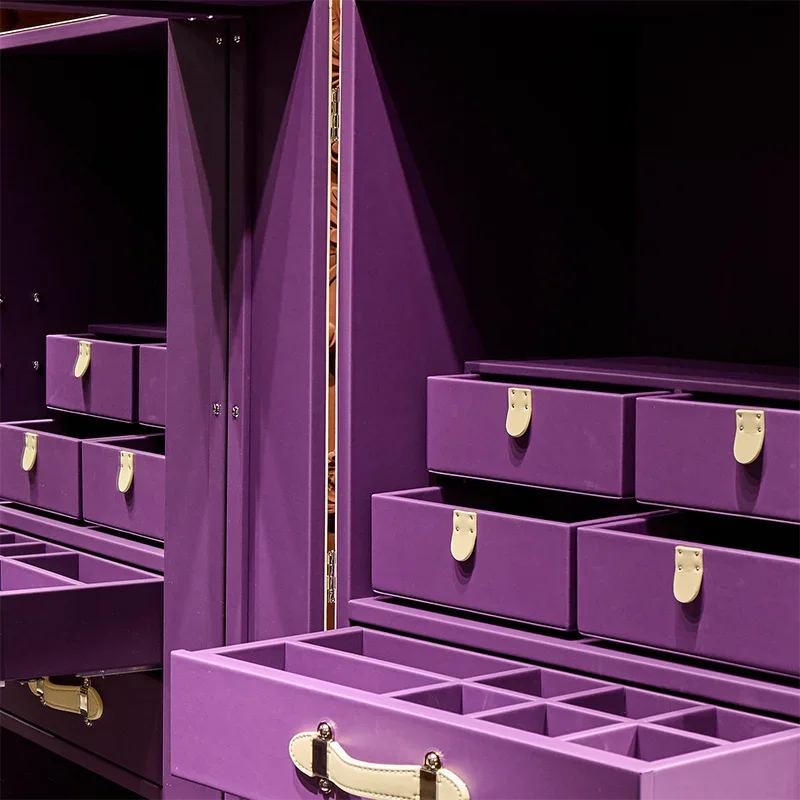
For safeguarding precious jewels, a vanity must offer more than a simple lock and key. Leading commissions integrate hidden compartments with biometric access or sophisticated electronic locks. These secure spaces are seamlessly built into the joinery, invisible to the casual observer. This elevates the vanity from a simple table to a personal vault, providing peace of mind and immediate access to one's collection without retreating to a primary safe.
Heritage brands like Christopher Guy are masters of sculptural form and hand-carved detailing, often allowing for customisation in finishes and fabrics. In contrast, avant-garde workshops like Boca do Lobo push the boundaries of material and craft, offering highly artistic, statement-making pieces. For commissions requiring deep integration of technology—such as specific LED light temperatures or biometric locks paired with unique materials like mother-of-pearl—a direct dialogue with a specialist atelier often yields a more precisely tailored result than customising a pre-existing design from a larger brand catalogue.
A truly exceptional trousseau vanity is a reflection of its owner—a piece commissioned not just for a wedding, but for a lifetime of use and generations of admiration.
The art of commissioning is a dialogue between heritage and personal vision, culminating in objects that carry meaning far beyond their function.
https://www.siraecasa.com

Leave a comment
This site is protected by hCaptcha and the hCaptcha Privacy Policy and Terms of Service apply.