
Statement & Colour Coffee Tables: Designer Centrepieces for Dubai Homes (2026)
Statement Colour Coffee Tables That Define Dubai Living Rooms (2026)
A statement coffee table does something an ordinary coffee table cannot: it establishes the room's character before a single cushion is chosen or a painting is hung. In Dubai's most considered interiors — villas in Emirates Hills, penthouses above Downtown, layered majlis rooms in Jumeirah — the designer coffee table at the centre of a seating group is increasingly the first decision, not the last. This 2026 guide covers how to choose a colour coffee table that holds its own against neutral upholstery, how copper-wire construction catches Gulf light in ways wood and glass cannot, how Tiffany Blue, Royal Amethyst and Monochrome finishes each pair with different interior palettes, and the honest differences between SIRAE's four copper-wire and leather designs — the only formats we make.

What Is a Statement Coffee Table — and Why Does Colour Do the Work?
Quick Answer: A statement coffee table is one that reads as the room's focal anchor rather than a surface placeholder — sized and finished so that even an otherwise neutral room has a clear visual centre. Colour is the most direct route to that effect because it cannot be unseen: a Tiffany Blue or Royal Amethyst table claims its position the moment someone enters, whereas a beige or clear-glass piece can disappear behind a large sofa.
The conventional wisdom in luxury interiors has long been to subordinate the coffee table — pale travertine, smoked glass, unfinished brass — so that it does not compete with art or upholstery. That logic works in a gallery, but it produces rooms that feel finished rather than alive. The alternative, increasingly chosen by Dubai's design-led clients, is to make the coffee table the room's one courageous decision and build everything else around it. A Royal Amethyst leather and copper-wire table, for instance, gives you a fixed chromatic anchor: the sofa behind it wants a warm ivory or deep charcoal, the rug beneath it wants an abstract or geometric that picks up the violet without repeating it, and the artwork above wants to echo — not match — the jewel tone.
What makes this approach workable rather than chaotic is material honesty. A woven copper-wire surface does not read as a painted surface; the colour lives inside the weave, shifting from bronze to amber as the light moves across it, so even a saturated finish retains depth and does not shout. That quality — colour with internal texture — is why statement coffee tables in this construction hold rooms that a solid-colour lacquer piece would overwhelm.
Tiffany Blue, Royal Amethyst or Monochrome: Which Colour Suits Your Interior?
The Bottom Line: Choose by the room's existing chromatic commitment, not by the colour alone. Tiffany Blue reads coolest and suits rooms with off-white walls and minimal pattern. Royal Amethyst reads warmest and pairs well with deeper neutrals — taupe, slate, aged brass. Monochrome (black and silver copper-wire) is the most versatile: it functions as a neutral while retaining the visual weight and texture of the statement formats.
SIRAE currently produces four coffee table designs, all in copper-wire or leather construction. There are no wood, stone or glass options — a deliberate restriction that keeps each piece materially coherent. The four are:
| Design | Construction | Colour register | Interior temperature |
|---|---|---|---|
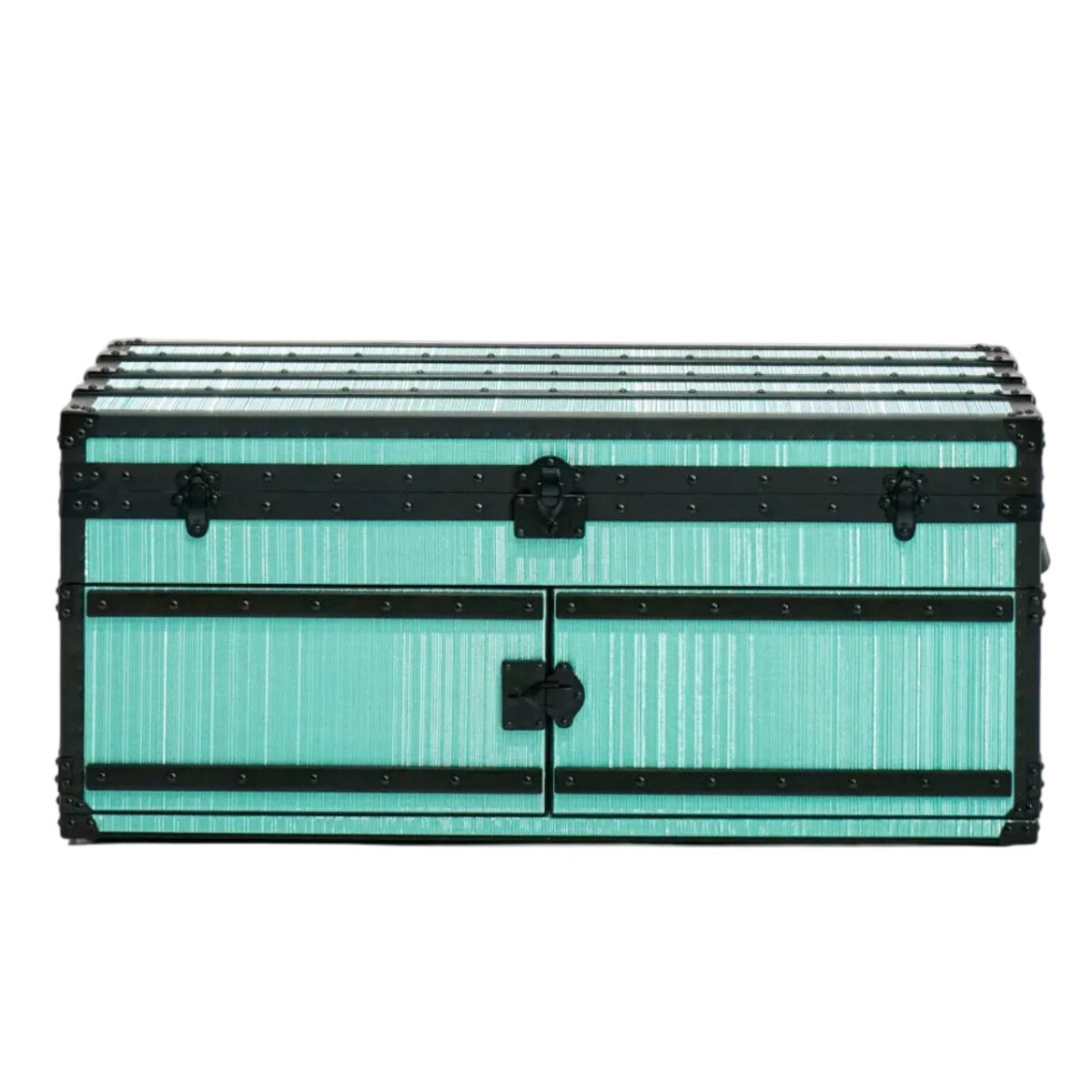
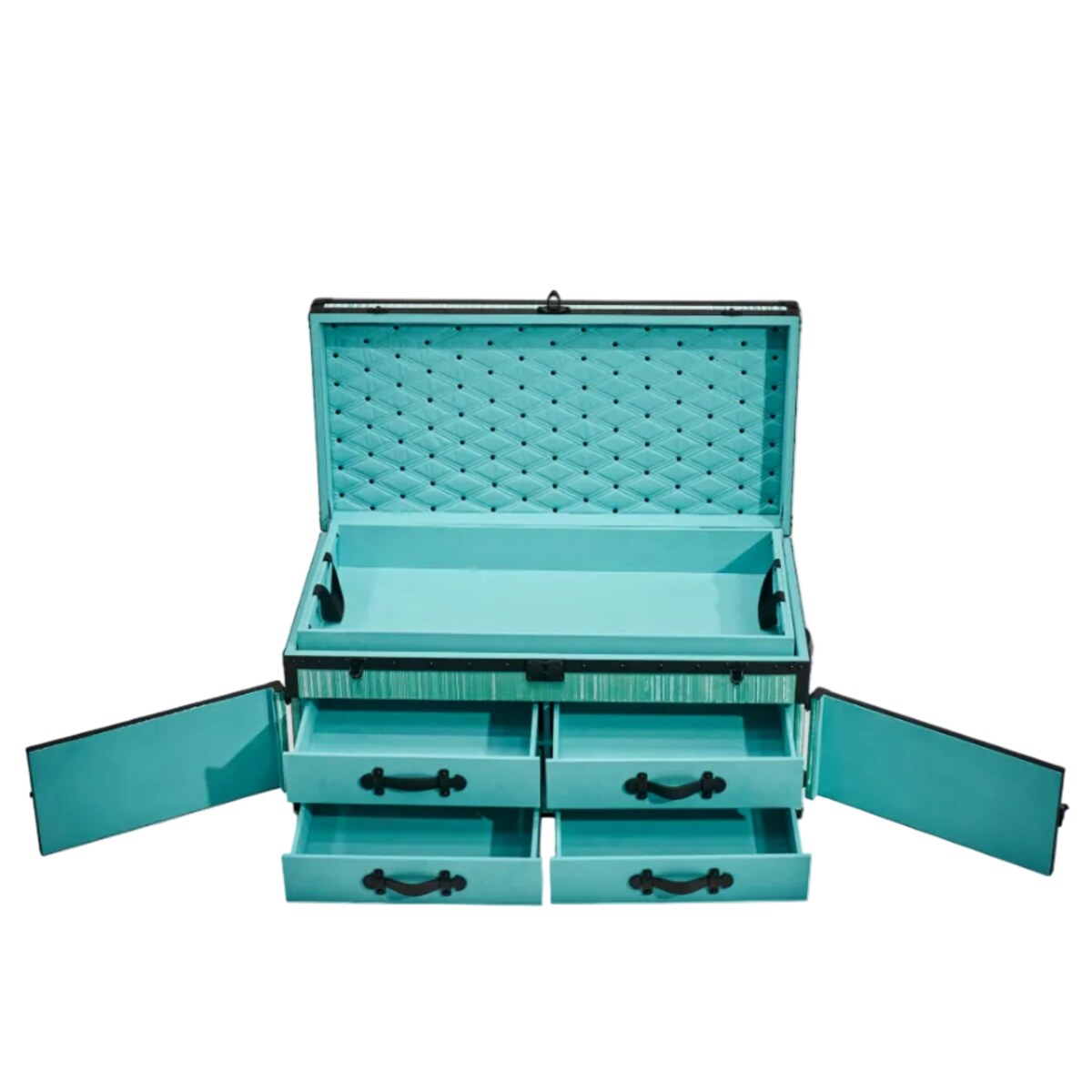
| Aurum Wire – Tiffany Blue | Woven copper-wire | Cool aqua-teal | Refreshing; suits pale, minimal palettes |
| Heritage Leather – Royal Amethyst | Microfiber leather wrap | Deep jewel violet | Warm; suits layered, rich-neutral rooms |
| Aurum Wire – Monochrome | Woven copper-wire | Black and silver | Neutral-weight; universally pairable |
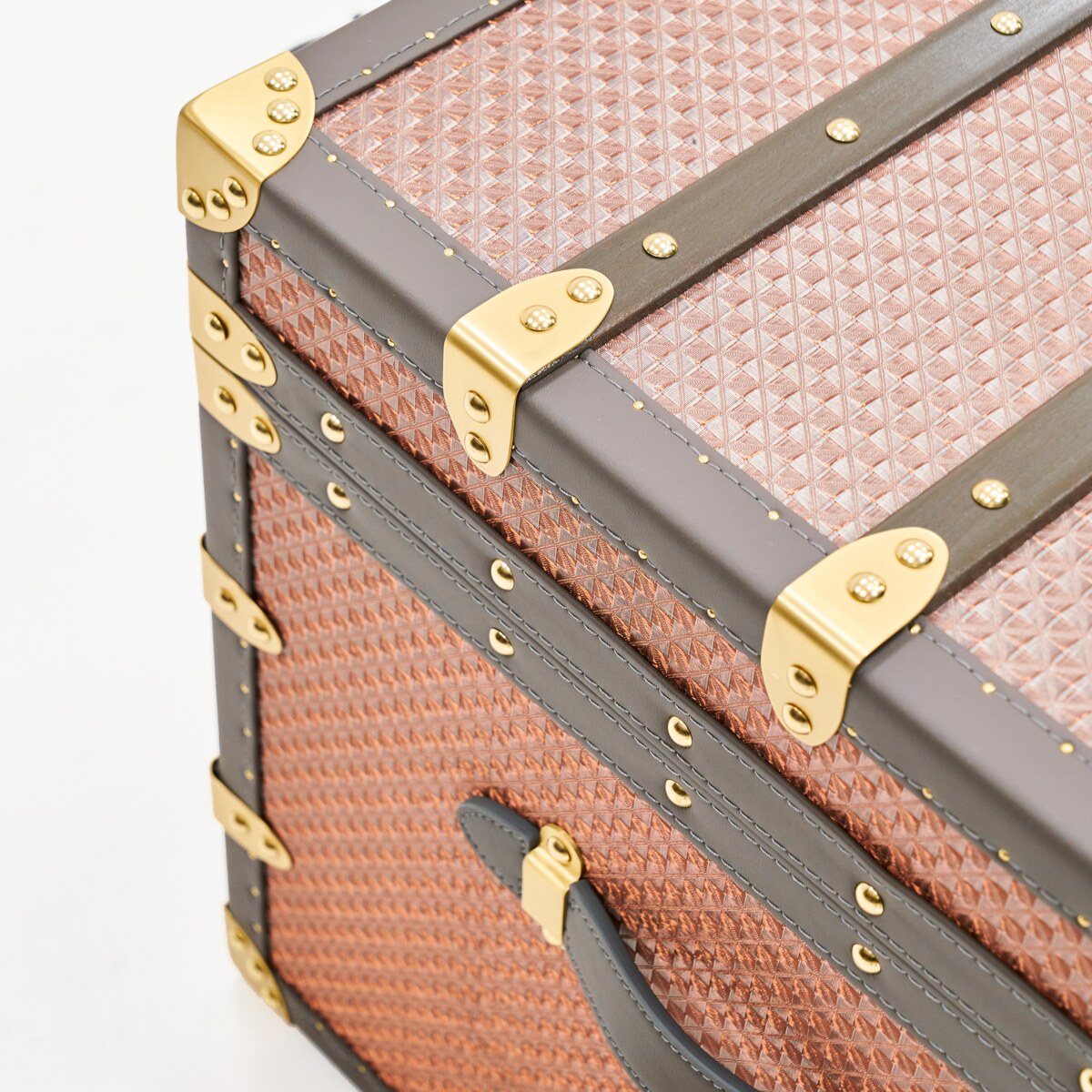
| Aurum Wire – Antique Copper | Woven copper-wire | Warm burnished bronze | Earthy; suits terracotta, sand, warm-white schemes |
The Tiffany Blue is the rarest finish commercially — few makers offer a jewel-toned woven metal at this scale — which also makes it the most conversation-generating piece in the range. The Royal Amethyst in microfiber leather is the warmest-feeling table in the collection and the one that photographs most dramatically under Dubai's afternoon light. If you are uncertain between a colour and Monochrome, the practical test is this: hold a swatch of your sofa fabric next to both and ask which version makes the swatch look more intentional, not which table you prefer in isolation.

How to Pair a Colour Coffee Table with a Neutral Sofa or Majlis
Technical Verdict: A statement coffee table works best against upholstery that is quiet in colour but rich in texture — bouclé, linen, deep-pile velvet in ivory, oatmeal, charcoal or warm stone. The table supplies the chromatic event; the sofa supplies tactile contrast. Matching the table colour to accent cushions or artwork is a useful secondary move, but the primary rule is contrast in saturation: one saturated element (the table) against multiple low-saturation elements (sofa, wall, rug).
The majlis setting deserves specific attention because it has its own geometry. A traditional majlis runs seating around three walls, leaving the central floor as a long rectangular stage — exactly the proportions where a statement coffee table performs best, because every seated guest has a sightline to it. In a majlis with ivory or cream upholstery and intarsia woodwork, the Tiffany Blue table reads like a pool at the centre of the room. In a majlis with darker wengé or ebony tones, the Royal Amethyst holds its own without fighting the woodwork. The Monochrome is the choice when the majlis already has strong pattern — geometric tile, traditional mashrabiya — and the table needs to anchor without competing.
For Dubai living rooms with open-plan kitchen connections, the statement table also does structural work: it defines the boundary of the seating group in a room with no walls to do the job. A correctly sized colour table — proportional to the sofa length, sitting on a rug that extends 30–40 cm beyond the table's footprint — makes a floating arrangement read as a deliberate room rather than furniture arranged in a space.
| Pairing scenario | Recommended table | Sofa / upholstery | Supporting palette |
|---|---|---|---|
| Pale minimal (white walls, linen sofa) | Tiffany Blue | Ivory or sand bouclé | Silver, pale grey accents |
| Rich layered (dark wood, pattern rug) | Royal Amethyst | Deep charcoal velvet | Aged brass, soft terracotta |
| Majlis with strong pattern | Monochrome | Cream or taupe fabric | Bronze, black architectural detail |
| Warm-earth (sandstone, terracotta walls) | Antique Copper | Warm white or caramel leather | Olive, dark oak, brass |
| Contemporary art-forward interior | Tiffany Blue or Royal Amethyst | Neutral linen or wool | Art supplies the pattern; table the colour |
Statement Table vs. Background Table: How to Decide
Quick Answer: Choose a statement table — colour, strong material, architectural form — when the room lacks a focal point other than a TV or a window view. Choose a background table when the room already has a dominant element (a large painting, a patterned rug, a majlis ceiling feature) and the table's job is to serve without competing. Most Dubai living rooms err towards too many background decisions, producing rooms that feel safe but unresolved; one statement piece usually resolves that.
The distinction is not about budget. A Monochrome Aurum Wire in black and silver copper-wire is a background table in the sense that its colour register is neutral, but its woven-metal texture still gives it more visual presence than a glass or stone table of equivalent price. A Royal Amethyst is unambiguously a statement piece — it is making a chromatic claim. The question to ask is not "is this too much?" but "does this room currently have a centre?" If the answer is no, the statement table is almost always the right call.
The practical test: stand at the entrance to your living room or majlis and identify the first object your eye rests on. If it is the television, the room has no designed focal point. If it is a painting or architectural feature, assess whether a colour table would support or compete with it. If the answer is support — same temperature, different saturation — proceed.

Copper-Wire Construction: Light, Texture and the Gulf Environment
Technical Verdict: Woven copper-wire construction behaves differently from every other coffee table material in Gulf light conditions: the metal weave refracts rather than reflects, producing a surface that shifts register from morning to afternoon without any finish degradation. In Dubai's intense sunlight and high-contrast interior lighting, this means the table reads differently at 9 am, at noon under recessed LEDs, and at 9 pm with ambient floor lighting — a material property no lacquer, stone or glass replicates.
From a climate standpoint, woven metal is also the most honest choice for the Gulf. The UAE's National Center of Meteorology records summer conditions above 45°C with coastal humidity exceeding 80% RH (ncm.gov.ae), and air-conditioning pulls interiors to roughly 25% RH — a swing wider than almost any furniture market. Wood veneers expand and lift at edges; lacquer hazes at touch points. Copper-wire is dimensionally stable through that entire range: the metal does not absorb moisture, the woven structure tolerates thermal movement without cracking, and the surface cleans with a dry microfibre cloth. The leather-wrap construction of the Heritage Leather Royal Amethyst behaves differently — microfiber leather benefits from keeping the table at least one metre from AC supply-air outlets — but the copper-wire designs are the most climate-resilient pieces in the range.
The weave also functions as partial ventilation: unlike a solid tabletop, it does not trap heat from direct west-facing glazing, which is a real consideration in Dubai villas where afternoon sun can push dark surface temperatures well above 50°C.
Frequently Asked Questions
Can a coloured coffee table work in a majlis without clashing with traditional décor? Yes, if the colour is chosen by temperature rather than by pattern. A cool Tiffany Blue reads as a jewel-like accent against ivory or cream majlis upholstery — analogous to the effect of coloured mosaic tile in traditional Islamic interiors. A Royal Amethyst echoes the deep tones found in Persian rugs and embroidered cushions. The rule is that the table's colour should be present somewhere else in the room at a smaller scale — a cushion, a vase, a book spine — so it reads as deliberate rather than accidental.
Does a statement coffee table make a small living room feel cramped? Not if the table is correctly proportioned. The risk with statement pieces is over-scaling: a table that is too large crowds the seating group and magnifies its presence uncomfortably. The correct proportion is roughly two-thirds the length of the sofa it faces, with 35–45 cm of clear walking space on all sides. Within those constraints, a colour table actually helps a smaller room by giving the eye a clear resting point, which makes the space feel considered rather than compressed.
How does copper-wire construction age compared to wood or stone in Dubai? Better, in the conditions specific to the Gulf. Stone and wood are both affected by the 25–90% RH swing of Dubai's indoor–outdoor cycle: stone can stain at grout joints, and wood veneer lifts at door edges and tabletop seams within two to three Gulf summers. Copper-wire weave is dimensionally stable and develops a gentle patina rather than degrading. The structural integrity of the woven facade does not change; the surface can be wiped clean without abrasive compounds.
What rug size works under a statement coffee table in a Dubai living room? The rug should extend 30–40 cm beyond the coffee table's footprint on all sides and be large enough that the front legs of all surrounding sofas rest on it. In practice this means an 240 × 340 cm rug for a standard three-seat sofa arrangement. A rug that is too small makes the statement table appear to float unsupported; one that is correctly sized grounds the entire seating group and lets the table read as the centre of a deliberate composition rather than an isolated object.
Visit the SIRAE Showroom in Dubai
A colour coffee table is a commitment that photographs and screens cannot fully represent — the way Tiffany Blue shifts between morning and evening light, the weight of microfiber leather under your hand, the sound a copper-wire surface makes when a glass is set on it. To experience the full SIRAE coffee table collection at scale, book a private appointment at the SIRAE showroom, Al Shafar Complex, Umm Suqeim 1, Dubai. Call +971 55 886 6180 or write to info@siraecasa.com, and our team will walk you through colour pairing for your specific interior, rug proportions and placement for your floor plan.
%0AA%20statement%20coffee%20table%20does%20something%20an%20ordina...)
Leave a comment
This site is protected by hCaptcha and the hCaptcha Privacy Policy and Terms of Service apply.