
The Tea Cabinet: Storing Gahwa & Tea in the Gulf
The Tea Cabinet: Storing Gahwa & Tea in the Gulf
In the UAE, a tea cabinet is where daily hospitality is quietly safeguarded. Gahwa, loose-leaf tea and fine porcelain are offered from morning to night across Gulf homes, yet the region's heat, coastal humidity and strong light slowly dull their flavour and finish. A considered tea cabinet protects both the contents and the ceremony.
Why a Tea Cabinet Belongs in the Gulf Home
Hospitality in the Emirates is continuous and ceremonial. Arabic coffee poured from a dallah—cardamom-scented, served in a small finjaan—is a gesture of welcome repeated throughout the day. Tea follows: karak in the afternoon, green and first-flush leaves carried home from travels, herbal blends for the evening. To store these casually, in a kitchen cupboard beside cooking spices and fluctuating heat, is to let provenance slip away.
A dedicated tea cabinet gives the service a home. Coffee, tea, sugar, dates and their vessels sit together in considered order, ready for guests. It also lifts the ritual out of the kitchen and into the majlis or dining room, where a bench-made cabinet becomes part of how a household presents itself. In a Dubai villa that receives often, that presence matters as much as practicality.
What the Gulf Climate Does to Tea, Coffee and Porcelain
Loose-leaf tea and roasted coffee are hygroscopic: they draw in moisture and ambient odours. In the Gulf, where outdoor humidity is high and interiors swing between cool air-conditioning and warm still air, leaves left in permeable packaging stale within weeks. The volatile aromatics—the cardamom in gahwa, the muscatel in a good Darjeeling—are the first to fade.
Light is the second adversary. Ultraviolet exposure bleaches delicate green and white teas and accelerates oxidation, while sustained warmth above roughly 25°C speeds the loss further. Porcelain and silver face their own trial: humidity encourages tarnish on silver dallahs and trays, and repeated thermal change can craze fine glazes over the years. A sealed, shaded interior held near 18–22°C and a stable 50–55%RH keeps all of this in check.
The Anatomy of a Considered Tea Cabinet
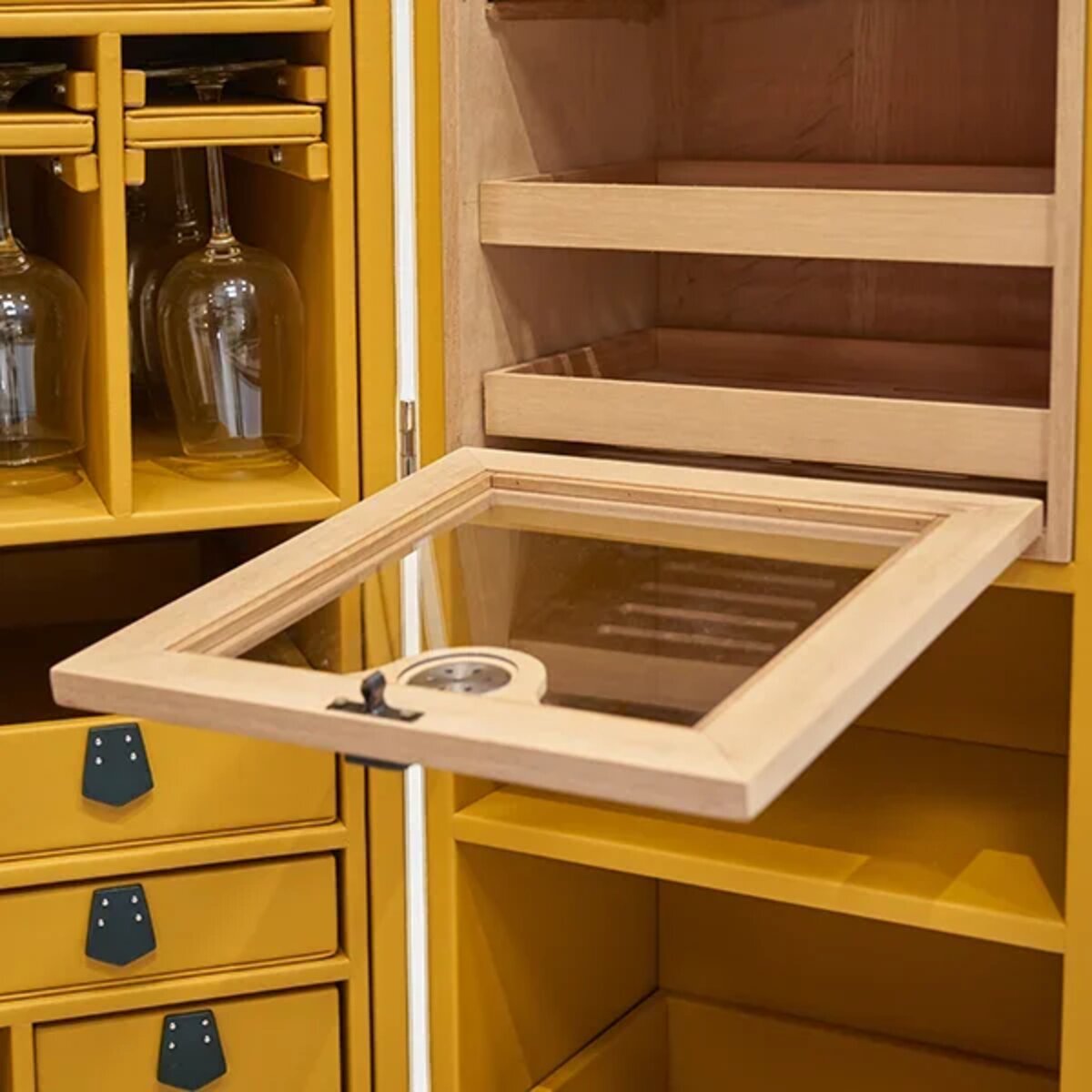
The cabinets we commission begin with a sealed timber carcass and gasket-set doors that slow the exchange of air and moisture. Where a collection of rare teas justifies it, a discreet humidity buffer holds the interior steady through the summer months.
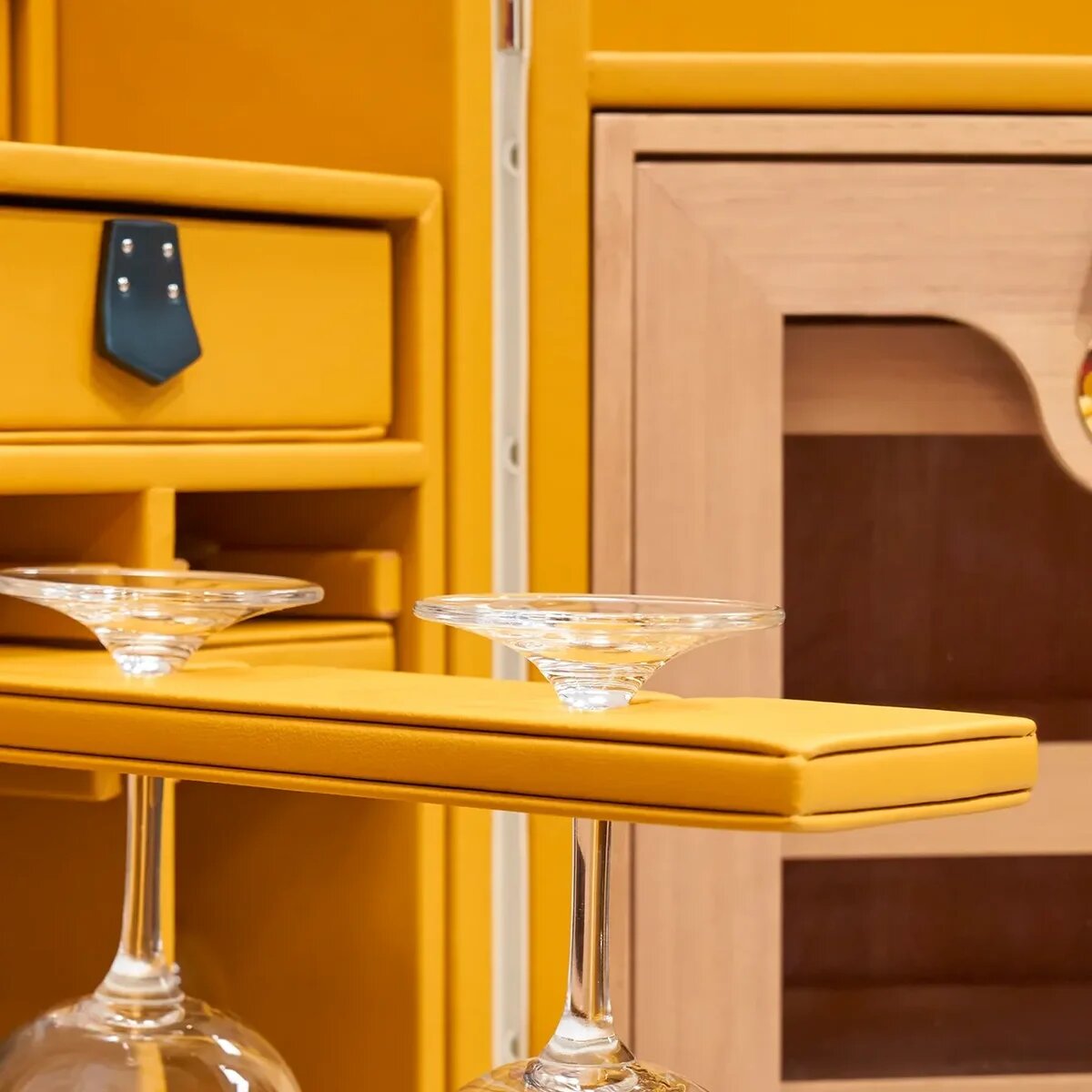
Glazing is chosen with care. Display fronts use UV-filtering glass so a service can be shown without bleaching the leaves behind it, while everyday tea drawers are kept solid and dark. Inside, lined compartments separate coffee from aromatic teas to prevent cross-scenting, and airtight caddies in graded sizes hold open stock. A raised niche presents the dallah and finjaan as the centrepiece they are, and a soft, low-tarnish lining protects silver between gatherings. The same discipline of dust-sealing and humidity control that governs a bench-made bar cabinet applies equally here.
Arranging Gahwa and Tea for the Majlis
Presentation is a matter of sequence. Place the dallah and warming vessels at the centre, finjaan cups within easy reach, and sugar, saffron and cardamom in small lidded vessels alongside. Tea caddies follow by type—black, green, herbal—each labelled and dated so the household serves by provenance rather than guesswork.
A well-planned cabinet keeps the most-used items at standing height and reserves lower drawers for stock and seasonal pieces. For households that entertain on a larger scale, pairing the tea cabinet with a majlis storage and display scheme or a glazed display island allows porcelain and the trophies of travel to be shown without crowding the service itself.
How to Choose a Tea Cabinet: A Checklist
- Seal and climate: gasket-set doors and, for fine teas, a humidity buffer holding 50–55%RH.
- Light control: UV-filtering glass on any display front; solid, dark storage for open leaf.
- Separation: isolated compartments so coffee and aromatic teas do not cross-scent.
- Vessel provision: a dedicated niche for the dallah, with secure stacking for finjaan and pots.
- Silver care: an anti-tarnish lining for trays and serving pieces.
- Proportion: sized to the room and the scale of hospitality, with everyday items at hand height.
- Materials: bench-made timber and considered hardware that will earn a patina, not date.
Caring for a Tea and Coffee Collection
Decant open tea into airtight caddies rather than leaving it in retail packaging, and keep only a few weeks of stock in active rotation. Date each caddy and clean it fully before refilling, so old oils are not layered over fresh leaf. Wipe glazing with a dry cloth and keep liquids and steam away from timber joints.
Silver benefits from occasional gentle polishing and from resting on a tarnish-inhibiting lining between uses. Porcelain should be shelved with felt separators to prevent glaze-on-glaze wear. Maintained this way, a tea cabinet holds its contents—and its own finish—in good order for decades.
Frequently Asked Questions
What is a tea cabinet used for in a Gulf home? A tea cabinet stores and presents gahwa, loose-leaf tea, sugar, spices and the porcelain and silver used to serve them. In the UAE, where hospitality is frequent and ceremonial, it keeps these items organised, climate-protected and ready for the majlis, rather than scattered through a warm kitchen.
How should loose-leaf tea be stored in the UAE's humidity? Decant tea into airtight, opaque caddies and keep them in a sealed, shaded cabinet held near 18–22°C and 50–55%RH. This limits moisture uptake, slows oxidation and protects volatile aromatics. Keep only a few weeks of open stock in rotation, and store coffee separately to prevent cross-scenting.
Can a tea cabinet display porcelain without damaging it? Yes, provided the display front uses UV-filtering glass and the interior is sealed against dust and humidity. Felt separators prevent glaze wear, and a stable temperature avoids the thermal cycling that crazes fine glazes over time. Everyday leaf, by contrast, is better kept behind solid, dark fronts.
Where can I commission a bespoke tea cabinet in Dubai? SIRAE commissions bench-made tea and coffee cabinets for UAE and wider Gulf homes, specified around your collection, your service and your room. Pieces can be tailored in timber, lining and climate control. Private consultations are held at the SIRAE showroom in Umm Suqeim, Dubai.
A Cabinet Made for Your Table
A tea cabinet should be measured against the way your household actually receives guests—the teas you keep, the silver you serve with, the room in which welcome is offered. To commission a piece considered around your collection and your majlis, arrange a private consultation at the SIRAE showroom at Al Shafar Complex, Umm Suqeim 1, Dubai, or speak with our team on +971 55 886 6180 or info@siraecasa.com.

Leave a comment
This site is protected by hCaptcha and the hCaptcha Privacy Policy and Terms of Service apply.