
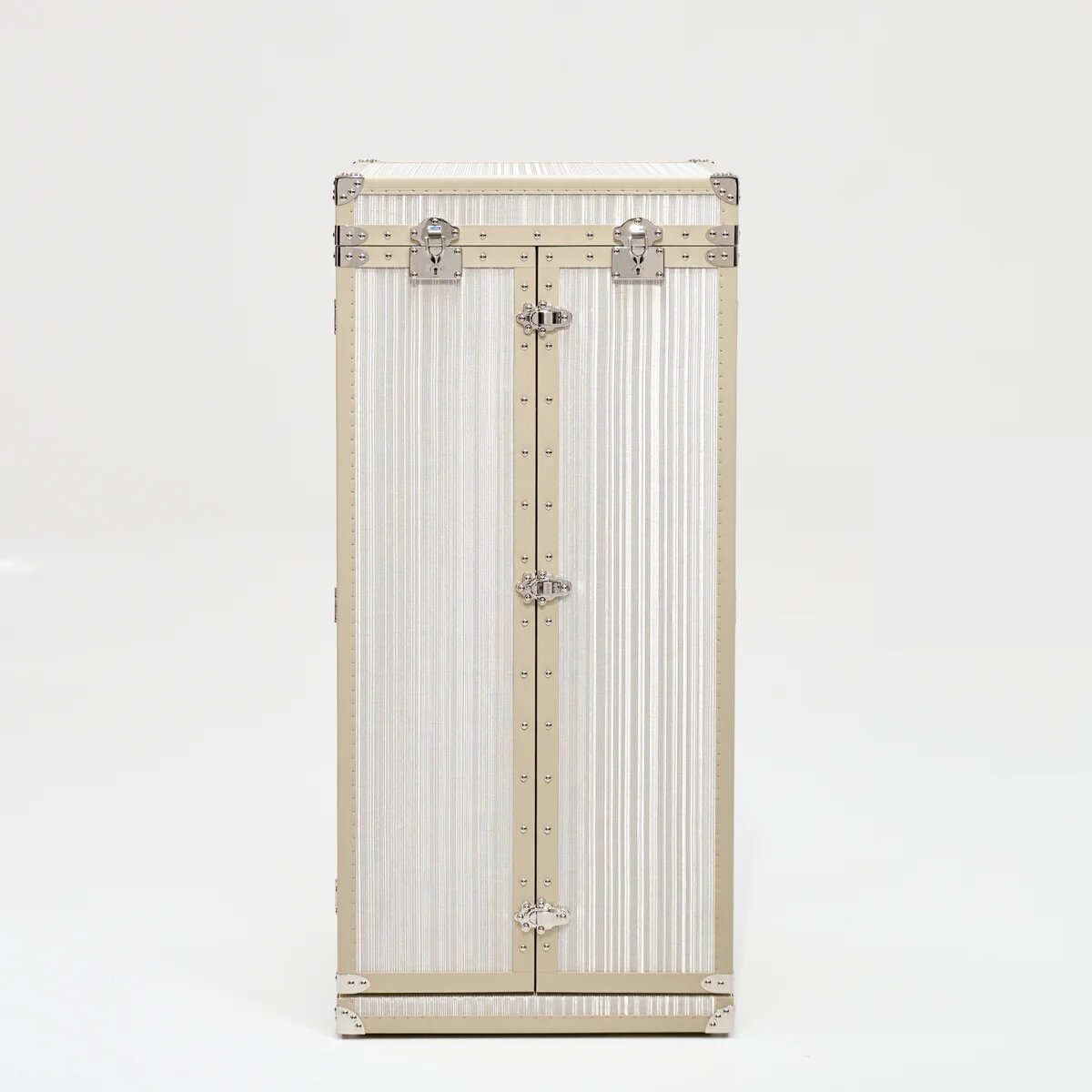
The Vinyl Record Cabinet: Storage & Display in Dubai
The Vinyl Record Cabinet: Storage & Display in Dubai
A vinyl record cabinet is, in Dubai, as much a conservation measure as a piece of furniture. The Gulf's heat, coastal humidity and fine dust are unkind to records, styli and valve electronics, and a collection left on open shelving degrades faster than its owner expects. A considered cabinet keeps a vinyl library playable and presented with the gravity it deserves.
Why a Vinyl Record Cabinet Matters in the Gulf
Records are physical media, and physics is unsentimental. A vinyl record cabinet built for the UAE climate addresses the three pressures that shorten a collection's life—warmth, moisture and particulate dust—while giving a turntable a stable, considered home. For the collector who has assembled pressings over decades, the cabinet is what protects that provenance.
There is also the matter of presence. A record collection is a portrait of its owner's taste, and a bench-made cabinet in a study, library or majlis lets that portrait be shown rather than boxed away. The best examples balance display with discretion: sleeves visible where wanted, electronics and cabling concealed.
What Heat, Humidity and Dust Do to Vinyl
Vinyl is thermoplastic. Sustained warmth—anything much above 25°C, and certainly the heat of an unconditioned room in a Dubai summer—softens it enough to invite warping, particularly when records are stored at a lean rather than upright. Once a disc has warped, it cannot be reliably recovered.
Humidity attacks differently. Moisture encourages mould on cardboard sleeves and inner liners, and condensation on a cold record drawn into a warm room can leave residue in the grooves. Dust, ever-present in the Gulf, settles into those grooves and accelerates wear on both record and stylus. Stable temperature, controlled humidity around 45–50%RH and a sealed, dust-resistant interior are the countermeasures.
The Anatomy of a Considered Record Cabinet
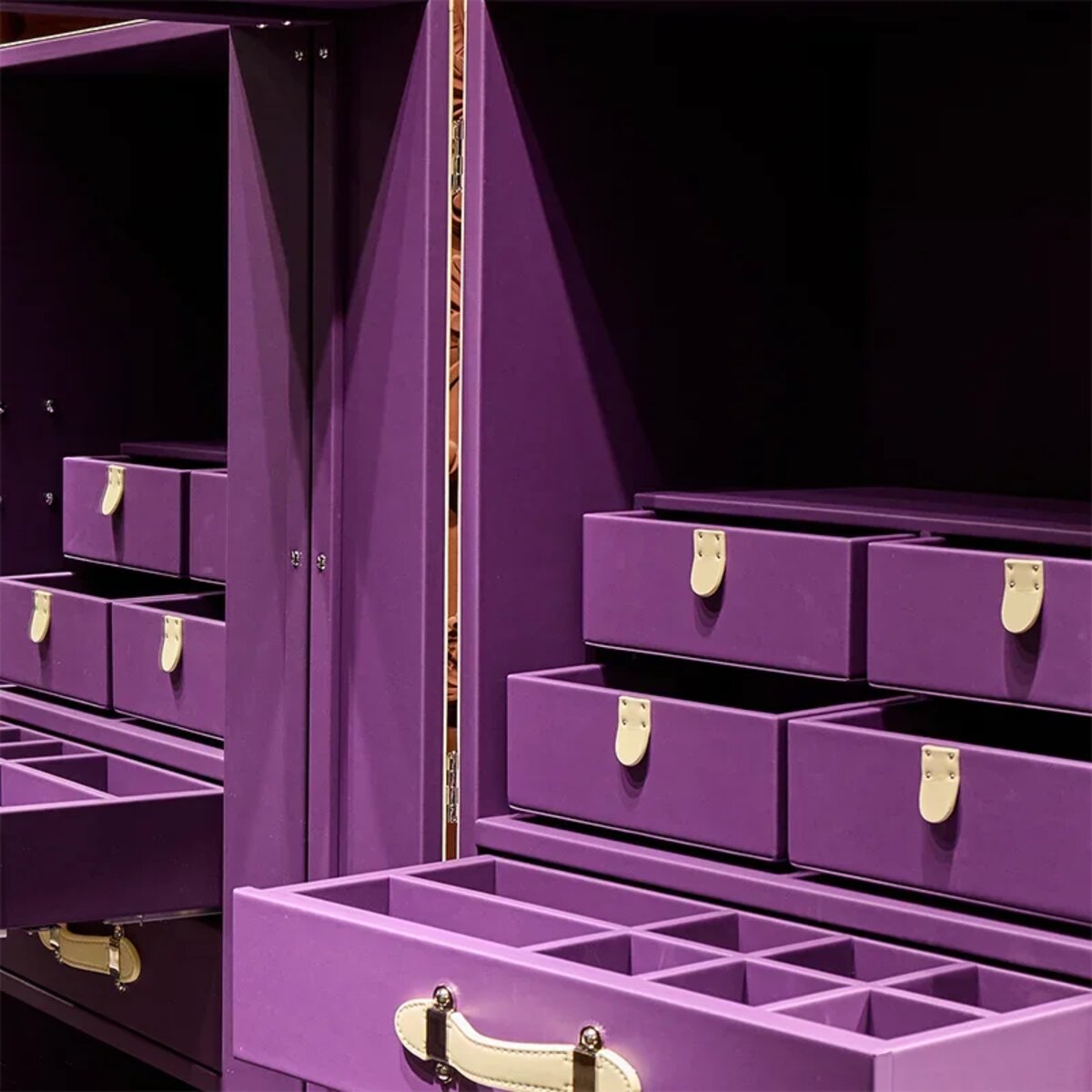
A record cabinet earns its name in the details. Records must be stored vertically, supported so they bear their own weight evenly; divided compartments prevent the leaning that causes warp, and adequate spacing lets sleeves be drawn without abrasion.
Construction is sealed against dust, with soft-closing fronts and, where a collection warrants, light humidity buffering. Display sections use UV-filtering glass to protect sleeve artwork and the records behind it from the fading that strong Gulf daylight causes. The same sealed, climate-aware construction found in a bench-made bar cabinet translates naturally to media storage, while concealed cable runs and ventilated sections keep the installation tidy and cool.
Housing the Turntable and Hi-Fi
A turntable is a precision instrument, and footfall or speaker vibration reaching it through the cabinet will be heard as it plays. A considered record cabinet isolates the deck—on a decoupled shelf or isolation feet—so that vibration is not transmitted into the stylus.
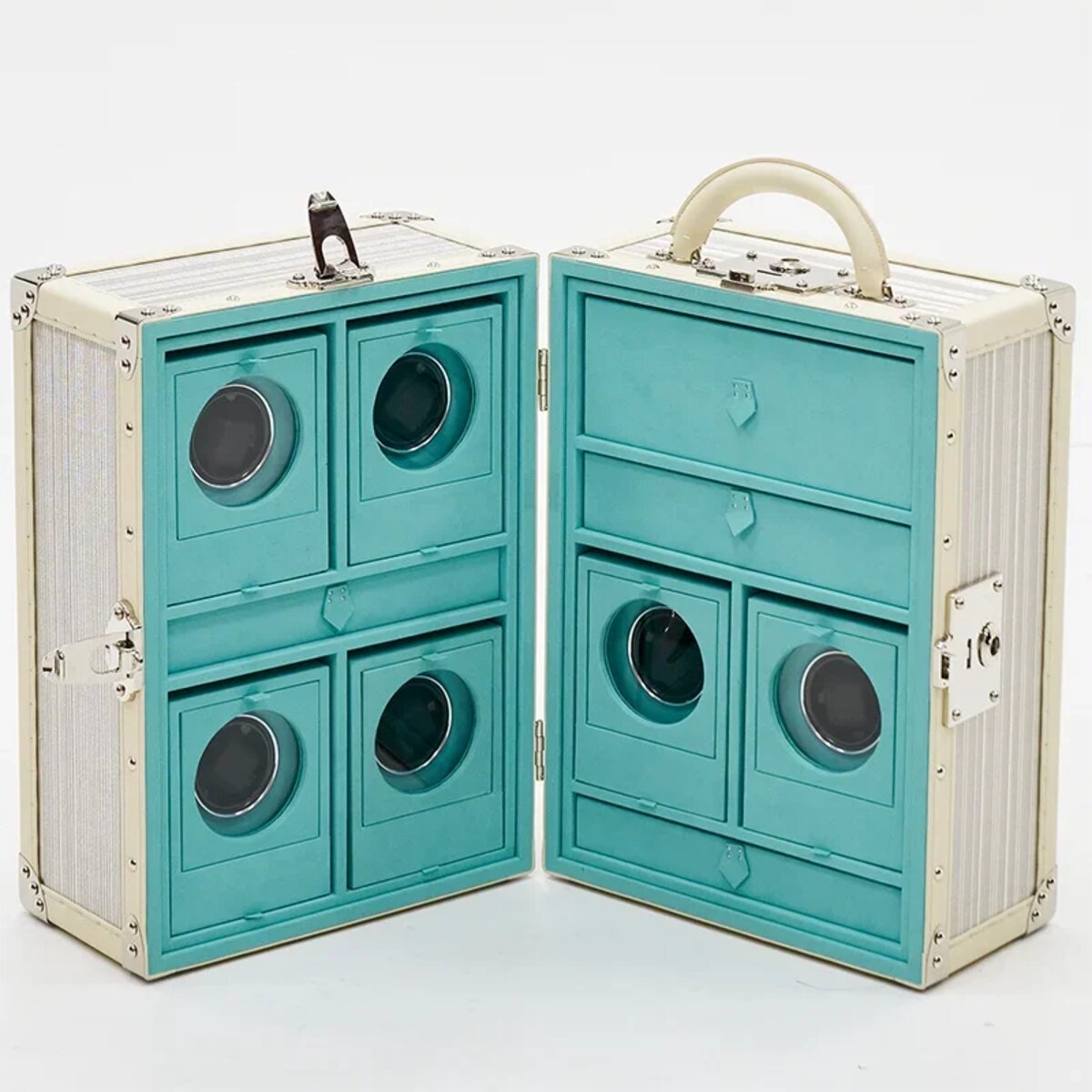
Electronics generate heat, and valve amplifiers especially must breathe. Ventilated compartments, rear cable management and adequate clearance keep equipment within its operating range even through summer. For the collector building a dedicated listening corner, the cabinet can be specified alongside a display scheme for the majlis or study so that hardware, records and the room read as one composition, or paired with a glazed display island for prized pressings.
How to Store and Arrange a Vinyl Collection: A Checklist
- Vertical, never stacked: store records upright with even support to prevent warping.
- Climate: keep the interior near 18–22°C and 45–50%RH, away from windows and vents.
- Dust control: sealed fronts and a low-dust interior; sleeve records in anti-static inners.
- Light: UV-filtering glass on any display front to protect artwork and discs.
- Isolation: a decoupled shelf or isolation feet beneath the turntable.
- Ventilation: open, rear-vented sections for amplifiers and valve equipment.
- Order: arrange by genre or alphabet, with most-played pressings at hand height.
Caring for Records and Equipment
Clean records before and after play with a carbon-fibre brush, and wet-clean older pressings periodically to lift dust from the grooves. Replace paper inner sleeves with anti-static liners, which shed less and hold moisture less readily, and keep outer sleeves out of direct sun to preserve the artwork.
Equipment rewards the same discipline: keep ventilation clear, check that the cabinet has not trapped heat around amplifiers, and have the stylus inspected for wear, since a worn tip damages every record it touches. Maintained in a considered cabinet, both collection and hardware will give decades of service.
Frequently Asked Questions
How should vinyl records be stored in the UAE climate? Store records vertically, upright and evenly supported, in a sealed cabinet held near 18–22°C and 45–50%RH, away from windows and air-conditioning vents. This prevents the warping that Gulf heat causes and the mould that humidity encourages, while a dust-resistant interior keeps grooves clean and reduces stylus wear.
Does a vinyl record cabinet need climate control in Dubai? For a modest collection, a sealed, well-placed cabinet away from heat and sun is often enough. For valuable or extensive libraries, light humidity buffering and stable temperature are worth specifying, because Dubai's summer warmth and coastal moisture act on vinyl, sleeves and electronics continuously over the year.
Can a record cabinet also house a turntable and amplifier? Yes. A well-designed record cabinet isolates the turntable on a decoupled shelf to keep vibration from reaching the stylus, and ventilates separate compartments for amplifiers and valve equipment. Concealed cable management keeps the installation tidy, allowing records, deck and hi-fi to sit as a single considered piece.
How many records can a bespoke cabinet hold? Capacity is specified to the collection. A commissioned cabinet can be sized from a few hundred to several thousand records, with divided compartments that keep discs upright and supported. Because it is built to the room, it can also reserve space for a turntable, equipment and future additions to the library.
A Cabinet for the Listening Room
A record cabinet should be drawn around the collection it will hold and the room in which it will be heard—the size of the library, the equipment, the place where listening happens. To commission a piece considered around your records and your space, arrange a private consultation at the SIRAE showroom at Al Shafar Complex, Umm Suqeim 1, Dubai, or speak with our team on +971 55 886 6180 or info@siraecasa.com.

Leave a comment
This site is protected by hCaptcha and the hCaptcha Privacy Policy and Terms of Service apply.