How to Pair a Coffee Table with Side Tables: A Coordinated Living Room (UAE 2026)
A coffee table and side table set that reads as intentional is not achieved by buying everything from the same catalogue page — it is achieved by understanding the three relationships that make occasional tables cohere: height tier, finish echo, and proportional weight. Get those right and a mixed set of two different collections looks more resolved than a matching set placed without thought. This 2026 guide covers the core pairing principles — matching versus mixed, metal and material coordination, height layering, white space in UAE-scale rooms, and multi-table layouts for the formal majlis — so your living room reads as designed, not assembled.

Matching Set or Curated Mix: Which Approach Works in UAE Interiors?
Quick Answer: A same-series coffee table and side table set guarantees visual cohesion but risks feeling flat in a large UAE living room or formal majlis. A curated mix — different scales, shared finish or material — delivers more depth, provided one design element is held constant as the thread. For most clients, the answer is a same-collection coffee table with side tables that echo one material or metal tone rather than replicate the full design.
The matching set argument is simple: when every piece comes from the same design language, the room requires no further editing. That simplicity is genuinely useful in compact apartments or guest-facing spaces where instant legibility matters. The risk is that matching sets in large rooms collapse visual interest — the eye has nowhere to travel. Gulf-scale living rooms, which often run to 60–80 m² with 3.5 m or higher ceilings, absorb identical repetition and return monotony.
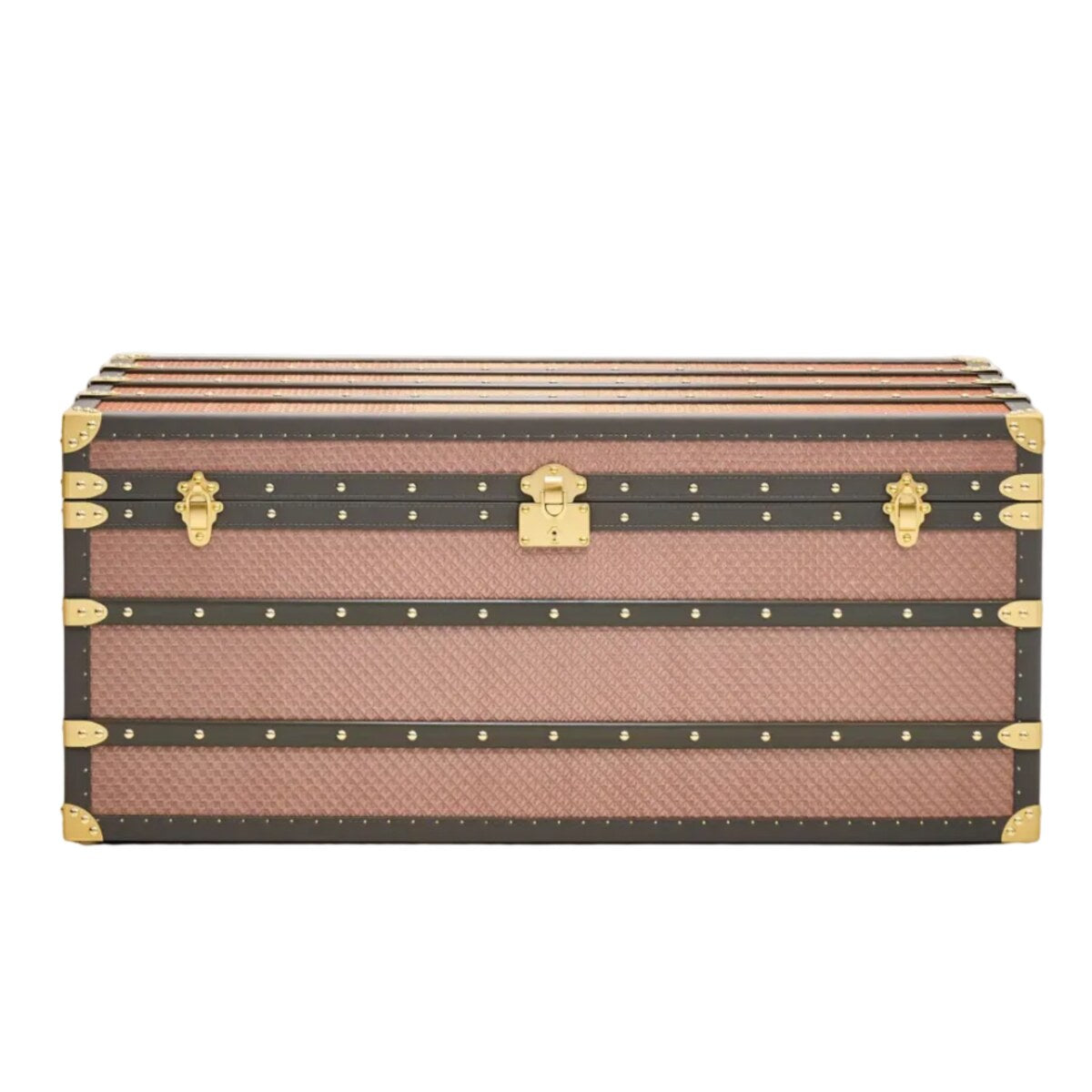
The curated mix solves this by keeping one thread constant — typically the metal finish or structural material — while varying silhouette and height. A woven copper-wire coffee table anchors the arrangement; a side table in frosted silver from the same Aurum Loom collection introduces a lighter tonal note without breaking the woven-metal language. The Aurum Loom Coffee Table – Antique Copper paired with the Aurum Loom Side Cabinet – Frosted Silver demonstrates this precisely: same construction method, same copper-wire weave, different metallic temperature — warm anchor with cool satellite.
How to Coordinate Metal Finishes Across a Coffee Table Set
Technical Verdict: The rule for mixing metal finishes in occasional furniture is one dominant, one accent — never three equals. A warm dominant (antique copper, brushed brass, aged bronze) can carry a cool accent (frosted silver, brushed nickel, pewter) in a ratio of roughly 70:30 without visual friction. Two warm tones or two cool tones of similar depth read as a mistake rather than a deliberate choice; two tones of clearly different temperature read as intentional contrast.
The practical reason this matters in UAE interiors is that living rooms frequently contain other metallic elements — window frames, light fittings, decorative accessories — so the table finishes enter an existing finish dialogue rather than creating it from scratch. Audit what is already in the room before selecting: if the pendant light over the seating group is brushed brass, a coffee table in antique copper extends that warm conversation; a side table in frosted silver introduces the contrast accent without competing with the ceiling element.
| Dominant finish | Compatible accent | Finish combination to avoid |
|---|---|---|
| Antique copper | Frosted silver, pewter, aged bronze | Polished chrome (too cold a jump) |
| Brushed brass | Smoked bronze, warm champagne | Bright nickel (creates a mismatch, not contrast) |
| Matte black | Antique copper, raw brass | High-gloss silver (clash of sheen level) |
| Frosted silver | White lacquer, soft gold | Dark bronze at equal proportion (no clear dominant) |
| Aged bronze | Cognac leather, dark copper | Stainless steel (reads as two different eras) |
Sirae's copper-wire and leather construction offers a third path: the woven-metal facade carries the finish story while a leather wrap or suede detail on the base reads as a warm neutral — so finish coordination happens between the metal tone and the room's textiles, not between two competing metals.

Height Layering: The Dimension Most Buyers Get Wrong
The Bottom Line: A side table should sit within 3–5 cm of the sofa arm height — the rule exists because that is the functional reach zone for a seated person setting down a glass. A coffee table typically runs 5–10 cm lower than sofa seat height. The common error is selecting all three pieces — sofa, coffee table, side table — from the same mid-level plane, which flattens the room's vertical rhythm and makes the furniture feel like it belongs to a waiting area rather than a composed interior.
Height layering across occasional tables creates what designers call visual cadence: the eye moves from the lower coffee table plane to the side table at arm height, and where a tall element exists — a floor lamp, a statement cabinet — the contrast reads as deliberate. In the formal Gulf majlis, where seating often runs around three walls at generous scale, a single coffee table level across the full depth of the room reads as institutional; introducing a second tier at side-table height opposite the sofa pulls the arrangement into something more residential and personal.
| Piece | Typical height range | Relationship to sofa |
|---|---|---|
| Sofa seat height | 42–48 cm | Reference point |
| Coffee table | 35–45 cm | 3–8 cm below seat height |
| Side / end table | 55–68 cm | Approx. level with sofa arm (55–65 cm) |
| Accent table (tall) | 70–85 cm | Reading surface; suits high-arm or wingback seating |
| Nesting tables (low set) | 35–50 cm stacked | Secondary surface, pulled out as needed |
The Aurum Loom Coffee Table – Monochrome sits at the lower coffee table plane in a matte black and woven-metal construction that disappears cleanly under the side table's visual weight — the two-tier system works because the coffee table reads as ground, not as a competing piece.
Proportion, Scale and White Space in Gulf Living Rooms
Quick Answer: In a UAE living room or formal majlis, occasional tables that would read as correctly proportioned in a European apartment often disappear — the volume absorbs them. Size up: a coffee table for a Gulf living room typically runs 120–150 cm long; side tables at 50–65 cm wide provide enough surface to register at scale. The equally important decision is how much floor to leave uncovered — white space between pieces allows the room to breathe and makes each piece legible as a deliberate choice rather than a fill.
Proportion is a relationship, not an absolute size. A coffee table should span roughly two-thirds of the sofa length it faces — so a 240 cm sofa anchors a 150–160 cm table; a 180 cm sofa anchors a 110–120 cm piece. Side tables at one-third to one-half of sofa arm length in depth read correctly in most plans. When a room has a secondary seating group or a dedicated nesting corner — common in majlis planning where one cluster faces the main seating and another serves a window bay — the second group can carry its own smaller coffee table at a reduced scale, which creates a room-within-a-room rather than one continuous furniture field.
White space between the coffee table and the nearest wall or cabinet should be a minimum of 45 cm for passage; 60–75 cm for comfortable circulation in an entertaining space. UAE villas typically allow for the 60–75 cm target without difficulty, but apartment living rooms in Dubai frequently cannot sustain both a 150 cm coffee table and a full side table pair without compromising circulation. In those cases, a single off-centre side table paired with a nesting set under the coffee table provides surface when needed without permanently occupying the floor.

Multi-Table Layouts for the Formal Majlis
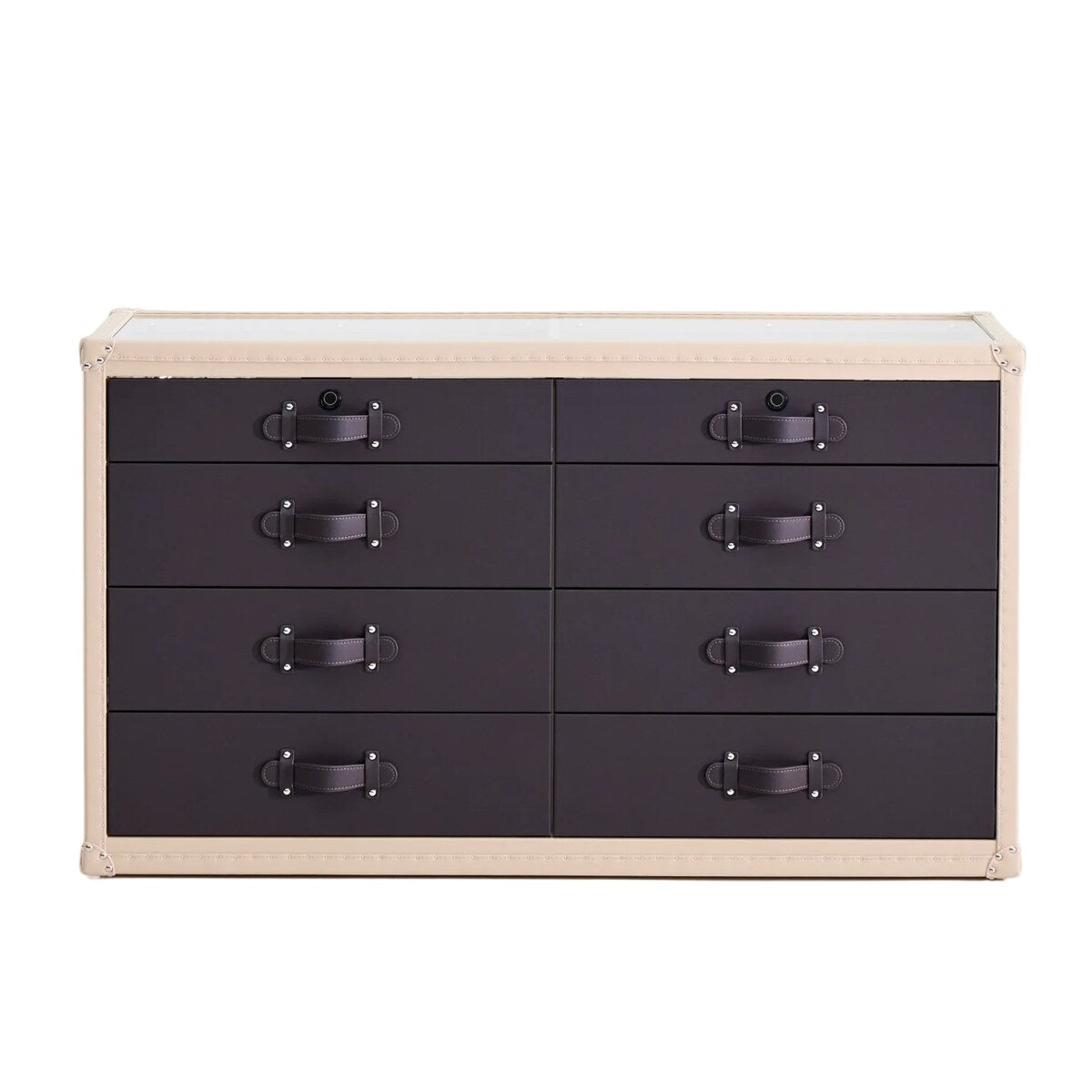
Technical Verdict: A traditional formal majlis — seating arranged around three or four walls, often 8–14 people — needs occasional furniture at multiple points around the perimeter, not a single central coffee table. The correct approach is a central anchor piece in the open floor area, secondary side tables or nesting sets at each sofa section, and where the majlis has a focal wall (fireplace, display cabinet, or artwork), a console-height accent table there that bridges the seating and vertical element. The Heritage Luxe Tallboy Cabinet – Noir & Crème serves exactly this function: its vertical proportion and storage capacity make it the focal-wall piece that also provides surface and concealed storage without occupying the open floor plan.
For a standard U-shaped majlis seating group, the layout runs: one large coffee table (120–150 cm) in the open centre, one side table at each sofa arm (two or three tables total depending on room depth), and one accent or display piece on the focal wall. This five-to-six-piece occasional table arrangement sounds like a lot until you are in the room — the majlis scale demands it, and a single central table with bare sofa arms reads as incomplete regardless of how beautiful that table is.
Gulf interiors also benefit from nesting tables tucked under the coffee table: pulled out when service requires an extra surface, returned invisibly when not in use. This doubles the available surface without permanently increasing the furniture footprint, which matters when the same room serves as both a formal majlis for large gatherings and a daily family sitting room.
Frequently Asked Questions
Should a coffee table and side tables match exactly? They do not need to match exactly, but they need to share at least one design element — finish, material, or construction method — so the arrangement reads as intentional rather than collected. The most resolved approach in 2026 UAE interiors is a same-collection coffee table and side table that share construction but differ in tone: warm and cool variants of the same metal family, for instance, rather than identical duplicates or entirely unrelated pieces.
How high should a side table be relative to a sofa? Within 3–5 cm of the sofa arm height, so a seated person can set down a glass without reaching up or bending down. Most sofa arms run at 55–65 cm; a side table in the 58–65 cm range covers the majority of sofas. If the sofa has a very low arm or no arm (floor-cushion majlis seating), scale the side table down to 45–50 cm so the surface relationship still works.
Can you mix antique copper and frosted silver in the same occasional table set? Yes — mixed-metal occasional furniture reads well when one finish is dominant and the other is an accent. Antique copper and frosted silver are opposite in temperature (warm versus cool) but share a hand-crafted, slightly aged character that prevents them from clashing. This is the pairing logic behind Sirae's Aurum Loom collection: the woven-copper coffee table and frosted-silver side cabinet are designed to coexist in the same scheme.
How many side tables does a majlis need? For a standard U-shaped majlis seating group of 10–14 seats, two to three side tables plus a central coffee table covers the full perimeter — roughly one side table per sofa section. Large L-shaped or wraparound formats may need four, particularly where the room depth means the central coffee table is out of easy reach for guests on the far seating section.
Visit the Sirae Showroom in Dubai
Coffee table and side table proportions, finish temperatures and height relationships have to be read in a physical room — a photograph compresses scale and drains the warmth from metal tones. To work through your specific floor plan, sofa arm height, and existing finish palette, book a private appointment at the Sirae showroom, Al Shafar Complex, Umm Suqeim 1, Dubai. Call +971 55 886 6180 or write to info@siraecasa.com, and our team will map your occasional table layout across the Aurum Loom and Heritage Luxe collections in full scale.


اترك تعليقًا
This site is protected by hCaptcha and the hCaptcha Privacy Policy and Terms of Service apply.