
Jewellery Insurance & Valuation in the UAE: A Collector's Guide (2026)
Jewellery Insurance & Valuation in the UAE: A Collector's Guide (2026)
Jewellery insurance is the single most misunderstood line in a Gulf collector's financial picture — most UAE residents assume the gold and diamonds in their wardrobe are fully covered by home contents insurance, and most are wrong. A standard UAE home contents policy typically caps an undeclared single item at around AED 10,000, which is a fraction of one good ring. The pieces only become properly covered once they are individually declared, valued by a certified appraiser, and documented well enough to survive a claim. This guide covers how jewellery insurance works in the UAE, how valuation and appraisal certificates are produced in Dubai, how often a collection should be re-valued, what insurers ask for after a theft, and how custody-grade storage and provenance documentation hold the whole chain together. It is informational, not personalised advice.

Is Jewellery Covered by Home Insurance in the UAE?
Quick Answer: Partially, and rarely enough. A UAE home contents policy covers jewellery as part of general "personal belongings," but unspecified items are subject to a single-article limit — often around AED 10,000 — and an overall valuables sub-limit. To cover a fine ring, a diamond set or a luxury watch for its true value, you must declare each high-value item separately to the insurer, supported by a valuation. Anything above the limit that you have not declared is simply not paid out in full.
This is the gap that catches collectors. The marketing for home contents insurance in Dubai implies broad protection, but the wording does the limiting. Jewellery, watches, and other "valuables" are almost always grouped under a sub-category with its own ceiling, and within that ceiling each individual piece is further capped unless named. A villa policy might insure AED 500,000 of contents in total yet pay only AED 10,000 against the theft of a AED 120,000 watch, because the watch was never specified.
There are, broadly, three ways UAE residents arrange cover, and they differ sharply in how a fine collection is treated:
| Cover type | How jewellery is treated | Best suited to |
|---|---|---|
| Standard home contents (personal belongings) | Grouped under a valuables sub-limit; single-article cap (often ~AED 10,000) on undeclared items | Everyday pieces of modest value |
| Home contents with specified / scheduled items | Each named piece insured to its declared (valued) amount; usually requires a valuation | A few significant items — engagement ring, key watch |
| High-value / private-client all-risks | Broad worldwide cover for the whole collection, accidental loss and damage included | Substantial fine-jewellery and watch collections |
The practical takeaway: the more your collection is worth, the further up this table you need to be. A single engagement ring may be handled by scheduling it onto a home policy; a multi-piece collection of fine jewellery and watches is usually better served by a dedicated high-value or "private client" all-risks arrangement. Which is right for you depends on your insurer's wording and your collection — confirm it directly with a licensed provider.
How Do You Value and Appraise Jewellery for Insurance?
Technical Verdict: Insurance valuation is a specialist appraisal that establishes a piece's retail replacement value — what it would cost to replace the item as new, today — and documents it in a certificate detailed enough that an insurer can underwrite it and replace it after a loss. In the UAE this is done by a qualified gemologist, ideally GIA-credentialled, after a physical inspection of the item. It is a different number from what you paid and different again from what you could sell the piece for.
Three values attach to the same piece, and confusing them is the most common appraisal mistake:
- Retail replacement value — the cost to buy an equivalent new piece at current retail. This is the figure insurers want, because it is what they will spend to make you whole. It is usually the highest of the three.
- Market / resale value — what the piece would realistically fetch if sold second-hand. Almost always lower than replacement value, and the relevant number for estate, division-of-assets or sale purposes, not insurance.
- Purchase price — what you actually paid, which drifts away from both of the above as gold and gemstone prices and exchange rates move.
A proper insurance valuation report describes the piece in forensic detail: metal type and weight, diamond carat, colour, clarity and cut, the cut and quality of coloured stones, the setting and design, hallmarks, and a clear photograph. For diamonds it should reference grading laboratory data (GIA being the global benchmark). That specificity is what lets an insurer replace "this ring" rather than argue about "a ring."
In Dubai, appraisals are carried out by certified gemologists — one well-known UAE practice is led by a GIA graduate gemologist and former office-holder of the GIA Alumni Association's UAE chapter — and only after a physical inspection; nobody credible values fine jewellery from photographs alone. Indicative Dubai pricing runs around USD 100 per item for small collections, with tiered or day-rate pricing for larger ones. Figures vary by valuer; treat these as orientation, not a quote.

How Often Should You Re-Value a Jewellery Collection?
The Bottom Line: Re-value on a regular cadence and after any material change, because a stale valuation can leave you under-insured. The most cautious guidance is an annual appraisal; common practice sits at every three years, and some auction-house and valuer guidance stretches to roughly every five. In the Gulf, where gold prices and the dirham-linked cost of imported stones move with global markets, the case for the shorter end is real. Confirm the interval your specific policy requires — some insurers set their own.
The reason valuations expire is that the replacement cost they describe is a moving target. Gold trades daily; a sustained run in the bullion price can lift the replacement value of a heavy gold-and-diamond set well above the figure on a three-year-old certificate. Coloured-gemstone and fine-diamond prices shift with supply and demand. And because the UAE imports its precious metals and stones and prices them against a dollar-pegged dirham, currency moves feed through to retail tags. A collection valued in a soft market and never revisited can quietly become materially under-insured — and under-insurance is discovered at exactly the wrong moment, during a claim.
Two triggers should prompt a re-valuation regardless of the calendar:
| Trigger | Why it matters | Action |
|---|---|---|
| Scheduled interval (1–3 yrs) | Metal and stone prices drift; replacement cost rises | Book a fresh appraisal; update the schedule with your insurer |
| New acquisition | New piece is undeclared and effectively uninsured above the single-article limit | Value and declare before wearing in public |
| Alteration or repair | Resizing, re-setting or stone replacement changes the piece and its value | Re-appraise the altered piece |
| Inheritance / gift | No purchase record exists to anchor value | Commission a valuation to establish replacement value and provenance |
| Major market move | Gold or gemstone prices have jumped since last valuation | Refresh the relevant pieces |
Keep superseded certificates rather than discarding them — the dated trail of valuations is itself a form of provenance, showing continuous ownership and how value has been tracked over time.
What Do UAE Insurers Require — Documentation and the Claim
Quick Answer: To insure a piece you generally need a valuation certificate (for existing jewellery) or the original purchase invoice (for recent buys), proof of the appraiser's credentials, and high-resolution photographs. To claim after a loss in the UAE you typically need a police report, and for theft most insurers expect evidence of forced entry. The documentation you assemble before anything happens is what determines whether a claim is paid quickly, paid partially, or disputed.
On the underwriting side, expect an insurer to ask for some combination of the following before a high-value piece is accepted onto a policy:
- A valuation certificate from a recognised appraiser — or the original purchase invoice / detailed sales receipt if the item is newly bought.
- Proof of the appraiser's certification, so the valuation can be relied upon.
- High-resolution photographs of each piece, ideally showing distinguishing detail.
- Grading reports (e.g. GIA) for significant diamonds, where available.
On the claims side, UAE practice is documentation-heavy and the burden sits with you:
- A police report is generally required for theft or loss; in the UAE this is normally the first step after discovering a loss.
- Evidence of forced entry is commonly expected for a theft claim — many policies will not pay where there is no sign of a break-in, which is precisely why how and where you store pieces matters.
- Your pre-loss file — valuation, photographs, purchase records — is what lets the insurer identify and replace the exact item rather than negotiate downward.
A worked example shows why the file matters. A resident reports a stolen watch with only a faded receipt: the insurer has no independent valuation, no current photograph, and no grading detail, so settlement is slow and contested. A resident with a current valuation certificate, dated photographs, the original box and papers, and a police report has effectively pre-proven the claim; the insurer's job becomes administrative. The difference is preparation, not luck. (Specific requirements vary by insurer — confirm yours.)
Where Storage Meets Insurance: Custody-Grade Documentation at Home
Technical Verdict: Storage and insurance are two ends of one chain. Insurers price risk partly on how securely pieces are kept, theft claims can turn on evidence of forced entry, and valuation depends on items being preserved in known condition with their papers intact. A custody-grade storage piece does three jobs at once: it physically protects the collection, it keeps each item's provenance documentation — certificates, receipts, grading reports, box and papers — with the item rather than scattered, and it preserves condition in the Gulf's demanding indoor climate.
The provenance point is the one collectors underrate. A fine piece is worth more, values more reliably, and claims more cleanly when its paper trail is complete and stored with it: the original grading report, the purchase invoice, the sequence of valuation certificates, and a watch's box and papers. When that documentation lives in a drawer in another room — or in three different rooms — it tends to be incomplete exactly when an appraiser or insurer needs it. A considered jewellery trunk or cabinet consolidates the objects and their evidence in one secured place.
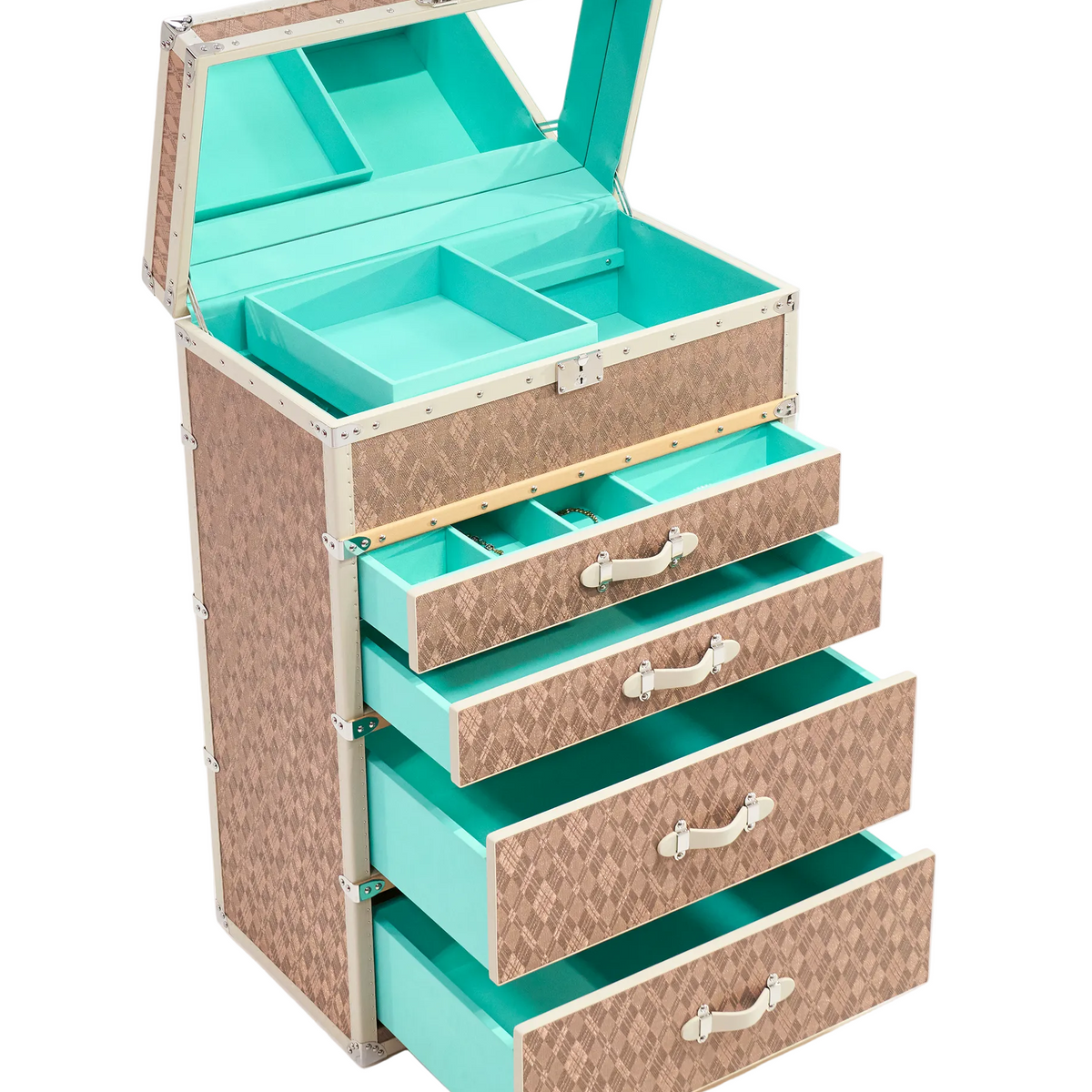
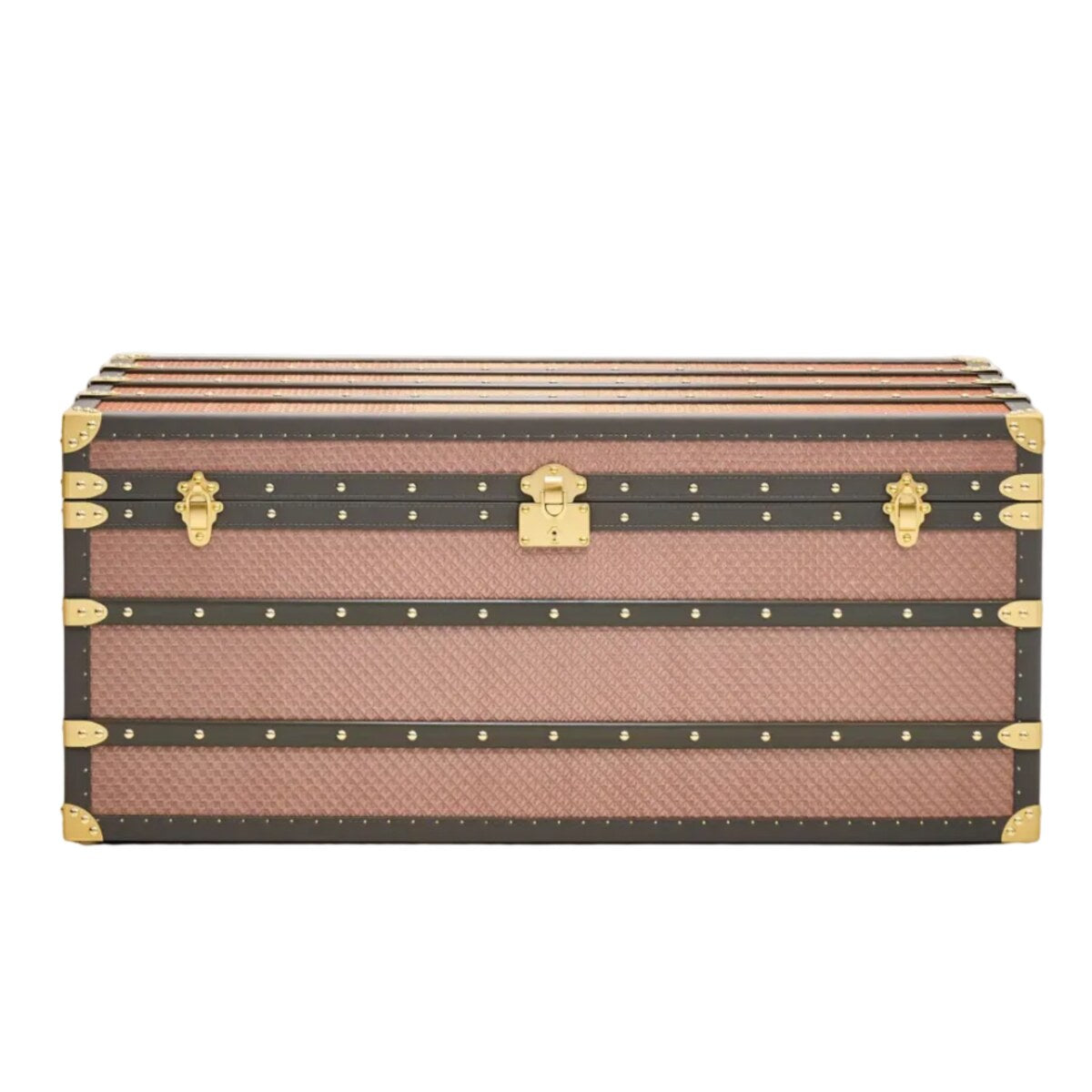
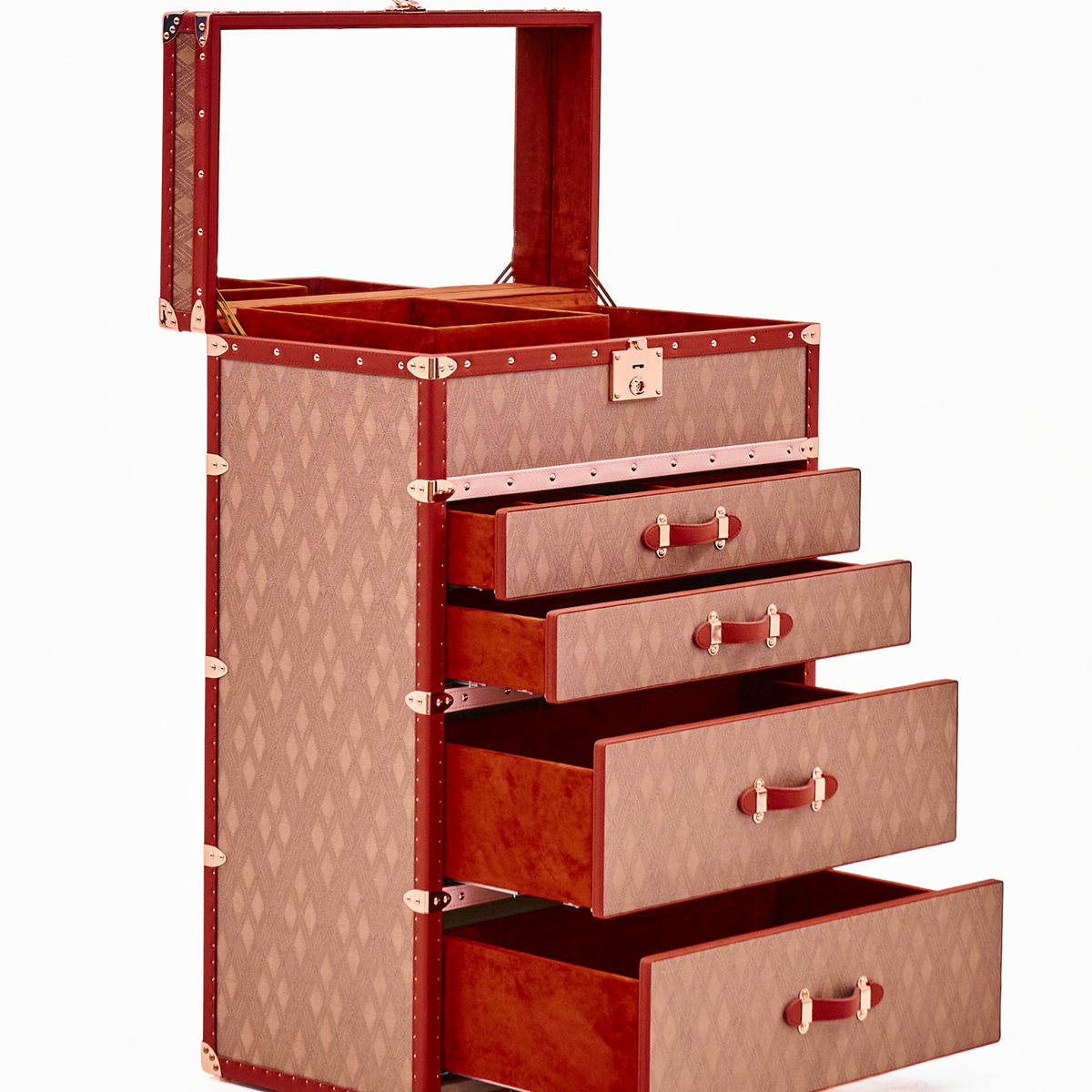
Sirae builds storage to this custody-grade standard. The hand-woven copper-wire Aurum Wire · The Oasis Jewelry Cabinet - Dune Teal and the larger Aurum Wire · The Grand Atelier Jewelry Cabinet - Anemone Purple organise rings, fine chains, watches and certificates within a single dimensionally stable case, while the Velvet Atelier · The Boudoir Jewelry Cabinet - Blush Rose lines its compartments in soft velvet that protects polished surfaces and gemstone settings from abrasion. Climate matters here in a way it does not in cooler markets: Gulf summer humidity runs high while air conditioning swings indoor air dry, and that cycling tarnishes unprotected silver and white-gold settings, dries leather watch straps and loosens adhesives. Enclosed, lined, dimensionally stable storage keeps pieces in the condition your valuation describes — which is the condition an insurer expects to replace.

None of this replaces the security measures your insurer specifies — a safe, alarm or vault where required. It complements them: the home-safe-or-vault decision governs theft risk, while custody-grade organisation governs condition and documentation. Read together, they are what turn a valuable collection into an insurable, claimable one.
Frequently Asked Questions
Does home insurance cover jewellery in the UAE? Home contents insurance in the UAE covers jewellery only up to limits. Undeclared items typically fall under a single-article cap — often around AED 10,000 — and an overall valuables sub-limit, which rarely reflects a fine piece's value. To cover high-value jewellery or a luxury watch for its true worth, you must declare each item separately to the insurer, usually supported by a valuation certificate. Above the limit, anything not specifically declared is generally not paid in full. Limits and wording vary by insurer, so confirm the detail in your own policy.
How much does a jewellery valuation cost in Dubai? In Dubai, insurance valuations are typically priced per item — indicatively around USD 100 per piece for smaller collections — with tiered or day-rate pricing for larger collections appraised in one visit. The appraisal must follow a physical inspection of each item by a certified gemologist, ideally GIA-credentialled, and produces a report stating the retail replacement value with full descriptive detail and a photograph. Pricing varies by valuer and by the size and complexity of the collection; treat published figures as a guide and request a quote.
How often should jewellery be re-valued for insurance? Guidance ranges from annually at the most cautious to every three years in common practice, with some valuer and auction-house guidance extending to roughly every five years. In the UAE, where gold prices and the dirham-pegged cost of imported stones track global markets, the shorter interval is well justified. Re-value sooner after any new acquisition, alteration, repair or inheritance, or after a major move in metal or gemstone prices. Some insurers set their own revaluation requirement, so check your policy wording.
What documents do I need to insure and claim on jewellery in the UAE? To insure a piece, insurers generally ask for a valuation certificate (or the original purchase invoice for new items), proof of the appraiser's certification, and high-resolution photographs; grading reports such as GIA help for significant diamonds. To claim after a loss, UAE practice typically requires a police report, and for theft most insurers expect evidence of forced entry. Keeping valuation certificates, receipts, grading reports and photographs together with the pieces makes both underwriting and claims far smoother. Requirements vary by insurer — confirm yours.
Visit the Sirae Showroom in Dubai
Jewellery insurance is only as strong as the documentation and storage behind it. To see how custody-grade jewellery trunks and cabinets keep your collection — and its valuation certificates, receipts and grading papers — protected and together in the Gulf climate, book a private appointment at the Sirae showroom, Al Shafar Complex, Umm Suqeim 1, Dubai. Call +971 55 886 6180 or write to info@siraecasa.com, and our team will walk you through storage built to preserve both the pieces and the paper trail that insures them.

اترك تعليقًا
This site is protected by hCaptcha and the hCaptcha Privacy Policy and Terms of Service apply.