
Carrying Gold from the UAE to India: Customs Allowance, Duty & Safe Storage (2026)
Carrying Gold from the UAE to India: Customs Allowance, Duty & Safe Storage
Carrying gold from the UAE to India is one of the most common — and most misunderstood — journeys for the Gulf's large Indian expat community, and the rules changed materially in 2026. The single mistake travellers make is assuming the old value-based caps still apply; they do not. Under the Customs Baggage Rules announced in India's Union Budget 2026, the duty-free allowance is now a clean weight-based limit that differs by gender and depends on how long you have lived abroad. This guide sets out the current gold customs limit for India, the duty on anything above it, the declaration discipline at the red channel — and, just as importantly, which pieces you sensibly carry and which heirloom gold you leave in secure custody at home in the UAE.
What Is the Gold Customs Limit for India in 2026?
Quick Answer: As of 2026, a female passenger may bring up to 40 grams of gold jewellery into India duty-free, and a male passenger up to 20 grams — provided they have resided abroad for more than one year and arrive by air or sea (not by land). The previous monetary value caps (roughly INR 1,00,000 for women and INR 50,000 for men) have been removed; the allowance is now purely weight-based, which simplifies compliance for UAE-based Indian passengers.
The shift matters because, at recent gold prices, the old value caps translated to only around three to six grams — far below a single bridal bangle. The 2026 rule decouples the allowance from the daily gold rate, so a known weight of worn jewellery is now predictable rather than tied to a fluctuating valuation. This is a genuine easing for the Indian community in Dubai, Abu Dhabi and Sharjah who travel home with personal jewellery.
Two qualifications are essential. First, the allowance covers jewellery — articles of adornment ordinarily worn, whether studded or not. It does not cover gold bars, biscuits or coins, which carry no duty-free exemption and are taxable from the first gram. Second, the "more than one year abroad" condition is strict; passengers who have spent less time outside India do not receive the same treatment.
Please note: Indian customs allowances, duty rates and eligibility rules change — and figures vary between intermediaries. Always confirm the current rules with Indian Customs (CBIC) at cbic.gov.in before you travel, and treat this guide as orientation, not legal advice.
Gold Allowance for Indian Passengers: Male vs Female vs Children
The Bottom Line: The duty-free gold allowance is gendered and tied to residence duration. Female passengers receive double the male allowance, children are generally assessed against the same gender-based limits (not given a separate bonus), and the eligibility gate is twelve continuous months abroad. Knowing your exact band before you pack prevents an unexpected red-channel conversation on arrival.
The table below summarises the position most commonly reported for 2026. Because intermediaries differ on the precise slab figures, treat the duty percentages as indicative and confirm with CBIC.
| Passenger | Duty-free jewellery allowance | Residence condition | Notes |
|---|---|---|---|
| Female passenger | Up to 40 g gold jewellery | More than 1 year abroad | Value cap removed; weight-based only |
| Male passenger | Up to 20 g gold jewellery | More than 1 year abroad | Half the female allowance |
| Child (Indian origin) | Assessed on gender-based limit | Same residence test applies | No separate child top-up in most readings |
| Abroad 6 months–1 year | Reduced / concessional treatment | Shorter stay | Often taxable from the first gram at a concessional rate |
| Abroad under 6 months | No duty-free jewellery allowance | Short stay | Full applicable duty applies |
A few practical points follow from this. A couple travelling together effectively pools 60 grams of duty-free headroom (40 + 20), which covers a meaningful personal set but rarely a full bridal collection. Families should calculate each eligible traveller's band separately rather than assuming one combined figure. And anyone who has been in the UAE for less than a year should expect to pay duty even on modest worn jewellery — a frequent surprise for newer expats heading home for a wedding.
How Much Duty on Gold Above the Free Allowance?
Technical Verdict: Gold carried beyond your duty-free band — and all gold bars, coins and biscuits — is dutiable. For eligible long-stay passengers, a concessional rate of roughly 6% is commonly applied to excess jewellery up to 1 kilogram per passenger, while gold in bar or coin form attracts a higher effective duty (frequently cited around 13–15% inclusive of cess and surcharge). The maximum a single passenger may bring, on payment of duty, is 1 kg.
The duty stack in 2026 is layered: a Basic Customs Duty, an Agriculture Infrastructure and Development Cess, and a Social Welfare Surcharge combine into the effective rate. Different sources quote slightly different totals because they account for these layers differently and because rates are periodically revised in the Budget — another reason to verify the live figure with CBIC rather than rely on a single article.
Three disciplines reduce friction at the counter. Keep purchase invoices and appraisals for every significant piece, ideally dated and itemised; carry them digitally and in print. Declare proactively through the red channel if you are over your allowance, rather than risk the green channel and a secondary inspection — non-declaration can mean detention of the goods, penalties and, in serious cases, proceedings. And remember the 1 kg ceiling is a hard limit per passenger, applied per the relevant qualifying period, not a per-trip free-for-all.
| Item carried | Duty-free? | Indicative treatment on excess |
|---|---|---|
| Worn jewellery within your gram band | Yes (if 1+ year abroad) | None up to allowance |
| Worn jewellery above your band | No | Concessional duty (often ~6%), up to 1 kg total |
| Gold bars / biscuits | No | Taxable from first gram, higher effective rate |
| Gold coins | No | No duty-free exemption; declare in full |
| Studded / antique pieces | As jewellery | Carry provenance and appraisal documents |
Carrying Gold from the UAE to India: Carry vs Leave at Home
Quick Answer: Not all of your gold should fly. The disciplined approach is to carry only the curated, wearable pieces that fit comfortably within your duty-free band — and to leave the heirloom sets, bridal gold, bars and the bulk of your collection in secure custody at home in the UAE. This cuts customs complexity, lowers your in-transit risk, and spares you from managing irreplaceable pieces through airport security and hotel rooms.
For the Indian family in Dubai weighing a trip home, the recurring question is which gold travels. Treating it as a logistics decision rather than a sentimental one keeps you on the right side of both the allowance and your own peace of mind.
| Scenario | Carry with you | Leave in secure custody at home |
|---|---|---|
| Festival visit (1–2 weeks) | Daily-wear gold within your gram band | Heavy bridal sets, gold bars, coins |
| Family wedding | A worn set you can declare and document | The rest of the collection — ship/insure separately if needed |
| Routine annual trip | A few staple pieces per eligible traveller | Investment gold and antique heirlooms |
| Newly arrived (under 1 year) | Minimal — you have no duty-free jewellery band | Almost everything; avoid carrying dutiable gold home early |
| Collection value is significant | Only what you will genuinely wear | Everything else, in a metered home enclosure |
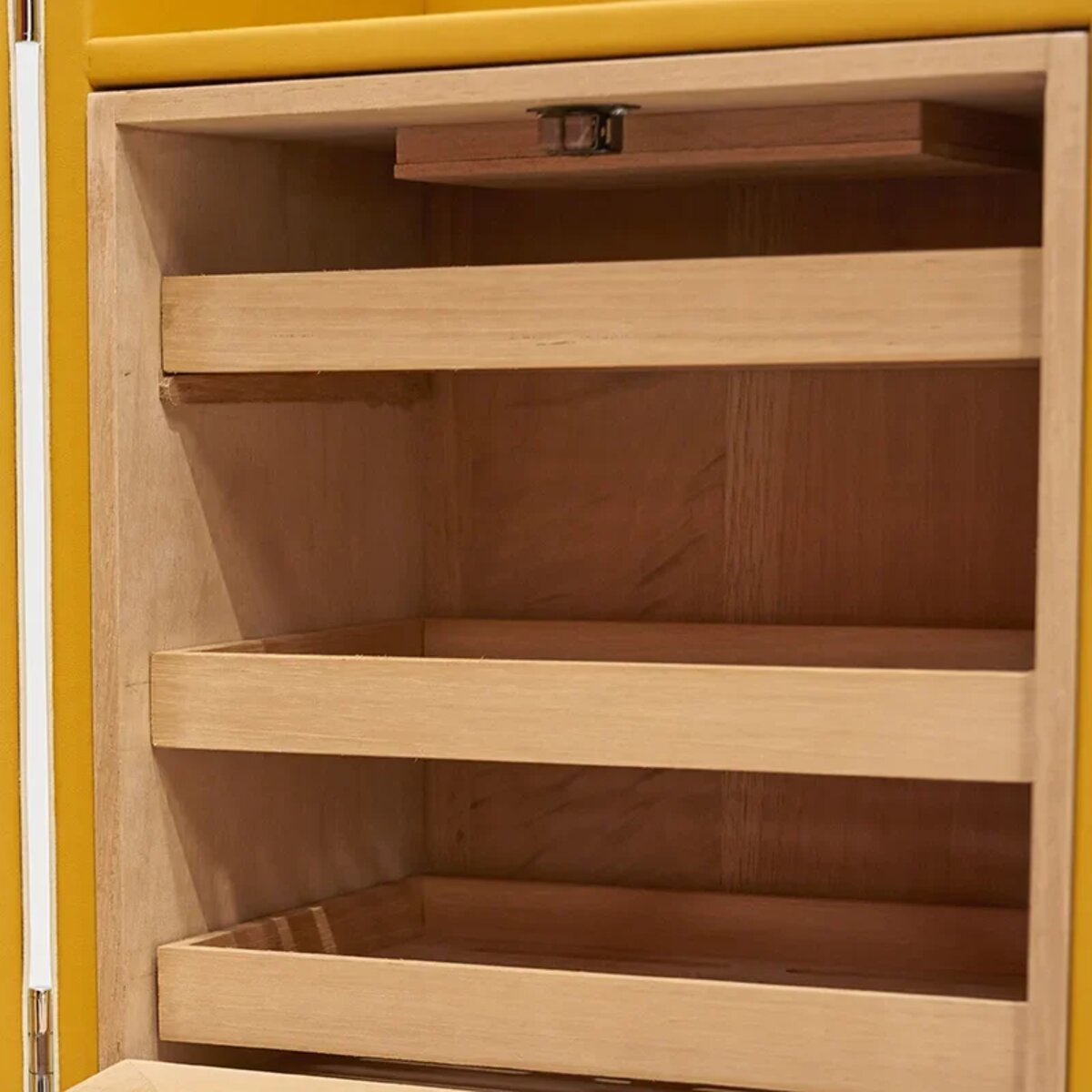
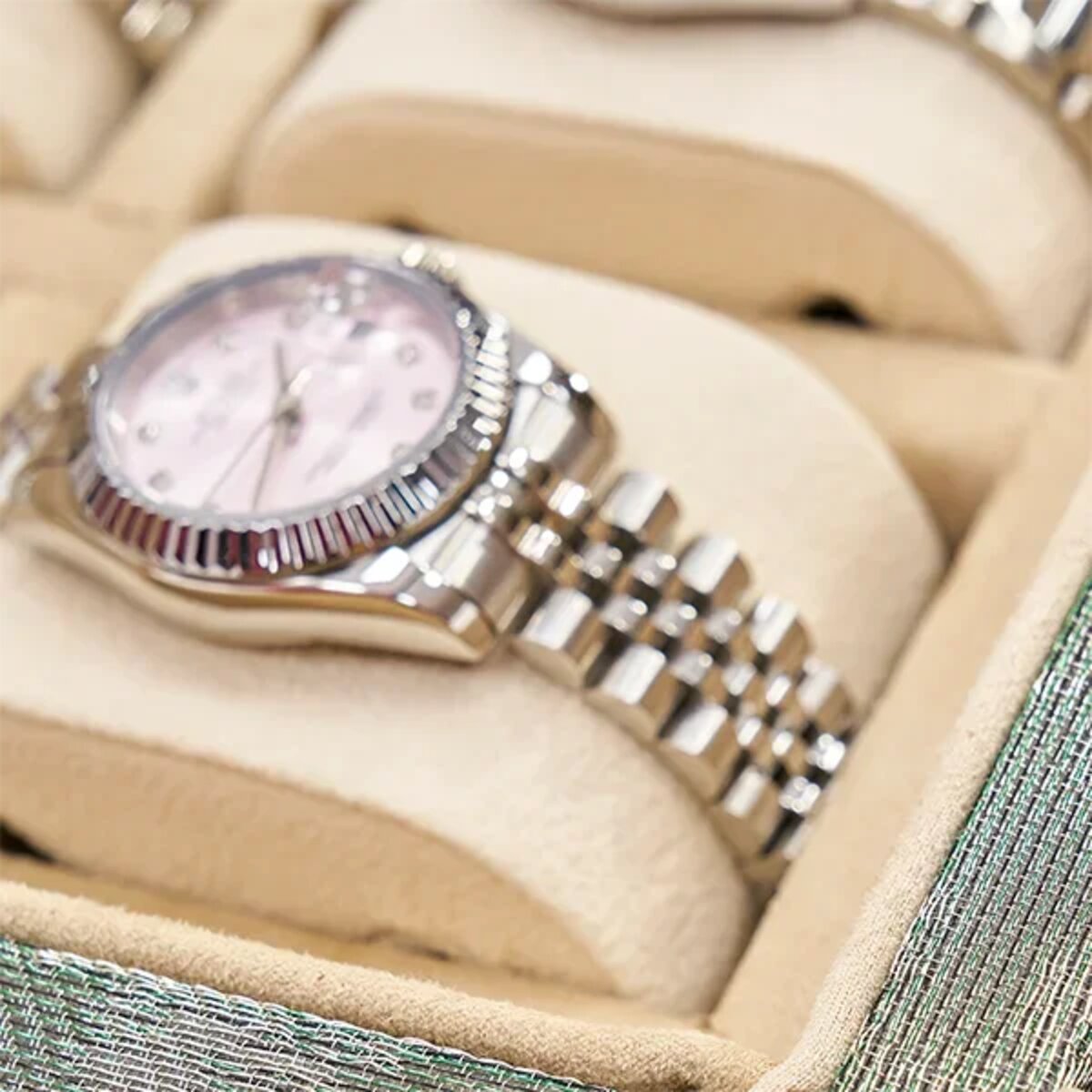
The pieces that stay behind need more than a bedroom drawer. Dubai's climate is unkind to gold-set jewellery: coastal summer humidity runs above 80% RH against air-conditioned interiors closer to 25% RH, and that swing tarnishes the silver in gold-set kundan and polki work, dulls pearls and dries the silk threads in temple jewellery. A sealed, metered enclosure moderates the cycle. The The Amber Jewelry Cabinet - Dune Gold is built for exactly this role — biometric lock, suede-lined compartments zoned for necklaces, earrings and bangles, and a sealed construction that buffers the sulphur-bearing, humidity-swinging air that ages a collection left at home for the season.
Packing the Gold You Do Carry
The Bottom Line: The gold you carry should travel in a hard-sided, compartmented case in your cabin baggage — never checked luggage, and never a soft pouch. This is a physical custody question, not a convenience one: compartmentalisation prevents chains tangling and stones rubbing, and a rigid shell resists the compression and impact of the conveyor and overhead bin. Most jewellery and travel insurance policies also require valuables to be hand-carried.
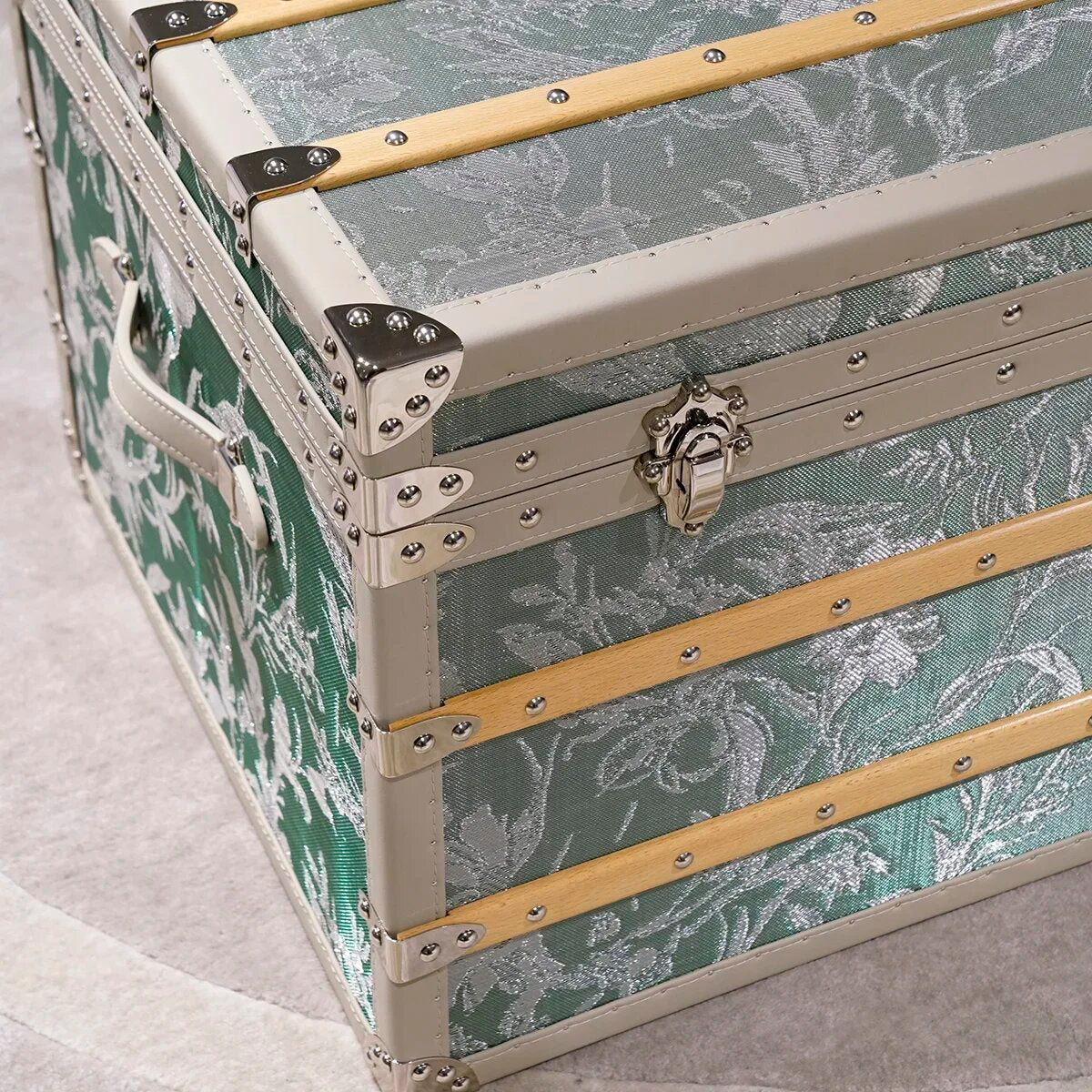
A worn set destined for a wedding arrives in far better condition when each piece is isolated. Bangles nest in their own slots, a necklace lies flat rather than coiled against earrings, and the whole set is presentable the moment you land — and orderly if a customs officer asks to see it. The The Refined Travel Jewelry Case - Noir is designed for this carry-on role: hard-case construction, individual suede-lined compartments, and carry-on dimensions. For a larger worn collection or a longer itinerary, the The Maison Hand-Carry Jewelry Case - Monochrome scales up capacity while remaining cabin-legal, with the same custody-grade compartment architecture.
Two habits make the journey smoother. Photograph each piece against your invoice before you pack, so your documentation and your jewellery match exactly at the red channel. And keep the case with you, not in an overhead bin two rows away — custody means custody. For a fuller treatment of cabin-legal options, see our guide to the best luxury travel jewellery case for the GCC traveller, and for the broader rules on what you must declare leaving the UAE, our note on travelling with valuables and UAE customs declaration.
Documentation, Provenance & the Pieces You Keep
Technical Verdict: Whether gold travels or stays, provenance is what protects its value — and increasingly its admissibility. Dated invoices, hallmark certificates and independent appraisals turn a customs query into a two-minute formality and underpin any insurance claim. The collection you keep at home deserves the same paper trail as the set you carry, stored alongside the pieces in a secure, climate-stable enclosure.
For bridal and heirloom gold, the documentation discipline compounds over generations. A studded antique piece without provenance is harder to value, harder to insure and harder to clear if it ever crosses a border. Keeping appraisals current — and stored with the jewellery rather than in a forgotten folder — means the collection is always ready, whether for a claim, an estate matter or a customs declaration on a future trip. Our guide to Indian bridal jewellery storage in the UAE covers how to organise and preserve a bridal set for the long term.
This is where home storage and customs strategy converge. The gold you choose not to carry is not idle — it is an asset whose condition and documentation you are actively preserving. A metered, lockable cabinet keeps the metal stable, the documents to hand, and the whole collection in a custody-grade state that survives both the Gulf climate and the occasional border crossing.
Frequently Asked Questions
How much gold can I carry from Dubai to India duty-free in 2026? If you have lived abroad for more than one year and arrive by air or sea, a female passenger may bring up to 40 grams of gold jewellery duty-free and a male passenger up to 20 grams. The old monetary value caps were removed under the 2026 Budget rules, so the allowance is now purely weight-based. The allowance covers worn jewellery only — not bars, coins or biscuits. Always confirm the live figure with Indian Customs (CBIC) before you fly, as rates and rules are periodically revised.
Do I have to pay duty on gold above my allowance? Yes. Gold jewellery beyond your duty-free gram band is dutiable, commonly at a concessional rate of around 6% for eligible long-stay passengers, up to a maximum of 1 kilogram per passenger. Gold bars and coins receive no duty-free exemption and are taxable from the first gram at a higher effective rate. Declare excess gold through the red channel on arrival, keep your purchase invoices, and verify the current duty percentage with CBIC, since the layered duty stack changes between Budgets.
Can I carry gold bars or coins from the UAE to India? You can, but there is no duty-free allowance for bars, biscuits or coins — they are dutiable from the very first gram and must be declared at the red channel. The duty-free gram limits apply strictly to wearable jewellery. For most travellers, carrying investment-grade bars personally is rarely worth the duty and risk; leaving them in secure custody at home in the UAE, properly documented and insured, is usually the more sensible path until a deliberate, declared transfer.
Should I carry my whole gold collection or leave some at home? Carry only the curated, wearable pieces that fit within your duty-free band and that you can document. Leave heirloom sets, bridal gold, bars and the bulk of your collection in secure custody at home in the UAE — it lowers your customs exposure, your in-transit risk and your insurance complexity. A sealed, metered jewellery cabinet also protects the gold-set silver and pearls you leave behind from Dubai's humidity-and-AC swing, which tarnishes and dries pieces stored loosely in a drawer.
Carrying Gold from the UAE to India — Plan Storage at the SIRAE Showroom
Carrying gold from the UAE to India is partly a customs question and partly a storage one: what you carry needs a custody-grade travel case, and what you leave behind needs a metered, lockable home for the season. Both decisions are better made in person — the lock action, the suede give of a lined compartment and the seal of a closed door are felt, not photographed. Book a private appointment at the SIRAE showroom, Al Shafar Complex, Umm Suqeim 1, Dubai. Call +971 55 886 6180 or write to info@siraecasa.com, and our team will match travel cases and biometric cabinets to your collection and your travel pattern.

Leave a comment
This site is protected by hCaptcha and the hCaptcha Privacy Policy and Terms of Service apply.