
Carrying Gold from the UAE to Pakistan: Customs Allowance, Duty & Safe Storage (2026)
Carrying Gold from the UAE to Pakistan: Customs Allowance, Duty & Safe Storage
Carrying gold from the UAE to Pakistan is a journey thousands of families make each year — a wedding set assembled over months, inherited bangles, a few coins bought on a Dubai gold-souk afternoon. It is entirely lawful, but it passes through two customs regimes at once: the UAE's export-side declaration rules on the way out, and Pakistan's inbound allowance and duty assessment on arrival. The figures are widely reported but periodically revised and, on the Pakistani side, left substantially to an officer's judgement — so the safe approach is to under-assume your allowance, over-document your gold, and declare proactively. This guide sets out the inbound allowance, the worn-versus-bullion distinction, the UAE departure declaration, and — because most of a serious collection never travels at all — how to store the gold you leave behind in a Gulf home.
How Much Gold Can You Carry to Pakistan Duty-Free?
Quick Answer: The commonly-cited duty-free allowance for a passenger entering Pakistan is around 10 grams of gold jewellery. Anything beyond that attracts customs duty, assessed on arrival by Pakistan Customs and the Federal Board of Revenue (FBR) on the value of the excess. Unlike the parallel India corridor, the Pakistani figure is not split by gender in current reporting — treat it as a single per-passenger allowance regardless of who is carrying.
Ten grams is a modest line. It covers a pair of bangles or a light chain, not a full bridal set. That does not mean larger quantities are prohibited — they are simply dutiable. The duty is applied to the value above the allowance, not retroactively to everything you carry, and it is the customs officer at entry who makes the assessment using the gold's value and the documentation you present. This is why a calm, declared passage with receipts in hand is invariably smoother than an attempt to pass undeclared.
For families moving wedding gold or building a collection across both markets, it is worth reading our guide to carrying gold from the UAE to India alongside this one: the corridors share a logic but differ in their thresholds, so do not assume one set of numbers applies to both.
| Item carried | Typical Pakistan treatment | Practical note |
|---|---|---|
| Up to ~10g gold jewellery | Duty-free personal allowance | Worn or hand-carried; declare if asked |
| Jewellery above ~10g | Duty on the excess value | Assessed by Pakistan Customs / FBR on arrival |
| Gold bars, coins, biscuits | Dutiable from the first gram | Plus ~1% advance tax on import value |
| Commercial-looking quantity | Treated as import, not personal effects | Officer discretion; expect full assessment |
Please note: Allowances, duty rates and the line between personal and commercial gold change and are applied with officer discretion. Confirm current rules with Pakistan Customs / the Federal Board of Revenue (fbr.gov.pk) and, for the departure side, the UAE Federal Authority for Identity, Citizenship, Customs & Ports Security (ICP) before you travel. This guide is orientation, not legal advice.
Worn Jewellery vs Bars, Coins & Commercial Quantities
The Bottom Line: How your gold is formed matters as much as how much it weighs. Personally worn jewellery is generally treated as personal effects and benefits from the modest duty-free allowance. Gold bars, coins, biscuits and any commercial-looking quantity are dutiable from the first gram and additionally attract roughly a 1% advance tax on the import value. There is no clean statutory weight line separating "personal" from "commercial" — the judgement is the officer's at entry.
This is the distinction that catches travellers out. A bride wearing her set through the airport is presenting personal effects; the same value carried as loose investment bars in a pouch reads, to a customs officer, as an import. The metal is identical, but the treatment is not. If your purpose is to move investment gold rather than ornaments, expect it to be assessed in full, and budget for the advance tax on top of any duty — do not plan around an allowance that, for bullion, effectively does not exist.
Because the line is discretionary, presentation and paperwork carry real weight. Gold that is clearly worn, modest in quantity, and accompanied by purchase invoices reads as personal. Gold that is consolidated, uniform and undocumented invites a commercial assessment. The lesson is not to disguise quantity — that risks confiscation — but to keep genuinely personal gold unambiguously personal, and to declare anything beyond that openly.
What You Must Declare Leaving the UAE
Technical Verdict: Before you reach Pakistani customs, you must satisfy the UAE's departure rules. You are required to declare cash and high-value items — gold, jewellery, watches and monetary instruments — to UAE customs when their total value is AED 60,000 or more, a rule administered by the ICP (the Federal Authority for Identity, Citizenship, Customs & Ports Security). At recent prices, AED 60,000 is roughly 150 grams of gold, so a substantial bridal collection can cross that line easily.
Declaring on the way out is not an admission of anything; it is the lawful, low-friction path, and it produces a record that demonstrates the gold left the UAE legitimately — useful if questions arise on either side of the journey. Non-declaration, by contrast, risks detention, penalties or confiscation. The mechanism, the thresholds and the channel to use are set out in full in our dedicated guide to travelling with valuables and the UAE customs declaration; rather than duplicate the procedure here, we recommend reading it before you pack, because the AED 60,000 figure is a total value across cash and valuables, not a per-item one.
The practical sequence is simple: total the value of everything you are carrying, decide before you reach the hall whether you cross AED 60,000, and if you do, declare through the appropriate (red) channel with your documentation ready. The gold you then present to Pakistan Customs arrives with a clean departure record behind it.
Carry vs Leave at Home: The Decision Most Families Get Wrong
Quick Answer: The instinct is to carry everything. The wiser approach is to carry only what you will wear or use on the trip, declare it properly, and leave the bulk of the collection secured at home in the UAE. Customs friction scales with quantity; so does loss exposure in transit. A few worn pieces and a structured travel case clear easily, while the heirloom set is safer in a metered, lockable cabinet than in a suitcase.
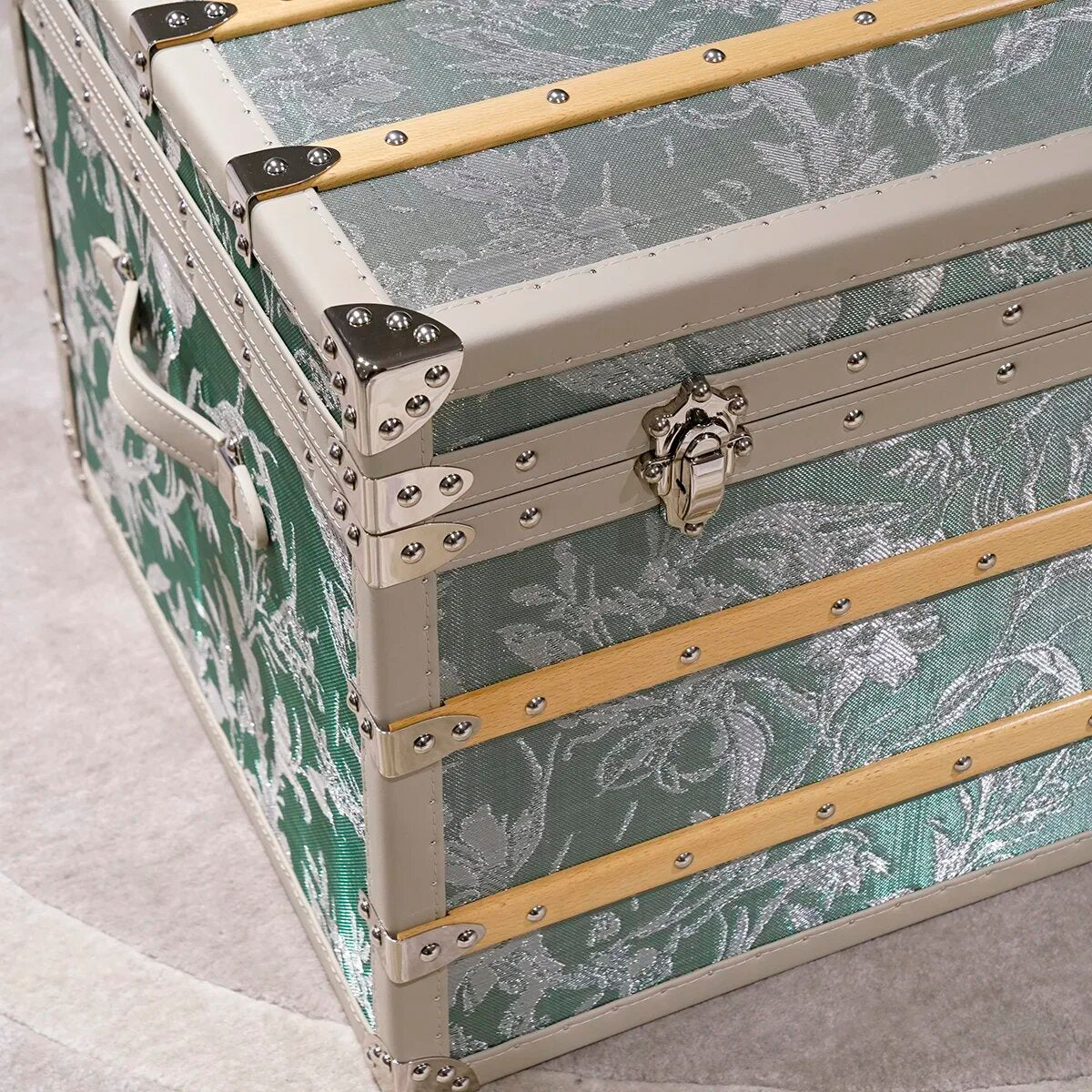
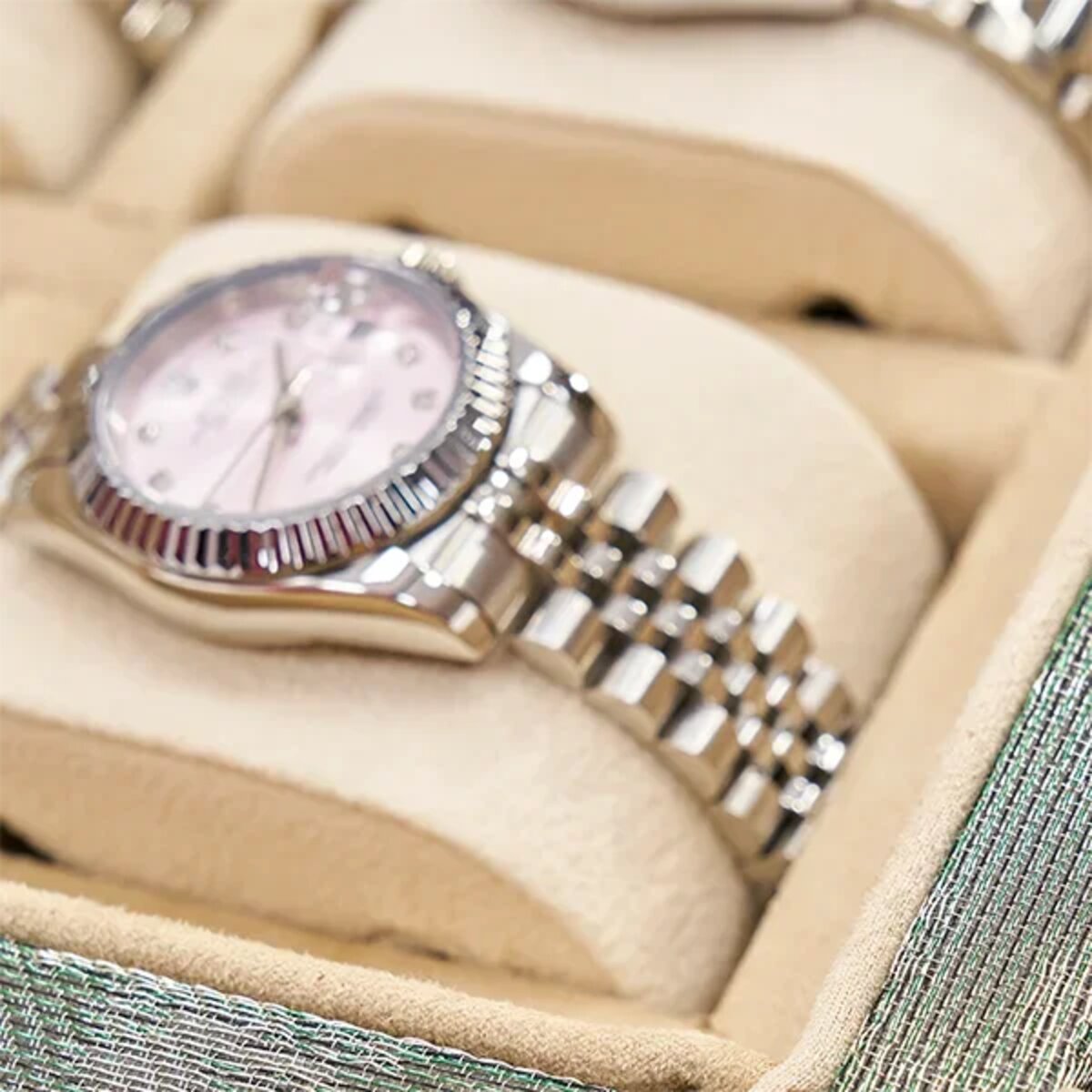
What you decide to carry should be driven by need, not by a wish to keep the collection together. Pieces for a specific event travel; investment gold and rarely-worn heirlooms stay. For the travelling portion, the The Refined Travel Jewelry Case - Noir keeps a curated selection organised, padded and presentable to an officer in one motion, while the larger The Maison Hand-Carry Jewelry Case - Monochrome suits a fuller set carried as hand luggage. For the portion that stays behind, the home enclosure is the real custody decision — and a Dubai home is harder on gold than most owners realise.
| Piece | Carry or leave | Why |
|---|---|---|
| Event jewellery for the trip | Carry (declared) | Worn use; reads as personal effects |
| One or two everyday pieces | Carry (declared) | Genuine personal use |
| Gold bars, coins, investment metal | Leave at home | Dutiable from gram one; safer secured |
| Heirloom / bridal set not in use | Leave at home | High value, high loss exposure in transit |
| Kundan, polki, pearl-set pieces | Leave at home | Climate-sensitive; need metered storage |
Packing the Gold You Do Carry
The Bottom Line: Whatever you carry, keep it in the cabin in a structured, soft-lined hard case — never in checked baggage, where it is out of your control and uninsured against the kind of loss that matters here. Distribute pieces sensibly, keep them accessible for inspection, and pack so an officer can see the gold without it spilling across a counter. The case is not vanity; it is the difference between a composed declaration and an awkward one.
Loose jewellery in a pouch tangles, abrades and looks, to a customs officer, exactly like undocumented import. A compartmentalised case keeps each piece seated, protects soft gold and stone settings from knocking together, and lets you present the collection cleanly when asked. The The Refined Travel Jewelry Case - Noir is built for the curated carry — bangles, a chain, earrings, a single set — while the The Maison Hand-Carry Jewelry Case - Monochrome takes a fuller selection when the occasion demands more. For the broader logic of choosing a case that survives Gulf travel, our guide to the best luxury travel jewellery case for the GCC traveller covers construction, lining and lockability in depth.
A short pre-flight discipline removes most friction: carry the case on, keep receipts and certificates in the same bag, and know your declared totals before you reach either customs hall.
Documentation & the Collection You Keep
Technical Verdict: Provenance is what turns a contested assessment into a clean one. Carry original purchase invoices and hallmark or purity certificates for the gold you travel with — they establish value, prove ownership, and distinguish your pieces from counterfeit or resale goods on both sides of the journey. The same documentation underpins insurance and resale value for the larger collection you leave at home, which is where the climate problem begins.
Gold itself does not tarnish, but the collection around it does. Gold left at home in the UAE sits in a punishing swing — coastal summer humidity above 80% against air-conditioned interiors that fall toward 25% RH. That instability tarnishes the silver in gold-set kundan and polki work, dulls the lustre of pearls and dries the silk threads in strung pieces. A drawer offers no defence. What a serious collection needs is a sealed, metered, lockable enclosure that holds its own microclimate independent of the room.
That is the brief the The Amber Jewelry Cabinet - Dune Gold is built to: biometric access, a stable interior, and lined trays that keep gold, stones and pearls in calm, controlled conditions while the rest of the home cycles through the Gulf year. If you are building that collection in the first place, our guide to buying gold in Dubai covers sourcing, hallmarking and the receipts you will be glad to have — both at the customs counter and at home.
| Document | Why it matters travelling | Why it matters at home |
|---|---|---|
| Original purchase invoice | Sets the value for any duty assessment | Underpins insurance and resale |
| Hallmark / purity certificate | Proves authenticity and karat | Records the standard of each piece |
| UAE departure declaration | Evidences lawful export over AED 60,000 | Closes the provenance trail |
Frequently Asked Questions
How much gold can I carry from the UAE to Pakistan duty-free? The commonly-cited duty-free allowance for a passenger entering Pakistan is around 10 grams of gold jewellery, applied per passenger and not split by gender in current reporting. Quantities above that are dutiable, with the duty assessed on arrival by Pakistan Customs and the FBR on the value of the excess. The figure is periodically revised and applied with officer discretion, so confirm it with the FBR before travelling and carry your receipts to support any assessment.
Do I have to declare gold when leaving the UAE? Yes, if the total value of the cash and valuables you carry — gold, jewellery, watches and monetary instruments combined — reaches AED 60,000 or more. This rule is administered by the UAE ICP, and AED 60,000 is roughly 150 grams of gold at recent prices, so a substantial collection crosses it easily. Declare proactively through the appropriate channel; non-declaration risks detention, penalties or confiscation. Our dedicated declaration guide sets out the full procedure.
Is worn jewellery treated differently from gold bars or coins? Yes. Personally worn jewellery is generally treated as personal effects and benefits from the modest duty-free allowance, whereas gold bars, coins and biscuits are dutiable from the first gram and also attract roughly a 1% advance tax on the import value. There is no clear statutory weight line between personal and commercial gold — the judgement rests with the customs officer at entry, which is why presentation and original documentation matter as much as quantity.
How should I store the gold I leave behind in the UAE? In a sealed, metered, lockable cabinet that holds its own microclimate. A Gulf home swings between coastal summer humidity above 80% and air-conditioned interiors near 25% RH, and that instability tarnishes the silver in kundan and polki settings, dulls pearls and dries silk threads. A drawer cannot buffer that swing. A custody-grade enclosure such as the Amber Jewelry Cabinet keeps gold, stones and pearls in controlled conditions independent of the room, protecting the collection you choose not to travel with.
Visit the SIRAE Showroom in Dubai
The hardest part of carrying gold from the UAE to Pakistan is rarely the customs hall — it is deciding what travels and what stays, and keeping both safe. The pieces you carry deserve a case that presents cleanly to an officer; the collection you leave behind deserves an enclosure that holds steady against the Gulf's climate swing. The difference between a case that merely closes and a cabinet that truly seals and meters its interior is felt in the hand and over a full day's AC cycle, not in a photograph. Book a private appointment at the SIRAE showroom, Al Shafar Complex, Umm Suqeim 1, Dubai. Call +971 55 886 6180 or write to info@siraecasa.com, and our team will match a travel case to the way you fly and a biometric cabinet to the collection you keep.

Leave a comment
This site is protected by hCaptcha and the hCaptcha Privacy Policy and Terms of Service apply.