
Jewelry Organizer Systems: Trays, Boxes & Cabinets (2026)
Jewelry Organizer Systems Compared: Trays, Boxes & Cabinets (2026)
A jewelry organizer only works when its format matches three variables: how many pieces you own, which categories dominate the collection, and the climate the collection lives in. In 2026 the market splits into five distinct systems — the jewelry tray, the box, the display stand, the armoire and the floor-standing cabinet — and each occupies a different position on capacity, tarnish protection, dust exclusion, security and price. This guide compares all five formats side by side, maps every jewellery category to its correct storage method, and adds the variable most international buying guides ignore: what Dubai's humidity cycle does to plated and sterling pieces.

Which Jewelry Organizer System Fits Your Collection Size?
Quick Answer: Count pieces before comparing finishes. Under 20 pieces, a single lined jewelry box organizer is sufficient. Between 20 and 100 pieces, move to a stacked multi-tier tray system or a drawer armoire so categories stay separated. Beyond 100 pieces, only a floor-standing jewellery cabinet provides one-piece-one-position storage without doubling up.
The most common organisation failure is not a bad product but a capacity mismatch. A 60-piece collection forced into a 25-slot box guarantees layering, and layered storage is where chains tangle, posts bend and stones abrade each other. Work from the thresholds below, then choose the finish.
- Fewer than 20 pieces: one compartmented box with a fitted lid. A lid matters more than size at this tier — it is the difference between dust-free and weekly cleaning.
- 20–100 pieces: a multi-tier jewelry tray stack inside a drawer, or an armoire with category-specific drawers. At this scale retrieval time is the metric: every piece visible within two drawer pulls.
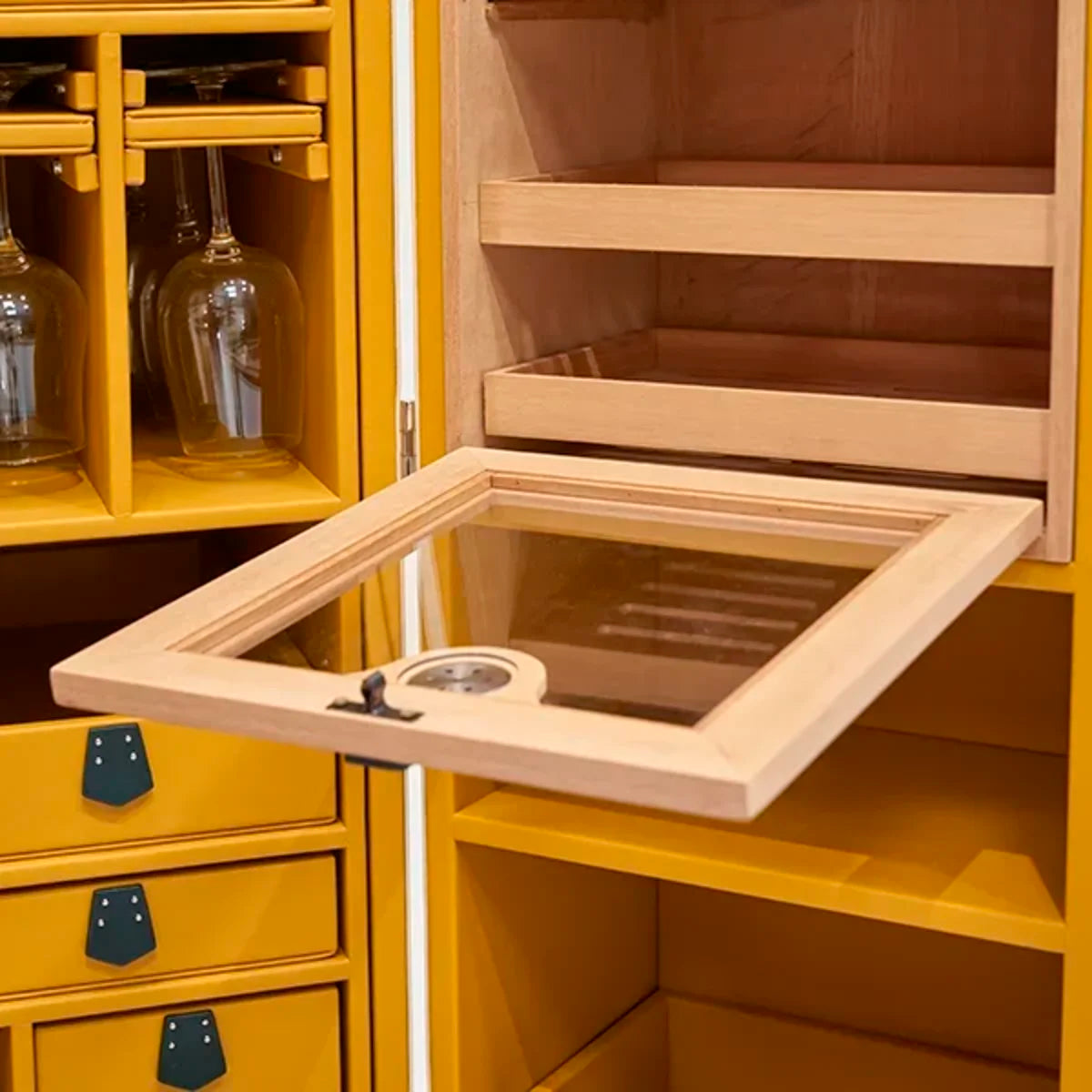
- 100+ pieces: a full-height cabinet with hanging panels, slotted drawers and a sealed carcass. A custody-grade piece such as the leather jewellery cabinet in cream is engineered around exactly this tier — vertical necklace storage, paired earring slots and soft-close drawers in one enclosed envelope.
The 2026 Form-Factor Comparison Table
| System | Typical capacity | Tarnish protection | Dust protection | Security | Price band (AED) |
|---|---|---|---|---|---|
| Jewelry tray (stackable) | 15–40 pieces per tier | Low–moderate (open tiers vent to room air) | Moderate when stacked, poor for the top tier | None | 80–600 |
| Jewelry box organizer | 10–30 pieces | Good — closed lid plus lined interior | Good | Optional key lock | 200–3,000 |
| Jewelry display stand | 5–15 pieces | Poor — fully exposed | Poor | None | 50–400 |
| Armoire (multi-drawer chest) | 50–150 pieces | Very good — drawers open seconds per day | Very good | Keyed lock common | 1,500–12,000 |
| Floor-standing jewellery cabinet | 100–500+ pieces | Excellent — sealed carcass, lined drawers | Excellent | Lockable, custody-grade | 6,000–40,000+ |
Read the table vertically: the stand wins on visibility and loses on everything else, while the cabinet inverts that profile. Most well-run collections combine two rows — one protective core plus one display or travel satellite.
How Should Each Jewellery Category Be Stored?
Technical Verdict: Necklaces hang vertically on hooks with a 25–30 cm clear drop; earrings live in paired slots so sets never separate; bracelets and bangles wrap suede rolls; rings sit in slotted channels at an 18–22 mm pitch. Any system that stores all four categories in identical flat compartments is undersized for at least two of them.
Category-specific zoning is what separates a true necklace organizer or earring organizer from a generic compartment grid. The mechanics differ per category because the failure modes differ:
| Category | Primary failure mode | Recommended storage | Specification notes |
|---|---|---|---|
| Necklaces & chains | Tangling, kinked links | Vertical hanging hooks behind a door or panel | 25–30 cm drop for princess lengths; 45 cm+ for opera chains |
| Earrings | Separated pairs, bent posts | Paired slots or perforated pads | Two-hole spacing keeps studs matched; pads suit hooks |
| Bracelets & bangles | Surface scratching | Suede rolls or padded bars | One piece per segment; never stack metal on metal |
| Rings | Stone-on-stone abrasion | Slotted channel inserts | 18–22 mm slot pitch; deeper slots for high-set stones |
| Watches & brooches | Strap creasing, pin damage | Individual cushions / pinned silk panels | Cushion circumference 165–185 mm preserves strap shape |
Vertical necklace storage deserves its own format decision. A glazed column such as the copper necklace display cabinet in frosted silver hangs chains at full drop behind glass — tangle-proof and visible at once — while drawer-based hanging panels inside a piece like the anemone purple jewellery cabinet trade the display effect for tighter dust and light exclusion. Both beat the universal alternative, which is coiling chains into flat compartments and untangling them every morning.

Open Display or Drawer Storage: Which Protects Silver Better?
The Bottom Line: A drawer-based jewelry organizer slows visible silver tarnish to a fraction of the rate of open-air storage, because tarnish is a gas-phase reaction: sterling silver reacts with airborne hydrogen sulphide, and an enclosed, lined drawer simply meters how much of that gas reaches the metal. A jewelry display stand offers zero metering.
The chemistry is unforgiving. Sterling silver is 92.5% silver, and both the silver and the 7.5% copper balance react with trace sulphur compounds in ordinary indoor air — parts-per-billion concentrations, yet enough to yellow a polished surface within weeks of open exposure. Gold-plated pieces fail differently: the 0.5–2.5 micron plating is inert, but sweat residue, dust friction and handling thin it until base metal shows. Open storage accelerates both pathways.
That does not make display illegitimate — it makes it a rotation decision. Keep the enclosed system as the permanent address for the full collection, and stage only the active week's pieces on the dressing surface. A dedicated vanity such as the monochrome majesty leather vanity table is the natural host for that staging layer: jewellery drawers below for the resting majority, a clear surface above for the few pieces in current rotation.
How Does the UAE Climate Change the Rules?
Quick Answer: Dubai subjects jewellery to a humidity swing most storage guides never model — roughly 25% relative humidity inside air-conditioned rooms against 80–90% RH outdoors on summer mornings, with 45°C+ heat and fine dust on top. Every door opening and every worn-then-stored piece imports moisture, so enclosure quality and lining material matter more here than in temperate markets.
The symptoms appear in a predictable order. First, gold-plated pieces dull at contact points as humid air and skin residue work on the thinning plate. Next, sterling pieces stored in open trays develop a yellow cast within a season. Finally, dust settles into chain links and slot linings, turning every retrieval into micro-abrasion. The countermeasures are structural, not behavioural: a sealed carcass that buffers the indoor-outdoor swing, tarnish-resistant microfiber suede lining that does not hold moisture against metal, and solid brass hardware that keeps door and drawer tolerances tight through summer expansion. SIRAE builds its cabinets around woven copper-wire hard case construction specifically because it holds dimensional stability through GCC heat cycles where ordinary veneered carcasses creep. For reference climate data, the UAE National Center of Meteorology (ncm.gov.ae) publishes daily coastal humidity ranges.
What About a Travel Sub-System?
Quick Answer: Travel storage should be a satellite, not a substitute. A rigid-shell petite case carrying 5–12 pieces — ring slots, two or three paired earring positions, one hook-and-pouch necklace channel — covers a trip without disturbing the main system's inventory logic.
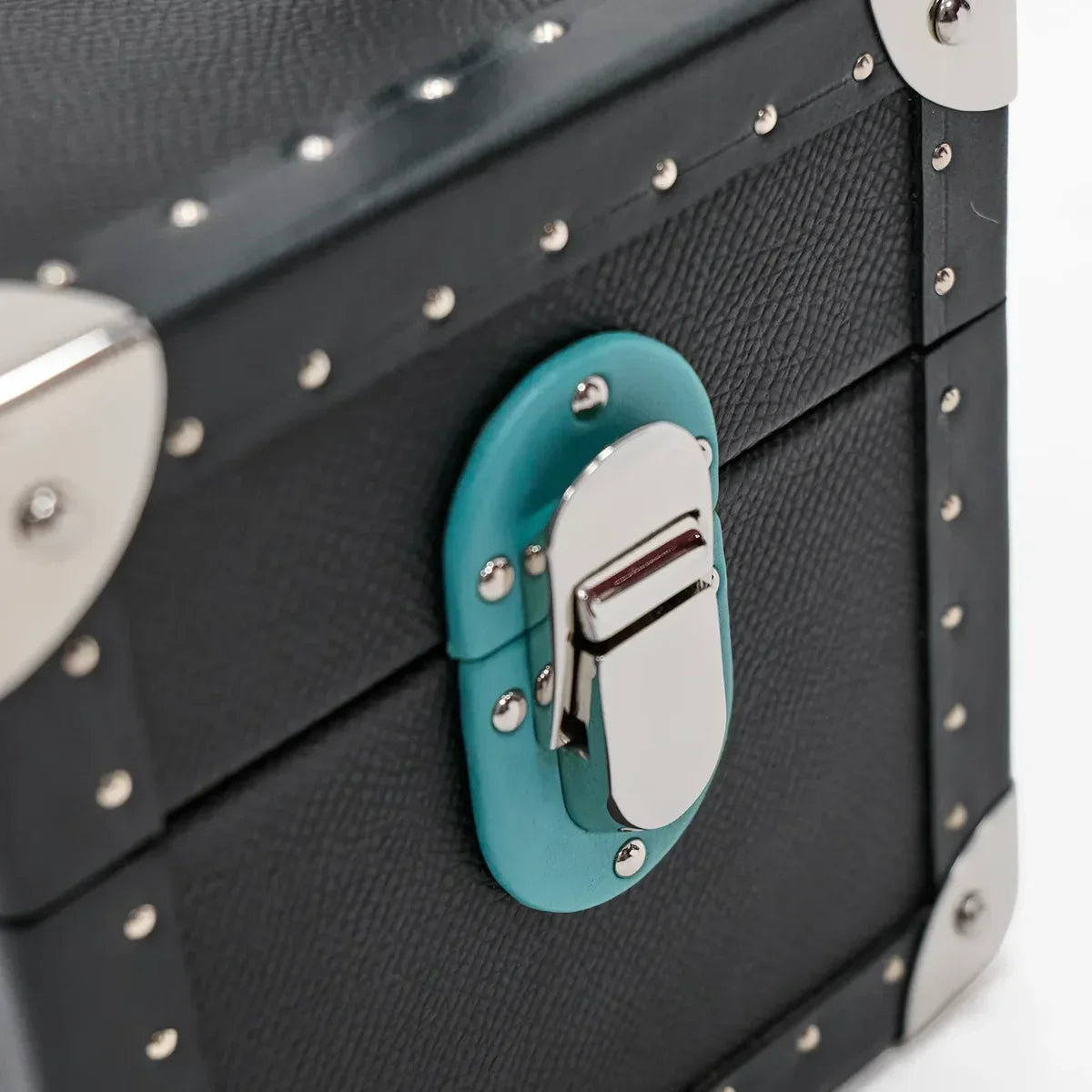
The discipline is one-way: pieces leave the main cabinet for the case before a trip and return to their fixed positions after, so nothing acquires a permanent "somewhere in the pouch" status. A hard-shell piece such as the petite copper jewellery box in gilded treasure is sized for precisely this role — compact enough for hand luggage, rigid enough that a packed suitcase cannot crush a setting, and lined so pieces do not migrate in transit. A soft travel jewelry holder or roll can supplement it for low-value pieces, but stones and plated items belong in structure. Whatever the satellite looks like, your jewelry organizer at home remains the system of record: every travelling piece has a position waiting for it.

Frequently Asked Questions
What is the best jewelry organizer for a small collection? For fewer than 20 pieces, a single compartmented jewelry box organizer with a fitted lid and lined interior outperforms trays and stands: it excludes dust, slows tarnish and keeps pairs together. Choose one with at least three compartment geometries — ring slots, flat trays and one hanging or pouch position for chains.
How do I stop necklaces tangling in a drawer? Store them vertically, not flat. Hanging hooks with a 25–30 cm clear drop keep princess-length chains under their own light tension, which prevents the loose loops that knot when a drawer slides. If drawers are the only option, give each chain an individual channel or pouch — never share compartments between chains.
Does Dubai humidity tarnish gold-plated jewellery faster? Indirectly, yes. The plating layer is inert, but Dubai's indoor–outdoor humidity swing (roughly 25% RH in air-conditioned rooms versus 80–90% RH outside in summer) keeps moisture and skin residue active at contact points, wearing the 0.5–2.5 micron plate faster. Enclosed, suede-lined storage measurably extends plating life.
Should silver jewellery be kept on open display? Only the pieces in active rotation. Sterling silver tarnishes by reacting with trace hydrogen sulphide in room air, so permanent open display on a jewelry display stand guarantees a yellow cast within weeks. Keep the collection enclosed and stage no more than the current week's pieces in the open.
View the Full System in Umm Suqeim
Specification tables shorten the list; handling the drawers settles it. To match a jewelry organizer system to your actual collection — counted, categorised and climate-checked — book a private viewing at the SIRAE showroom, Al Shafar Complex, Umm Suqeim 1, Dubai. Bring your most difficult pieces: the opera-length chain, the unmatched studs. Call +971 55 886 6180 or write to info@siraecasa.com to reserve an appointment.
%0AA%20jewelry%20organizer%20only%20works%20when%20its%20format%20...)
Leave a comment
This site is protected by hCaptcha and the hCaptcha Privacy Policy and Terms of Service apply.