
Travelling with a Luxury Watch Collection: Customs, Carnets, Insurance & Cabin Custody (2026)
Travelling with a Luxury Watch Collection: Customs, Carnets, Insurance & Cabin Custody
Travelling with a watch collection is less about packing and more about paperwork, custody and judgement: which pieces leave the Gulf with you, how you prove you already owned them, what you declare at each border, and how the rest of the collection survives a Dubai summer while you are away. A worn Patek on the wrist is treated very differently from three watches in a roll, and a watch you have owned for years is treated differently from one you bought in Geneva last week. This guide walks Gulf collectors through the UAE AED 60,000 declaration threshold, the 5% duty trap on new purchases, when an ATA carnet earns its keep, the insurer's cabin-only rule, and how to store the collection you leave behind.
Do You Have to Declare a Watch Collection at UAE Customs?
Quick Answer: Yes — if the combined value of the watches, jewellery, gold and cash you are carrying meets or exceeds AED 60,000, you must declare it on entering or leaving the UAE, in either direction. The declaration is a transparency record, not a tax, and it is submitted online through the ICP's Afseh platform at declare.customs.ae or the Afseh app.
The threshold is an aggregate, not a per-item figure. Three watches at AED 25,000 each clear AED 60,000 on their own; add a wedding band and some cash and a single dress watch can tip you over. The federal authority is the ICP, and the same AED 60,000 rule that governs cash and gold applies to high-value timepieces carried for personal use. For the full picture on cash, gold and jewellery, see our companion guide on travelling with valuables to the UAE.
Declaring does not mean you owe duty. It means the UAE has a dated record of the collection entering or leaving — which, conveniently, doubles as proof you owned the watches before the trip. Non-declaration above the threshold is where the trouble starts: confiscation, fines and, in serious cases, legal proceedings.
Please note: Thresholds and procedures change. Always confirm current rules with UAE customs (ICP) at declare.customs.ae before you travel, and confirm ATA carnet requirements with the issuing chamber of commerce in the country of issue. This article is general guidance, not legal or customs advice.
Worn Personal Watches vs. New Purchases: The Duty Line
The Bottom Line: A watch you already own and wear is a personal effect — it travels with you duty-free and the declaration simply records it. A watch you buy abroad and bring into the UAE is potentially a new import, exposed to the standard 5% customs duty on its CIF value. The discipline that protects you is documentation: prove the old watches are old, and account honestly for anything new.
The UAE standard customs duty is 5% of the CIF (cost, insurance, freight) value, and it applies to most imported goods. Personal and used belongings are exempt when residents or returning nationals bring them in — but the exemption hinges on the items being genuinely used rather than new, and not for resale. A serviced, dated, photographed watch you have owned for three years sits comfortably inside that exemption. A boxed, plastic-sealed purchase with a fresh invoice does not.
This is why collectors who travel with serious pieces keep a standing dossier: appraisal certificates, original purchase invoices, service records and dated photographs. The same file that satisfies a customs officer also anchors your insurance valuation. Where a watch is genuinely new, declaring it and paying any duty due is far cheaper than the alternative.
| Situation | Customs treatment | What protects you |
|---|---|---|
| Watch you own and wear, value under AED 60,000 | Personal effect, no declaration needed | Dated photo / appraisal on file |
| Owned watches, combined value ≥ AED 60,000 | Declare via Afseh; no duty on personal effects | ICP declaration record + appraisals |
| New watch bought abroad, brought into UAE | Potential import — 5% duty on CIF value | Invoice; declare and pay duty if due |
| Watch sent for service / returned to you | Re-importing your own goods | Service docket proving prior ownership |
| Carrying multiple watches for an event / show | Treated as commercial movement risk | ATA carnet (see below) |
When Does a Collector Need an ATA Carnet?
Technical Verdict: An ATA carnet is for the temporary cross-border movement of multiple high-value watches that you intend to bring back — exhibitions, trunk shows, dealer travel, or a collector physically carrying a portfolio of pieces between countries. It lets the goods enter participating countries duty- and deposit-free for up to one year. For a few watches you own and wear, you do not need one; for a curated batch you are carrying commercially or semi-commercially, it removes the risk of being treated as an importer at every border.
The ATA carnet — "Admission Temporaire / Temporary Admission" — is an international customs passport for goods. It is valid for one year, is non-renewable, and is honoured across more than 80 countries and customs territories. Crucially, it lets listed items move in and out as many times as needed within that year without paying import duty, VAT or posting a deposit at each crossing. In the UAE it is administered through the Dubai Chamber of Commerce; in other countries, the equivalent chamber issues it.
For a private collector flying with two or three watches on the wrist and in a roll, a carnet is overkill — those are personal effects. The carnet earns its place when the movement looks commercial to customs: a dealer carrying a portfolio, a collector lending pieces to an exhibition, or anyone moving a quantity of timepieces that no reasonable person "wears." The carnet pre-lists every watch by reference and value, so each border crossing becomes a stamp rather than an interrogation.
| Option | Best for | Duty / deposit | Practical note |
|---|---|---|---|
| Carry as personal effects | 1–3 watches you own and wear | None on personal effects | Declare if combined value ≥ AED 60,000 |
| ATA carnet | Multiple watches, shows, dealer / temporary movement | None while carnet is valid (up to 1 year) | Issued by chamber of commerce; pre-list every piece |
| Leave at home in secure custody | Pieces you will not wear this trip | None — never crosses a border | Needs a metered, lockable enclosure (see below) |
A carnet is not a loophole for new purchases you intend to keep — it is strictly for goods that come back out again. Confirm eligibility and the exact item schedule with the issuing chamber before you rely on it.
Cabin vs. Checked: How to Physically Carry Watches
Quick Answer: Insured watches travel in the cabin, full stop. Most travel and jewellery policies will not pay out on high-value items lost from checked luggage, and several exclude checked baggage for valuables entirely. Carry the watches you travel with in a hard, individually slotted case as cabin baggage, under your own supervision through the security queue and into the overhead — never in the hold.
Airlines are not obliged to compensate you for valuables in carry-on, and they cap liability harshly on checked bags — so the insurer's cabin requirement and basic risk sense point the same way. Read your policy wording before the airport: look for the per-item limit, the aggregate valuables cap, and any clause requiring high-value items to be hand-carried or kept under your "personal control." A watch worth more than the per-item limit may need to be scheduled (named and individually insured) rather than relying on a generic valuables sub-limit.
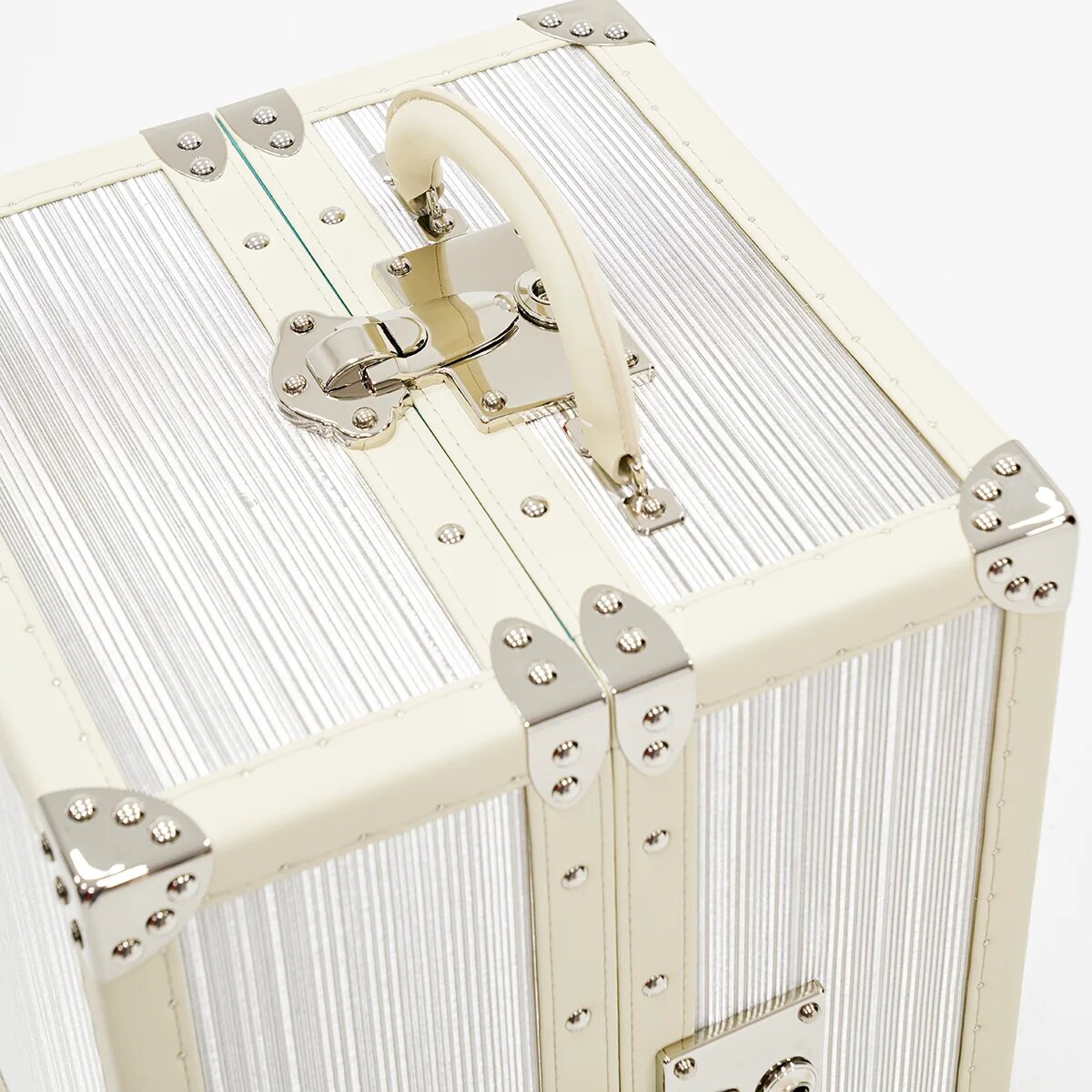
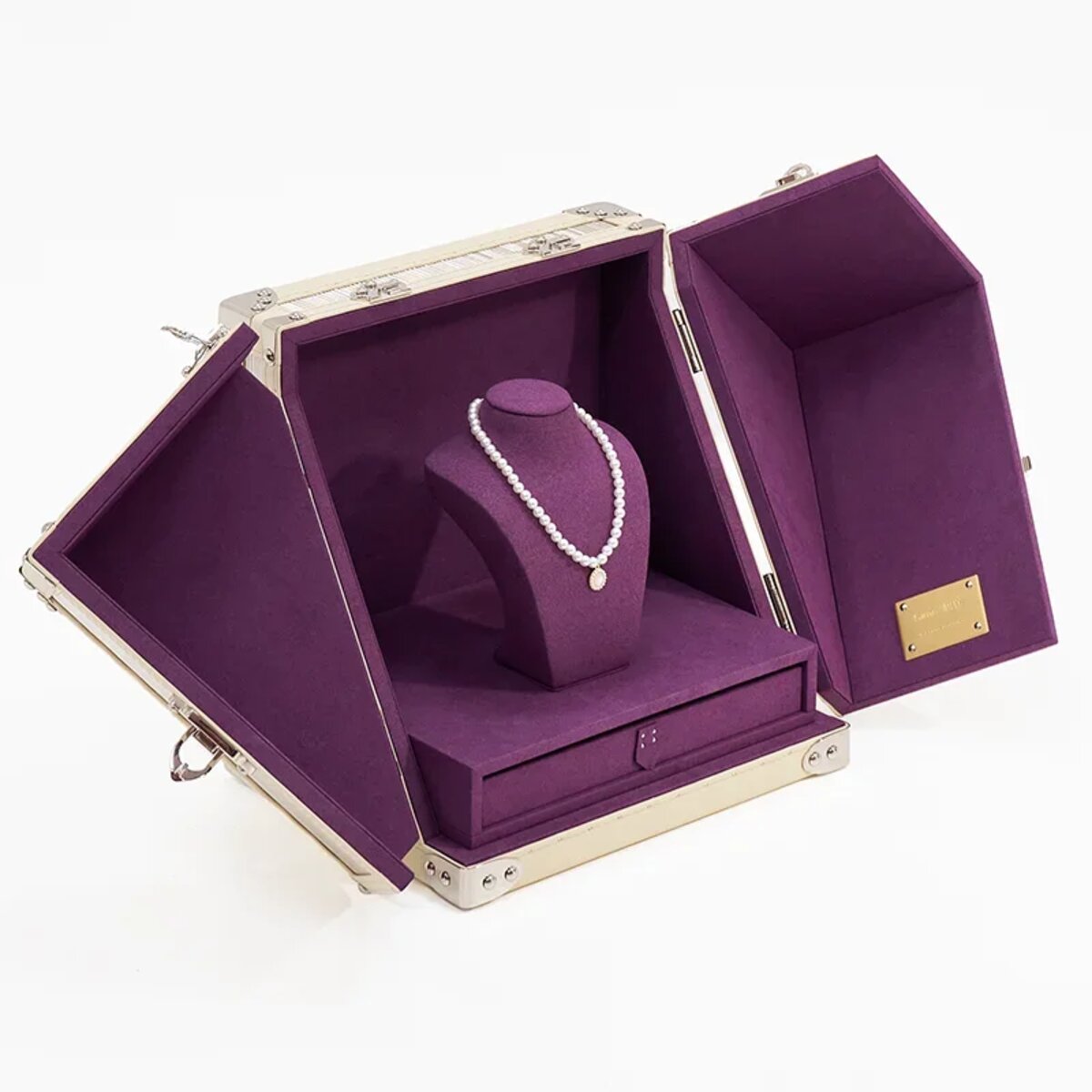
The case itself matters more than collectors expect. A soft pouch offers no resistance to the compression of an overhead bin, the impact of a dropped bag, or watches knocking against one another. A hard travel case with individual, padded slots isolates each movement from its neighbours and from impact, and stays within cabin dimensions and airline weight allowances. The The Refined Travel Jewelry Case - Noir is built for exactly this — hard-shell construction, suede-lined compartments for watches and small jewellery, sized for the cabin. For a collector travelling with several timepieces, the Delux 10 Watch Case - Meadow Floral carries up to ten in isolated slots, keeping each piece supervised and impact-protected from showroom to suite. Our guide to choosing a travel jewellery case for the GCC traveller goes deeper on cabin-legal formats.
What to Document Before You Fly
The Bottom Line: The single best investment for a travelling collector is a complete, dated document file for every piece — because the same paperwork clears customs, satisfies the insurer and proves prior ownership if a watch is ever questioned at a border. Assemble it once, keep digital copies on your phone, and update it after every service or acquisition.
Customs officers and claims adjusters ask the same questions in different words: is this yours, what is it worth, and when did it become yours? A standing dossier answers all three before they are asked. Where you can, register or declare watches with customs on the way out so there is an official record they left with you — the principle behind the US CBP's pre-travel registration applies in spirit anywhere: it pre-empts a duty argument when you return.
| Document | Why it matters | Keep where |
|---|---|---|
| Purchase invoice | Proves ownership date and origin | Digital + original at home |
| Independent appraisal / valuation | Sets insured value; supports customs | Digital + insurer copy |
| Dated photographs (front, back, serial) | Identifies the specific piece | Phone + cloud backup |
| Service / warranty records | Proves prior ownership on return | Digital |
| Insurance schedule (named items) | Confirms cover and per-item limit | Phone + insurer app |
| ICP / outbound declaration reference | Records the collection leaving the UAE | Phone screenshot / PDF |
Keep the file lean and current. A collection that grows but a dossier that does not is a claim — or a customs query — waiting to go wrong.
Storing the Collection You Leave Behind in the Gulf
Quick Answer: The smartest move for most travelling collectors is to leave most of the collection at home and travel light. But "home" in the Gulf is a hostile environment for mechanical watches: coastal humidity runs above 80% RH while air-conditioned interiors sit near 25% RH, and that swing — plus heat — strains spring mechanisms, dries and cracks leather straps, and tarnishes precious-metal cases. The pieces that stay need a metered, lockable enclosure, not a sock drawer.
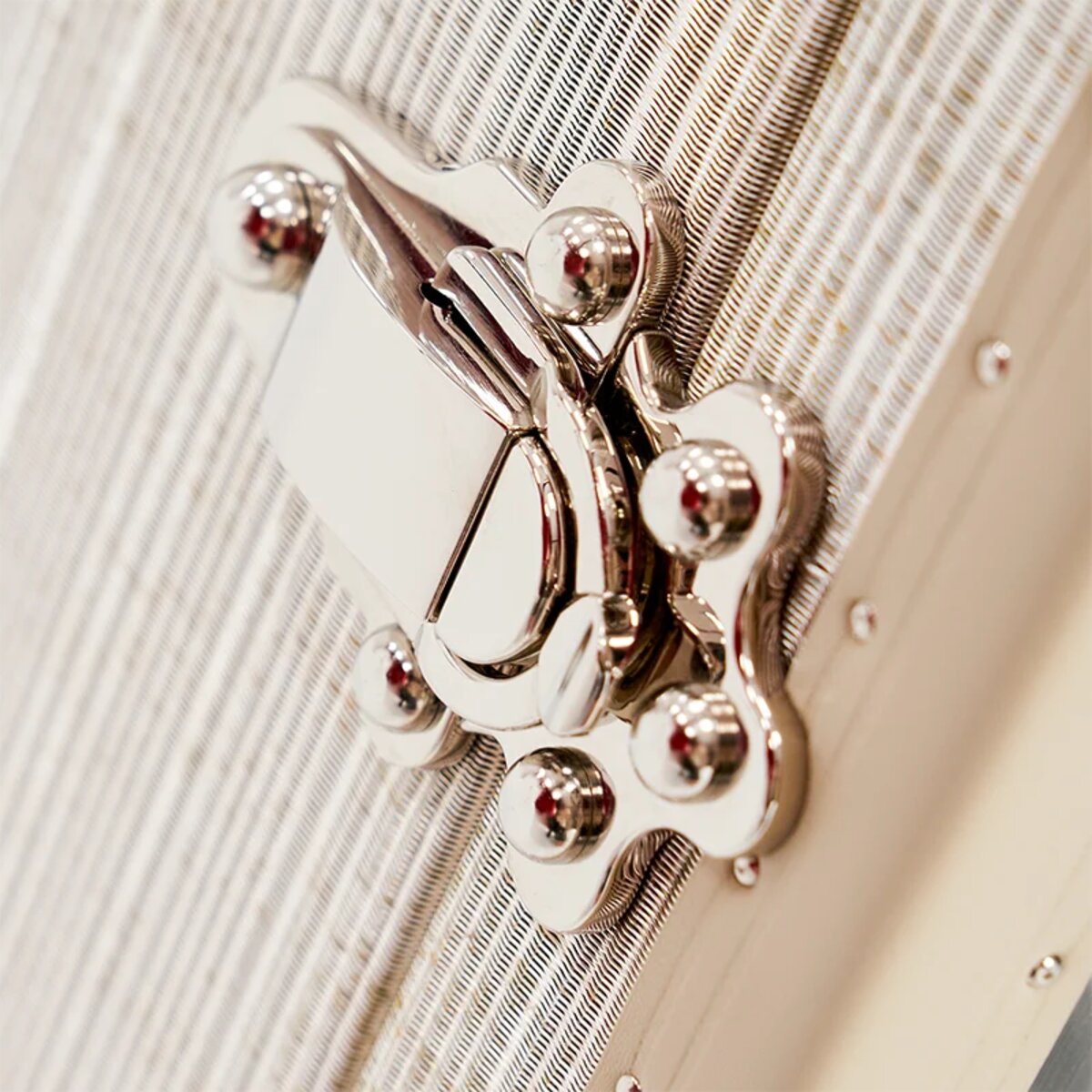
A watch left flat in a humid villa or baking in a sun-facing dressing room ages faster than one that is worn. The damage is quiet: lubricants degrade, gaskets dry, straps stiffen, and condensation forms when a piece moves between an AC-cold room and the outside air. A proper watch box moderates that environment — a sealed, lined enclosure that buffers the humidity-versus-AC swing and keeps the pieces in a stable, lockable space. The Signature Watch organizer - Frosted Silver is built for the resident collection: individual cushioned bays, a sealed lid that meters moisture exchange, and a lockable, lined interior that keeps movements stable and straps supple while you are abroad.
Position matters as much as the box. Keep it inside a climate-controlled interior room, away from west-facing glass and exterior walls, and never in a garage, store-room or anywhere the AC is cycled off when the house is empty. For the deeper mechanics of humidity, heat and strap care in the Gulf, our watch care and storage FAQ for Gulf collectors lays out the practical rules. The principle is simple: the watches you travel with want a hard case for custody; the watches you leave want a metered box for preservation.
Frequently Asked Questions
Do I have to declare watches I already own when entering the UAE? Only if the combined value of the watches, jewellery, gold and cash you are carrying meets or exceeds AED 60,000. Below that, personal-use watches you own do not need declaring. At or above it, you declare via the ICP's Afseh platform at declare.customs.ae — in either direction, arriving or leaving. The declaration is a record, not a duty: personal effects you already owned are not taxed. Keeping appraisals and dated photographs on file makes the process quick and proves the watches were yours before the trip.
Will I pay 5% duty on a watch I buy abroad and bring home to Dubai? Potentially, yes. The UAE standard customs duty is 5% of the CIF value, and a newly purchased watch can be treated as an import rather than a personal effect. A watch you have owned and worn for years generally qualifies for the used-personal-belongings exemption; a boxed, sealed, freshly invoiced purchase generally does not. Declare new acquisitions honestly and keep the invoice — paying any duty due is far cheaper than confiscation and fines for non-declaration above the AED 60,000 threshold.
Do I need an ATA carnet to travel with my watch collection? Usually not. For a few watches you own and wear, they are personal effects and a carnet is unnecessary. A carnet is for temporary, often commercial movement of multiple high-value watches that you will bring back — exhibitions, trunk shows, dealer travel, or carrying a portfolio between countries. It is valid one year, covers 80-plus countries, and removes duties and deposits at each crossing. In the UAE it is issued by the Dubai Chamber of Commerce; confirm the item schedule and eligibility with the issuing chamber before relying on it.
Should I put my watches in checked luggage or carry-on? Always carry-on. Most travel and jewellery policies will not pay out on valuables lost from checked baggage, and some exclude checked bags for high-value items entirely. Airlines also cap liability on checked luggage and owe nothing on carry-on, so cabin custody is both the insurer's requirement and basic sense. Carry the watches in a hard, individually slotted case kept under your personal supervision through security and in the overhead. Check your policy's per-item limit and hand-carry clause before you leave for the airport.
Travelling with a Watch Collection? Plan It at the SIRAE Showroom in Umm Suqeim
Travelling with a watch collection is a custody decision before it is a packing one: a hard cabin case for the pieces that fly, and a metered, lockable box for the collection that waits out the Gulf summer at home. The difference between an adequate enclosure and a custody-grade one is felt in the lock action, the give of a suede-lined slot and the seal of a closed lid — not in a photograph. Book a private appointment at the SIRAE showroom, Al Shafar Complex, Umm Suqeim 1, Dubai. Call +971 55 886 6180 or write to info@siraecasa.com, and our team will match travel cases and watch boxes to your collection and your travel pattern.

Leave a comment
This site is protected by hCaptcha and the hCaptcha Privacy Policy and Terms of Service apply.