
أفكار منظم القلائد والأقراط: تخزين خالٍ من التشابك (2026)
أفكار منظِّم القلائد والأقراط: تخزين خالٍ من التشابك (2026)
يحل منظّم القلائد الجيد ومنظّم الأقراط الجيد مشكلتين متعاكستين بنفس الهدف، وهو إبقاء القطع الثمينة جاهزة للارتداء بدلاً من أن تتشابك أو تضيع أو تتخدش. تتلف القلائد بالتشابك؛ وتتلف الأقراط بفقدان أحدها. تعالج الشبكات المقسمة العامة كلاهما بنفس الطريقة ولا تخدم أيًا منهما. يغطي دليل عام 2026 هندسة التخزين التي تحتاجها كل فئة بالفعل - أطوال سلاسل التعليق، وتباعد الأقراط المزدوجة، وتنسيقات التعليق مقابل الفتحات مقابل الأدراج - بالإضافة إلى عامل التشويه الذي يضيفه مناخ دبي، بحيث تبقى القطع التي ترتديها غالبًا في أفضل حالة.

لماذا تحتاج القلائد والأقراط إلى تخزين مختلف؟
إجابة سريعة: تحتاج القلائد إلى تعليق عمودي منفصل لأن طريقة تلفها هي التشابك - تتشابك السلاسل الفضفاضة بمجرد أن يتشارك اثنان في نفس المكان. تحتاج الأقراط إلى فتحات سطحية مزدوجة لأن طريقة تلفها هي الانفصال والانحناء. أي منظم مسطح عام يتجاهل هاتين الهندستين يضمن لك فك تشابك يومي ودرجًا مليئًا بالأقراط الفردية في غضون موسم واحد.
تتشارك الفئتان في الدرج ولكن ليس في المنطق. السلسلة هي خط طويل مرن يستقر في حلقات كلما كان هناك ارتخاء ومجاور ليمسك به؛ الحل هو الشد والعزل - علّقها بحيث تسقط مستقيمة، وامنحها قناة خاصة بها. القرط هو زوج قصير وصلب تنهار قيمته لحظة فقدان أحد النصفين؛ الحل هو التجاور - وضع ثابت مزدوج بحيث يتم تخزين المجموعة واسترجاعها كوحدة واحدة. ابنِ التخزين حول هاتين الآليتين وتختفي جميع الشكاوى الشائعة تقريبًا.
كيف تخزن القلائد دون تشابك؟
الرأي الفني: علّق السلاسل عموديًا على خطافات فردية مع مساحة كافية للتعليق بحيث تتدلى القلادة بالكامل ولا تلامس القطعة المجاورة لها. طابق التعليق مع طول السلسلة: تحتاج قلادة الأميرة إلى حوالي 25-30 سم من التعليق الواضح، بينما تحتاج قلادة الأوبرا أو الحبل إلى 45 سم أو أكثر. يُعد لف السلسلة بشكل مسطح في مكان مخصص السبب الأكثر شيوعًا للتشابك الذي يلومه الناس على السلسلة نفسها.
القاعدة هي: سلسلة واحدة، خطاف واحد، تمديد كامل. عندما تتدلى القلادة بوزنها الخفيف الخاص بها، لا يمكنها أن تشكل الحلقات المرنة التي تتشابك؛ عندما تتشارك اثنتان في خطاف أو صينية مسطحة، فإن كل انزلاق للدرج يعيد ترتيبها إلى تشابك. تم تصميم عمود عمودي مزجج مثل صندوق عرض القلائد Aurum Loom - فضي مصنفر بدقة حول هذا المبدأ - تتدلى السلاسل بكامل طولها خلف الزجاج، مما يجعلها مقاومة للتشابك ومرئية في لمحة. حيث يُفضل نظام مغلق، فإن اللوح المعلق داخل قطعة مثل خزانة المجوهرات Aurum Loom - أرجواني شقائق النعمان تبادل العرض المفتوح بحماية أكثر إحكامًا من الغبار والضوء مع الحفاظ على نفس المنطق الرأسي.
| طول القلادة | تقريبي. الانحدار | تباعد الخطاف الواضح | أفضل تخزين |
|---|---|---|---|
| طوق (35-40 سم) | 16-18 سم | 4-5 سم متباعدة | خطافات قصيرة أو شريط مبطن |
| الأميرة (42-48 سم) | 21-24 سم | 5-6 سم متباعدة | خطافات تعليق قياسية |
| ماتيني (50-60 سم) | 25-30 سم | 6 سم متباعدة | خطافات طويلة، عمود مزجج |
| الأوبرا (70-90 سم) | 35-45 سم | 7-8 سم متباعدة | عمود كامل الانحدار، مزدوج |
| حبل (110 سم+) | 45 سم+ | 8 سم متباعدة | عمود كامل الانحدار أو ملفوف على شريط مبطن |
إذا كان الدرج هو الخيار الوحيد، فلا تسمح أبدًا للسلاسل أن تتشارك في مقصورة واحدة: امنح كل واحدة منها قناة مبطنة خاصة بها أو كيسًا فرديًا، وضعها في خط واحد مسترخٍ بدلاً من لفها.
كيف تنظم الأقراط بحيث تبقى الأزواج معًا؟
الخلاصة: قم بتخزين الأقراط في مواضع مزدوجة، وليس فضفاضة. تنتمي الأقراط المرصعة إلى وسادات مثقبة أو فتحات ذات ثقبين تحمل المجموعة جنبًا إلى جنب؛ وتنتمي الأقراط المعلقة أو المتدلية إلى قضيب أو شريط يسمح لها بالتعليق دون انحناء الأعمدة. أي منظم أقراط يسقط الأزواج في صينية مسطحة مفتوحة، بمرور الوقت، سيؤدي إلى تشتت الأقراط الفردية في الدرج وانحناء الأعمدة الرقيقة تحت القطع الأخرى.
تأتي الأقراط بأربعة أنواع ميكانيكية، وكل منها يتطلب مكانًا مختلفًا قليلاً:
| نوع القرط | الخطر الأساسي | التخزين الموصى به |
|---|---|---|
| مسامير | ظهور مفقود، أزواج منفصلة | وسادة مثقبة أو فتحة ذات فتحتين، ظهور مخزن عليها |
| حلقات | شكل محطم، خدش | فتحات مبطنة فردية أو شريط حلقات |
| قطرات متدلية | سلاسل متشابكة، أعمدة منحنية | قضيب تعليق مع سقوط واضح أدناه |
| مميز / مشبك | تلف الضغط، تآكل السطح | أقسام مبطنة فردية |
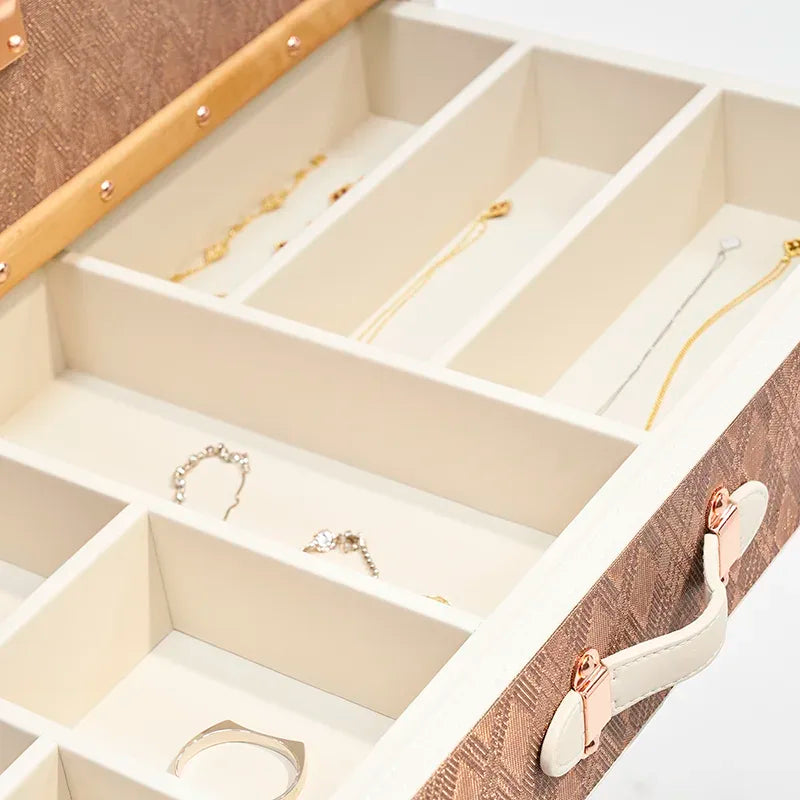
الانضباط الذي يحافظ على المجموعة سليمة بسيط: يغادر الزوج مكانه معًا ويعود معًا، لذلك لا يكتسب أي شيء حالة "في مكان ما في الدرج". قطعة المجوهرات ذات الأدراج المتعددة تكسب مكانها هنا لأنها تتيح لك منح الأقراط درجها الضحل والمبطن المنفصل عن السلاسل والأساور - الفئات لا تتنافس أبدًا على نفس المساحة المسطحة.

تعليق، فتحات أم أدراج: أي تنسيق يناسبك؟
إجابة سريعة: اختر حسب حجم المجموعة ومدى رغبتك في أن تكون القطع مرئية. لأقل من 20 قطعة تقريبًا، صندوق واحد مبطن مع وضع تعليق للسلاسل يكفي. لمجموعة متنوعة ومتنامية، توفر خزانة ذات أدراج متعددة للقلائد لوحة تعليق وللأقراط صينية مبطنة خاصة بها في غلاف واحد مغلق. للقطع التي ترتديها أسبوعيًا، شاشة عرض صغيرة مفتوحة أو سطح تزيين يحافظ على دوران القطع في متناول اليد دون الكشف عن المجموعة بأكملها.
التنسيقات الثلاثة ليست منافسة بقدر ما هي طبقات. التعليق والعرض المفتوحان يفوزان في الرؤية والوصول ولكنهما يخسران في التحكم في الغبار والتشوه. الأدراج تعكس ذلك - حماية ممتازة، مسرح يومي أقل. معظم المجموعات المدارة جيدًا تجمع بين نواة واقية وشاشة عرض صغيرة أو قمر صناعي للسفر: الخزانة المغلقة تحتوي على المخزون الكامل، بينما تضع طاولة الزينة مثل خزانة زينة أوروم لوم - ذهبي فاتح قطع الأسبوع الحالي فقط على سطحها، مع أدراج المجوهرات أدناه لكل شيء آخر. صندوق مبطن مدمج مثل صندوق مجوهرات أوروم لوم - رمادي بتلة يغطي مجموعة أصغر أو تحرير بجانب السرير.
كيف يغير مناخ الإمارات العربية المتحدة تخزين القلائد والأقراط؟
الرأي الفني: تذبذب الرطوبة الداخلية والخارجية في دبي - حوالي 25% رطوبة نسبية في الغرف المكيفة مقابل 80-90% رطوبة نسبية في الهواء الطلق في صباحات الصيف - يسرّع من تآكل الفضة ويؤدي إلى تآكل الطلاء الرقيق عند نقاط التلامس بشكل أسرع مما يحدث في الأسواق المعتدلة. بالنسبة للسلاسل والأقراط على وجه التحديد، هذا يعني أن جودة التغليف ومادة البطانة تهمان بقدر الهندسة: القضبان المفتوحة تبدو أنيقة ولكنها لا توفر أي قياس للهواء الحامل للكبريت الذي يصفر الفضة.
الإجراء العملي المضاد هو الاحتفاظ بالمجموعة الكاملة في حاوية محكمة الإغلاق مبطنة بالشمواه وعرض القطع النشطة فقط في الأماكن المفتوحة. التآكل هو تفاعل في الطور الغازي - يتفاعل الفضة الإسترليني مع آثار كبريتيد الهيدروجين في الهواء الداخلي العادي بمستويات أجزاء في المليار، وهو ما يكفي لإطفاء لمعان السلسلة المصقولة في غضون أسابيع من التعرض المفتوح - لذا فإن الدرج المغلق ببساطة يقيس كمية هذا الهواء الذي يصل إلى المعدن. تضيف البطانة المصنوعة من الألياف الدقيقة المضادة للتآكل فائدة ثانية للأقراط: فهي تبطن الأعمدة وتمنع الأزرار من التحرك عند انزلاق الدرج. ينشر المركز الوطني للأرصاد الجوية بدولة الإمارات العربية المتحدة (ncm.gov.ae) نطاقات الرطوبة الساحلية اليومية التي تجعل التغليف غير اختياري هنا.

أسئلة متكررة
ما هي أفضل طريقة لتنظيم القلائد حتى لا تتشابك؟ علق كل سلسلة رأسيًا على خطافها الخاص مع مساحة كافية لتدليها بشكل كامل دون أن تلامس ما جاورها - حوالي 25-30 سم لطول الأميرة، و45 سم أو أكثر لسلاسل الأوبرا والحبل. يمنع الامتداد الكامل تحت وزن السلسلة الخفيف الحلقات المتراخية التي تتشابك. إذا كان عليك استخدام درج، فامنح كل سلسلة قناة مبطنة فردية أو كيسًا بدلاً من مقصورة مشتركة.
كيف أحافظ على عدم فقدان الأقراط لأزواجها؟ خزّنها في مواضع مزدوجة ثابتة - وسادات مثقوبة أو فتحات ذات فتحتين للأزرار، أو سكة تعليق للأقراط المتدلية - وحرك كل زوج كوحدة واحدة. يحدث الفقدان عندما تسقط الأقراط بشكل فضفاض في صينية مفتوحة؛ منظِّم الأقراط المخصص والمقسّم يحافظ على المجموعة معًا ويحمي الأعمدة من الانحناء تحت القطع الأخرى.
هل يجب تخزين القلائد معلقة أم ممددة بشكل مسطح؟ معلقة، دائمًا تقريبًا. التخزين المسطح يسمح للسلاسل بالالتفاف والتشابك، وهذا هو المكان الذي تتكون فيه العقد. التعليق الرأسي يحافظ على كل سلسلة تحت شد خفيف بحيث تبقى مستقيمة. التخزين المسطح مقبول فقط للقلائد أو الأطواق الصلبة التي لا يمكن أن تتشابك، وقطعة واحدة فقط لكل مقصورة مبطنة.
هل يسبب عرض المجوهرات المفتوح التآكل في دبي؟ نعم، أسرع مما يحدث في المناخات المعتدلة. يعرض العرض المفتوح الدائم الفضة والقطع المطلية للهواء الرطب المشبع بالكبريت في المدينة دون قياس، مما يجعلها باهتة في غضون أسابيع. احتفظ بالمجموعة في حاوية محكمة الإغلاق مبطنة بالشمواه واعرض فقط القطع التي ترتديها بنشاط في الأماكن المفتوحة.
خطط لتخزينك في أم سقيم
لا يحقق منظّم القلائد ومنظّم الأقراط قيمتهما إلا بعد أن تتعامل مع انسيابية لوحة تعليق ومرونة فتحة أقراط مبطنة. لمطابقة نظام مع مجموعتك الفعلية - السلاسل المحسوبة بالطول، والأقراط حسب النوع - احجز موعدًا خاصًا لمشاهدة في صالة عرض سيراي، مجمع الشفار، أم سقيم 1، دبي. أحضر أصعب قطعك: السلسلة بطول الأوبرا، الأزرار غير المتطابقة. اتصل على الرقم +971 55 886 6180 أو راسلنا على info@siraecasa.com لحجز موعد.
%0A%D9%8A%D8%AD%D9%84%20%D9%85%D9%86%D8%B8%D9%91%D9%85%20%D8%A7%D9%84%D9%82%D9%84%D8%A7%D8%A6%D8%AF...)
اترك تعليقًا
This site is protected by hCaptcha and the hCaptcha Privacy Policy and Terms of Service apply.