
الانتقال إلى دبي مع مجموعة ساعات ومجوهرات: الاستيراد والتأمين والحفظ المنزلي (2026)
الانتقال إلى دبي مع مجموعة ساعات ومجوهرات: الاستيراد والتأمين والحفظ المنزلي
نادراً ما يكون الانتقال إلى دبي مع مجموعة ساعات ومجوهرات جزءاً يعدك به وكيل النقل - فهم يغلفون الأثاث، ويحجزون الشحن الجوي ويتركون ما لا يمكن تعويضه بين يديك. هذا عادة ما يكون الغريزة الصحيحة، ولكنه يترك خمسة قرارات حقيقية دون معالجة: ما يجب الإعلان عنه عند الحدود، وما إذا كان يجب حمل المجموعة يدوياً أو شحنها، وكيفية تأمينها أثناء النقل، وكيفية إعادة تقييمها وتغطيتها بمجرد أن تصبح مقيماً في الإمارات العربية المتحدة، وأين ستقيم منذ الليلة الأولى في فيلا جديدة. يرشدك هذا الدليل في عملية الانتقال من البداية إلى النهاية، بالترتيب الذي تحدث به بالفعل، مع الأسباب المتعلقة بالمناخ الخليجي التي تتجاهلها معظم قوائم مراجعة الانتقال.
الخطوة الأولى: الإعلان عن مجموعتك عند حدود الإمارات العربية المتحدة
إجابة سريعة: إذا بلغت القيمة المجمعة للنقود والذهب والأحجار الكريمة والمجوهرات أو الساعات عالية القيمة التي تحملها عبر حدود الإمارات العربية المتحدة 60,000 درهم إماراتي أو تجاوزتها، فيجب عليك تقديم إقرار - عبر الإنترنت قبل السفر، أو من خلال تطبيق أفصح في ميناء الدخول. الإقرار هو خطوة إبلاغ، وليس ضريبة، وينطبق سواء حملت المجموعة يدوياً أو سافرت كشحن تحت اسمك.
الحد الأقصى هو إجمالي، وليس لكل قطعة. يمكن للمسافر الوحيد الذي ينتقل ووصل ومعه ساعة يد، وخاتمان موروثان، وبضعة آلاف من الدراهم نقداً أن يتجاوز 60,000 درهم إماراتي دون شراء أي شيء جديد. الهيئة الاتحادية هي الهيئة الاتحادية للهوية والجنسية والجمارك وأمن المنافذ، وتتم الإقرارات عبر منصة أفصح التابعة لها على declare.customs.ae، وليس نموذجاً ورقياً على المنضدة.
يضيف الانتقال تعقيداً لا يوجد في السفر العادي: التمييز بين الممتلكات الشخصية المستعملة والسلع الجديدة. الممتلكات الشخصية المستعملة والسلع المنزلية التي يجلبها أجنبي يقيم لأول مرة معفاة من رسوم الاستيراد البالغة 5٪، شريطة أن تكون بكميات معقولة لتأثيث منزل وأن تكون مصحوبة بقائمة تعبئة. القطع الجديدة تماماً، والمعبأة في صناديقها، والتي لا تزال تحمل بطاقة السعر - أو أي شيء بكميات "تجارية" - يمكن أن تخضع لرسوم بنسبة 5٪ من قيمة CIF. المجموعة المستعملة ذات تاريخ التقييم تعتبر ممتلكات شخصية؛ خزنة مغلقة من سبائك الذهب الاستثمارية ليست كذلك. احتفظ بإثبات الملكية السابقة لقطعك الثمينة.
نحن نغطي آليات الإعلان بالكامل في دليلنا الخاص بـ السفر مع الأشياء الثمينة إلى الإمارات العربية المتحدة؛ الأولوية هنا هي معالجة القيمة المجمعة لمجموعتك بصدق قبل أن تسافر، وليس بعد وصولك.
يرجى ملاحظة ما يلي: تتغير العتبات ومعدلات الرسوم وقواعد الأمتعة الشخصية، وتنشر جمارك دبي والهيئة الاتحادية للهوية والجنسية والجمارك وأمن المنافذ إرشاداتهما الخاصة. يرجى دائماً تأكيد القواعد الحالية مع جمارك الإمارات العربية المتحدة (الهيئة الاتحادية للهوية والجنسية والجمارك وأمن المنافذ) على u.ae أو declare.customs.ae، وجمارك دبي على dubaicustoms.gov.ae، قبل الانتقال.
الخطوة الثانية: حملها باليد، أو الشحن، أو تركها في الخارج؟
الخلاصة: احمل المجموعة الأساسية ذات القيمة العالية باليد في حقيبة اليد؛ وشحن فقط ما تشعر بالراحة لتأمينه كشحن؛ واترك أي شيء لا يمكنك إعادة تأمينه أو إعادة تقييمه في الحفظ في الخارج حتى يصبح الجانب الإماراتي جاهزاً. العامل الحاسم ليس العاطفة - بل هو القناة التي يغطيها تأمينك بالفعل، لأن بوالص الشحن البحري القياسية تستثني المجوهرات بشكل افتراضي.
هذا هو القرار الذي تخطئ فيه معظم عمليات الانتقال بجمع المجموعة مع الحاوية. الجدول أدناه يصنفها حسب ما هي عليه كل قطعة وما هي التغطية المتاحة لها.
| القناة | الأفضل لـ | احذر من |
|---|---|---|
| الحمل اليدوي (مقصورة الركاب) | الأساس عالي القيمة: الساعات المميزة، والقطع التراثية والمميزة، وأي شيء لا يمكن تعويضه | يجب الإعلان عنها بقيمة 60,000 درهم إماراتي أو أكثر؛ لا توضع أبداً في الأمتعة المسجلة؛ حافظة آمنة للحزام الأمني والانتقال في الفندق |
| الشحن الجوي / البحري | الأثاث الضخم، لفافات الساعات، القطع الفنية العادية منخفضة القيمة، التعبئة والتغليف | تغطية الشحن البحري القياسية تستثني المجوهرات - قم بترتيب تغطية متخصصة للأشياء الثمينة لجميع المخاطر أو لا تشحنها |
| الاحتفاظ بها في الخارج | القطع التي تنتظر التقييم في الإمارات العربية المتحدة، والقطع الأرشيفية التي لن ترتديها قريباً، وأي شيء لم يتم إعادة تأمينه بعد | تحتاج إلى تخزين آمن ومستقر مناخياً في نقطة المنشأ؛ خطط لنقل ثانٍ تحت الإشراف لاحقاً |
هناك حقيقتان تدفعان هذا التقسيم. أولاً، يجب أن تسافر القطع المؤمنة في أمتعة المقصورة، وتتطلب معظم بوالص التأمين على السفر والمجوهرات ذلك بالضبط - الأمتعة المسجلة تبطل التغطية. ثانياً، تستثني بوالص تأمين الشحن البحري القياسية المجوهرات والسبائك والأحجار الكريمة بشكل خاص؛ الصياغة "جميع المخاطر" التي تبدو مطمئنة على حاوية الأثاث لا تمتد إلى صندوق خاتم بداخلها. إذا كنت تنوي شحن أي شيء ثمين، فعليك ترتيب تغطية نقل مخصصة عالية القيمة قبل أن يغادر المنزل، أو حمله يدوياً بدلاً من ذلك.
الخطوة الثالثة: تأمين النقل - سد فجوة التغطية
الحكم الفني: بين مغادرة منزلك القديم وحجزك في تغطية الإمارات العربية المتحدة، تقع مجموعتك في فجوة تغطية لا تسدها بوليصة تأمين منزلك القديم ولا بوليصة الشحن الافتراضية بالكامل. سدها عن قصد: تغطية نقل متخصصة لجميع المخاطر ("الأشياء الثمينة البحرية") لما تشحنه، وتأكيد أن قطعك المحمولة يدوياً مغطاة أثناء النقل بموجب بوليصة المجوهرات الشخصية الخاصة بك - يتم التحقق منها، كتابياً، قبل المطار.
"جميع المخاطر" هي أوسع صيغة لشحن البضائع البحرية وتغطي الخسارة أو التلف أثناء النقل الجوي أو البري أو البحري باستثناء الاستثناءات المدرجة - ولكن المجوهرات والسبائك والأحجار الكريمة هي عادة من بين هذه الاستثناءات. لذا، يتطلب الانتقال تغطية تُقرأ على طبقتين:
- الأساس المحمول باليد - مغطى بموجب بوليصة تأمين شخصية للمجوهرات/الأشياء الثمينة مع تمديد لتغطية النقل في جميع أنحاء العالم. تأكد من أن البوليصة تتبع القطع من المنشأ إلى إقامة جديدة في الإمارات العربية المتحدة، بما في ذلك الأيام التي تكون فيها في الفنادق أو الإقامة المؤقتة قبل أن تكون فيلاتك جاهزة.
- القطع المشحونة - مغطاة بموجب بوليصة شحن مخصصة عالية القيمة أو بوليصة متخصصة للأشياء الثمينة يتم ترتيبها مع الناقل أو الوسيط، مع الإعلان عن القيمة الكاملة. لا تفترض أن مسؤولية الناقل القياسية أو بوليصة بحرية شاملة تصل إلى قطعك؛ عادة ما تتوقف عند هذا الحد.
احتفظ بالتقييمات المؤرخة، وفواتير الشراء، والصور الواضحة في متناول اليد طوال الوقت. فهي تسرع عملية الإقرار الجمركي، وتدعم أي مطالبة بالمرور، وتصبح أساس تقييمك في الإمارات العربية المتحدة في الخطوة التالية. المطالبة تكون قوية بقدر الوثائق التي تدعمها، والانتقال هو اللحظة التي من المرجح أن تُختبر فيها هذه الوثائق.
الخطوة الرابعة: إعادة تحديد القيمة والتأمين كمقيم في الإمارات العربية المتحدة
إجابة سريعة: بمجرد حصولك على تأشيرة إقامة في الإمارات العربية المتحدة، أعد ترسيخ مجموعتك على تغطية الإمارات العربية المتحدة: اطلب تقييم كل قطعة مهمة من قبل خبير أحجار كريمة معتمد في دبي، وأعلن عنها بشكل فردي لشركة تأمين في الإمارات العربية المتحدة بدلاً من الاعتماد على تغطية محتويات المنزل، وحدد إعادة تقييم سنوية دائمة. عادة ما تحدد بوليصة تأمين محتويات المنزل القياسية في الإمارات العربية المتحدة الحد الأقصى للقطعة الواحدة غير المعلن عنها بحوالي 10,000 درهم إماراتي - وهو جزء صغير من قيمة خاتم جيد واحد.
هذه هي الخطوة التي يؤجلها الراحلون ويندمون عليها. قد لا تستجيب بوليصة تأمين بلد المنشأ الخاص بك للخسارة في الإمارات العربية المتحدة، ولن يغطي تأمين منزلك الجديد في الإمارات العربية المتحدة المجوهرات الثمينة بشكل صحيح حتى يتم الإعلان عن كل قطعة، وتقييمها وتوثيقها بشكل كافٍ لتبقى في حالة مطالبة.
| مهمة الوصول | كيف يبدو "الانتهاء" | لماذا يهم في الإمارات العربية المتحدة |
|---|---|---|
| التقييم المعتمد | فحص كل قطعة مهمة والإبلاغ عنها من قبل خبير أحجار كريمة في دبي - المعدن، الوزن، درجة الحجر، العلامات المميزة، الصورة الفوتوغرافية | لا يقوم أي شخص موثوق به بتقييم المجوهرات الفاخرة من الصور الفوتوغرافية؛ يبلغ سعر التقييم في دبي حوالي 100 دولار أمريكي للقطعة الواحدة |
| الإقرار الفردي لشركة التأمين | كل قطعة مجدولة بالاسم والقيمة، وليس مجمعة تحت بند المحتويات | يتم عادة تحديد الحد الأقصى للقطع الفردية غير المعلن عنها بالقرب من 10,000 درهم إماراتي - وهو أقل بكثير من قيمة الاستبدال |
| جدول إعادة التقييم السنوي | تذكير في التقويم وعلاقة مع مقيم | تتحرك أسعار الذهب وأسعار الصرف بشكل مادي لقيمة الاستبدال خلال عام واحد |
| ملف الإثبات | التقييمات والفواتير والشهادات والصور في مكان واحد | مطلوبة للمطالبات وإعادة البيع وحالة الأمتعة الشخصية في الجمارك |
يوضح دليلنا الكامل للتأمين على المجوهرات وتقييمها في الإمارات العربية المتحدة تقرير التقييم والجدول الزمني والسوق المحلية بالتفصيل. النقطة الخاصة بالانتقال هي التوقيت: احجز التقييمات في أسابيعك الأولى، وليس في عامك الأول، لأن كل يوم تبقى فيه المجموعة في البلد غير معلن عنها بموجب بوليصة تأمين إماراتية هو يوم يتم فيه التأمين عليها ذاتياً بشكل فعال.
الخطوة الخامسة: إعداد الحفظ المنزلي عند الوصول
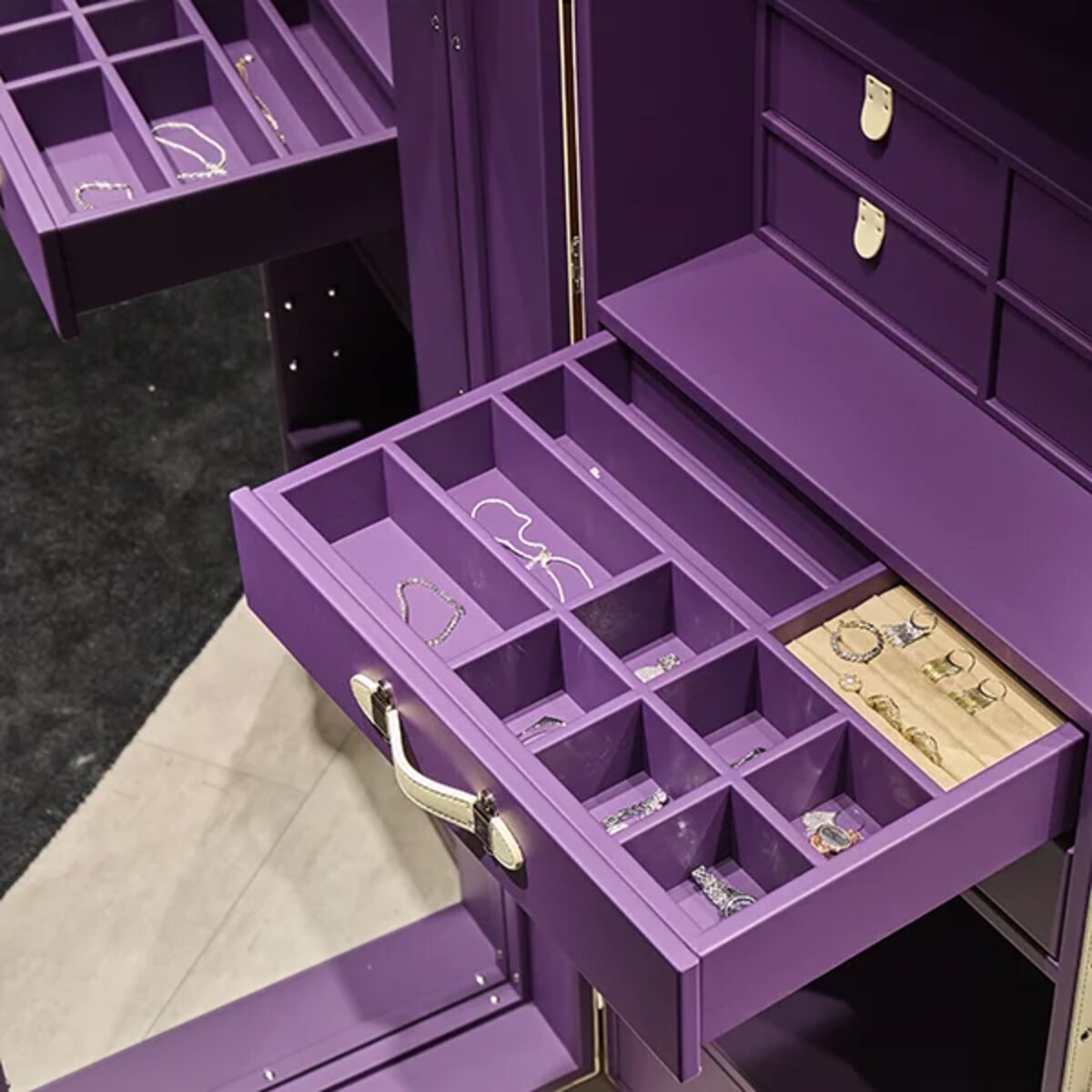
الخلاصة: تحتاج المجموعة إلى منزل قبل تفريغ الصناديق، وليس بعد ذلك. عند الوصول، تنتقل من علب النقل إلى حفظ دائم، ويعكس الهيكل الأكثر تنظيمًا كيفية تقسيم المجموعة: صندوق خزانة للمجموعة الكاملة المنقولة، وخزانة بيومترية للجوهر عالي القيمة، وحقيبة مخصصة للساعات.
يضغط الانتقال على قرار كنت ستتخذه ببطء. في الأسابيع الأولى، تكون المجموعة بأكملها في مكان واحد، في فيلا غير مألوفة، وغالباً قبل أن تستقر روتين المنزل - وهذا هو بالضبط عندما تكون نقطة الحفظ المحددة هي الأهم. يوضح الهيكل أدناه تقسيم النقل على التخزين الدائم.
- المجموعة الكاملة تهبط في صندوق خزانة بمرآة يجمع كل شيء في داخل مؤمن ومنظم. يوفر صندوق خزانة Atelier - فضي لمجموعة منقولة نقطة تخزين وارتداء واحدة - قلائد، أقراط، خواتم وقطع يومية في حجرات مخصصة بدلاً من أن تكون مبعثرة في غرفة تبديل ملابس جديدة.
- الجوهر عالي القيمة - القطع التي حملتها يدوياً - تنتقل إلى خزانة بيومترية بحيث يكون الوصول مقصوراً عليك من الليلة الأولى. يجمع خزانة مجوهرات Amber - ذهبي بين قفل بيومتري وداخل مبطن بالجلد السويدي وحساس للكبريت مصمم للقطع التي يجدولها مؤمنك بشكل فردي.
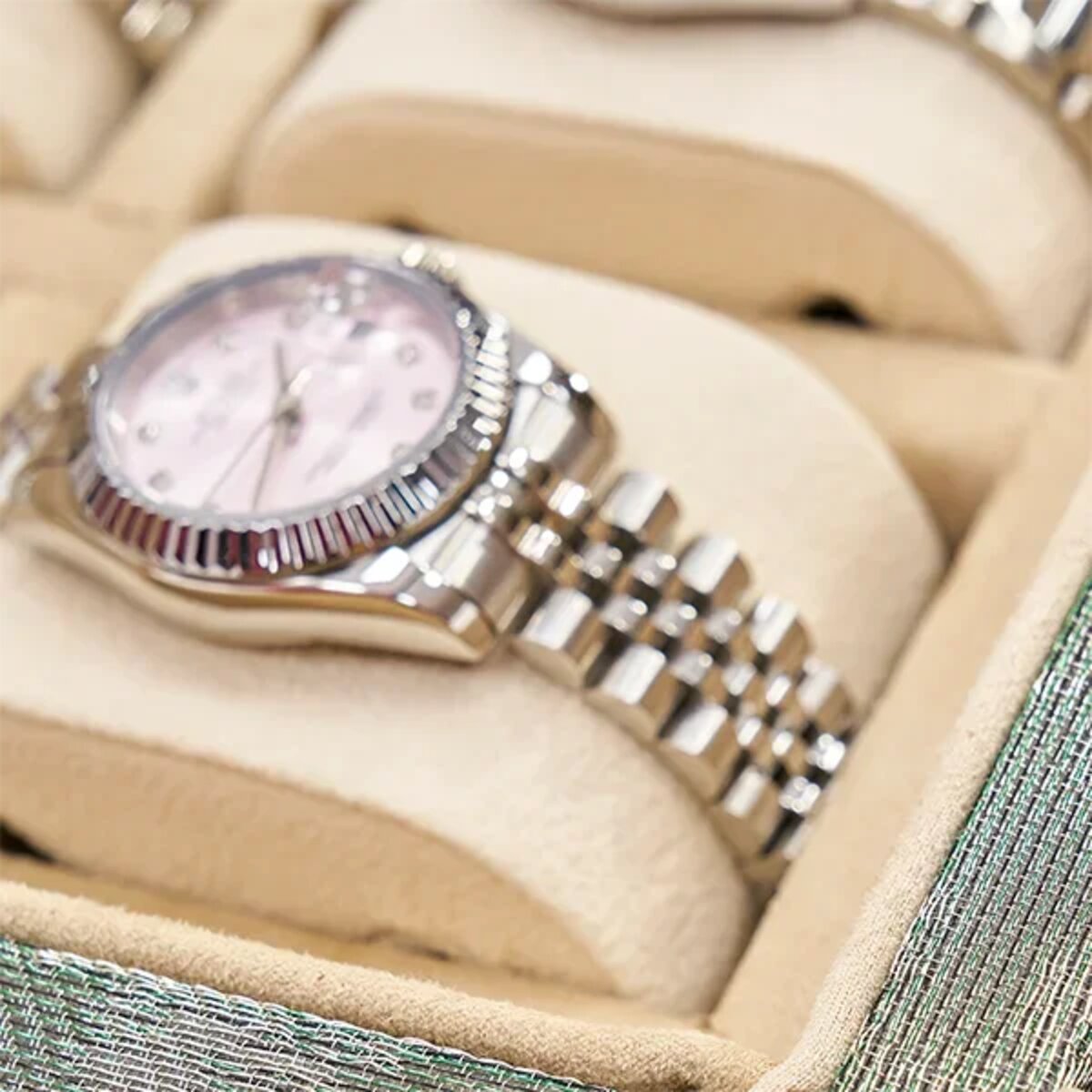
- مجموعة الساعات توضع في علبة ساعات مخصصة متعددة الساعات تحافظ على كل حركة معزولة وسهلة الوصول إليها. يحمل علبة ساعات Delux 10 - زهرة المرج دورة من عشر قطع في فتحات فردية، بحيث تعيش الساعات التي سافرت في مقصورة الركاب الآن في مكان مدروس بقدر الرحلة.
للسؤال الأوسع حول ما يبقى في المنزل مقابل ما يذهب إلى الخزنة، يغطي الأسئلة الشائعة حول تخزين الأشياء الثمينة في المنزل في الإمارات العربية المتحدة التفاصيل المتعلقة بالمقايضات.
لماذا يعد الحاوية المقاسة مهمة من اليوم الأول في الخليج
الخلاصة الفنية: تلتقي المجموعة المنقولة بمناخ الخليج لحظة وصولها، والمناخ قاسٍ عليها. الرطوبة الساحلية في دبي فوق 80% رطوبة نسبية تتأرجح مقابل الديكورات الداخلية المكيفة بالقرب من 25% رطوبة نسبية هي بالضبط التغيير الذي يصدأ الفضة، ويجفف الأشرطة الجلدية، ويجهد الحركات الميكانيكية - لذا فإن الحاوية المحكمة والمناسبة للمناخ ليست لمسة نهائية بل هي متطلب من اليوم الأول.
لم تشاهد القطع القادمة من مناخ معتدل هذا من قبل. يسجل المركز الوطني للأرصاد الجوية رطوبة ساحلية صيفية فوق 80% رطوبة نسبية (ncm.gov.ae)، بينما تعمل الديكورات الداخلية للفيلا جافة تحت تكييف الهواء المستمر. مجموعة تنتقل بين الاثنين - يتم تفريغها في درج مفتوح، ثم تتعرض لدورة التكييف اليومية - تتقدم في العمر بشكل أسرع في صيف دبي مما تفعله في سنوات التخزين الأوروبي. الهواء الرطب الحامل للكبريت يصدأ سبائك الفضة والذهب الأبيض؛ والداخل الجاف يشقق جلد أحزمة الساعة وبطانات الصندوق؛ والتأرجح المتكرر يجهد الزيوت والينابيع في الساعات الميكانيكية التي تفضل الاستقرار.
تستجيب الحاوية ذات الجودة العالية للحفظ لجميع الثلاثة: بناء محكم يقلل من تأرجح الرطوبة، وداخل مبطن بالشمواه يخفف من الجفاف، وحجرات منظمة تمنع القطع من الاحتكاك ببعضها البعض. لهذا السبب، خطوة الحفظ المنزلي ليست تجميلية ولا يمكن تأجيلها - يجب أن تكون الحماية موجودة قبل مرور الأسبوع الأول غير المحمي، لأن هذا الأسبوع يسبب الضرر. الانتقال هو اللحظة الوحيدة التي تقوم فيها بإعداد بيئة المجموعة من الصفر؛ يستحق الأمر إعدادها للمناخ الذي تعيش فيه الآن.
الأسئلة الشائعة
هل يجب عليّ الإعلان عن مجموعة ساعاتي ومجوهراتي عند الانتقال إلى دبي؟ نعم، إذا بلغت القيمة الإجمالية 60 ألف درهم إماراتي أو تجاوزتها من النقد أو الذهب أو الأحجار الكريمة أو المجوهرات والساعات عالية القيمة التي تحملها عبر الحدود. الإعلان هو خطوة إبلاغ، وليس ضريبة، يتم تقديمه عبر الإنترنت على declare.customs.ae أو عبر تطبيق أفصح قبل السفر. وينطبق ذلك سواء حملت المجموعة يدوياً أو سافرت كشحن تحت اسمك. يتم إعفاء الممتلكات الشخصية المستعملة التي يتم إحضارها عند الإقامة الأولى بشكل عام من رسوم الاستيراد المنفصلة البالغة 5٪؛ وقد تخضع العناصر الجديدة والمغلفة للرسوم. تأكد دائماً من القواعد الحالية مع الهيئة الاتحادية للهوية والجنسية والجمارك وأمن المنافذ وجمارك دبي.
هل يجب أن أحمل مجموعتي من المجوهرات يدوياً أم أشحنها إلى الإمارات العربية المتحدة؟ احمل القطع الأساسية عالية القيمة التي لا يمكن تعويضها في حقيبة اليد، ولا تضعها أبداً في الأمتعة المسجلة، حيث تتطلب معظم بوالص تأمين المجوهرات ذلك لكي تكون التغطية سارية. لا تشحن إلا ما يمكنك تأمينه كبضاعة - وتذكر أن بوالص الشحن البحري القياسية تستثني المجوهرات والسبائك والأحجار الكريمة، لذا تحتاج إلى بوليصة متخصصة لجميع المخاطر للأشياء الثمينة مع الإعلان عن القيمة الكاملة، أو تحملها يدوياً بدلاً من ذلك. أي شيء لا يمكنك إعادة تأمينه أو إعادة تقييمه بعد، يفضل تركه في حراسة آمنة في الخارج حتى يتم ترتيب الجانب الإماراتي.
كيف يمكنني تأمين مجوهراتي بمجرد أن أصبح مقيماً في الإمارات العربية المتحدة؟ أعد ترسيخ المجموعة على تغطية الإمارات العربية المتحدة بدلاً من الاعتماد على بوليصة تأمين بلد المنشأ أو تأمين محتويات المنزل. اطلب تقييم كل قطعة مهمة من قبل خبير أحجار كريمة معتمد في دبي، ثم قم بجدولة القطع بشكل فردي مع شركة تأمين في الإمارات العربية المتحدة - عادة ما يتم تحديد الحد الأقصى للقطع الفردية غير المعلن عنها بالقرب من 10,000 درهم إماراتي، وهو أقل بكثير من قيمة الاستبدال. حدد إعادة تقييم سنوية دائمة، لأن أسعار الذهب وأسعار الصرف تحرك قيمة الاستبدال بشكل كبير خلال عام واحد. احتفظ بالتقييمات والفواتير والشهادات والصور في ملف إثبات واحد للمطالبات وإعادة البيع.
أين يجب أن تقيم مجموعتي في الأسبوع الأول في منزل جديد في دبي؟ في حاوية محددة ومحكمة الإغلاق من الليلة الأولى - وليس درجًا مفتوحًا. يعكس الهيكل الأنظف كيفية تقسيم المجموعة للانتقال: صندوق خزانة بمرآة للمجموعة المنقولة بالكامل، وخزانة بيومترية للجوهر عالي القيمة الذي حملته يدوياً، وحقيبة مخصصة للساعات. علاوة على الأمان، السبب هو المناخ: الرطوبة الساحلية فوق 80% رطوبة نسبية مقابل الديكورات الداخلية الجافة والمكيفة تصدأ الفضة وتضغط على الحركات، ويحدث التلف في هذا الأسبوع الأول غير المحمي بالضبط.
الانتقال إلى دبي مع مجموعة: قم بزيارة صالة عرض سيراي في أم سقيم
يُختتم الانتقال إلى دبي بمجموعة ساعات ومجوهرات، بشكل مثالي، باستقرار المجموعة في حراسة تتناسب مع الرحلة التي قطعتها للتو - وتلك الخطوة الأخيرة تستحق القيام بها شخصياً. يكمن الفرق بين الحاوية الكافية والحاوية ذات الجودة العالية في آلية القفل، ومرونة جلد الشمواه في الحجرة المبطنة، وختم الباب المغلق، وليس في صورة. احجز موعداً خاصاً في صالة عرض سيراي، مجمع الشفاء، أم سقيم 1، دبي. اتصل على 971 55 886 6180 أو اكتب إلى info@siraecasa.com، وسيقوم فريقنا بمطابقة صندوق خزانة، وخزانة بيومترية، وحقيبة ساعات للمجموعة التي نقلتها والمنزل الذي تعيش فيه الآن.


اترك تعليقًا
This site is protected by hCaptcha and the hCaptcha Privacy Policy and Terms of Service apply.