
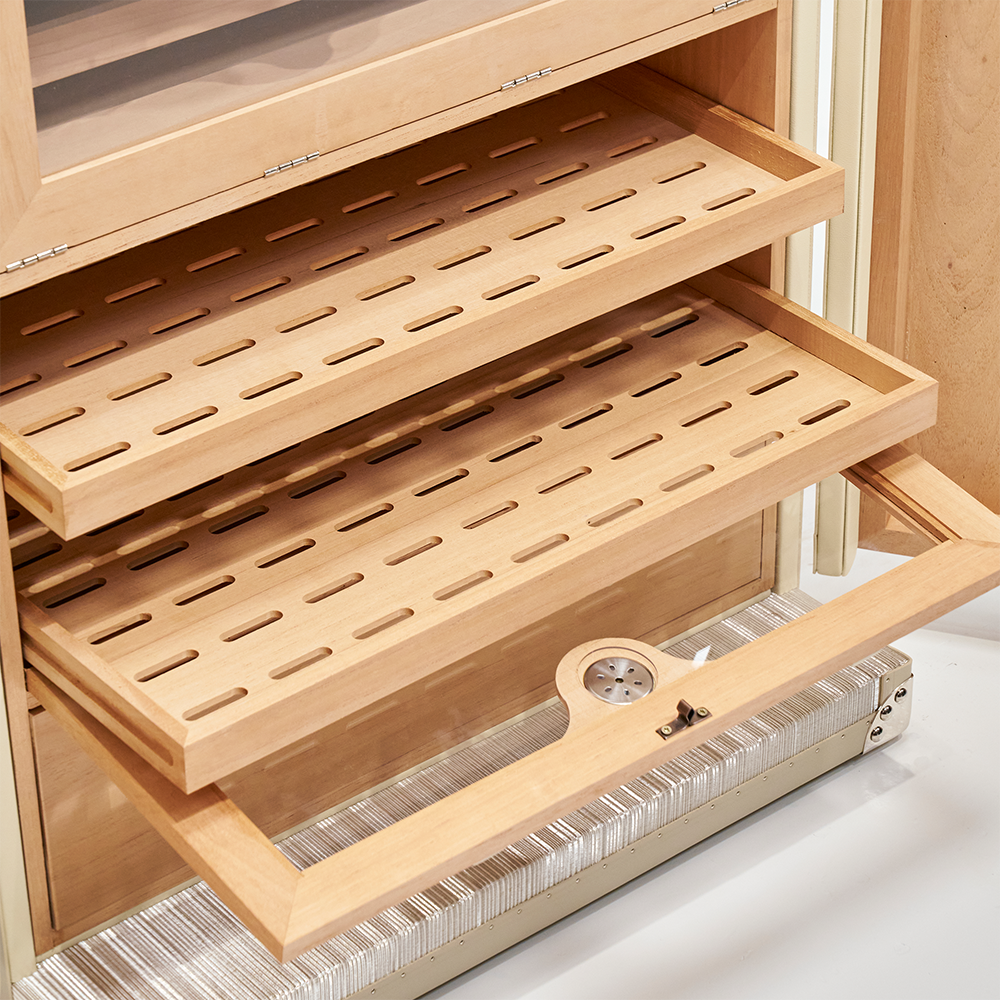
خزانة مرطب مبطنة بخشب الأرز الإسباني بقفل بصمة الإصبع للمكتب المنزلي: دليل لجنة سيراي
يتم الحكم على مرطب السيجار المكتبي المنزلي بمعيارين في آن واحد — دقة هندسة المناخ وسرية التحكم في الوصول. عندما يتم تبطين كل جدار ورف داخلي بـ خشب الأرز الإسباني (Cedrela odorata)، يكون الخشب صلبًا وليس قشرة، ويصبح الدولاب بيئة حية: يتنفس الخشب، ويوازن الرطوبة، وينقل حضورًا عطريًا مميزًا لا يمكن لأي طبقة صناعية أن تكرره. عند دمج ذلك مع قفل بيومتري ببصمة الإصبع مصمم لتحمل الرطوبة العالية المستمرة، يصبح الدولاب خاصًا حقًا — لا يمكن للزوار الفضوليين الوصول إليه دون المساس بالبيئة الدقيقة المغلقة بالداخل. غالبًا ما يتم التعامل مع التخصصين، حرفة الأرز والأمان البيومتري، بشكل منفصل في السوق الأوسع. سيراي تعالج كلا الأمرين.
التنقل
- بطانة خشب الأرز الإسباني: الحرفية، الأصالة، وأداء مناخ الخليج
- قفل بصمة الإصبع البيومتري: متانة الرطوبة ومواصفات الأمان
- سعة الخزانة، التحكم النشط في الرطوبة، وموضع المكتب المنزلي
معيار سيراي
المعايير الأساسية — دولاب مرطب سيجار المكتب المنزلي من سيراي
| المعلمة | المواصفات |
|---|---|
| الأبعاد الخارجية (العرض × العمق × الارتفاع) | 600 × 550 × 1,300 مم |
| مادة البطانة الداخلية | خشب الأرز الإسباني / Cedrela odorata — لوح صلب، وليس MDF مكسو بقشرة |
| نطاق تشغيل الرطوبة النسبية المستهدف | 70% رطوبة نسبية ±5% (معاير لنطاق تشغيل 65–75% رطوبة نسبية) |
| التحكم في الوصول | قفل بيومتري ببصمة الإصبع — وحدة استشعار سعوية |
| نوع الختم | ختم حشية محكم الغلق — حشية ضغط محيطية، تلامس كامل لإطار الباب |
| نظام الرطوبة | نظام تحكم نشط في الرطوبة — إلكتروني بيليتير أو بمساعدة ضاغط |
| ملحق الرطوبة السلبي | متوافق مع عبوات الرطوبة ثنائية الاتجاه Boveda / منظم الرطوبة Xikar |
| عدد الخزائن (إرشادي) | 500+ سيجار بتنسيق مقياس حلقي قياسي 48–52 |
| التكوين | ترتيب تخزين ذكي ذو مفهوم مفتوح مع مناطق رفوف مخصصة |
إشارة النقطة العمياء — متانة قفل بصمة الإصبع عند الرطوبة النسبية العالية وأصالة خشب الأرز
العرض: يفشل مستشعر بصمة الإصبع في القراءة خلال 6–18 شهرًا من التركيب في بيئة رطوبة نسبية تتراوح بين 68–72% — يتأكسد سطح المستشعر، وتتدهور الطبقة السعوية، ويرتفع معدل الرفض فوق 30%.
المواصفات/الآلية: غلاف مستشعر بتصنيف IP (الحد الأدنى IP54 لمقاومة تسرب الرطوبة)؛ طلاء متطابق على لوحة الدوائر المطبوعة (PCB)؛ لوحة واجهة من الفولاذ المقاوم للصدأ أو سبيكة مؤكسدة؛ لا توجد نقاط تلامس نحاسية مكشوفة عند وصلة إطار الباب. بطانة الأرز مؤكدة على أنها لوح Cedrela odorata صلب، بسمك لا يقل عن 12 مم — وليس قشرة بسمك 2–3 مم فوق ركيزة MDF (تنفصل القشرة تحت الرطوبة الدورية، وتحبس البكتيريا، وتتوقف عن تخفيف الرطوبة النسبية خلال 18–24 شهرًا).
التحقق: تحمل المستشعر: 50,000+ دورة تشغيل عند رطوبة نسبية مستدامة بنسبة 70% مع معدل رفض أقل من 5%. أصالة الأرز: مقطع عرضي مرئي عند حافة الرف (لا يوجد خط أساس MDF)؛ مركب عطري موجود (2-فورفورال، كافور الأرز يمكن اكتشافه بالأنف دون تسخين)؛ الوزن لكل رف متوافق مع كثافة اللوح الصلب (حوالي 560 كجم/متر مكعب لـ Cedrela odorata).
بطانة خشب الأرز الإسباني: لماذا يظل Cedrela odorata المعيار الذهبي لتخفيف الرطوبة والحفاظ على الرائحة
الحالة المادية للوح الصلب مقابل القشرة
الفرق بين خشب الأرز الإسباني / Cedrela odorata الصلب والسطح المكسو بالقشرة ليس تجميليًا. يحمل اللوح الصلب بسمك 12 مم أو أكثر كتلة استرطابية حقيقية — تمتص تركيبته الخلوية الرطوبة وتطلقها استجابة للتغيرات المحيطة، وتعمل كمخزن بطيء الاستجابة يخفف من الارتفاعات التي لا يستطيع المرطب الإلكتروني وحده منعها. مرر ظفرك على حافة لوح صلب حقيقي وستشعر بمقاومة الألياف؛ يتوقف MDF المكسو بالقشرة ببساطة.
القشرة، عادة بسمك 2-3 مم موضوعة فوق قلب MDF حساس للرطوبة، لديها قدرة تخزين مهملة. في مناخ الخليج — حيث يمكن أن تتراوح الظروف الخارجية خارج الغرفة المتحكم فيها بين 30-40% رطوبة نسبية في تكييف الهواء في الشتاء العميق و80% أو أكثر في الهواء الساحلي غير المُدار — فإن هذه الكتلة المخزنة ليست رفاهية. إنها الفرق بين قبو مستقر وقبو متقلب.
النزاهة العطرية: كيمياء الأرز في خزانة محكمة الإغلاق
يحتوي خشب الأرز الإسباني (Cedrela odorata) على مركبات عطرية متطايرة – بشكل أساسي كافور الأرز و2-فورفورال – تتفاعل بلطف مع أوراق التبغ أثناء التخزين طويل الأمد. هذا ليس تعطيرًا. عند التركيزات المناسبة داخل خزانة محكمة الإغلاق، يفهم خبراء السيجار أن هذه المركبات تكمل بدلاً من أن تهيمن على الملف العطري للسيجار؛ فهي تعطي البيئة لمسة مميزة بدلاً من فرض نفسها عليها.
تُقدم الألواح المكسوة بالقشرة مشكلة مختلفة تمامًا، خاصة عندما تُطلق الركيزة مركبات لاصقة. تُعد راتنجات عائلة الفورمالديهايد شائعة في تصنيع الألواح الليفية متوسطة الكثافة (MDF)، وتدخل كيمياء معادية في بيئة دقيقة تتم إدارتها بعناية. سيلاحظ المُجمِّع الذي يخزن السيجار النيكاراغوي أو الكوبي طويل الأمد لمدة ثلاث إلى خمس سنوات الفرق في السحب وفي الزفير، وسيرجع ذلك في أغلب الأحيان إلى البطانة بدلاً من نظام الترطيب.
عندما يتم تقديم خزانة مع وصف "مبطنة بخشب الأرز" ولكن بدون تحديد سمك اللوح أو المادة الأساسية، يقع عبء التحقق على المشتري. حافة الرف هي الاختبار الأكثر وضوحًا: سيعرض اللوح الصلب حبيبات مستمرة عبر المقطع العرضي، بدون خطوط تصفيح مرئية ولا لب MDF بني رمادي. يوفر الوزن لكل رف — أثقل مما يتوقعه غير المطلعين — إشارة ثانوية تستحق الاهتمام بها.
في سيراي، يتم تحديد أقسام الرفوف لتكون من ألواح خشب الأرز الإسباني (Cedrela odorata) الصلبة، وتكون الحبيبات على كل حافة مرئية متاحة للفحص أثناء العرض الخاص. الرائحة المميزة موجودة في درجة حرارة الغرفة دون تسخين. إذا لم يكن خشب الأرز واضحًا فور فتح الباب – تلك الدفء الراتنجي الهادئ – فإن اللوح ليس صلبًا.
قفل بصمة الإصبع البيومتري في بيئة مكتب منزلي عالية الرطوبة: مواصفات الأمان واعتبارات المتانة
لماذا تفشل أقفال بصمة الإصبع القياسية في ظروف المرطب
خزانة السيجار التي تعمل عند رطوبة نسبية تتراوح بين 68-72% توفر بيئة لم تصمم معظم وحدات بصمة الإصبع المخصصة للمستهلكين للعيش فيها بشكل مستمر. تعتمد المستشعرات السعوية على سطح عازل مستقر بين الإصبع وطبقة القراءة؛ تتسبب الرطوبة المستمرة في تكثف دقيق، وتأكسد تدريجي لأسطح التلامس، وفي النهاية انحراف المعايرة. يبدأ المستشعر في قراءة البصمات المسجلة بشكل خاطئ. ترتفع معدلات الرفض.
الفشل نادرًا ما يكون مفاجئًا. يظهر على شكل رفض متقطع يزداد سوءًا على مدار أشهر، حتى يجب تجاوز القفل بواسطة رمز PIN أو مفتاح احتياطي. في سياق المكتب المنزلي حيث تكون السرية مهمة - وحيث قد يتم الوصول إلى الخزانة بشكل خاص - فإن فرض تجاوز ثانوي يحبط الغرض من التحكم البيومتري تمامًا.
مواصفات الأجهزة التي تحدد طول العمر عند 70% رطوبة نسبية
المتغيرات التي تفصل بين القفل البيومتري المتين والقفل القياسي في سياق المرطب دقيقة وقابلة للقياس:
- تصنيف غلاف المستشعر: الحد الأدنى IP54 — مقاوم لدخول الغبار ومحمي ضد رذاذ الرطوبة؛ IP65 مفضل لأي خزانة تتجاوز 70% رطوبة نسبية باستمرار
- طلاء متوافق للوحة الدوائر المطبوعة (PCB): طبقة بوليمر متوافقة فوق لوحة الدوائر تمنع الدوائر القصيرة والتآكل الناتج عن الرطوبة عند وصلات اللحام
- مادة لوحة الواجهة: فولاذ مقاوم للصدأ أو ألومنيوم مؤكسد من الدرجة البحرية؛ سبيكة الزنك الخام ستظهر عليها تلون السطح خلال 18 شهرًا عند الرطوبة المستمرة
- واجهة الاتصال عند إطار الباب: لا توجد أطراف نحاسية مكشوفة؛ موصلات مطلية بالذهب أو محكمة الغلق فقط
- متانة التشغيل: مصنفة من المصنع بحد أدنى 50,000 دورة — ذات معنى مستقل فقط عند اختبارها عند الرطوبة النسبية التشغيلية المصنفة، وليس في ظروف المختبر الجافة
الوصول البيومتري في سياق المكتب المنزلي: الخصوصية والأمن المنزلي
حالة الاستخدام محددة. مرطب المكتب المنزلي ليس قبوًا تجاريًا للسيجار. المقتني لا يحمي من اقتحام احترافي - إنه يحافظ على نطاق خاص داخل مسكن مشترك. يمثل الأطفال وموظفو المنزل والضيوف الزائرون السيناريو الأساسي للتحكم في الوصول.
يعالج قفل بصمة الإصبع البيومتري هذا الأمر بسجل للمستخدمين المسجلين، عادةً ثلاثة إلى عشرة بصمات، دون توزيع مفتاح مادي أو رمز يمكن مشاركته أو نسيانه. الفائدة العملية مقارنة بالقفل المرمز كبيرة: يمكن ملاحظة رمز PIN أو مشاركته أو ببساطة تخمينه؛ لا يمكن استعارة بصمة إصبع مسجلة. بالنسبة لخزانة تضم مجموعة ذات قيمة كبيرة - مالية وعاطفية على حد سواء - فإن النمط البيومتري هو الحل المناسب.
مقارنة خزائن المرطبات البيومترية مقابل ثلاجات النبيذ المعاد توجيهها والبدائل المقفلة بالرمز
يتعلق سؤال يواجهه فريق الاستشارات في Sirae بانتظام بتكييف ثلاجات النبيذ أو وحدات التخزين المقفلة برمز كخزائن سيجار. الإجابة معمارية.
تم تصميم وحدات تبريد النبيذ لعلاقة مختلفة بين درجة الحرارة والرطوبة وعادة ما تفتقر إلى بطانة خشب الأرز، وضغط حشية فعال، ونمط تدفق الهواء الداخلي المناسب للتبغ. تستخدم خزائن الأقفال المشفرة من موردي الأثاث العام MDF أو الخشب الرقائقي بشكل شبه عالمي؛ يؤدي تركيب نظام ترطيب ما بعد البيع في علبة غير محكمة الإغلاق إلى توزيع غير متساوٍ للرطوبة النسبية وتآكل متسارع لجهاز الترطيب نفسه. تقترب تكلفة التدخل التصحيحي المستمر - عبوات Boveda البديلة بكميات أكبر، وإعادة معايرة مقاييس الرطوبة، وتركيب لوحات الأرز - أو تتجاوز الفرق في تكلفة التشغيل الأولية في غضون سنتين إلى ثلاث سنوات. يجدر تصحيح افتراض شائع هنا: طريق ثلاجة النبيذ ليس إجراءً لتوفير التكاليف. إنه نفقات مؤجلة.
سعة الخزانة، التحكم النشط في الرطوبة، وموضع المكتب المنزلي: دليل عملي
مطابقة سعة الخزانة مع مجموعة متنامية
تستوعب خزانة سيراي للمكتب المنزلي بأبعاد 600 × 550 × 1300 مم 500 سيجار أو أكثر بتنسيق قياس الحلقة 48-52. هذه عتبة مهمة. تسمح للمقتني بالحفاظ على قبو دوار — مخزون معتق في الأوضاع السفلية حيث تكون درجة الحرارة الأكثر استقرارًا، والمقتنيات الحديثة في المناطق العلوية للتكييف الأولي — دون أن تصبح الخزانة وعاء احتجاز قصير الأجل مملوءًا باستمرار.
التخطيط العملي للرفوف ضمن هذه المساحة:
- المنطقة السفلية (الثلث السفلي): التخزين طويل الأجل؛ كتلة حرارية أكثر استقرارًا، تبادل رطوبة أبطأ
- المنطقة الوسطى: مخزون التدوير النشط؛ الأكثر سهولة، الرطوبة النسبية المثلى للاستخدام اليومي
- المنطقة العلوية: المقتنيات الجديدة والإضافات الموسمية تحت المراقبة؛ مقياس رطوبة صغير منفصل هنا يسمح بمراقبة منطقة مستقلة
أنظمة التحكم النشط في الرطوبة ودور المكملات السلبية
يوفر نظام التحكم النشط في الرطوبة — سواء كان بمساعدة ضاغط أو قائمًا على تأثير بلتييه — المصدر الرئيسي للرطوبة النسبية. ويحدد ختم الحشية المحكم الإغلاق عند إطار الباب مقدار عمل التكييف الذي يتم الاحتفاظ به بين الفتحات. يفقد الباب ذو الحشية الضعيفة الرطوبة النسبية بسرعة مع كل فتح؛ بينما يحافظ الختم المحيط بالضغط على استقرار الخزانة ضمن ±3% رطوبة نسبية حتى في غرفة جافة ومكيفة.
يخدم الاستكمال السلبي باستخدام عبوات الرطوبة ثنائية الاتجاه Boveda أو منظم الرطوبة Xikar وظيفة تكميلية: امتصاص ارتفاعات الرطوبة النسبية القصيرة عندما يتجاوز النظام النشط، وتوفير مخزن مؤقت أثناء التأخير قبل أن يستجيب النظام النشط للانخفاض. يمثل الاثنان معًا — النظام النشط للتحكم الأساسي، والعبوات السلبية للتثبيت الدقيق — النهج الذي يتحقق منه فريق تركيب Sirae عند التسليم.
معايرة مقياس الرطوبة ومعيار 70% رطوبة نسبية ±5%
يُعد معيار معايرة الرطوبة بنسبة 70% رطوبة نسبية ±5% هو المعيار المقبول على نطاق واسع لتخزين التبغ على المدى الطويل، ويدعمه المنتجون الكوبيون والنيكاراغويون والدومينيكانيون على حد سواء. المعايرة ليست عملية تُجرى لمرة واحدة. إنها تتطلب انضباطًا.
يجب التحقق من مقياس الرطوبة مقابل اختبار الملح أو جهاز مرجعي معاير من الشركة المصنعة عند التركيب، ومرة أخرى على فترات مدتها ستة أشهر. تختلف الوحدات الرقمية الصغيرة في دقتها على المدى الطويل؛ بينما تكون المقاييس التناظرية أكثر اتساقًا بشكل عام ولكنها تتطلب تعديلًا دوريًا. الرقم الأساسي ليس قراءة الرطوبة النسبية المطلقة بل معدل الانحراف — مقياس الرطوبة الذي يقرأ 68% باستمرار يعمل بشكل جيد؛ بينما مقياس الرطوبة الذي يقرأ 68% في ديسمبر و 74% في يونيو دون أي تغيير في الإعداد يشير إلى مستشعر معطل، وليس قبوًا مستقرًا.
موضع المكتب المنزلي: الاستقرار الحراري ووضع الخزانة
تتأثر عملية تكييف السيجار بدرجة الحرارة والرطوبة. أفضل مكان لوضع مرطب سيجار قائم في مكتب منزلي هو أن تكون الوحدة:
- بعيدًا عن التعرض المباشر لأشعة الشمس عبر النوافذ (الأشعة فوق البنفسجية تفسد أوراق التغليف وتخلق دورات حرارية سطحية)
- بعيدًا عن فتحات تكييف الهواء ومصادر التدفئة تحت الأرض (تخلق تدرجات حرارية محلية رطوبة نسبية غير متساوية داخل الخزانة)
- بجانب جدار داخلي بدلاً من جدار خارجي، حيث يكون تباين العزل أكبر في بناء الخليج
تندمج الخزانة المستقلة بارتفاع 1300 مم بشكل طبيعي في غرفة دراسة أو مكتبة خاصة. تبدو كخزانة قائمة — أثاث، وليست جهازًا — وتشغل مساحة 600 × 550 مم، تتوافق مع معظم مخططات أرضيات المكاتب المنزلية دون الحاجة إلى بناء تجويف مخصص.
تخطيط السعة لهواة الجمع الذين يملكون أكثر من 500 قطعة: متى تكون الخزانة الواحدة هي الحل الصحيح
سؤال ما إذا كان يجب طلب خزانة واحدة كبيرة أو وحدات متعددة أصغر له إجابة عملية لمعظم هواة الجمع في المكاتب المنزلية. تحافظ وحدة واحدة بهذا الحجم على بيئة داخلية أكثر استقرارًا من وحدتين أصغر لأن الكتلة الحرارية والرطوبة النسبية أكبر بالنسبة لحجم الهواء الذي يتم إزاحته عند كل فتح للباب. الإدارة أبسط أيضًا — نظام نشط واحد للحفاظ عليه، وحشية واحدة للفحص، ومجموعة واحدة من عبوات Boveda لتدويرها.
بالنسبة للمجموعات التي تتجاوز 1000 قطعة، تصبح الخزانة الثانية امتدادًا طبيعيًا — من الناحية المثالية توضع في نفس الغرفة لمشاركة ظروف درجة الحرارة المحيطة، بدلاً من إدخالها في منطقة مناخية منفصلة حيث تتضاعف المتغيرات.
لترتيب استشارة خاصة بشأن خزانة مرطب مبطنة بخشب الأرز الإسباني مع قفل بيومتري ببصمة الإصبع — يتم تنسيقها من صالة عرض سيراي في الطابق الأول من مجمع الشافار، طريق شاطئ جميرا، أم سقيم 1، دبي، ومتاحة للتسليم بالطلب والتركيب الاحترافي في جميع أنحاء الإمارات العربية المتحدة ومنطقة الشرق الأوسط وشمال إفريقيا — يمكن التواصل مع فريق سيراي عبر خط كبار الشخصيات على الرقم +971 55 886 6180، أو بالمراسلة على البريد الإلكتروني info@siraecasa.com، أو عبر المجموعة الكاملة على الموقع الإلكتروني https://www.siraecasa.com. يتم ترتيب المواعيد بشكل خاص، بما يتماشى مع طبيعة المجموعة نفسها.

اترك تعليقًا
This site is protected by hCaptcha and the hCaptcha Privacy Policy and Terms of Service apply.