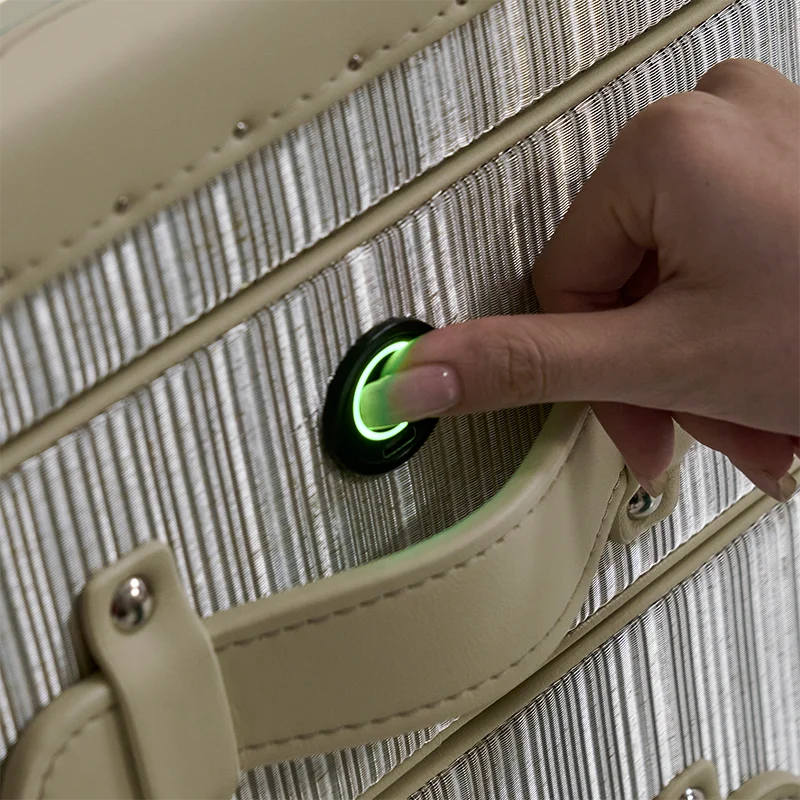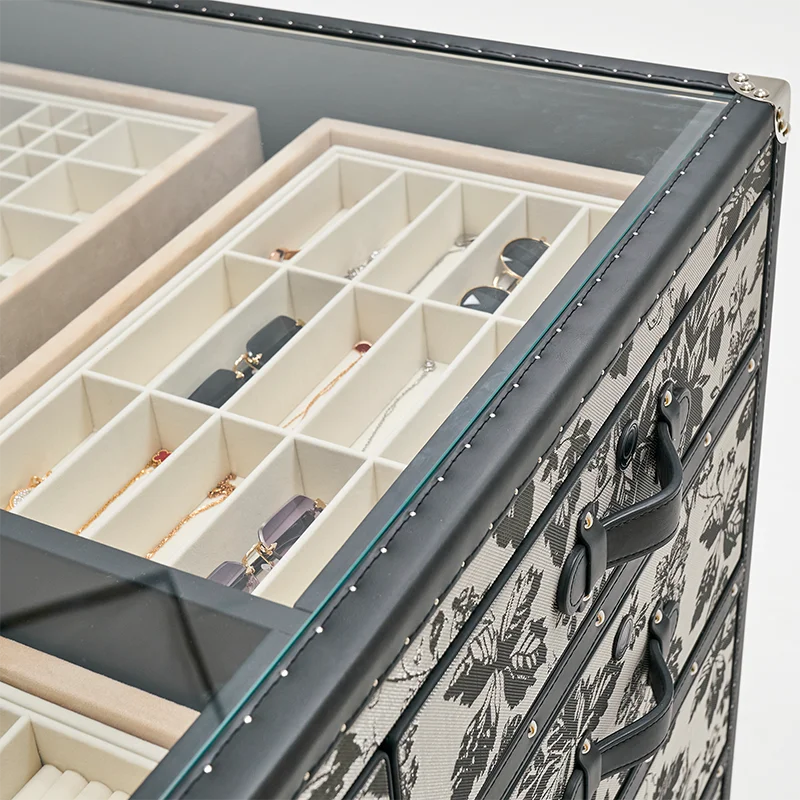
Beyond the Vault: Securing Valuables from Internal Threats with Biometric Alerts
The security of a private residence in Dubai, or indeed anywhere in the MENA region, presents a unique and compelling paradox. It rests not only on formidable perimeter defences, but on the delicate, carefully managed balance of trust extended to household staff. While traditional safes provide a bulwark against external threats, they often overlook the nuanced risks from within. These are risks posed by individuals who possess proximity, time, and an intimate, ingrained knowledge of the home's daily rhythms.
Intelligent biometric systems offer a discreet yet decisive solution to this challenge. By moving beyond simple mechanical locks to create an auditable, identity-based record of every interaction, they provide principals with a profound sense of peace. Valuables are protected not just by hardened steel, but by the quiet certainty of data.
Guide to This Commission
- The Sirae Standard
- Internal Threats: The Limits of Traditional Safes
- Intelligent Alert Systems: Real-Time Notifications for Unauthorised Access
- Integrated Biometric Ecosystems: A Holistic Security Posture
[Image Placeholder: A discreet, leather-lined biometric safe built into a dark wood wardrobe in a Dubai villa.]
The Sirae Standard
Technical Verdict: A collection-grade security posture requires biometric systems with non-repudiable audit trails, real-time alert notifications for tamper and duress events, and cryptographic protocols that prevent physical reset attacks, ensuring asset protection against sophisticated internal threats.
Core Principles of Internal Threat Detection
The foundation of modern residential security lies in a critical shift from passive barriers to active, responsive intelligence. This evolution involves several core principles. Biometric integrity ensures that the unique whorls of a fingerprint cannot be easily spoofed or replicated. Access logging creates a silent, immutable record of every interaction, whether successful or not. Time-fencing allows principals to grant temporary, context-specific access with surgical precision, while robust cryptographic keys shield the system's core programming from direct manipulation.
Alert Mechanisms and Their Triggers
An intelligent system does not merely wait to be breached; it reports the attempt. Key mechanisms include failed attempt thresholds, which trigger an alert after a set number of incorrect fingerprint scans—signalling deliberate probing rather than a simple, honest mistake. Beneath a smooth, seamless exterior, physical tamper sensors detect the brute force of a drill or pry bar, or any attempt to remove the unit. And in a moment of crisis, duress codes or specific duress fingerprints can be used to open a safe while silently sending a high-priority alert to a security detail or the principal themselves.
✍️ Expert Insight: A robust biometric system logs not only successful entries but every failed attempt, creating an immutable audit trail. This data is critical for distinguishing idle curiosity from a concerted effort to bypass security protocols. —— Sirae Preservation Lab.
Internal Threats: The Limits of Traditional Safes
The Bottom Line: Standard safes are vulnerable to observation, coercion, and physical backup key discovery, lacking the real-time, identity-specific alert systems needed to counter internal threats from staff with prolonged access.
A conventional safe, secured by a physical key or a memorised combination, operates on a starkly binary principle: it is either locked or unlocked. It possesses no awareness of who is attempting access, nor when, nor how many times. This presents a critical vulnerability within a staffed residence, where individuals have sustained, and often unsupervised, access to the most private areas of a home.
The Fallacy of Physical Security Alone
The weakness of a traditional safe is not in its steel, but in its credentials. Or rather, it lies in the singularity and anonymity of those credentials. A key can be misplaced, borrowed, or copied with ease. A combination can be observed over a shoulder, coerced, or discovered written down. Once this single point of failure is compromised, the safe offers no further resistance. Crucially, it leaves no record of the breach until the discovery is made, often far too late. The internal threat actor leverages time and familiarity—subtle advantages an external burglar rarely possesses.
The Backup Key Vulnerability
Nearly all electronic safes include a mechanical override as a final failsafe. For many mass-market luxury products, this simple backup key is the weakest link in the entire chain. If discovered by household staff, it grants complete, untraceable access. Advanced systems, such as the Verifi Smart.Safe.®, counter this directly by logging the event and triggering a Backup Key Access Alert. This single feature transforms the override from a clandestine vulnerability into a monitored, audited action, immediately and silently notifying the owner that the primary layer of security has been bypassed.
[Image Placeholder: Close-up of a smartphone screen displaying a real-time SMS security alert.]
Intelligent Alert Systems: Real-Time Notifications for Unauthorised Access
Technical Verdict: Advanced systems engineered by firms like Zvetco provide instant SMS Notifications for specific events including unauthorized fingerprint attempts (Tamper Alert), use of physical keys, and attempts to bypass security via hardware resets (Reset Attack Protection).
The defining feature of a modern security device is its ability to communicate. A silent breach is, for all intents and purposes, a successful one. A system that instantly reports anomalous activity to the principal’s phone, regardless of their location in the world, creates a powerful, active deterrent and provides an opportunity for immediate intervention.
Identity-Specific Tamper Alerts
When a curious staff member or guest attempts to use their fingerprint on a safe, a basic system might do nothing at all. A superior one, however, registers the failed attempt. The Tamper Alert functionality found in collector-grade systems elevates this by not only logging the event but instantly sending a notification. This is not merely an alarm; it is intelligence. It delivers irrefutable knowledge that a specific security layer was tested by an unauthorised user, confirming a breach of protocol even when you are not there to witness it.
Defending Against Sophisticated Internal Attacks
Determined individuals may go beyond simple, opportunistic curiosity. They might try to find a hidden reset button to wipe registered fingerprints and enroll their own—a surprisingly common flaw in lower-grade consumer safes. True security-conscious engineering anticipates this. Reset Attack Protection is a critical, deeply embedded feature that ensures the device can only be reset by an already-registered administrator's fingerprint. This renders external reset buttons inert, defeating a common and effective method of internal attack. Any such attempt is logged and can trigger its own alert, protecting the very integrity of the system itself.
Integrated Biometric Ecosystems: A Holistic Security Posture
The Bottom Line: An integrated ecosystem like the Sanctuary™ Management System allows for granular, time-based access control across multiple entry points, providing zoned security and alerts for any deviation from pre-set permissions for staff or family members.
For a comprehensive solution, security cannot be confined to a single, isolated box. A truly secure residence employs an ecosystem approach, where access rights are managed centrally and applied with intelligence throughout the property—from the front door to the private study and the strongroom concealed within.
[Image Placeholder: An elegant hallway in a modern home, with a subtle, wall-mounted biometric scanner next to a door.]
Granular Access Control and Time-Fencing
Answering the need for nuanced, real-world permissions, an advanced system allows a principal to grant specific, time-limited access. A housekeeper, for example, can be granted biometric access to the main villa and storage areas, but only between the hours of 10:00 and 12:00 on Tuesdays and Fridays. Her fingerprint will simply not function outside this designated window. Crucially, access to a private study or dressing room can be permanently denied. Any attempt to access a restricted area, or to operate outside the authorised schedule, will fail and instantly generate an SMS Notification with the user’s identity, location, and timestamp, delivered directly to the principal.
Navigating Privacy and Trust in a Monitored Environment
Implementing such a system requires careful consideration of both the employer-employee relationship and local privacy laws. The objective is not surveillance, but security through accountability. Our consultation process, curated from our Dubai showroom, emphasises transparent communication. Staff should be informed that access to sensitive areas is biometrically controlled and logged for the protection of valuable assets. This reframes the system from one of mistrust to one of professional protocol, creating clear, unambiguous boundaries that protect both the family’s privacy and the staff from potential false accusations. It establishes a professional environment built on verifiable trust. For ultimate discretion, hidden release mechanisms like Invisiprox™ tags can secure entire compartments without alerting attention to their existence.
A thoughtful security strategy, in the end, enhances peace of mind by making the implicit rules of the household explicit, verifiable, and effortlessly enforceable.


Leave a comment
This site is protected by hCaptcha and the hCaptcha Privacy Policy and Terms of Service apply.