
Heirloom Jewelry Chest: The Ultimate GCC Wedding Gift to Last Generations
The Heirloom Jewellery Chest: A Legacy Gift for a GCC Wedding
In the grand tradition of Gulf weddings, where the exchange of significant gifts marks the foundation of a new family legacy, the focus often lies on the jewels themselves. Yet, a truly profound statement of continuity is made not only by the gems but by the vessel crafted to protect them. A commissioned jewellery chest is more than storage; it is the first chapter of a story, an object of intention designed to be passed through generations, gathering meaning with each handover.
This guide explores the principles that elevate a jewellery chest from a beautiful object to a true family heirloom, designed to endure the unique climate and honour the cultural depth of the GCC.
- Why the Chest Itself is the Ultimate Legacy
- Defining Heirloom-Grade Craftsmanship
- Commissioning a Personalised Family Narrative
The SIRAE Standard
Technical Verdict: The viability of an heirloom-grade chest in the GCC is determined by its material stability against relative humidity (RH) swings of 20–80%+, its use of inert, non-off-gassing linings to prevent chemical oxidation of precious metals, and a structural integrity impervious to thermal expansion and contraction—qualities inherent in our proprietary machine-woven copper-wire facade construction.
The Climate-Proof Mandate for Gulf Heirlooms
For an object to last a century in Dubai or Doha, its design must begin with an uncompromising understanding of the local climate. Standard luxury goods, often engineered for temperate European conditions, can fail dramatically when faced with the coastal humidity and intense dry heat of the Gulf. Wood can warp, veneers can peel, and interior adhesives can degrade, releasing damaging fumes.
An heirloom intended for this environment must be constructed from materials chosen for their resilience. This involves a foundational structure impervious to climatic shifts, joinery techniques of absolute precision, and the use of linings that actively buffer against moisture.
The Material Science of Preservation
The interior of a jewellery chest is not a passive space; it is an active micro-environment. The wrong materials can accelerate the very damage they are meant to prevent. Many common textiles and foams contain sulphur compounds that cause aggressive tarnishing on silver and can even affect low-karat gold over time.
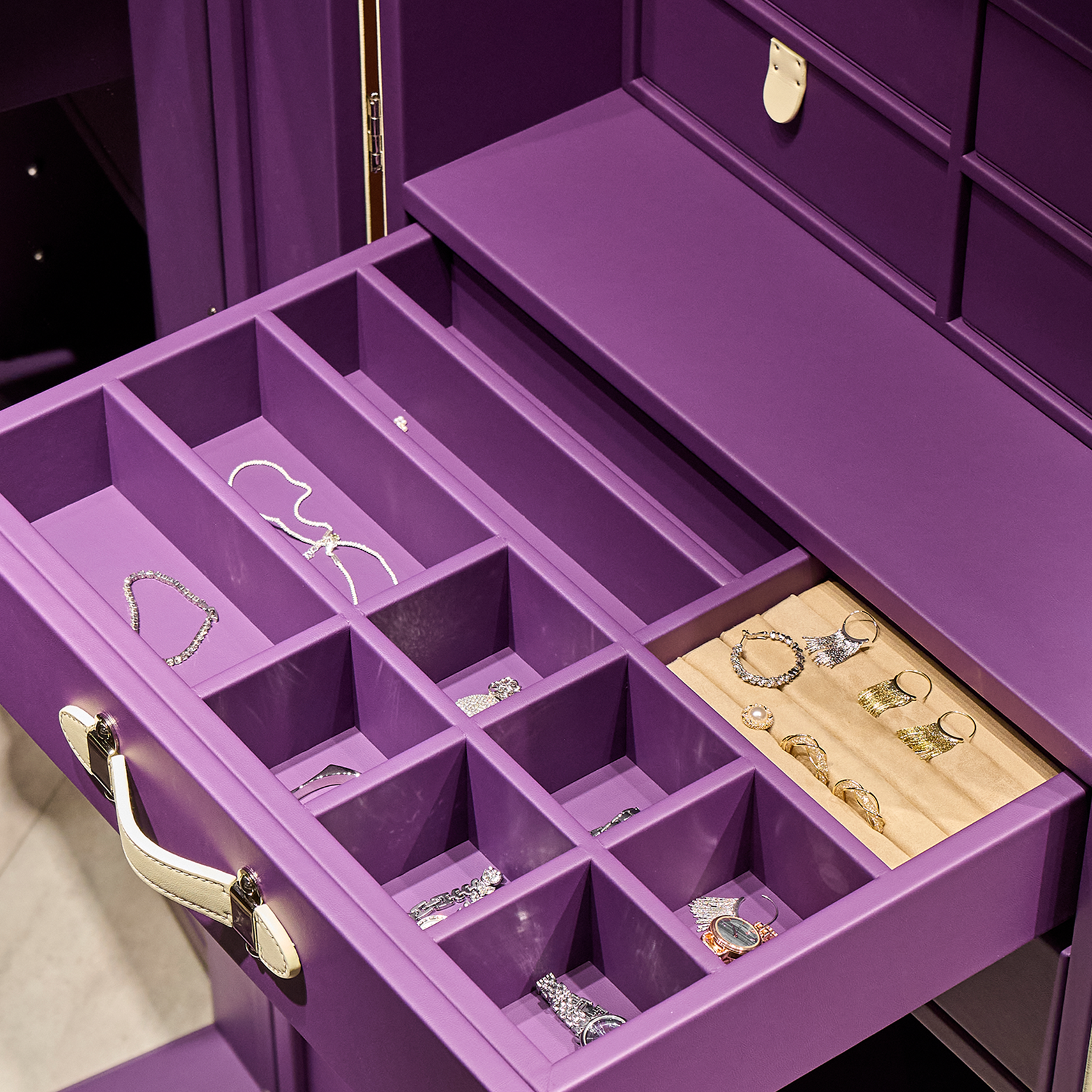
Therefore, the selection of every component is a scientific discipline. From the hand-sewn microfiber linings to the solid brass fittings specified for their chemical neutrality and durability, each element is chosen to ensure the chest remains a sanctuary, not a source of slow decay, for the treasures within.
Why an Heirloom Chest is the Ultimate GCC Wedding Gift
The Bottom Line: Unlike ephemeral gifts, a commissioned chest functions as a tangible asset and a narrative vessel, its intrinsic craft value appreciating alongside the collection it protects, establishing a physical anchor for family continuity.
In a region that holds family heritage in the highest esteem, a wedding gift should resonate with permanence. While jewellery is passed down, the chest that houses the collection becomes the constant—the silent witness to every anniversary, every milestone, every moment a piece is chosen for a special occasion. It is the library that holds the stories.
This shifts the perspective from the contents to the context. The chest is not merely an accessory to the jewellery; it is an equal part of the inheritance. Its own story, told through the hands of the master artisans who made it, becomes interwoven with the family’s own. This is the critical distinction: it is a gift that doesn’t just contain value, but is value.
The pieces most often commissioned for this purpose are gathered in our Wedding Heirlooms collection.
Beyond Material: Defining Heirloom-Grade Craft and Design
Technical Verdict: Heirloom-grade construction is defined by hand-fitted joinery, the use of stable, exotic veneers such as Burlwood, intricate hand-applied decorative work like Marquetry or Mother of Pearl Inlay, and advanced climate-resilient interior systems.
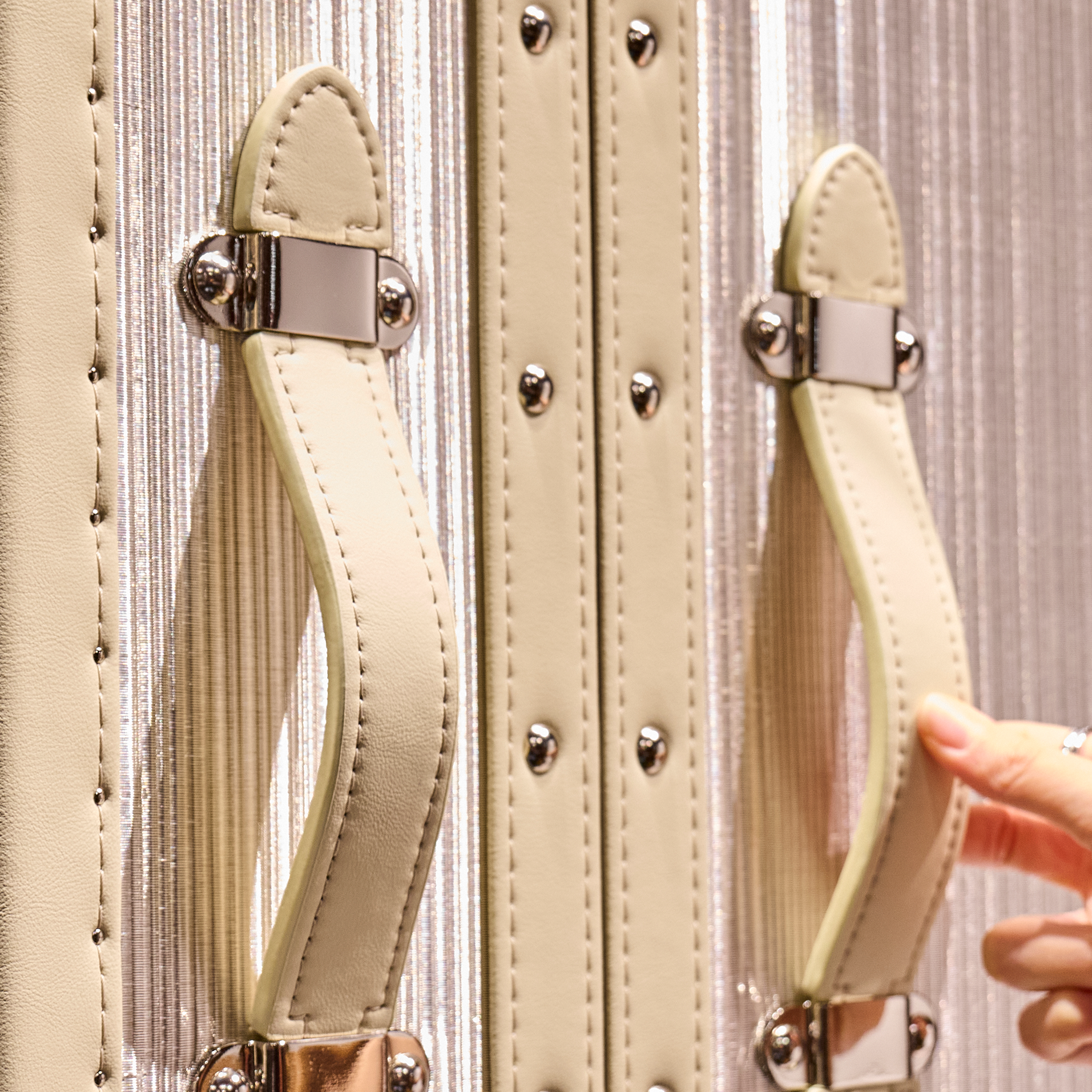
The world’s most discerning collectors recognise that true quality is found in details invisible to the casual observer. While celebrated European ateliers have set formidable benchmarks in fine cabinetry, SIRAE pioneers a new language of heirloom craft, defined by our signature machine-woven copper-wire facade. This technique, where fine strands of copper are meticulously woven into a resilient, textile-like surface, offers a contemporary aesthetic grounded in a discipline of absolute precision.
Materials That Tell a Story
Our Aurum Wire collection exemplifies this philosophy. In a piece like the Aurum Wire Jewelry Trunk - Emerald, the subtle lustre of the copper-wire fabric provides a modern counterpoint to classic forms. While we honour the patient arts of Marquetry and Mother of Pearl Inlay in certain commissions, our core identity lies in this unique fusion of artisanal texture and contemporary design—a new aesthetic for a new generation of heirlooms.
A Sanctuary for Precious Assets
Answering the challenge of the Gulf’s coastal humidity requires specifying materials that actively manage moisture. The interior lining is the first line of defence. Traditional velvet is hygroscopic, meaning it absorbs and holds atmospheric moisture, creating a potentially corrosive microclimate.
A superior technical choice is a high-grade, neutral-pH imported microfiber suede lining. It is dimensionally stable, resistant to humidity, and provides a soft, non-abrasive surface that safeguards delicate metals and gemstones from scratches. This is paired with modern security—a discreetly integrated biometric scanner provides peace of mind that cannot be matched by a simple lock and key, uniting timeless craft with contemporary asset protection.
Personalised Narratives: Commissioning a Chest to Carry a Family Story
Technical Verdict: The commissioning process translates a family's abstract heritage into a physical object through collaborative design, selection of symbolic materials, and the integration of unique identifiers like Custom Crest Engraving.
To commission a jewellery chest is to participate in its creation. It is a dialogue that transforms the piece from a product into a personal testament. This process moves beyond simple customisation to become a form of storytelling, embedding the family’s identity into the very grain of the object.
The journey begins with a private consultation at our Jumeirah Beach Road showroom in Dubai, exploring the scope of the collection it will hold and the aesthetic language of the residence it will inhabit. Once conceived, each piece is commissioned and delivered via our white-glove service to private villas across the UAE and, by special appointment, to our clientele throughout the MENA region. What will it be—a discreet vault or a statement piece of furniture? The answers inform every decision, from the internal partitioning to the final exterior finish.
The inclusion of a family crest or custom monogram, executed in fine metal inlay or discreet engraving, is the final touch. It is a signature that marks the piece as unequivocally theirs, ready to begin its journey as a silent guardian of a family’s most cherished memories.
A commissioned piece is defined by intention, chosen with the understanding that it will far outlive the moment it is given. It is a commitment to the future, a vessel of legacy, and the most enduring wedding gift of all.
Frequently Asked Questions
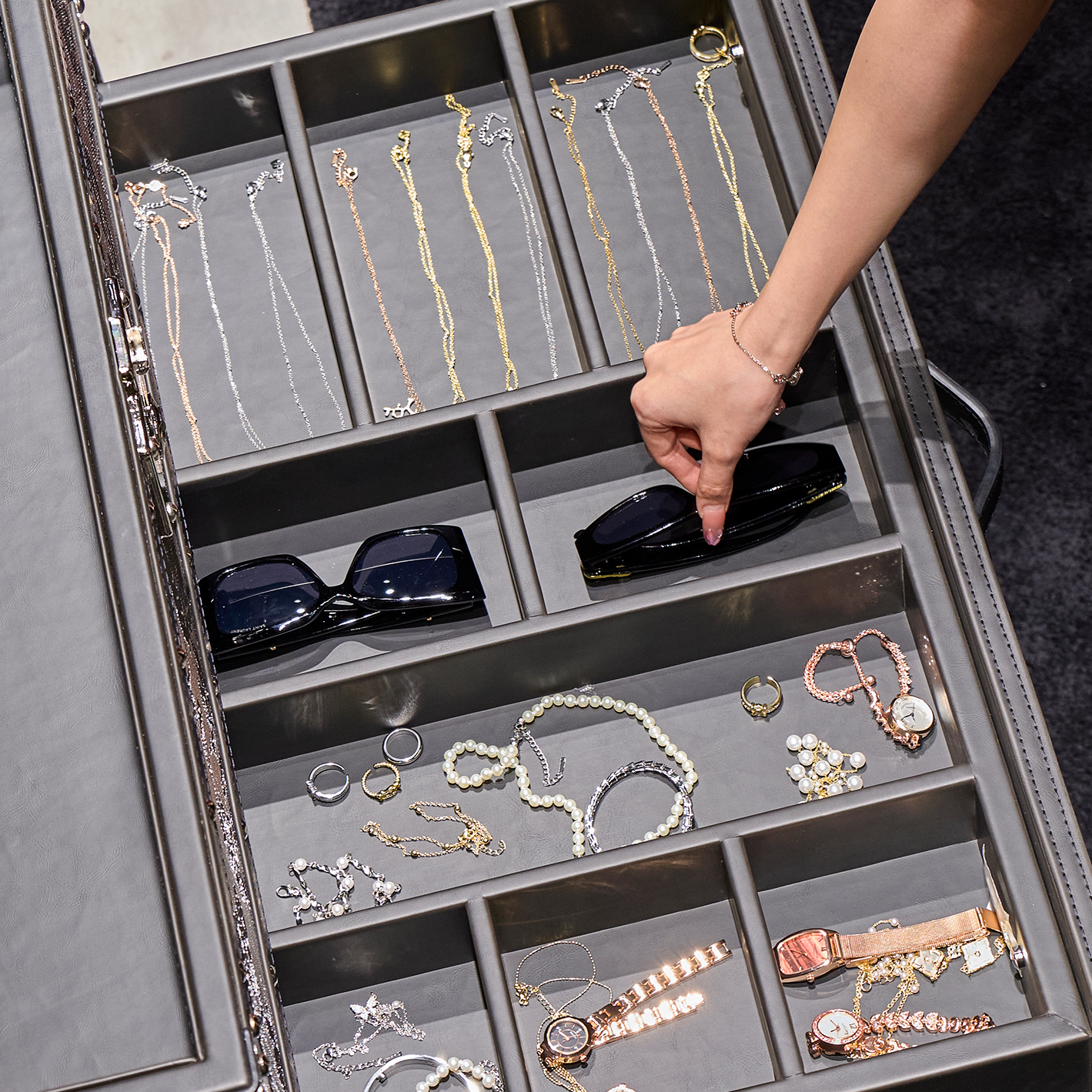
How large should an heirloom chest be for a GCC bridal set? Size the chest to the full set count, not the wedding-day pieces alone: separate drawers for kundan and temple sets, deeper trays for chokers and jhumkas, and reserve capacity for anniversary additions. Most families commission 30–50% more capacity than the current collection needs.
Can the chest be engraved or monogrammed? Yes. Names, wedding dates and family mottos are the most common dedications, engraved on a plate or embossed into the leather before delivery so the chest arrives already carrying the family's mark.
How do I care for an heirloom chest across generations? Keep it out of direct sunlight, in a climate-stable room rather than against an exterior wall, and condition leather surfaces on a yearly cycle. The hardware and lining of a quality chest are serviceable, which is what allows a 2026 commission to be re-lined decades later.
Is an heirloom chest suitable as a mahr presentation? Very much so — presenting mahr gold within a chest built to protect it for decades reframes the gift as the beginning of a family archive, which is why the chest is often commissioned jointly by both families.
- An Eid Al-Adha Gift Beyond Jewellery: A Heritage Armoire for Her Collection
- Indian Bridal Jewellery Storage in the UAE: A Guide for Kundan & Jhumka
- Luxury Jewellery Box: The Ultimate Wedding Gift Idea in Muscat, Oman
- The Modern Kuwaiti Bride's Guide to Luxury Jewellery Storage
- The Fingerprint Jewellery Box: A Ramadan Gift of Enduring Grace for a Mother in Saudi Arabia
- The Ultimate Guide to Velvet-Lined Wedding Jewellery Chests for Saudi Bridal Gold
- Ring Box Guide: From Engagement Day to Heirloom (2026)
- Jewelry Organizer Systems: Trays, Boxes & Cabinets (2026)

Leave a comment
This site is protected by hCaptcha and the hCaptcha Privacy Policy and Terms of Service apply.