
Jewellery Safe vs. Jewellery Box: A Collector's Guide to Asset Protection
Jewellery Safe vs. Lockable Jewellery Box: Which Security Level Does Your Collection Need?
For the discerning collector, the distinction between simple storage and true asset preservation is paramount. As a collection of heirloom jewellery, significant timepieces, and personal treasures grows in value and sentiment, so too does the need for a security solution that is both appropriate and uncompromising. This requires a considered evaluation of daily rituals, insurance mandates, and the very nature of the assets being protected.
Guide to This Commission
- The SIRAE Standard: Core Security Benchmarks
- Jewellery Box vs. Safe: Defining Your Core Security Needs
- Technical Deep Dive: From UL Ratings to Biometric Locks
- Making the Right Choice: A Practical Guide for Your Collection
The SIRAE Standard: Core Security Benchmarks
Technical Verdict: A collection's security is defined by a matrix of physical resistance (steel thickness, UL ratings), access control (biometric vs. digital), and interior preservation (anti-abrasion linings). Off-the-shelf solutions often compromise on interior finishing, leading to long-term degradation of high-value assets, particularly in demanding climates.
| Technical Spec | Standard Catalogue Offerings | SIRAE Commissioned Standard |
|---|---|---|
| Security Certification | Insurance 'B/C' ratings (steel thickness only) or basic UL listing | UL-listed safe construction with options for advanced ratings, verified by installation team. |
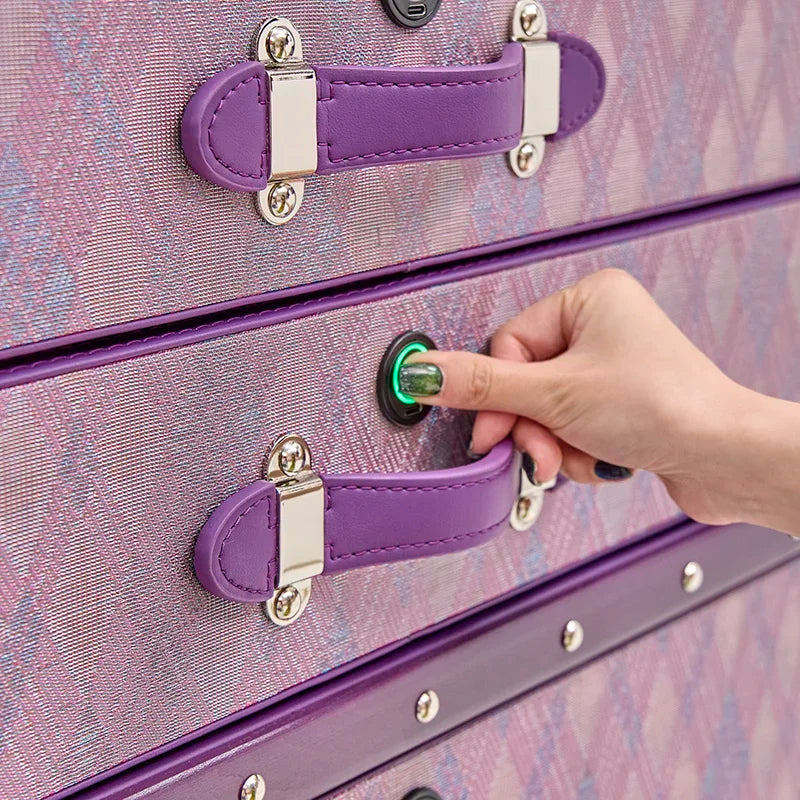
| Access Control | Digital keypad or key lock. | Biometric lock system with multi-user fingerprint recognition; discreet integration. |
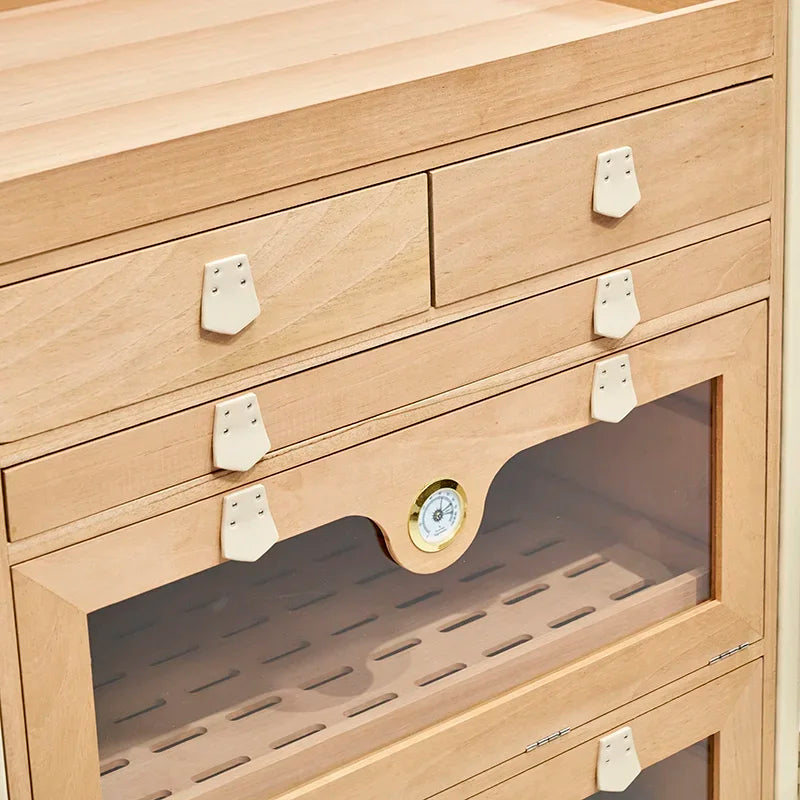
| Construction | Thick steel construction, often with industrial finishes. | Solid plate steel chassis, concealed within hand-finished cabinetry (solid wood veneer panels, leather). |
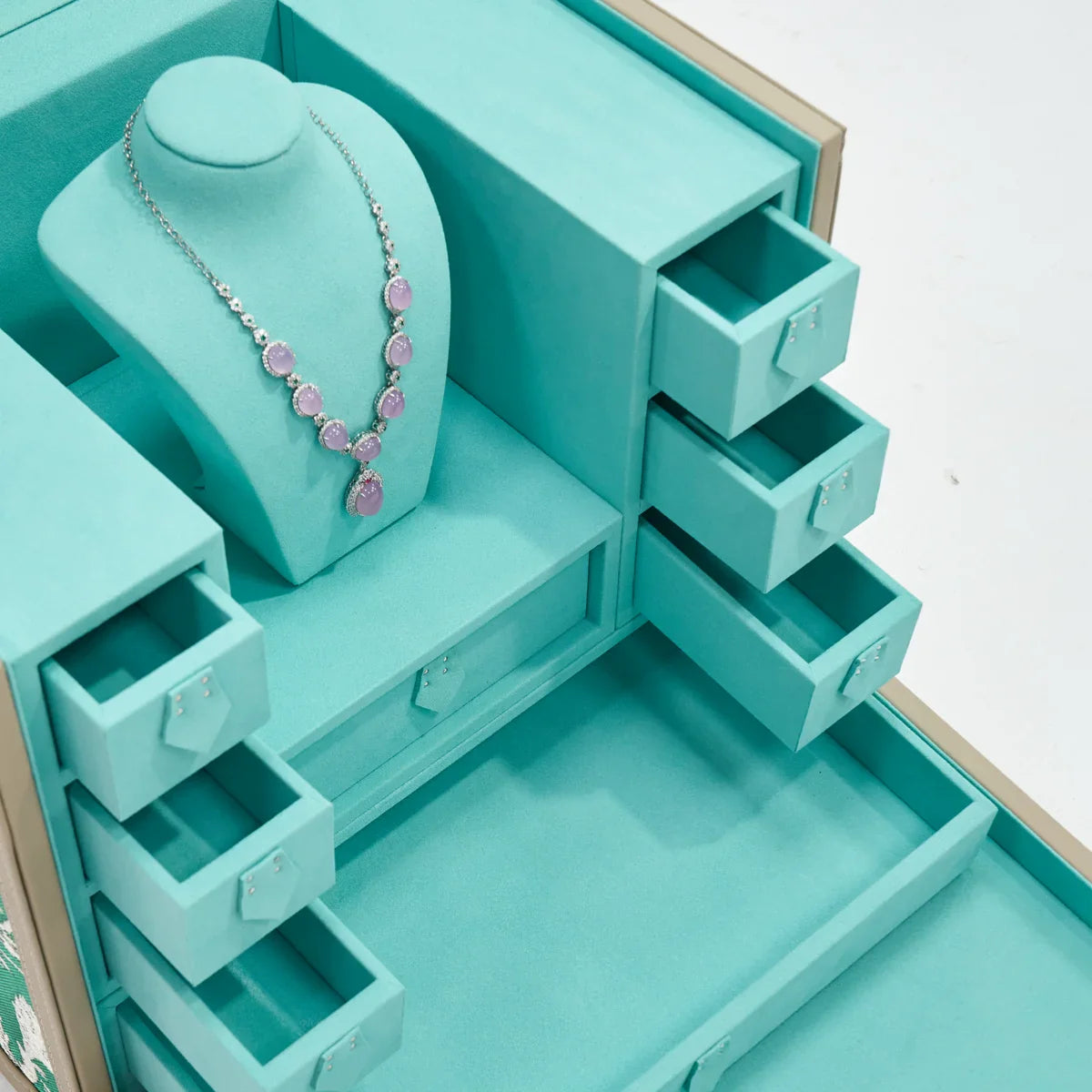
| Interior Finishing | Padded foam or generic felt lining. | Hand-stitched microfiber suede lining with bespoke, non-reactive partitioning. |
| Symptom (Observable Failure) | Spec / Mechanism (Design Parameter) | Verification (Outcome) |
|---|---|---|
| Micro-abrasions & scratches on gems, pearls, and soft metals | Industrial-grade felt/velvet contains abrasive fibres. | Tarnish-resistant microfiber suede linings and custom-fit compartments. |
| Disorganised pieces leading to damage during access or travel | Lack of considered, customisable partitioning. | Bespoke drawer layouts commissioned to match the client's specific collection. |
| Safe appears utilitarian, clashing with interior décor | Focus on security mechanics alone, ignoring aesthetic integration. | Commissioned cabinetry encasing the vault, matching the residence's design language. |
| Structural installation risk in modern Dubai villas | Inexperienced installers attempting to bolt into flooring without structural assessment. | Specialist installation team trained to navigate Post tension slabs safely. |
A commissioned security programme moves beyond raw specifications to consider the holistic preservation of a collection's financial and sentimental value.
Jewellery Box vs. Safe: Defining Your Core Security Needs
The Bottom Line: A high-end lockable jewellery box serves daily access and secure travel, while a professionally installed home safe addresses long-term fortification, fire resistance, and stringent insurance compliance for high-value collections.
As pioneers in the craft of the copper-wire hard case, SIRAE understands that a lockable jewellery case is an essential component of a collector’s daily ritual. Pieces like the Aurum Wire Jewellery Chest - Pearl White, with its signature woven copper-wire facade and precisely engineered solid brass fittings, provide organised, immediate access while deterring casual opportunism. This tier of security is ideal for items in frequent rotation and for maintaining discretion and order within a dressing suite. For a larger collection kept at home, a lockable jewellery cabinet extends the same principle to a full piece of furniture.
However, for a growing collection of significant value, or for pieces held as long-term family assets, the requirements escalate dramatically. Insurance providers will often mandate specific storage conditions to underwrite high-value items. This is where the distinction becomes absolute: a portable box offers convenience, while a bolted-down, fire-rated safe offers certifiable protection against determined threats and unforeseen disasters.
The trade-off is clear. A jewellery box offers portability for travel and ease of access. A professional safe offers uncompromising security, forming the bedrock of a robust home asset protection strategy. For many of our clients, whose collections we commission and deliver from our Dubai showroom across the MENA region, the solution is not one or the other, but a sophisticated synthesis of both.
Technical Deep Dive: From UL Ratings to Biometric Locks
Technical Verdict: Understanding the language of security ratings—such as the difference between an UL-listed safe and simpler Insurance 'B/C' ratings—is critical. The former involves rigorous testing against sophisticated attacks, while the latter primarily defines a minimum thick steel construction without performance verification.
When specifying a home safe, technical literacy is non-negotiable. Many mass-market brands, such as TigerKing Safe, Browning, or Hollon, offer products that meet basic insurance grades. These ratings typically refer only to the thickness of the steel in the door and walls. While a useful baseline, they involve no dynamic testing against tools, torches, or expert manipulation.
An UL-listed safe, by contrast, has been independently subjected to and has survived a timed attack by professionals using a variety of tools. This certification provides verifiable proof of its resilience. This is a crucial distinction, particularly when insuring irreplaceable heirlooms.
Advanced Access and Installation Considerations
The locking mechanism is the primary interface with your collection. While traditional key or combination locks are functional, a Biometric lock offers superior security and speed of access. By using fingerprint recognition, it eliminates the risk of lost keys or compromised codes, granting access only to registered individuals.
This level of technical diligence is fundamental. It ensures that the specified security rating is not undermined by a flawed installation, providing a truly fortified solution within the architectural context of a private villa.
Making the Right Choice: A Practical Guide for Your Collection
The Bottom Line: The ideal choice transcends a simple comparison of steel thickness and lock types; it involves commissioning an interior environment that actively preserves your assets, integrated seamlessly into your home.
Standard catalogue offerings are built for mass appeal, resulting in interiors that are often an afterthought. Generic felt or foam linings can, over time, cause micro-abrasions on high-carat gemstones and create friction points on delicate watch bracelets. In the ambient heat and humidity of the Gulf climate, these inferior materials can also degrade, potentially affecting delicate finishes over time.
True luxury asset protection considers the interior as meticulously as the exterior. Instead of a one-size-fits-all cavity, a SIRAE commission begins with the collection itself. Each drawer, divider, and compartment is lined with hand-stitched, non-reactive microfiber suede. Partitions are designed to the specific dimensions of your pieces, ensuring nothing shifts, rubs, or tangles.
This approach transforms a utilitarian steel box into a personal vault. The security chassis is concealed within exquisite, hand-finished cabinetry that complements your interior design, whether it features the rich texture of solid wood veneer panels, the woven copper facade of our Aurum Wire line, or the soft tactility of Heritage Leather. The result is a piece that is both a formidable security installation and a work of fine furniture, offering discreet protection without compromising the aesthetic of your private space.
To commission a security programme that honours the value and integrity of your collection, a private consultation is the essential first step. We invite you to explore the materials, mechanisms, and finishes at our Dubai showroom, where our Luxury Asset Custody Specialists can architect a solution tailored to your precise requirements. Appointments can be arranged by contacting our VIP line at +971 55 886 6180 or via email at info@siraecasa.com. Our flagship showroom is located on the first floor of the Al Shafar Complex, Jumeirah Beach Road, Umm Suqeim 1, Dubai, and further details of our collections can be viewed at https://www.siraecasa.com.

Leave a comment
This site is protected by hCaptcha and the hCaptcha Privacy Policy and Terms of Service apply.