
The Cartier Watch Box: From Iconic Red Case to Collector's Vault
The Cartier Watch Box: A Collector's Guide to Preservation and Presentation
The iconic crimson case of a Cartier timepiece is more than packaging; it is a symbol of a moment, an artefact of acquisition that carries its own legacy. For the discerning collector, however, the initial presentation is merely the beginning of a lifelong commitment to preservation. While the original box holds immense value for provenance, the stewardship of a significant collection demands a deeper understanding of material science and environmental control, particularly within the challenging Gulf climate.
This guide navigates the journey from the box itself to the principles of true, collection-grade custody. We will explore the protective qualities of the original case, the nuances of identifying vintage editions, and the essential transition to specialised solutions for long-term care and security—a process of curation that often begins at our Dubai showroom on Jumeirah Beach Road.
Guide to This Commission
- The Art of Preservation: Deconstructing the Cartier Watch Box's Protective Design
- A Collector's Guide: Identifying Vintage and Special Edition Cartier Boxes
- Beyond the Red Box: Curating Your Collection with High-End Watch Winders and Safes
The SIRAE Standard: Principles of Collection-Grade Preservation
The Bottom Line: Effective timepiece preservation transcends presentation packaging, requiring active management of relative humidity (RH), mitigation of material oxidation, and prevention of micro-abrasions through archival-grade interior linings and stable, climate-controlled environments.
Understanding Material Stability and Micro-Climates
The longevity of a mechanical watch is a function of its internal and external stability. Externally, materials like polished steel, gold, and leather straps are vulnerable to environmental stressors. High or fluctuating relative humidity, a constant challenge in Dubai and the wider MENA region, can accelerate the tarnishing of precious metals and encourage microbial growth on leather and certain lining fabrics.
Internally, the delicate lubricants that ensure the smooth operation of an automatic movement can degrade or migrate if left static for extended periods. This fundamental vulnerability is why passive storage, even in a beautiful presentation box, is insufficient for a serious collection of automatic timepieces.
The Hierarchy of Protection: From Presentation to Active Custody
A collector's preservation strategy should evolve with the value and complexity of their portfolio. There is a clear hierarchy:
- Presentation Box: Designed for the moment of acquisition and for maintaining provenance. Its primary role is aesthetic and archival.
- Travel Case: A purpose-built, shock-absorbent vessel for secure transit, prioritising padding and a compact form factor.
- Active Winder Cabinet: A climate-managed environment that provides precise, programmable rotation to keep automatic movements in optimal condition. An example is a piece from our Aurum Wire collection, defined by its signature woven copper-wire facade.
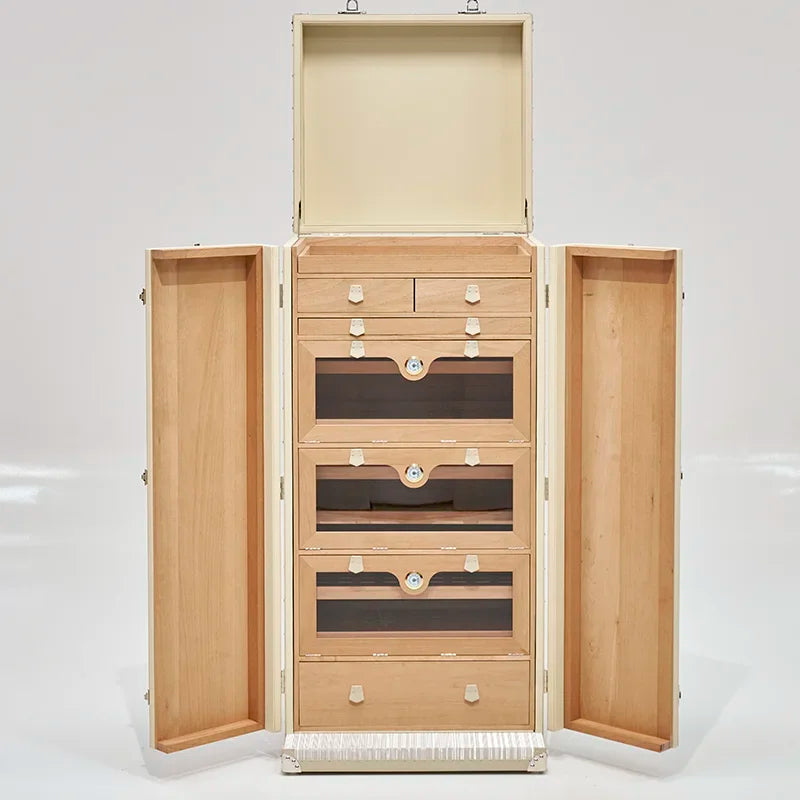
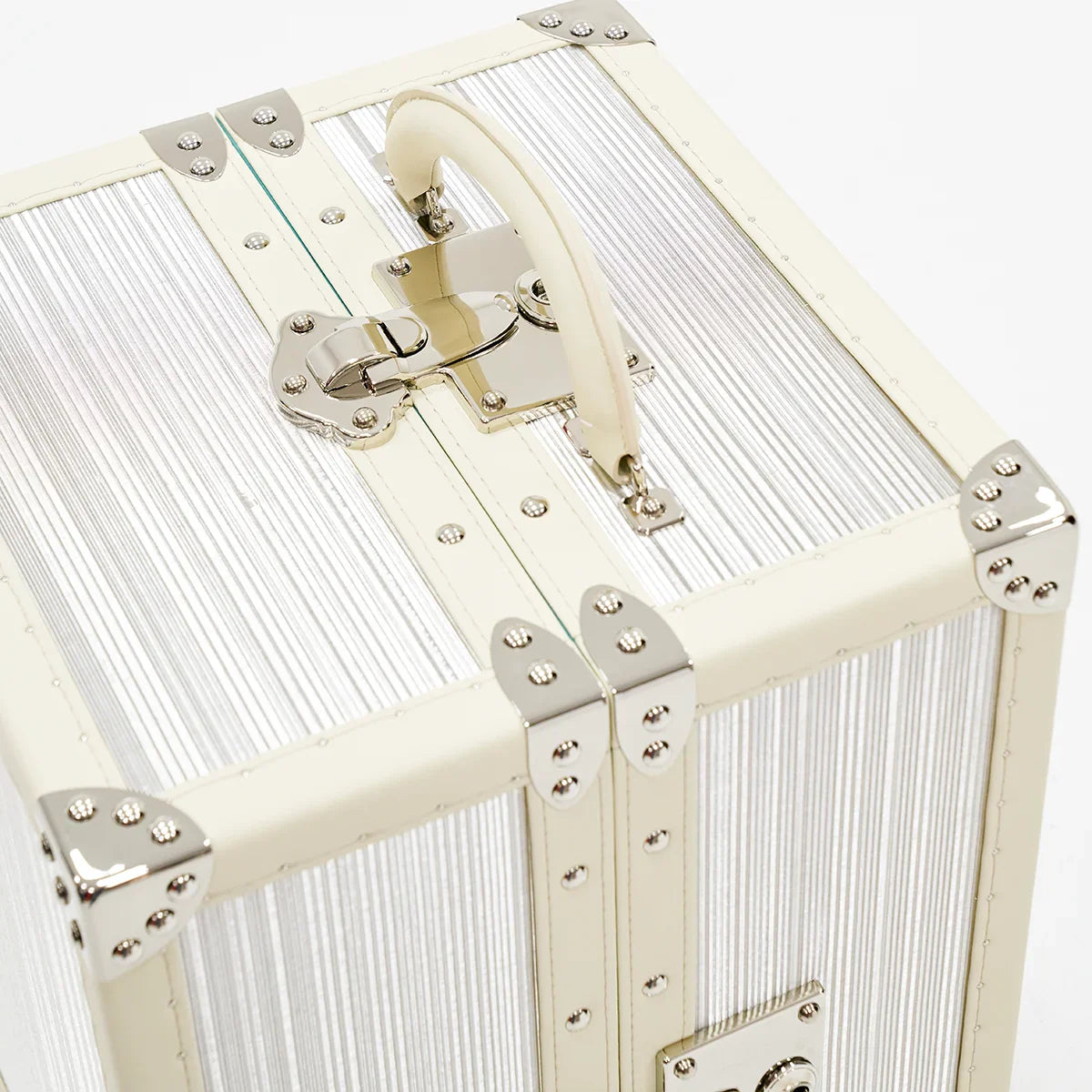
- Commissioned Vault: A fully secured, often biometric, repository for an entire collection of watches, jewellery, and other heirlooms, offering complete environmental and security control, constructed with the same meticulous copper-wire hard case craft and finished with precision solid brass fittings.
The Art of Preservation: Deconstructing the Cartier Watch Box's Protective Design
Technical Verdict: The official Cartier Red Box utilises a rigid shell, often finished in Leatherette, with a soft-touch Suede Lining to prevent surface scratches; its simple friction-fit or basic Locking Mechanism is designed for presentation, not as a high-security deterrent.
The Iconic Exterior: More Than Just Red
The instantly recognisable red box is a masterpiece of branding and design. Its construction typically involves a sturdy core, providing good resistance against incidental impacts. The exterior is most commonly wrapped in a high-quality, grained Leatherette, chosen for its durability and consistent colour. The gold-tone trim, a signature element, frames the piece, elevating it from a mere container to an object of desire in its own right.
The Interior Sanctuary: Cushioning and Lining
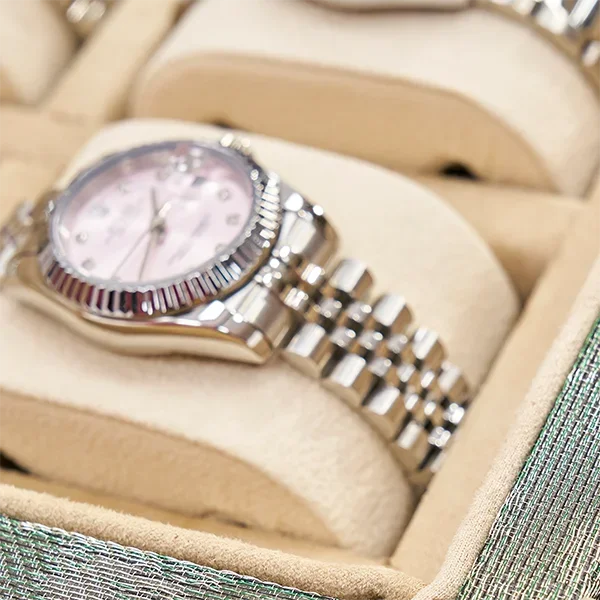
Upon opening the box, the timepiece is presented on a soft, padded cushion, usually encased in a cream or white Suede Lining. The primary function of this interior is to provide a soft, non-abrasive surface that protects the watch's highly polished surfaces and delicate bracelet from scratches during transport and storage. While effective for this purpose, these materials are not designed to regulate humidity or absorb environmental contaminants over the long term.
Security and Closure: The Role of the Locking Mechanism
Many Cartier boxes feature a simple push-button clasp or, on older and more significant pieces, a small Locking Mechanism with a key. This feature provides a basic level of security, sufficient to prevent the box from opening accidentally. It should be understood as a component of the presentation ritual rather than a robust security measure. The action lacks the reassuring, precision-machined finality of the solid brass fittings one expects on a modern, commissioned safe.
A Collector's Guide: Identifying Vintage and Special Edition Cartier Boxes
Technical Verdict: Authenticating vintage Cartier boxes, particularly from the 1970s and 1980s, involves analysing the specific grain of the leatherette, the tension and finish of the hinges, and the typography of the branding, with a complete set significantly increasing an heirloom's market value.
Authenticating Vintage Boxes: The 1980s Case Study
For collectors of pieces like a vintage Cartier Santos or Tank, the original box is a critical component of its provenance. Authenticating a box from this era involves a tactile and visual inspection.
- Material Feel: The leatherette used in the 1980s has a distinct feel and grain compared to modern equivalents. It often feels slightly thinner and more rigid.
- Hinge Construction: Open and close the box. Vintage hinges often have a different resistance and sound compared to the smooth, silent mechanisms of today. They lack the satisfying, haptic precision of the solid brass fittings on a modern SIRAE commission.
- Interior Branding: Examine the "Cartier" stamp inside the lid. Typography from this period was precise, but may show subtle differences in font weight and spacing from contemporary examples. Any smudging, unevenness, or incorrect font is a significant red flag.
The presence of the original, period-correct box and papers can amplify the resale value of a vintage timepiece considerably, as it assures the next owner of the item's complete and unabridged history.
Special Editions and Their Provenance
Cartier occasionally releases timepieces in special edition presentation boxes, often crafted from different materials like fine wood or lacquer. These are highly collectible in their own right. Their rarity and unique design make them an integral part of the watch's identity, and their presence is non-negotiable for a collector seeking to own a "full set" of a limited-run piece.
Beyond the Red Box: Curating Your Collection with High-End Watch Winders and Safes
Technical Verdict: For automatic movements, a multi-watch Watch Winder with programmable turns-per-day (TPD) and directional settings is essential for mechanical health, while collections stored in climates like Dubai require cabinets with UV Protection Glass and climate control to prevent long-term degradation.
The Necessity of Active Preservation for Automatic Timepieces
An automatic Cartier, such as a Calibre de Cartier, relies on the motion of the wearer's wrist to power its mainspring. When left static in a box, the movement stops, and the vital internal lubricants can begin to congeal or migrate away from critical friction points. Over time, this can lead to decreased accuracy and increased wear upon restart.
A high-end Watch Winder, such as an Aurum Wire Watch Winder, solves this by mimicking the natural motion of the wrist, rotating the watch according to precise programmes tailored to its specific calibre. This keeps the movement continuously lubricated and ready to wear, transforming storage from a passive state into an active process of mechanical care. This is a capability that a standard presentation box, regardless of its prestige, simply cannot offer.
Secure and Elegant Travel Solutions
Travelling with multiple timepieces presents a unique challenge. The original boxes are too cumbersome and conspicuous. A far more discreet and secure solution is a purpose-built watch case, like the Aurum Wire Watch Case - Frosted Silver. Crafted with a robust structural core and lined with deeply padded, hand-stitched microfiber suede, it provides individual, shock-protected compartments. This prevents assets from scratching each other and offers a compact, elegant solution for the travelling connoisseur.
Commissioned Vaults: The Ultimate Custody Solution
For the UHNW collector whose portfolio extends beyond a few cherished pieces, the conversation moves towards centralised, secure custody. As a commissioning house, SIRAE develops bespoke vaults and cabinetry, integrated seamlessly into private residences across the UAE and greater MENA region. These commissions, which begin with a private consultation at our Jumeirah Beach Road showroom, offer the pinnacle of preservation. They are not merely safes; they are bespoke environments featuring biometric access, modular interiors with integrated winders, and independent climate-control systems. Each is built upon our pioneering copper-wire hard case craft, ensuring archival conditions for an entire collection.
True stewardship of a legacy collection is an art that begins with reverence for the original presentation but culminates in a mastery of preservation science.
- The Best Watch Box for Your Rolex Collection: A Connoisseur's Guide
- Patek Philippe Box: Original vs. Bespoke Storage for Collectors
- Travelling with Valuables to UAE: Customs Declaration Rules for Jewellery, Gold & Watches
- Watch Box vs Watch Winder vs Watch Case: Which Do You Need? (UAE Guide 2026)
- Choosing the Perfect Luxury Watch Box: A UAE Collector's Guide

Leave a comment
This site is protected by hCaptcha and the hCaptcha Privacy Policy and Terms of Service apply.