
The Dowry Jewelry Box: A Guide to Curating a Family Heirloom
The dowry box is not merely a container for valuables. It is a vessel for legacy, a silent custodian of a family’s heritage passed carefully from one generation to the next. In the highest echelons of society, from the royal courts of India to the private chambers of dynastic China, these intricate chests have long been symbols of continuity, prosperity, and the profound cultural significance of marriage. To select one is to make a statement not of fleeting fashion, but of enduring, resonant value.
This guide examines the art and science behind choosing a dowry box worthy of becoming a future heirloom, with a particular focus on the unique preservation challenges faced by collectors in the demanding climate of Dubai and the wider MENA region.
Guide to This Commission
- The SIRAE Standard: Assessing Antique Boxes for Contemporary Collections
- Cultural Origins of the Dowry Box: From Indian Royalty to Chinese Chambers
- An Analysis of Heritage Craftsmanship: Malabar Teak and Mother-of-Pearl Inlay
- A Guide to Selection and Care: The Dowry Box for the Modern Bride
The SIRAE Standard: Assessing Antique Boxes for Contemporary Collections
Technical Verdict: The primary challenge in adapting antique dowry boxes for modern high jewellery lies in material science incompatibility and structural inadequacy; original wood resins, tannins, and aged fabric linings can cause oxidation and micro-abrasions on contemporary alloys and gemstones, while fixed, shallow compartments fail to secure large-format brooches or multi-strand necklaces.
Material Integrity vs. Modern Jewellery
Many antique boxes, particularly those from the 19th century, were crafted using woods and adhesives that are far from inert. Over decades, materials like unsealed teak or certain traditional lacquers can release subtle, volatile organic compounds—a process known as off-gassing. These airborne molecules can accelerate the tarnishing of silver, degrade the delicate nacre of pearls, and even affect the brilliant lustre of certain precious metals. The original felt or silk linings, once vibrant, may also have been treated with dyes or chemicals that are now understood to be reactive.
A contemporary collection, with its precise platinum settings, cool rhodium plating, and complex gemstones, demands an environment of archival-quality neutrality. The intrinsic beauty and historical weight of an antique exterior must be reconciled with the preservation-grade requirements of the modern assets it is commissioned to protect.
The Challenge of Internal Configuration
The design of historic dowry boxes reflected the jewellery of their time: often smaller, more uniform pieces laid gently in place. The shallow, undivided drawers and open chambers of a traditional Malabar Netturpetti, for example, are simply ill-suited to the scale and complexity of today’s high jewellery. A large haute joaillerie brooch, a sculptural statement cuff, or a multi-layered Polki necklace requires bespoke partitioning to prevent movement, friction, and the potential for irreparable damage. To simply place such items in an open cavity is to invite significant risk.
Environmental Stability in Antique Vessels
An antique wooden box, by its very nature, is permeable. It breathes, absorbing and releasing moisture in response to the slightest atmospheric shifts. In a climate like Dubai’s, with its significant fluctuations between intense outdoor humidity and the dry chill of powerful indoor air conditioning, maintaining a stable internal relative humidity is paramount. Without a modern, intelligently integrated conditioning system, the historic vessel itself can become a source of instability, harming both its own structural integrity and the delicate, precious items held within.
Cultural Origins of the Dowry Box: From Indian Royalty to Chinese Chambers
Technical Verdict: The dowry box tradition is deeply rooted in South Asian aristocratic culture, particularly Kerala craftsmanship from the 18th-19th centuries, and East Asian dynastic practices, with distinct material signatures like teak, brass, lacquer, and mother-of-pearl reflecting regional artistic and social hierarchies.
The concept of a bride’s trousseau, safeguarded within a dedicated chest, is a near-universal tradition among established families. Yet two historic provenances stand out for their exceptional artistry and their enduring influence on collectors today.
The first is the Malabar Coast of India, where the Malabar Netturpetti became a hallmark of noble and royal households. These are not just boxes; they are architectural miniatures, their forms often echoing the temple designs of Kerala. Their creation was a profound statement of status, designed to hold glittering gold, rare gems, and fine silks, embodying the wealth and prestige of the bride's family. This tradition has strong links to the wider visual language of Mughal and Indo-Islamic art, evident in its geometric precision and ornate, hand-worked metalwork.
The second great tradition originates in China, where lacquered boxes adorned with intricate scenes of courtly life, mythology, and nature were central to the aristocratic dowry. Here, the emphasis was on pictorial narrative and the painstaking craft of inlay. Materials like shimmering mother-of-pearl and cool, carved jade were used to convey wishes for happiness, fertility, and prosperity. These pieces were treasured as much for their sublime artistic merit as for their function.
An Analysis of Heritage Craftsmanship: Malabar Teak and Mother-of-Pearl Inlay
Technical Verdict: The investment potential of an antique dowry box is determined by material rarity, workshop hours, and cultural symbolism. Indian Lacquered Teak boxes with pierced brass panels offer robust structural integrity and patina, while Chinese Mother-of-pearl inlay offers superior narrative complexity and requires thousands of hours of precision artistry.
When considering a dowry box as a family heirloom with potential for appreciation, a direct comparison of these two master traditions becomes essential.
Material Scarcity and Durability
The Malabar Netturpetti is typically crafted from dense, old-growth teak wood, a material prized for its natural oils that resist insects and moisture—a critical advantage in its humid native climate. The extensive, hand-forged brass work, including hasps, studs, and decorative panels, provides both rich ornamentation and formidable structural reinforcement. These are robust, heavy objects built to endure for centuries.
In contrast, the value of a Chinese dowry box lies in the sublime delicacy of its surface. The base is often a fine-grained wood, but one might assume its lacquered shell is fragile. This is a misinterpretation. The true rarity is in the lacquer itself—requiring dozens of layers, each meticulously applied and polished to a glass-like depth—and the Mother-of-pearl inlay it protects. Sourcing, cutting, and placing thousands of iridescent fragments to create a seamless, flowing image is an art form of immense scarcity and skill.
Craft Complexity and Symbolism
Kerala craftsmanship is a testament to the mastery of metal and wood. The techniques for creating pierced brass panels, casting ornate finials, and setting rivets by hand are skills passed down through generations of artisans. The symbolism is often architectural and protective, with complex locking mechanisms that are both functional and deeply, satisfyingly decorative.
The Chinese tradition of mother-of-pearl inlay represents a different kind of complexity: one of immense patience and pictorial artistry. Each sliver of shell is chosen for its unique, captivating lustre and colour, then painstakingly set into the still-tacky lacquer. The symbolic language is rich with narrative, depicting legends, auspicious landscapes, and poetic scenes that bestow blessings upon the marriage.
Future Appreciation Potential
Both styles are highly sought after, though they appeal to different sensibilities. The Indian Malabar box attracts collectors of ethnographic art, colonial-era history, and robust, architectural forms. Its value is tied to its tangible history and the warm, honest patina of aged wood and brass.
The Chinese lacquered box, however, speaks to connoisseurs of the fine decorative arts. The best examples are considered pictorial masterpieces in their own right, their value often driven by the reputation of the workshop and the intricacy of the inlay. As exceptional examples of both traditions become rarer, their potential for value appreciation as tangible assets is significant—provided they are correctly and actively preserved.
A Guide to Selection and Care: The Dowry Box for the Modern Bride
Technical Verdict: Selecting an antique box for a modern home requires aesthetic alignment with minimalist or Wabi-Sabi interiors and, crucially, a professional assessment of its internal structure for commissioning a preservation-grade, non-reactive interior suitable for contemporary large-format jewellery.
For the modern bride and her family, the dowry box is both a tangible link to tradition and a striking feature within a contemporary home. The raw, elemental beauty of a 19th-century Malabar chest can powerfully complement a Wabi-Sabi interior, while the graphic elegance of a Chinese lacquer box can anchor a New Chinese or minimalist aesthetic.
However, the most critical consideration is its fitness for purpose. The original interior of an antique box is rarely suitable for protecting a modern high jewellery collection. The solution lies not in abandoning these historic treasures, but in sensitively and professionally retrofitting their interiors. This involves commissioning a specialist to design and install a custom, archival-quality insert.
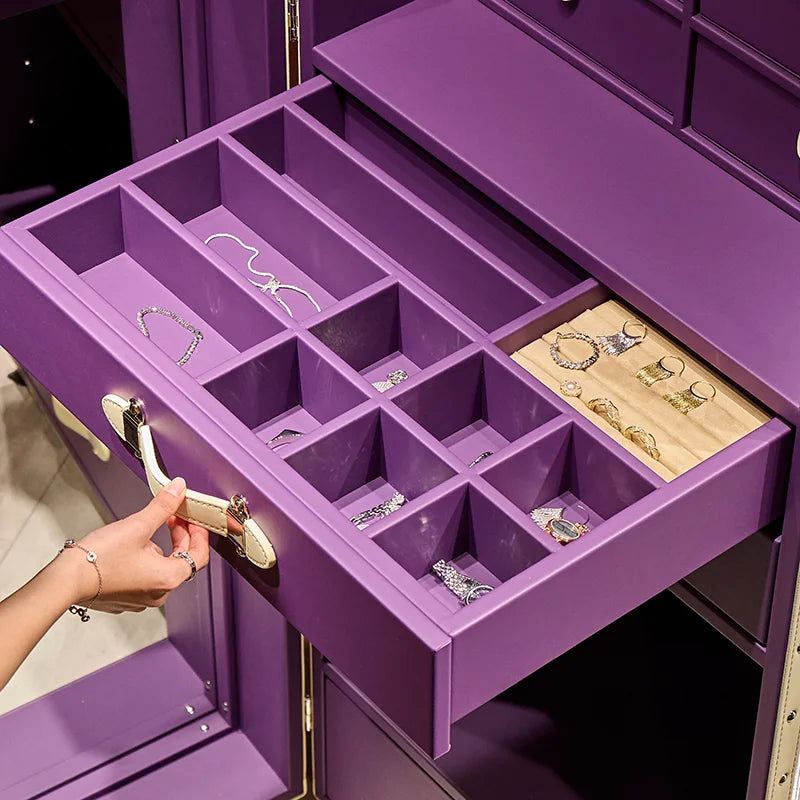
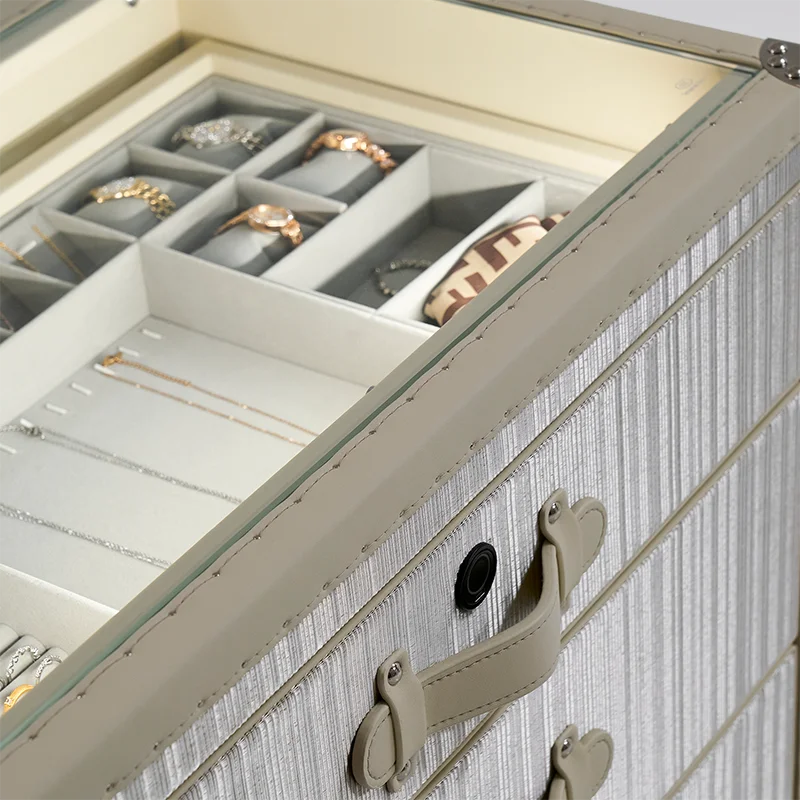
This bespoke interior should be crafted from materials verified to be chemically inert and non-abrasive, such as specific grades of microsuede or velvet that will neither tarnish nor abrade precious metals. The layout must be custom-designed around the bride’s specific collection, with secure, softly padded compartments for oversized brooches, multi-strand necklaces, and delicate watches, preventing any movement or contact between pieces. It is this thoughtful integration of modern preservation science within a historic vessel that transforms a beautiful antique into a functional, multi-generational family heirloom.
The dowry box represents the art of looking both backward and forward—honouring the heritage of the past while safeguarding the legacy of the future.

Leave a comment
This site is protected by hCaptcha and the hCaptcha Privacy Policy and Terms of Service apply.