
Buying Diamonds in Dubai: GIA/IGI Certification, VAT, the 4Cs & Where to Buy (2026)
Buying Diamonds in Dubai: Certification, VAT and the 4Cs
Buying diamonds in Dubai is one of the most reliably good decisions a Gulf buyer can make — provided you treat the certificate, not the showroom lighting, as the asset. Dubai's tax-efficient structure and direct trade pipelines genuinely undercut Western retail, but the most common and most expensive mistake is buying a beautiful loose stone or set piece on a verbal grade, with no GIA or IGI report to anchor its value at resale or insurance. This guide explains the 4Cs, the real difference between grading labs, how 5% VAT and the tourist refund actually apply, lab-grown versus natural in 2026, and where in Dubai to buy — from the DMCC Dubai Diamond Exchange to Gold & Diamond Park to mall jewellers.
Is It Actually Cheaper to Buy Diamonds in Dubai?
Quick Answer: Generally yes. Diamonds are typically 20–40% cheaper in the UAE than in Western retail markets, driven by Dubai's position as a global trading hub, direct producer-to-buyer supply chains through the DMCC, low operating costs and the absence of import duty on most loose stones. The 5% VAT is modest and, for many buyers, partially recoverable. But "cheaper" only holds when you compare like-for-like certified stones — an uncertified bargain is not a saving.
Dubai sits at the centre of the modern diamond trade. The DMCC's Dubai Diamond Exchange (DDE) is the only diamond bourse in the GCC affiliated with the World Federation of Diamond Bourses and hosts the world's largest rough and polished diamond tenders, with more than 1,300 gem enterprises in its ecosystem. That concentration of supply, combined with intense retail competition, is what compresses margins for the end buyer.
The saving is real but conditional. A G-colour, VS1, Excellent-cut, GIA-certified one-carat round in Dubai should be meaningfully cheaper than the same report number on a London or New York high street. A stone described as "around G, around VS, looks like an Excellent cut" with no report is not comparable to anything — and is where buyers lose money.
Please note: Diamond pricing, grades and tax treatment change. Always verify a stone's grades directly with the issuing laboratory (GIA at gia.edu or IGI at igi.org) using the report number, and confirm current VAT and refund rules with the UAE Federal Tax Authority at tax.gov.ae before you buy.
The 4Cs: What You Are Actually Paying For
The Bottom Line: Price is set by four interacting factors — Cut, Colour, Clarity and Carat. Cut governs how much a stone sparkles and is the one variable you should not compromise on; Colour and Clarity offer the largest opportunities to buy intelligently; Carat weight drives price in steep jumps at "magic sizes" (0.90ct, 1.00ct, 1.50ct, 2.00ct). The skill is balancing the four, not maximising each.
Cut is not shape — it is how precisely the stone's facets are proportioned to return light. A poorly cut D-colour, flawless diamond can look duller than a well-cut G/VS stone. For a round brilliant, hold to Excellent (GIA) or Ideal/Excellent (IGI) and let the budget you save go elsewhere.
Colour runs D (colourless) to Z (light yellow/brown). D–F are the rare "colourless" grades that command a premium; G–H are "near colourless" and, set in white metal, read as white to the eye at a fraction of the cost. Clarity runs from Flawless down through VVS, VS, SI and I. VS1–VS2 is widely considered the value sweet spot: inclusions are invisible without magnification, but you avoid the premium of higher grades you cannot see.
| C | Range | Where value buyers concentrate | Gulf buyer note |
|---|---|---|---|
| Cut | Poor → Excellent/Ideal | Do not compromise — hold Excellent | Cut, not carat, makes a stone "alive" under villa downlighting |
| Colour | D → Z | G–H near-colourless, set in white metal | Warmer H–I can suit yellow/rose gold settings |
| Clarity | I → Flawless | VS1–VS2 ("eye-clean") | Avoid paying for inclusions only a loupe sees |
| Carat | by weight | Buy just under a magic size (e.g. 0.90ct, 1.40ct) | Price jumps sharply at 1.00ct and 2.00ct |
A practical tactic: a 0.90ct stone of identical grades can cost markedly less than a 1.00ct, with a diameter difference few can perceive. Knowing the magic-size thresholds is one of the cleanest legitimate savings in the market.
GIA vs IGI vs No Certificate: Why the Report Is the Asset
Technical Verdict: A diamond's value lives in its grading report, not the jeweller's word. GIA (Gemological Institute of America) is the global benchmark for grading consistency and strictness; IGI (International Gemmological Institute) is widely accepted in the UAE and is the dominant authority for lab-grown stones. HRD is the established European lab. A stone with no report from a recognised lab — or with an in-house "certificate" — should be treated as having no documented value, regardless of how it looks in the case.
GIA tends to grade more conservatively. A stone IGI calls G/VS1 may come back from GIA as H/VS2; the practical effect is that GIA-graded stones often carry a 5–15% price premium for the same stated grades, because the market trusts the rigour behind them. For a natural diamond you intend to hold, insure and one day resell, that premium usually buys peace of mind worth having.
Lab-grown changed the lab landscape. IGI has graded lab-created diamonds since 2005 and certifies the large majority of them today. GIA, by contrast, stepped back from full lab-grown grading on 1 October 2025, replacing detailed 4C reports for lab stones with simplified "Standard" and "Premium" descriptors. So if you are buying a lab-grown diamond in Dubai, an IGI report is now the norm and is what you should insist on.
| Document | Recognised by | Grading rigour | Resale & insurance use | Verdict for a Dubai buyer |
|---|---|---|---|---|
| GIA report | Global benchmark | Strictest, most consistent | Strongest — globally trusted | First choice for natural diamonds you'll hold |
| IGI report | Widely accepted in UAE/Asia | Reliable; slightly more lenient on some grades | Strong, especially for lab-grown | Standard for lab-grown; fine for natural too |
| HRD report | Established in Europe | Reputable European lab | Good | Acceptable; less common in Gulf retail |
| In-house / no certificate | Issuing shop only | Unverifiable | Effectively none | Avoid for any stone of value |
Always verify the report independently. Both GIA and IGI publish online report-check tools; enter the number laser-inscribed on the stone's girdle (visible under magnification) and confirm it matches the paper in your hand before you pay.
Lab-Grown vs Natural Diamonds in Dubai (2026)
Quick Answer: Lab-grown diamonds are chemically and optically diamond — not simulants — and now sell for roughly 85–90% less than comparable natural stones. They are an excellent choice for maximum sparkle per dirham on jewellery you buy to wear. They are a poor choice as a store of value: lab-grown prices fell about 70–75% between 2020 and 2024 and resale recovers only a fraction of the purchase price, whereas certified natural diamonds hold value far more reliably.
The technology and ethics case for lab-grown is strong: identical hardness and brilliance, traceable origin, lower price. For a fashion piece, a larger lab-grown centre stone can deliver a look that a natural budget would never reach. If your goal is the jewellery, lab-grown is a rational, modern choice.
The asset case is the opposite. Lab-grown production costs keep falling, dragging prices and resale with them; the secondary market typically returns a small share of the original outlay. Certified natural diamonds — particularly classic round, oval and solitaire cuts in clean grades — retain a far larger proportion of value and trade actively in the UAE's resale and buy-back market. Decide which job the stone is doing before you choose, and make sure the certificate (IGI for lab-grown, GIA or IGI for natural) states clearly which it is.
VAT on Diamonds in the UAE: What You Pay and What You Can Recover
The Bottom Line: The UAE applies 5% VAT, introduced in 2018 and administered by the Federal Tax Authority. On retail jewellery, VAT is charged at 5% on the full invoice — stone, metal and making charges combined. Between VAT-registered businesses, a reverse-charge mechanism (expanded in February 2025 to cover diamonds, gold, pearls and key gemstones) shifts the VAT accounting to the buyer. Eligible tourists can reclaim most of the VAT they pay at the airport before departure.
For a private Gulf resident buying a finished diamond piece, the practical position is simple: expect 5% VAT on the invoice total. For VAT-registered traders and businesses, the February 2025 reverse-charge rules mean qualifying business-to-business transactions in diamonds and precious stones are accounted for by the recipient rather than charged by the seller — a cash-flow change, not an exemption. Loose diamonds imported into the UAE attract 5% import VAT at customs, which a registered business can typically recover as input tax against valid customs documentation.
| Buyer / transaction | VAT treatment (general) | Practical note |
|---|---|---|
| Resident buying finished jewellery | 5% on full invoice (stone + metal + making) | Standard retail position |
| Tourist buying from an enrolled retailer | 5% charged, largely refundable at the airport | Invoice usually min. AED 250; validate before check-in |
| VAT-registered business (B2B precious stones) | Reverse charge — recipient accounts for VAT | Per the Feb 2025 expanded RCM scope |
| Loose diamonds imported | 5% import VAT at customs | Recoverable as input tax for registered businesses |
Please note: VAT scope, refund percentages and the reverse-charge mechanism are technical and change over time. The figures above are general guidance, not tax advice — confirm your specific position with the UAE Federal Tax Authority (tax.gov.ae) or a qualified UAE tax adviser before relying on any treatment.
For tourists, the Tourist Refund Scheme allows reclaiming the bulk of VAT paid (after processing fees) on purchases from FTA-enrolled retailers, provided the goods are validated at the airport refund point before departure. Keep the tax invoice and the unworn item available for inspection.
Where to Buy Diamonds in Dubai
Quick Answer: Three routes dominate. The DMCC's Dubai Diamond Exchange and the wider DMCC district is the wholesale and trade heart, best suited to loose stones, larger budgets and trade-introduced buyers. Gold & Diamond Park is the value-and-custom destination — competitive pricing, custom settings and room to negotiate. Mall and high-street jewellers offer brand assurance, finished collections and fixed-price convenience. Match the venue to whether you want a loose certified stone, a custom commission, or a finished piece.
DMCC / Dubai Diamond Exchange (Almas Tower) is the trading core, home to over 1,300 enterprises, the region's only WFDB-affiliated bourse and the venue for the world's largest diamond tenders. It is geared to trade and serious loose-stone buyers rather than walk-in retail, and the UAE's membership of the Kimberley Process underpins conflict-free sourcing across this ecosystem.
Gold & Diamond Park is where competition is most visible at retail scale: many independent shops, strong appetite for custom settings, and genuine room to negotiate on a certified stone plus setting. Mall jewellers (and established brands) trade some price flexibility for assurance, service and finished design — the right choice for a buyer who wants a complete, guaranteed piece without sourcing a loose stone first.
| Venue | Best for | Price level | Negotiation | Certificate norm |
|---|---|---|---|---|
| DMCC / Dubai Diamond Exchange | Loose stones, large budgets, trade buyers | Lowest (wholesale/trade) | Trade-level | GIA / IGI expected |
| Gold & Diamond Park | Custom settings, value, comparison-shopping | Low–mid | High — built into the model | Ask and insist on GIA/IGI |
| Mall & brand jewellers | Finished pieces, brand assurance, service | Mid–high | Limited | Usually provided |
A note on negotiating: do it on a like-for-like basis. Fix the report (lab, the four grades, the report number), then compare total prices across two or three sellers. Negotiate the setting and making charges as well as the stone, ask about buy-back and lifetime-exchange terms in writing, and never let a lower headline price persuade you to drop the certificate.
Storing a Certified Diamond as the Documented Asset It Is
Technical Verdict: A certified diamond is a documented asset, and it should be stored like one. The stone itself is durable, but the setting is not: Gulf humidity tarnishes silver and white-metal alloys, dulls accompanying pearls, and degrades the leather and adhesives in cheap boxes — while the certificate and appraisal, which establish the piece's value for resale and insurance, are easily lost or sun-faded. Keep the diamond and its paperwork together in a metered, lockable fine jewellery box or cabinet.
The single most common storage error among Gulf buyers is separating the stone from its story. A diamond without its GIA or IGI report and a current appraisal is harder to insure and to sell at full value; the paper is part of the asset. A dedicated jewellery box with a document compartment keeps report, appraisal and warranty alongside the piece, where a future valuer or insurer expects to find them.
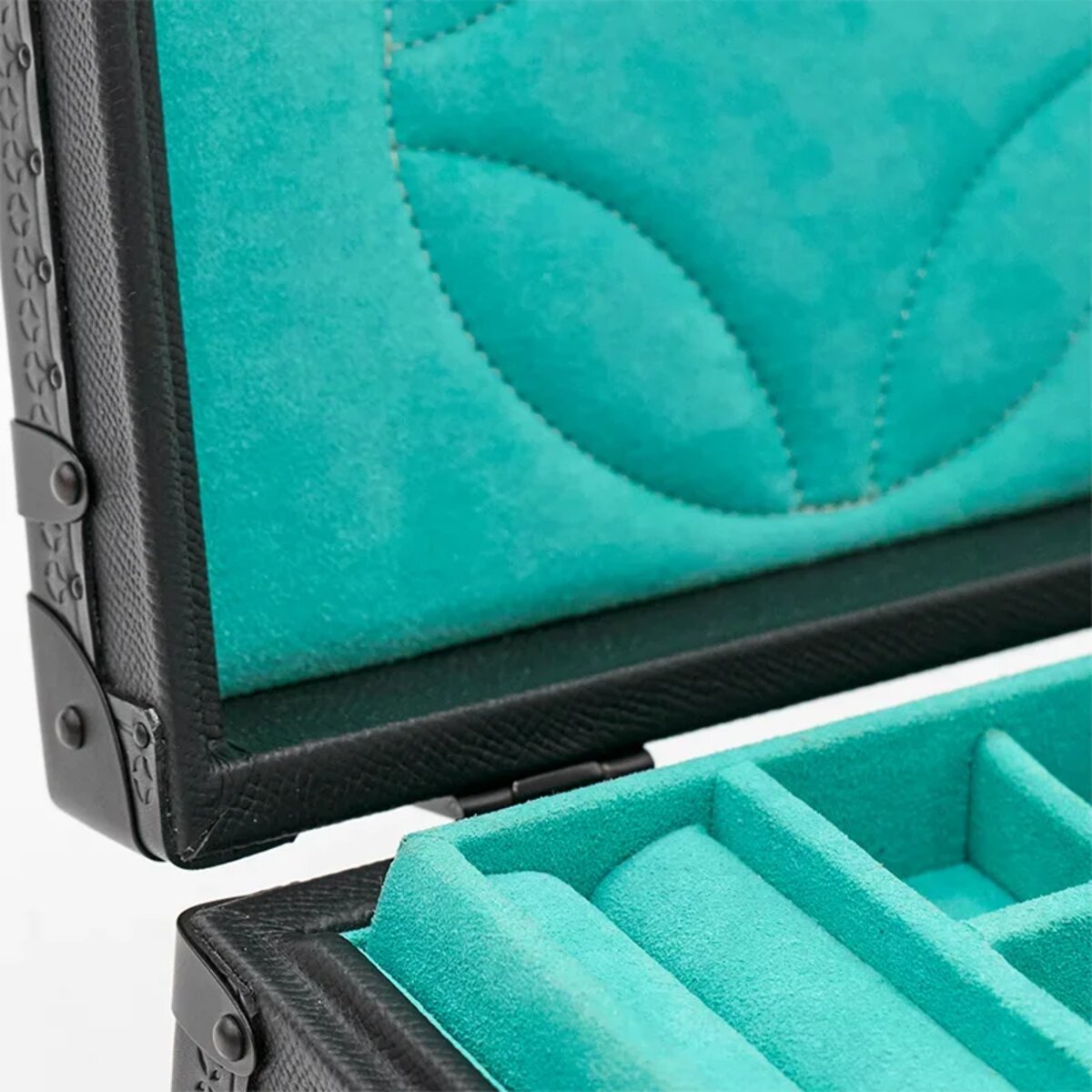
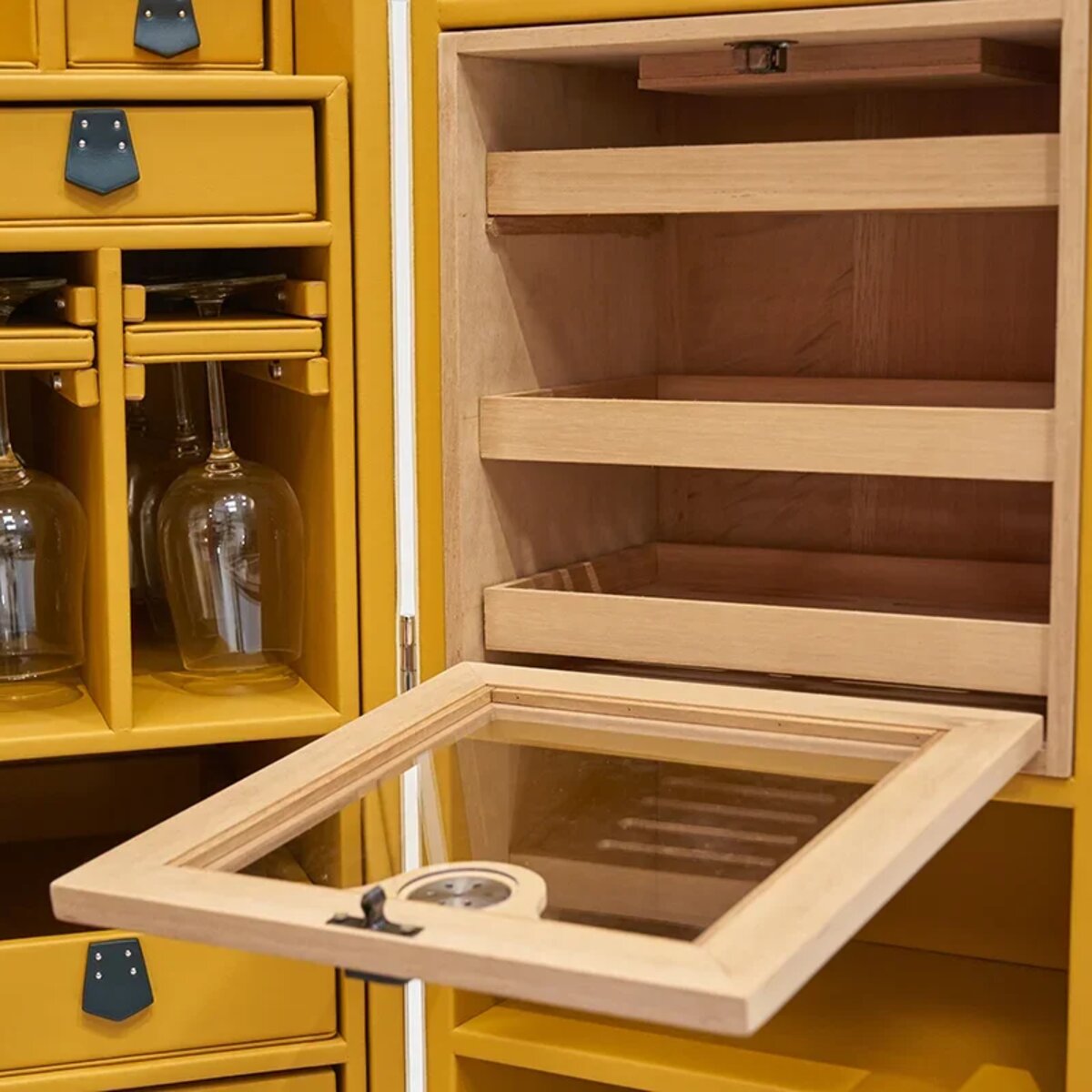
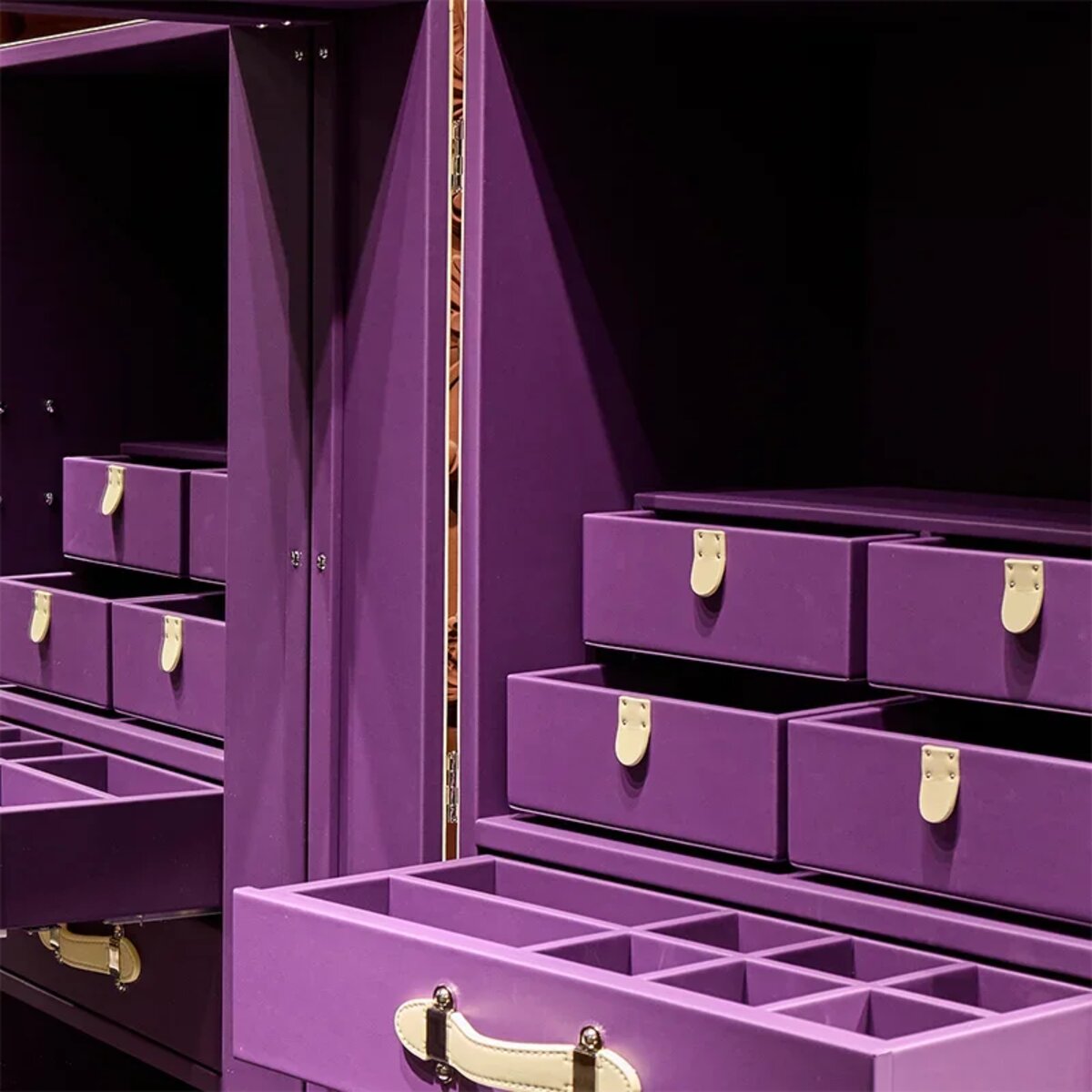
Climate compounds the case for proper custody. Dubai's coastal humidity routinely runs high and cycles hard against air-conditioned interiors near 25% RH, a swing that corrodes settings, tarnishes silver and dries out anything organic stored loosely in a drawer. A sealed, lined enclosure moderates that swing. The Illustrious Jewelry Box - Gilded Treasure offers a compartmented, lined interior that keeps a diamond ring, its certificate and its appraisal together; for a growing collection, the Celeste Jewelry Cabinet - Diamond Mist Blue adds lockable, zoned storage that separates settings so stones do not scratch one another. For sets that travel between homes, the Illustrious Jewelry Chest - Meadow Floral provides the same custody-grade architecture in a chest format.
The discipline pairs naturally with sound documentation and care: read our guide to jewellery insurance and valuation in the UAE before you finalise cover, and if your diamond is set alongside gold, the principles in how to store gold jewellery in the UAE and prevent tarnish apply to the setting. Buyers assembling a bridal collection will also find the storage logic in our Indian bridal jewellery storage guide for the UAE directly relevant.
Frequently Asked Questions
Is it cheaper to buy diamonds in Dubai than in the UK or US? Usually, yes — certified diamonds are commonly 20–40% cheaper in Dubai than in Western retail, thanks to the city's role as a trading hub, direct DMCC supply chains, low overheads and no import duty on most loose stones. The 5% VAT is modest and partly recoverable for tourists. The saving only holds for like-for-like certified stones: compare the same lab, the same four grades and the same report number. An uncertified "bargain" is not a comparable saving.
What is the difference between a GIA and an IGI diamond certificate? Both are recognised laboratories, but GIA is the global benchmark for strict, consistent grading and typically commands a 5–15% price premium for the same stated grades. IGI is widely accepted in the UAE and is the leading authority for lab-grown diamonds, especially since GIA stepped back from full lab-grown reports in October 2025. For a natural diamond you intend to hold, GIA is the safest choice; for lab-grown, IGI is now the standard. Always verify the report online with the issuing lab.
Do I pay VAT when buying diamonds or diamond jewellery in the UAE? Yes. The UAE applies 5% VAT on retail jewellery, charged on the full invoice — stone, metal and making charges combined. Business-to-business transactions in diamonds and precious stones fall under an expanded reverse-charge mechanism from February 2025, where the registered buyer accounts for the VAT. Eligible tourists can reclaim most of the VAT at the airport through the Tourist Refund Scheme when buying from an enrolled retailer. Confirm current rules with the Federal Tax Authority before relying on any treatment.
Are lab-grown diamonds a good investment in Dubai? For wearing, yes — lab-grown diamonds are real diamonds, around 85–90% cheaper than natural, and deliver more size and sparkle per dirham. As an investment, no. Lab-grown prices fell roughly 70–75% from 2020 to 2024 and resale returns only a small fraction of the purchase price. Certified natural diamonds in classic cuts and clean grades hold value far better and trade actively in the UAE's resale market. Decide whether the stone is for wearing or for holding before you buy.
Buying Diamonds in Dubai with SIRAE: Protecting the Asset
Buying diamonds in Dubai is the easy part; protecting a certified stone, its setting and its paperwork through Gulf summers is where the asset is preserved or quietly degraded. Whether you have just collected a GIA-graded solitaire from the Dubai Diamond Exchange or commissioned a custom piece at Gold & Diamond Park, the right enclosure keeps the diamond, its report and its appraisal together, in a lined and metered environment that protects the setting from humidity and tarnish.
Book a private appointment at the SIRAE showroom, Al Shafar Complex, Umm Suqeim 1, Dubai. Call +971 55 886 6180 or write to info@siraecasa.com, and our team will match a fine jewellery box or cabinet — with proper document storage and a secure lock — to your collection, so a documented asset is stored like one.

Leave a comment
This site is protected by hCaptcha and the hCaptcha Privacy Policy and Terms of Service apply.