
Securing Your Dubai Home & Valuables While You Summer Abroad: A 2026 Checklist
Securing Your Dubai Home & Valuables While You Summer Abroad
Securing your Dubai home while away is the one piece of summer planning most residents leave until the last evening — packing the cases, then locking the door on a villa that will sit semi-occupied from June through September. The Gulf summer migration is predictable: families leave for London, Geneva or the Mediterranean, the air conditioning runs on low for months, and a collection of fine jewellery and watches stays behind in bedside drawers and dressing-room shelves. This guide is a 2026 checklist for the long absence — not a generic list of holiday tips, but a Dubai-specific protocol covering the unoccupancy clause your insurer will quietly enforce, the humidity-versus-AC swing that damages valuables over a vacant summer, and the single most effective move for protecting valuables when away: consolidating them into one secure, climate-stable enclosure rather than leaving them scattered.
Why a Dubai Summer Absence Is Different from a Holiday
The Bottom Line: A two-week European holiday and a three-month Gulf summer are not the same security problem. Securing your Dubai home while away for the season means planning for a home that is unoccupied long enough to trigger insurance clauses, exposed to extreme heat, and visibly empty to anyone watching the building — three risks a short-trip checklist never addresses.
Most published home-security advice is written for the temperate-climate fortnight: hold the post, set a timer, tell a neighbour. That advice is not wrong, but it is incomplete for the Dubai pattern. From June onward, outdoor temperatures regularly exceed 45°C while interior air conditioning runs unattended for weeks, coastal humidity sits high, and entire floors of a residential tower can empty out at once. The home is not merely closed for a weekend — it is dormant for a quarter of the year.
That changes the calculus in three ways. First, duration crosses the threshold where standard contents and buildings cover begins to lapse. Second, the climate itself becomes an active threat to anything left inside — silver tarnishes, leather dries and cracks, mechanical watches seize. Third, a long, predictable absence is exactly the window opportunistic risk looks for. The sections below treat each in turn, in the order a departing resident should work through them.
Please note: This article is general guidance for residents of the UAE, not insurance, legal or security advice. Unoccupancy terms, notification periods and contents limits vary by policy and provider — always confirm your specific cover and any away-from-home conditions with your own insurer before you travel.
The Pre-Departure Security Checklist
Quick Answer: The core of securing your Dubai home while away is a fixed sequence: notify your insurer of an extended absence, appoint a trusted keyholder, shut off the main water supply, set the air conditioning to a moderate humidity-controlling level rather than off, arrange mail and deliveries, avoid advertising your absence on social media, and consolidate valuables into secure custody. Work it as a list, not from memory.
The table below is the working checklist. It is ordered roughly by how much damage the omission causes — the items near the top are the ones that void cover or flood a villa, not the ones that simply look untidy on return.
| Task | Why it matters in a Dubai summer | Timing |
|---|---|---|
| Notify your insurer of the absence length | Unoccupancy clauses can suspend theft/water cover beyond a set period | 2–4 weeks before |
| Appoint a trusted keyholder | A named contact who checks the home and holds keys; many policies require one | 2 weeks before |
| Shut off the main water supply | Prevents a burst connection flooding an unoccupied villa for weeks | Departure day |
| Set AC to a moderate level (not off) | Controls humidity and prevents mould; protects valuables and finishes | Departure day |
| Activate DEWA Away Mode | Remote monitoring of electricity and water flags anomalies early | 1 week before |
| Hold or redirect mail and deliveries | Accumulating post signals an empty home | 1 week before |
| Stay silent on social media | Public holiday posts advertise a vacant property to strangers | Throughout |
| Consolidate valuables into secure custody | One locked, climate-stable enclosure beats scattered pieces | Departure day |
| Photograph and inventory high-value items | Documentation underpins any future claim or police report | 2 weeks before |
A few items deserve emphasis because they are routinely skipped. Shutting the main water valve is the single most effective defence against the most common cause of long-absence loss in the Gulf — a failed hose or connection quietly flooding a home no one will enter for months. Appointing a keyholder is not optional courtesy; it is frequently a written condition of cover, and the keyholder should be someone who will physically enter and inspect, not merely glance at the building. And the discipline of silence on social media matters more than it sounds: a publicly posted itinerary is, in effect, a notice of vacancy.
The Insurance Reality: Unoccupancy Clauses
Technical Verdict: Most home contents and buildings policies contain an unoccupancy clause that limits or suspends certain cover — typically theft, escape of water and malicious damage — once a property has been left for a continuous period, commonly around 30 days. A standard Gulf summer absence often crosses that line, so the correct step is to notify your insurer in writing before you travel and obtain written confirmation of what remains covered.
This is the part of the checklist that most directly protects high-value collections, and it is the part residents most often overlook. The logic is straightforward from the insurer's side: an empty home is a higher risk, so cover narrows when no one is there to notice a leak, a forced entry or a fault. The exact trigger period and the specific perils affected vary by policy — some define the threshold at 30 consecutive days, others at 60 — which is precisely why reading the wording, or simply asking, is non-negotiable before a long absence.
Two practical points follow. First, "unoccupied" and "vacant" are not the same in policy language: a home that still contains all your belongings, ready for your return, is unoccupied; one stripped of contents is vacant, and may fall under different terms again. Second, telling your insurer in advance is what preserves cover — most providers will extend or endorse a policy for a known, declared absence, but a claim made on an undeclared extended vacancy is where disputes and denials arise.
| Term | What it means | Typical effect on cover |
|---|---|---|
| Occupied | Lived in normally | Full cover as written |
| Unoccupied | Contents present, no one staying | Limited after a set period; notify insurer |
| Vacant | Empty of people and belongings | Often excluded or separately rated |
| Declared absence | Insurer notified in advance | Cover usually extendable by endorsement |
| Undeclared vacancy | Insurer not told | Highest risk of denied claim |
For the valuables themselves, separate "all-risks" or specified-item cover often carries its own conditions on where pieces are kept — for example, requiring a locked safe or secure enclosure for items above a certain value. Consolidating a collection into one lockable, custody-grade cabinet is therefore not only good practice; it can be the difference between a paid and a contested claim. We cover the broader question of where to keep fine jewellery in how-to-store-valuables-home-uae-faq.
Protecting Valuables: Where the Collection Should Sit
Quick Answer: The single best move for protecting valuables when away is consolidation — bringing every meaningful piece into one secure, lockable, climate-stable enclosure rather than leaving jewellery, watches and heirlooms scattered across drawers and shelves. One controlled location is easier to secure, easier to insure, and dramatically easier to inventory than a dozen hiding places.
Scattered storage is the quiet vulnerability in most Gulf homes. A watch in a bedside drawer, a set in the dressing room, gold in a wardrobe pocket, a ring in the bathroom — each location is individually plausible and collectively indefensible. Over a three-month absence, it is impossible to monitor, impossible to verify on return, and impossible to present cleanly to an insurer. The fix is structural, not behavioural: a single enclosure that is the known, locked home for everything that matters.
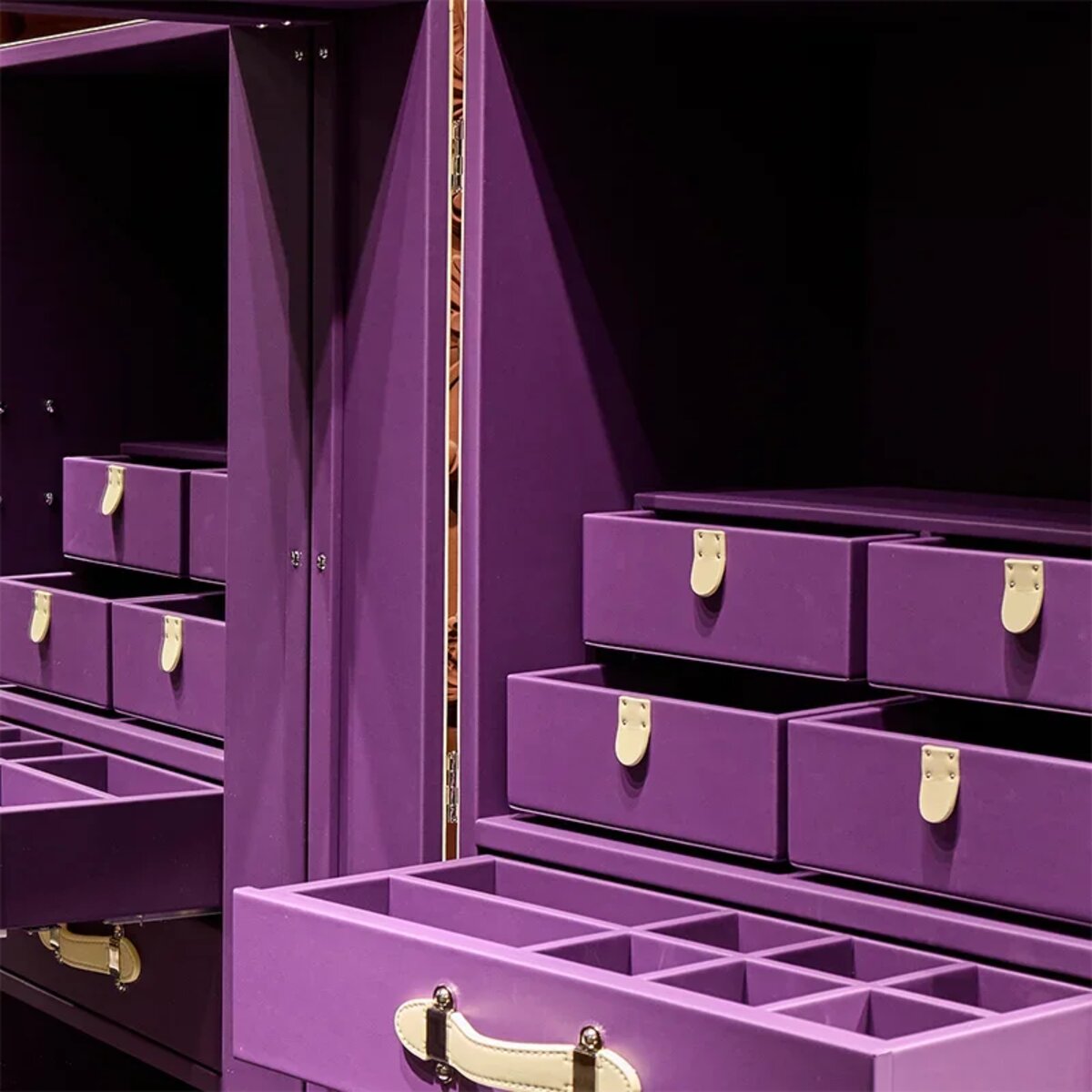
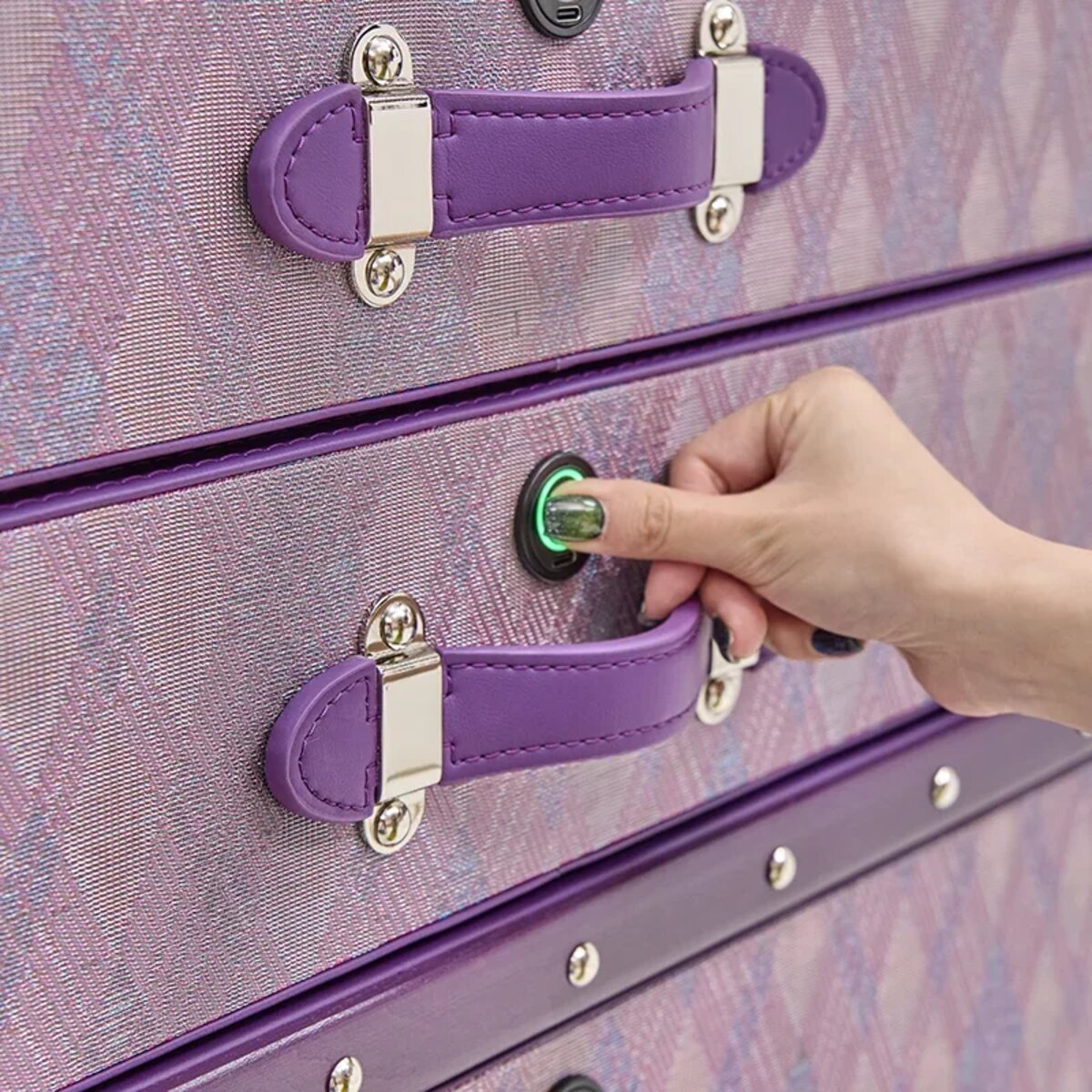
That enclosure should do three things at once. It should resist casual access — a biometric lock removes the weakness of a hidden key or a written combination. It should be physically substantial enough not to be simply carried away. And it should be climate-stable, which in Dubai is not optional. The Amber Jewelry Cabinet - Dune Gold is built for exactly this high-value core: biometric entry, a suede-lined interior zoned so chains, rings and earrings sit separated, and a sealed construction that meters the sulphur-bearing, humid air that tarnishes silver and dulls white metals over a vacant summer.
For a broader collection — the pieces beyond the daily core, the seasonal and the occasional — a larger format earns its place. The Atelier Wardrobe Trunk - Silver consolidates an extended collection into one lockable, mirror-fronted unit that reads as furniture, not as a target. The principle is the same at every scale: fewer locations, each one controlled.
The Climate Threat: Humidity, AC and the Semi-Occupied Home
Technical Verdict: A Dubai home left through summer is exposed to a damaging cycle — high external humidity against intermittent or low air conditioning — and that swing, not the heat alone, is what corrodes silver, dries leather straps and strains the lubricated movements in mechanical watches. The defence is twofold: keep AC at a moderate, dehumidifying level rather than switching it off, and keep valuables in a metered enclosure that buffers the swing regardless of what the room does.
There is a tempting false economy here. Switching the air conditioning off entirely to save on a months-long DEWA bill seems sensible, but in a Gulf summer it invites humidity and mould into a sealed home, and lets interior temperatures climb to levels that degrade finishes, adhesives and delicate mechanisms. The consensus guidance for a departing resident is to leave the AC running at a moderate level — around 24–26°C — precisely to hold humidity down rather than to cool an empty space for comfort.
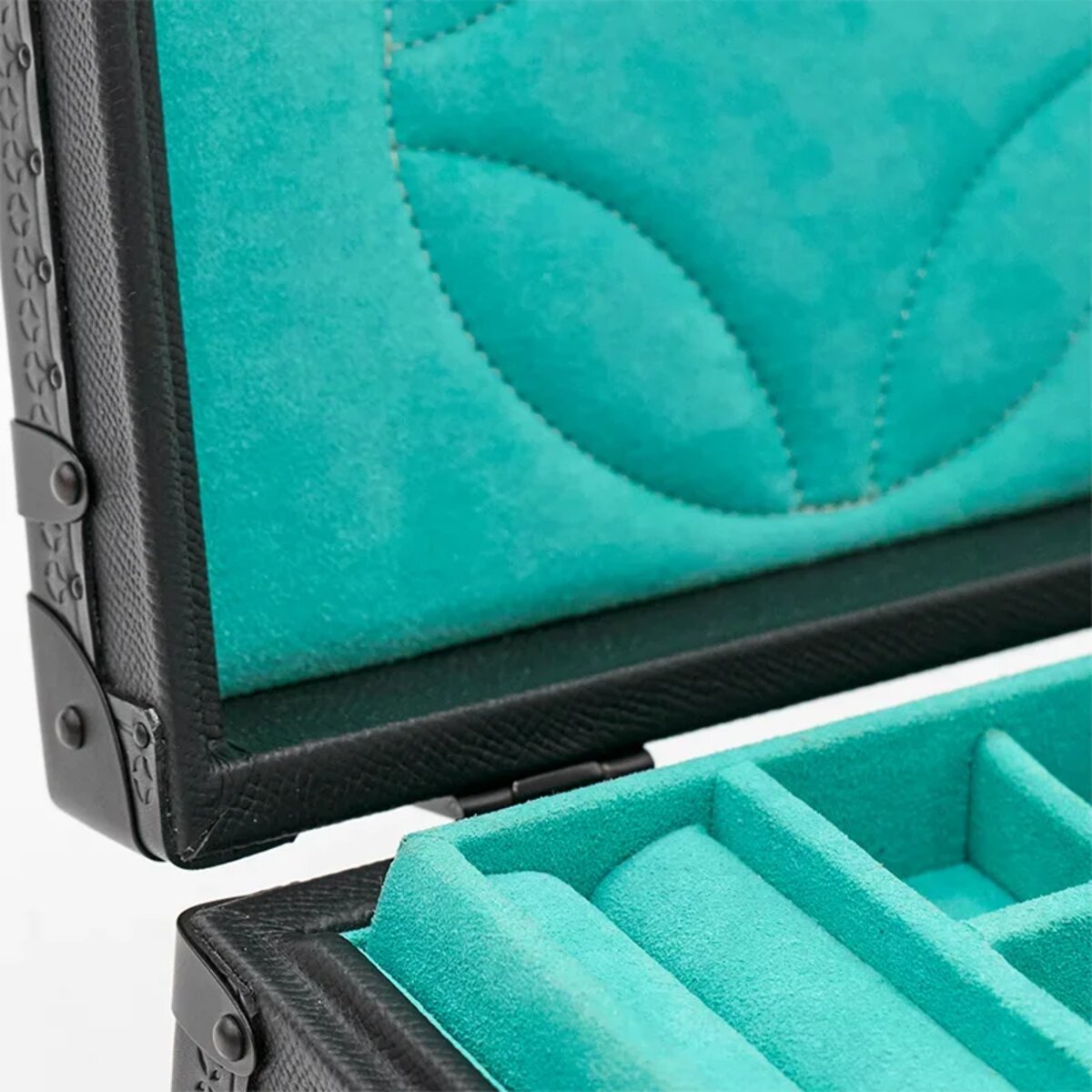
But even a well-managed home is not a stable environment over three months. AC cycles, settings drift, and the gap between humid outdoor air and dry conditioned air is exactly the stress that watch movements and silver dislike. This is why the storage enclosure matters as much as the room. A sealed, metered cabinet or trunk keeps the immediate micro-climate around your pieces far steadier than the open shelves around it — so a serviced mechanical watch is not left to seize, and a silver set is not left to tarnish, while the villa sits semi-occupied. For watch collections specifically, the Signature Watch organizer - Frosted Silver keeps each movement isolated, cushioned and shielded from the air swing, ready to wear rather than service on your return. The fuller climate-and-security case is set out in jewellery-storage-security-uae-faq.
What to Leave in Secure Custody vs. What Stays Everyday
The Bottom Line: Not everything needs to disappear into a locked cabinet, but the line should be drawn deliberately before you leave — high-value, irreplaceable and tarnish-prone pieces belong in secure custody for the summer; genuinely everyday, low-value items can remain accessible. Drawing that line in advance is what makes the consolidation actually happen rather than getting abandoned in the rush to the airport.
The decision is best made as a sorting exercise, piece by piece, the week before departure. The table below is the working logic. The question is never sentiment alone but a combination of value, replaceability and vulnerability to the summer climate.
| Item type | Leave in secure custody | Keep everyday / accessible |
|---|---|---|
| High-value statement jewellery | Yes — locked, climate-stable enclosure | No |
| Heirloom and estate pieces | Yes — irreplaceable, document first | No |
| Mechanical and fine watches | Yes — metered, isolated, cushioned | A single travel piece you take with you |
| Silver and white-metal sets | Yes — sealed against tarnish | No |
| Gold coins, bars, bullion | Yes — secured and inventoried | No |
| Costume and low-value pieces | Optional | Yes |
| Daily-wear items you travel with | N/A — these go with you | Carried, not left |
A note on what travels: anything you genuinely intend to wear over the summer should come with you, packed in cabin baggage and, where value warrants, declared at the border. We cover the declaration thresholds and the carry-versus-leave decision for travel in travelling-with-valuables-uae-customs-declaration. Everything you will not wear is, by definition, a candidate for secure custody at home — there is no reason for an unworn heirloom to spend the summer in an open drawer.
The final discipline is the inventory. Before the cabinet closes, photograph each significant piece, note any serial numbers or appraisal references, and keep that record somewhere you can reach it from abroad. It costs an hour and it underpins every conversation you might later have with an insurer or the authorities.
Frequently Asked Questions
How long can I leave my Dubai home empty before my insurance is affected? It depends entirely on your policy, but many home contents and buildings policies begin to limit or suspend certain cover — typically theft, malicious damage and escape of water — after a continuous unoccupied period, commonly around 30 days. A standard Gulf summer absence usually exceeds that. The safe approach is to read your policy's unoccupancy clause and notify your insurer in writing before you travel, then obtain written confirmation of exactly what remains covered while you are away. Declaring the absence in advance is what preserves cover; an undeclared extended vacancy is where claims are contested.
Should I turn off the AC to save money while I'm away for the summer? No — switching the air conditioning off entirely is a false economy in a Dubai summer. A sealed home with no climate control invites humidity and mould, and lets interior temperatures climb high enough to damage finishes, adhesives and delicate mechanisms. The widely recommended approach is to leave the AC running at a moderate level, around 24–26°C, to hold humidity down rather than to cool an empty space for comfort. For valuables specifically, keep them in a sealed, climate-stable enclosure that buffers the humidity swing regardless of what the wider room does.
What is the single best way to protect my jewellery and watches over a long absence? Consolidation. The most effective move is bringing every meaningful piece — high-value jewellery, fine watches, heirlooms, silver — into one secure, lockable, climate-stable enclosure rather than leaving them scattered across drawers and shelves. One controlled location is far easier to secure, to insure and to inventory than a dozen hiding places, and a metered enclosure also protects against the humidity-versus-AC swing while the home sits semi-occupied for months. A biometric cabinet for the high-value core, a wardrobe trunk for the broader collection, and a dedicated case for watches cover the full range.
Do I really need to tell anyone I'm leaving? Yes — but tell the right people, not everyone. Appoint a trusted keyholder who will physically enter and check the home, and notify your building security or management of the dates; both are practical and frequently required by insurers. At the same time, stay silent publicly: a holiday itinerary posted on social media is, in effect, a notice of vacancy to strangers. The principle is private notification to people you trust, and public discretion to everyone else.
Secure Your Collection at the SIRAE Showroom in Umm Suqeim
Securing your Dubai home while away for the summer comes down, in the end, to one physical decision: where the collection sits while the villa is quiet. The difference between an open drawer and a custody-grade enclosure is felt in the lock action, the seal of a closed door and the steadiness of the air inside it — and that is worth assessing in person rather than from a photograph.
Book a private appointment at the SIRAE showroom, Al Shafar Complex, Umm Suqeim 1, Dubai. Call +971 55 886 6180 or write to info@siraecasa.com, and our team will walk you through biometric jewellery cabinets, wardrobe trunks and watch cases matched to your collection and your summer travel pattern, so the home you lock in June is exactly as you left it in September.

Leave a comment
This site is protected by hCaptcha and the hCaptcha Privacy Policy and Terms of Service apply.