
How to Store Jewellery Properly at Home: The Complete Preservation Guide
For the discerning collector, a piece of fine jewellery is not merely an accessory; it is an asset, an heirloom, and a tangible piece of a family’s legacy. Proper storage is therefore not a matter of simple tidiness, but of disciplined stewardship. In climates as demanding as those found across Dubai and the MENA region, the ambient heat and humidity present a constant, subtle threat to the integrity of precious metals and delicate gemstones, demanding a more scientific approach to preservation.
This guide outlines the professional protocols for ensuring your collection remains in impeccable condition, safe from the environmental and mechanical risks that degrade value and beauty over time.
Guide to This Commission
- The SIRAE Standard: Core Principles of Jewellery Preservation
- Foundations of Preservation: Environmental Control & Material Science
- Systematic Curation: Segregation and Damage Prevention
- Specialised Care: Protocols for Heirlooms and Sensitive Gemstones
The SIRAE Standard: Core Principles of Jewellery Preservation
The Bottom Line: This section establishes the core scientific principles for jewellery preservation, focusing on humidity control (45-55% RH), temperature stability, light exclusion, and material-specific protocols for preventing chemical and physical degradation.
The Physics of Tarnish and Abrasion
The primary threats to any collection are chemical and physical. Oxidation, the chemical reaction that causes tarnish on metals like Sterling Silver, is aggressively accelerated by humidity and airborne pollutants. Equally damaging are micro-abrasions—tiny scratches accumulated over time from improper contact between pieces, which dull surfaces and can compromise delicate settings.
Essential Preservation Tools
A foundational storage system employs specific tools to create a stable micro-environment. An anti-tarnish cloth or, more effectively, a dedicated interior lined with microfiber suede lining can absorb sulphides and other corrosive agents. For enclosed spaces, Silica gel packets help manage moisture, while advanced solutions like Zerust Vapor capsules release a harmless, non-toxic vapour that forms a protective layer on metal surfaces, actively preventing corrosion for extended periods.
The Mohs Scale in Practice
Understanding the Mohs Hardness scale is non-negotiable for any serious collector. This scale ranks materials by their resistance to scratching, from 1 (talc) to 10 (diamond). Storing a diamond next to a softer gemstone or metal will inevitably result in permanent damage to the latter. This physical law dictates that every piece in a collection must be stored separately to prevent contact.
Foundations of Preservation: Environmental Control & Material Science
Technical Verdict: Optimal jewellery preservation hinges on maintaining a stable micro-environment with 45-55% relative humidity, consistent temperature away from direct sunlight, and physical separation based on material properties to prevent chemical reactions like tarnishing and physical damage like scratching.
Mastering the Climate Challenge in Dubai and the MENA Region
For those residing in private villas across the Emirates, particularly in Dubai, the pervasive humidity poses a significant challenge. A standard jewellery box is often insufficient as it cannot form a perfect seal against the humid air. For significant collections, a commissioned consultation is essential to specify a truly protective solution. These engagements, which begin at our Jumeirah Beach Road showroom, result in climate-controlled cabinetry that actively manages the interior atmosphere, holding it at a stable relative humidity and protecting delicate heirlooms from the corrosive coastal air.
Material-Specific Protocols
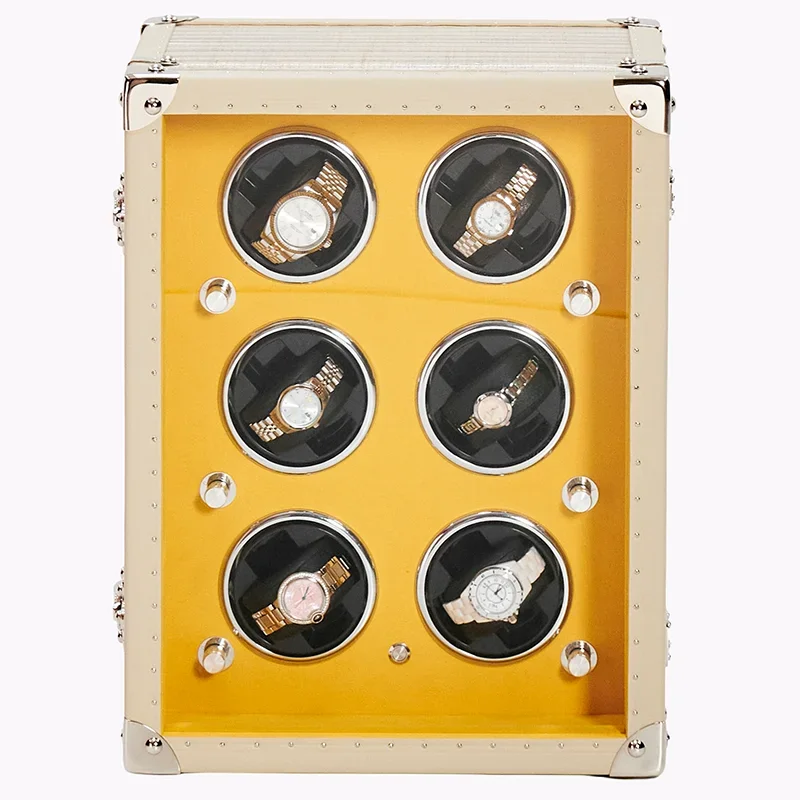
Different materials require distinct environments. Pearls, for instance, are organic gems that require a small amount of moisture from the air to prevent them from drying out and cracking. They must be stored away from desiccants like silica gel and protected from chemicals in cosmetics and perfumes. Conversely, the intricate mechanical movements within a fine watch are highly vulnerable to moisture, demanding a dry, stable environment completely separate from other pieces.
Systematic Curation: Segregation and Damage Prevention
The Bottom Line: A structured storage system organises a collection by material, frequency of use, and hardness, utilising individual compartments, soft linings, and dedicated spaces to eliminate tangling, scratching, and cross-contamination between reactive metals.
The Principle of Isolation
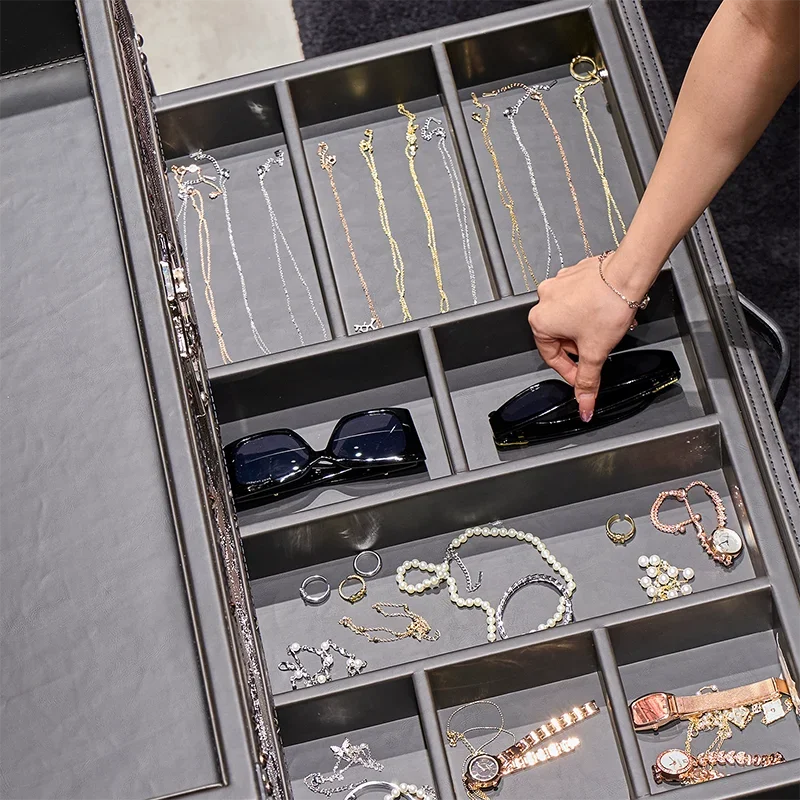
The most fundamental rule of jewellery storage is simple: one piece, one compartment. This principle of isolation prevents the physical contact that leads to scratches and the chemical reactions that can occur between different alloys. A well-designed system, such as our Aurum Wire Jewelry Trunk, features drawers meticulously partitioned and lined with inert, non-reactive microfiber suede, ensuring each item rests securely in its own dedicated space.
Preventing Mechanical Damage
Necklaces should be fastened and stored either hanging vertically or lying flat in individual channels to prevent tangling, which can strain or break fine chains. Rings should never be stacked or piled together; dedicated ring rolls or slotted compartments keep them upright and apart. This meticulous organisation not only preserves the pieces but elevates the daily ritual of selecting them.
Integrating Security with Aesthetics
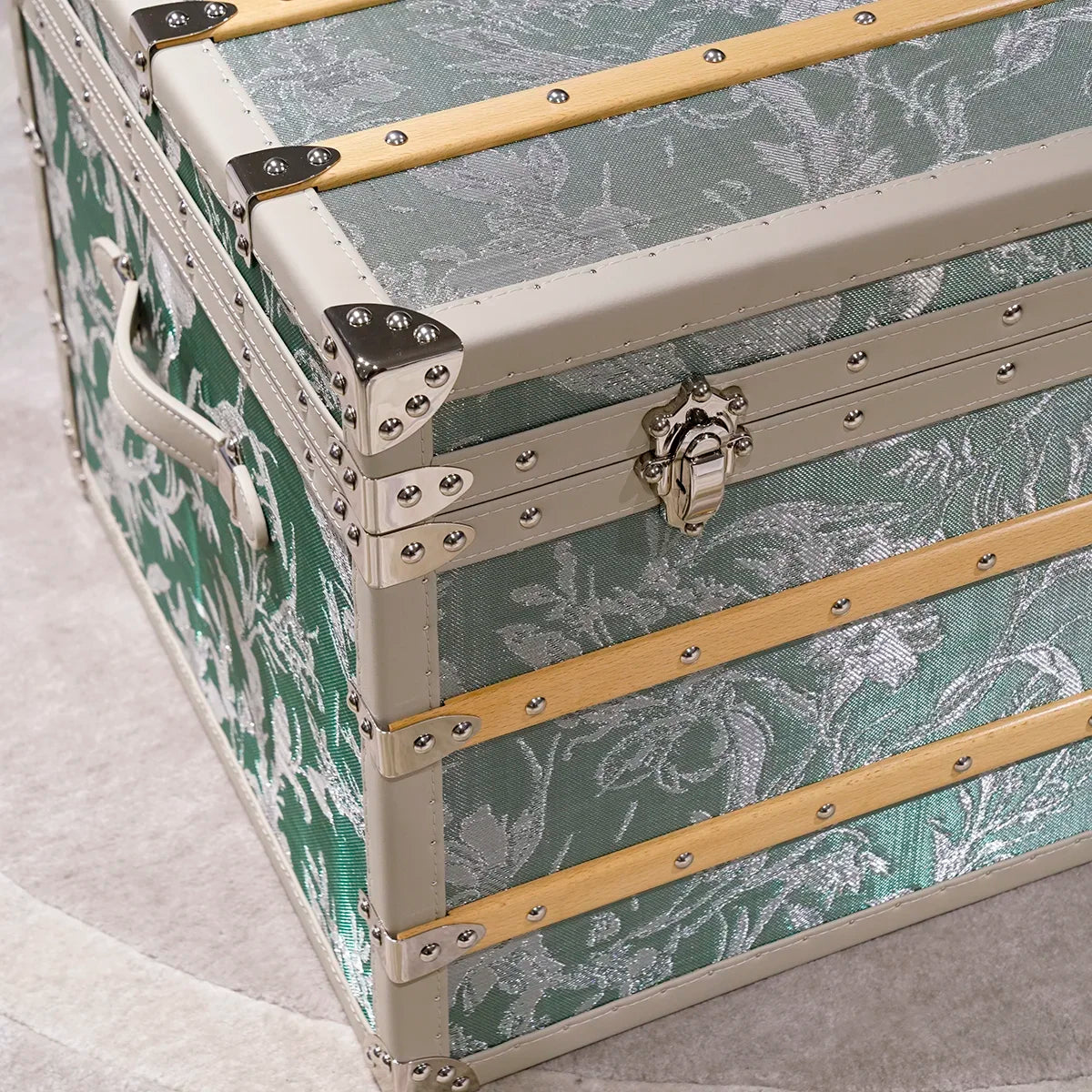
True collection management transcends simple organisation. It involves the seamless integration of museum-grade preservation with vault-level security, all within a piece of furniture that complements the residence's interior design. This is a discipline SIRAE pioneered through its signature copper-wire hard case craft. Here, woven copper-wire facades and solid brass fittings provide not only aesthetic distinction but also a formidable physical presence, turning a storage solution into a private vault.
Specialised Care: Protocols for Heirlooms and Sensitive Gemstones
Technical Verdict: Gemstones with significant inclusions or lower hardness, such as emeralds and aquamarines, require storage that mitigates thermal shock and humidity fluctuations to prevent the exacerbation of internal fractures; this necessitates specialised, climate-stabilised cabinetry for long-term preservation.
The Challenge of Porous and Treated Gemstones
Certain gemstones demand a higher level of care. Emeralds, for example, are often treated with oils to enhance their clarity by filling tiny internal fissures. Extreme changes in temperature or humidity can cause these oils to dry out or degrade, making the natural inclusions more visible and potentially compromising the stone's structural integrity. For such sensitive pieces, a standard jewellery box offers insufficient protection against the seasonal climate swings experienced across the Gulf.
A professionally commissioned repository, from a collection such as Aurum Wire, provides a climate-stabilised enclosure that shields these vulnerable treasures from thermal shock and atmospheric volatility. This ensures that the conditions within the cabinet remain constant, regardless of the environment outside, preserving the gemstone’s colour and internal character for generations.
Antique and Vintage Pieces
Heirloom jewellery often features delicate filigree, older setting techniques, or materials that require exceptional care. These pieces are irreplaceable links to family history and warrant the highest standard of preservation. Storing them in a controlled, inert environment ensures that their story, and their value, endures.
The discipline of collecting extends beyond acquisition to the quiet, daily act of preservation, ensuring that legacies of beauty and craftsmanship are passed on with their integrity intact.
To arrange a private consultation, please contact our VIP client services at +971 55 886 6180 or info@siraecasa.com.
https://www.siraecasa.com

Leave a comment
This site is protected by hCaptcha and the hCaptcha Privacy Policy and Terms of Service apply.