
Jewellery & Watch Appraisal in the UAE: Where to Get a Valuation, Costs & What Insurers Accept (2026)
Jewellery & Watch Appraisal in the UAE: Where to Get a Valuation and What Insurers Accept
A jewellery appraisal in the UAE is the single document that turns "this ring is precious to me" into "this ring is worth AED X and here is the certified report that proves it" — and the most common mistake Gulf owners make is confusing it with the GIA or IGI grading report that came in the box. A grading report describes the stone; an appraisal states the money. This guide is the practical how-to of getting a valuation in the Emirates: where to go (gemmological laboratories, independent registered appraisers, auction houses, manufacturer boutiques), what it costs and how long it takes, the documents you receive, and how often to re-value as gold and diamond prices move. For insurance-policy depth — premiums, cover types, claims — see the companion guide below.
Grading Report vs Insurance Valuation: What Is the Difference?
Quick Answer: A grading report (GIA, IGI) is a scientific description of a stone's quality — carat, colour, clarity, cut — and deliberately carries no monetary value. An appraisal, or insurance valuation, assigns a money figure: usually the Retail Replacement Value, the cost to replace the piece new at today's UAE prices. Insurers want the valuation; the grading report is supporting evidence inside it.
This distinction trips up almost every new collector. The certificate that accompanied your engagement diamond from a Dubai jeweller is a grading report — GIA's own position is explicit that it "is not a certificate or guarantee and does not indicate a diamond's monetary value." It tells an underwriter the stone is a 1.2ct G VS1, but not what replacing it would cost in Dubai Gold Souk or DIFC pricing this year.
An insurance valuation does the opposite. A registered appraiser inspects the finished piece, reads any grading data, weighs the metal, assesses the setting and craftsmanship, and writes a figure tied to current market conditions. That figure is what your insurer schedules the item against. For coloured stones, antique pieces and signed jewellery there may be no grading report at all — which is exactly why a separate valuation matters.
| Feature | Grading Report (GIA / IGI) | Insurance Valuation / Appraisal |
|---|---|---|
| What it describes | The loose or set stone's quality (4Cs) | The complete finished piece |
| States a money value? | No — by design | Yes — usually Retail Replacement Value |
| Who issues it | Gemmological laboratory | Registered/certified appraiser (often GIA-trained) |
| Used for | Provenance, buying, comparison | Insurance scheduling and claims |
| Covers watches? | No | Yes |
| Expires / dates? | No, but value context ages | Yes — refresh every 2–3 years |
Please note: This article is general information, not financial, legal or insurance advice. Always use a registered or certified appraiser, and confirm the exact valuation format your insurer accepts before you book — requirements differ between UAE underwriters.
Where Can You Get Jewellery Valued in the UAE?
The Bottom Line: There are four credible routes in the Emirates — accredited gemmological laboratories (GIA Dubai, IGI Dubai, Gulf Gem Lab), independent registered appraisers, the major auction houses, and the manufacturer's own boutique. For an insurance valuation, an independent registered appraiser or a lab-backed valuer is the standard; the auction houses are best for resale or estate figures.
Dubai is one of the world's diamond hubs — the DMCC's Dubai Diamond Exchange sits inside the World Federation of Diamond Bourses — so accredited expertise is unusually accessible here compared with most cities. Where you go depends on why you are valuing.
Gemmological laboratories. GIA operates a laboratory in Dubai, IGI has a Dubai office, and Gulf Gem Lab (Sharjah) offers diamond grading, origin identification and antique-jewellery analysis with turnaround as quick as 24 hours. Labs produce grading and identification reports; some also issue valuation documents. Use them to establish what a stone is before, or alongside, an appraisal of what it is worth.
Independent registered appraisers. This is the workhorse route for insurance. UAE practices are typically led by a GIA graduate gemologist who has "appraised collections for all major insurers and brokerages in the UAE." They inspect in person, value the finished piece, and issue a report in the format underwriters expect.
Auction houses. Sotheby's runs jewellery specialists in Dubai and has offered UAE residents free valuation sessions; auction houses are ideal for resale or estate values on important pieces, less so for replacement-cost insurance figures.
Manufacturer or boutique. The maison that sold you a Cartier high-jewellery piece or a Patek Philippe can supply or confirm replacement documentation — useful for branded pieces, though boutique figures lean toward current retail.
How Much Does a Jewellery Appraisal Cost in the UAE?
Technical Verdict: Reputable UAE appraisers charge a flat fee per item or a tiered/day rate — not a percentage of the value. Indicative Dubai pricing starts around USD 100 (roughly AED 370) per item for small collections, dropping per piece as volume rises. Percentage-of-value pricing is discouraged across the profession because it builds an incentive to inflate the figure.
The flat-fee principle is the single most important thing to check before you book. A valuer paid a percentage of what they value has a structural conflict of interest; a valuer paid per item, or per day, does not. The table below reflects a representative Dubai tariff for insurance/replacement valuations.
| Collection size | Indicative basis | Typical turnaround | Best route |
|---|---|---|---|
| 1–14 items | ~USD 100 (≈AED 370) per item | A few working days | Independent appraiser, in person |
| 15–39 items | Flat ~USD 1,500 total | Up to ~1 week | Appraiser site visit |
| 40–69 items | Flat ~USD 2,000 total | ~1 week+ | Appraiser site visit |
| 70+ items | Flat ~USD 3,500 total | Scheduled over days | Site visit, full inventory |
| Single watch | Per-item fee; box & papers raise value | Same day to days | Watch specialist or appraiser |
| Loose diamond grading | From ~USD 50 (small) to ~USD 110+ (1ct) | 24h–2 weeks (lab) | Gemmological laboratory |
Two notes for Gulf owners. First, Abu Dhabi and the northern emirates often attract a day-rate (commonly ~USD 1,500 for up to ~39 items) because the appraiser travels to you. Second, lab grading fees (GIA/IGI) are separate from, and usually lower than, a full valuation — you may pay both if a stone needs grading before it can be appraised.
What Happens During the Appraisal — and What You Receive
Quick Answer: A credible UAE appraisal is always done in person — nobody reputable values fine jewellery from photographs alone. The appraiser examines each piece under a loupe and microscope, weighs and measures it, records hallmarks and grading data, photographs it, and issues a signed, dated report stating the Retail Replacement Value. That report, with photos, is what you give your insurer.
In-person inspection is non-negotiable for a figure an insurer will accept. A specialist may give provisional feedback from images as a first step, but the binding valuation follows a physical examination. Bring everything that supports provenance: original invoices, grading reports, watch box and papers, service history and any prior valuations.
For watches specifically, documentation moves the number more than for jewellery. Original box, warranty card and service records can materially raise a timepiece's assessed value; a Rolex, Patek or AP with full set commands a different figure from a bare watch head. Have the reference and serial numbers ready.
A proper insurance valuation report describes each piece in forensic detail — and this is the document worth keeping with the asset itself:
- Metal type, fineness and weight (gold karat, platinum, etc.).
- For diamonds: carat, colour, clarity, cut, and any grading-laboratory reference.
- For coloured stones: species, cut, dimensions and quality assessment.
- Setting, design, signature/maker and hallmarks.
- A clear photograph of the piece.
- The stated value, valuation date, basis (replacement/resale) and the appraiser's signature and credentials.
How Often Should You Re-Value Jewellery and Watches?
The Bottom Line: Re-value every 2–3 years as a working rule, and sooner after any sharp move in gold or diamond prices, a new acquisition, an alteration, or a change of insurer. A valuation drifts out of date the moment the market moves — and Gulf owners hold metal- and stone-heavy collections whose replacement cost tracks commodity prices closely.
The case for the 2–3 year cadence is simply that an underinsured piece pays out underinsured. Gold has repriced sharply in recent years; a ring valued three years ago at one gold price may cost meaningfully more to replace today, and a stale figure leaves you covering the gap yourself at claim time. Some bodies suggest up to five years for "good housekeeping," but in a fast-moving Gulf market the tighter cadence protects you better.
Trigger an interim re-valuation when any of these occur: a significant gold or diamond price swing; you buy, inherit or are gifted a new piece; you resize, re-set or repair an item (which changes its value and description); your collection crosses an insurer's single-item threshold; or you switch underwriters and the new one wants its own accepted format. Keep each superseded valuation — the dated trail is itself evidence of provenance and ownership.
Keep the Paperwork With the Pieces: Custody-Grade Documentation at Home
Technical Verdict: A valuation is only as useful as the documentation you can produce at claim time. Store appraisal certificates, grading reports, invoices, photographs and a written inventory alongside the jewellery and watches in one secure, lockable, climate-stable enclosure — so the paper and the asset never drift apart. UAE insurers expect both the schedule and the proof; Gulf humidity also degrades pieces stored loose.
This is the bridge between a valuation and real protection. The certificate filed in a drawer in another room, or buried in an email, is the certificate you cannot find the day a piece is lost or stolen. Custody-grade storage solves two problems at once: it keeps the documentation physically with the collection, and it controls the environment that quietly damages the assets the documentation describes. Dubai's coastal humidity climbs above 80% RH in summer, cycling against air-conditioned interiors near 25% RH — a swing that tarnishes silver, dries leather watch straps and strains mechanical movements.
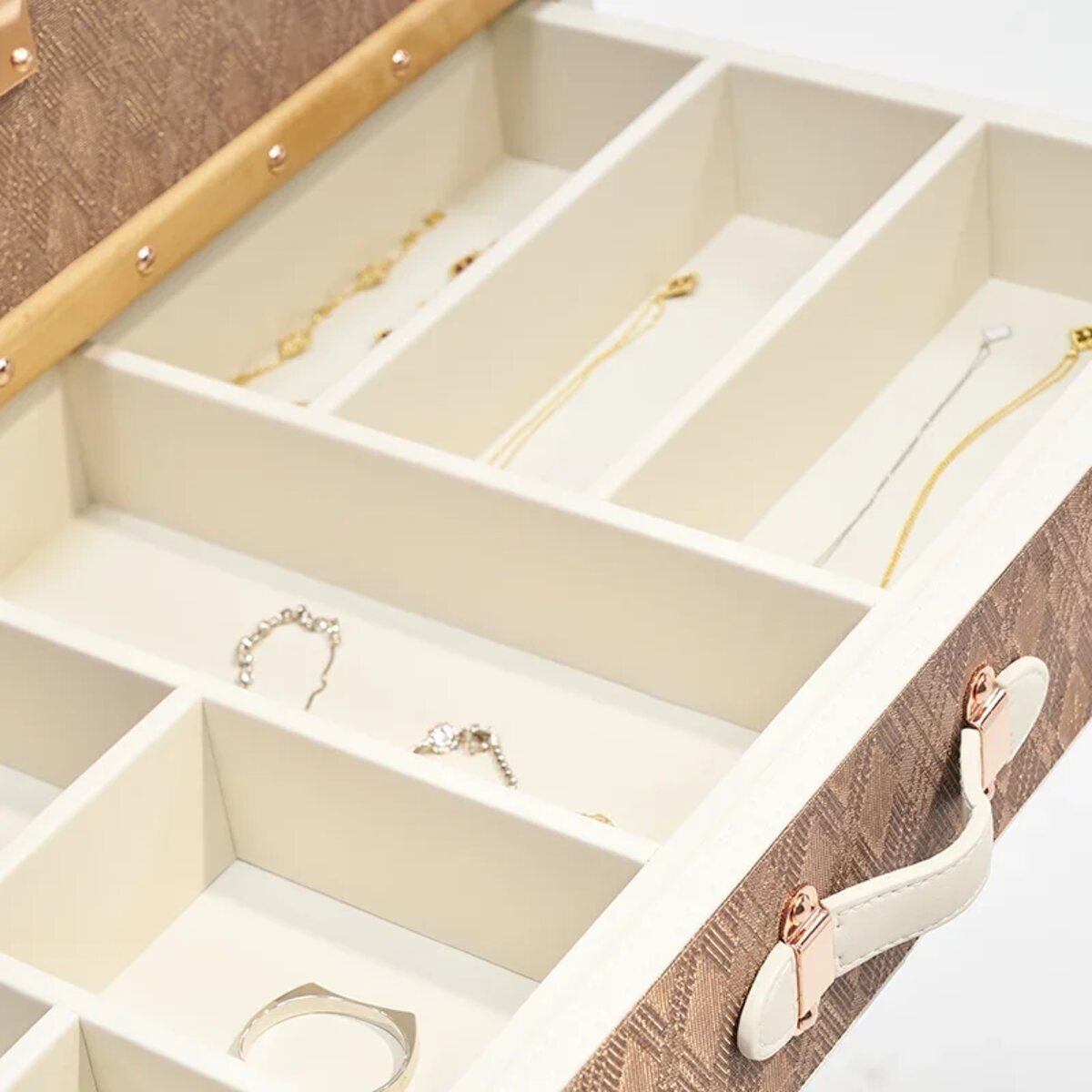
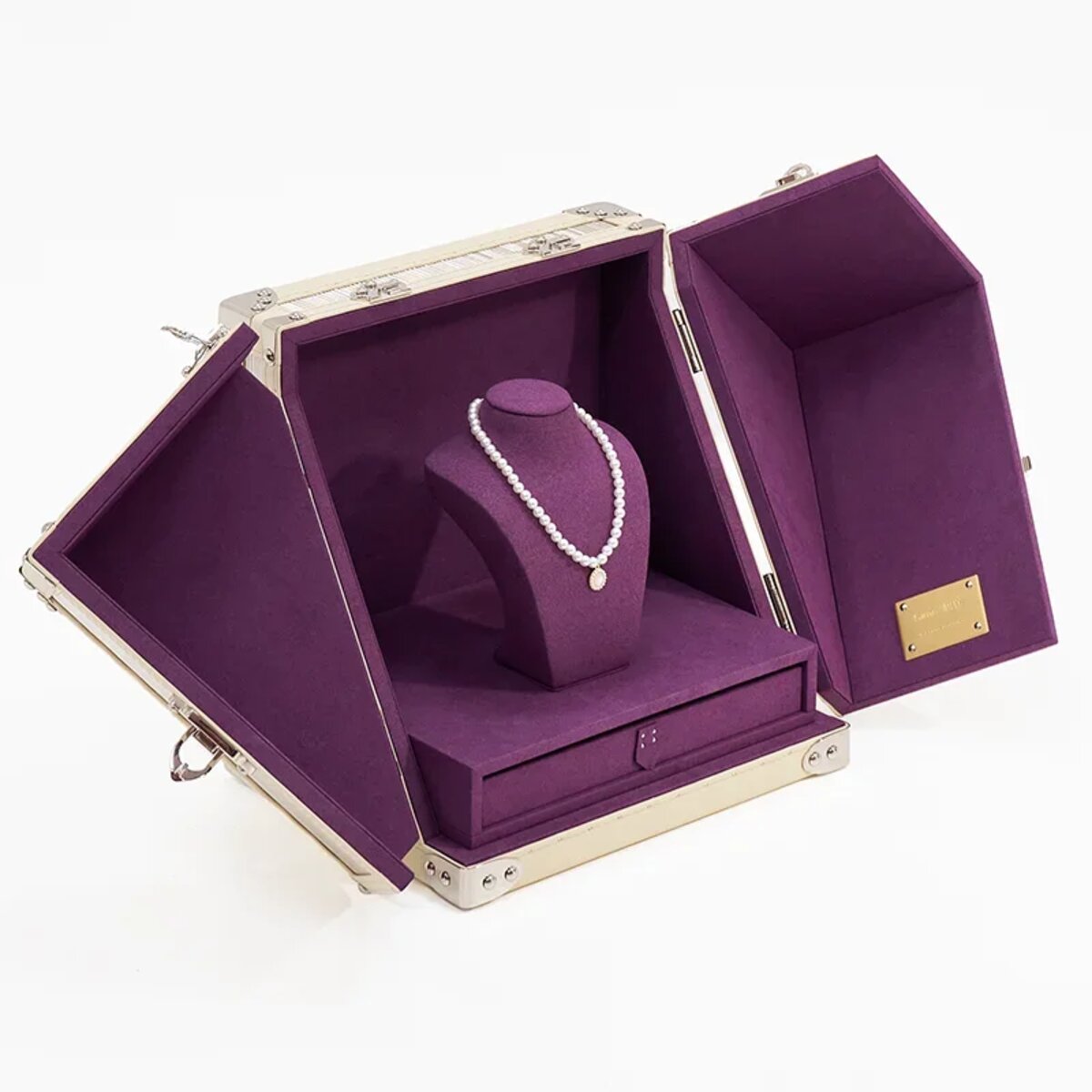
A biometric jewellery cabinet such as the Amber Jewelry Cabinet - Dune Gold gives you a single locked, sealed home for both the pieces and the folder of certificates, with zoned, suede-lined compartments that keep chains, rings and earrings from abrading one another. For collectors who want a softer-toned cabinet with the same custody-grade architecture, the Celeste Jewelry Cabinet - Diamond Mist Blue holds the collection and its paperwork in one place. For watches — where box, papers and service records sit beside the timepiece — the Signature Watch organizer - Frosted Silver keeps movements protected, isolated and accessible, with room to store the documentation that proves each watch's assessed value.
For how this documentation feeds an actual policy and a successful claim, read our companion pieces on jewellery insurance and valuation in the UAE, home contents insurance for UAE valuables, and how to store valuables at home in the UAE.
Frequently Asked Questions
Is a GIA certificate the same as a jewellery appraisal? No — and the difference matters for insurance. A GIA (or IGI) certificate is a grading report: it scientifically describes a diamond's carat, colour, clarity and cut, but deliberately states no monetary value. An appraisal, or insurance valuation, is a separate document in which a registered appraiser inspects the finished piece and assigns a money figure — usually the Retail Replacement Value at current UAE prices. Insurers schedule your items against the valuation; the grading report is supporting evidence within it. You often need both.
How much does a jewellery appraisal cost in the UAE? Reputable UAE appraisers charge a flat fee per item or a tiered day rate — never a percentage of the value, which the profession discourages because it incentivises inflated figures. Indicative Dubai pricing starts around USD 100 (roughly AED 370) per item for small collections, falling per piece as volume rises — for example a flat fee for 15–39 items. Loose-diamond grading at a laboratory is charged separately and usually costs less than a full valuation of the finished piece.
Can my jewellery or watch be valued from photographs? No credible appraiser issues a binding insurance valuation from photographs alone. A specialist may offer provisional feedback from images as a first step, but the figure your insurer will accept follows a physical, in-person inspection — examination under loupe and microscope, weighing, measuring, and recording hallmarks and grading data. For watches, bring the box, papers and service history: a full set materially raises the assessed value compared with a bare watch head.
How often should I re-value my collection in the UAE? As a working rule, every two to three years — and sooner after a sharp move in gold or diamond prices, a new acquisition, a resize or repair, or a change of insurer. Gulf collections are metal- and stone-heavy, so their replacement cost tracks commodity prices closely; a stale valuation can leave a piece underinsured at claim time. Keep every superseded report — the dated trail is itself useful evidence of ownership and provenance.
Visit the SIRAE Showroom in Dubai
A jewellery appraisal in the UAE protects your collection's value; custody-grade storage protects the collection itself — and keeps the certificates, invoices and photographs in one secure, climate-stable place where you can find them the day an insurer asks. The difference between an adequate cabinet and a custody-grade one is felt in the lock action, the seal of a closed door and the give of a suede-lined compartment, not in a photograph. Book a private appointment at the SIRAE showroom, Al Shafar Complex, Umm Suqeim 1, Dubai. Call +971 55 886 6180 or write to info@siraecasa.com, and our team will match a biometric jewellery cabinet or watch organiser to your collection — and to the paperwork that proves what it is worth.


Leave a comment
This site is protected by hCaptcha and the hCaptcha Privacy Policy and Terms of Service apply.