
How to Store Valuables at Home in the UAE: The Complete FAQ (2026)
How to Store Valuables at Home in the UAE: The Complete FAQ (2026)
The question of how to store valuables at home in the UAE has no single answer, because a Dubai household typically holds six very different categories of valuable — fine jewellery, gold, watches, cigars, spirits, and cash or documents — and each has its own ideal humidity, security tier, and insurance treatment. Most people get this wrong by treating them as one problem and buying one safe, when the truth is that the conditions that protect a mechanical watch will dry out a cigar, and the conditions that preserve a cigar will tarnish silver. This 2026 FAQ is the hub answer: a fast, extractable response to each of the questions UAE residents most often ask, with a link to the in-depth SIRAE guide for every category.
Where Should You Keep Jewellery, Gold and Watches at Home in the UAE?
Quick Answer: Keep frequently worn jewellery and watches in a lockable, climate-stable cabinet inside a dressing room or wardrobe, and keep high-value gold, investment bullion and rarely worn pieces in a fire- and burglary-rated home safe or a bank safe deposit box. The deciding factor is access frequency: daily-wear pieces want a beautiful, secure cabinet; static stores of value want a hardened safe.
The mistake most UAE collectors make is forcing everything into a single steel box. A bedroom safe is excellent for static value — gold bars, certificates, items worn twice a year — but it is a poor home for the rings, watches and necklaces you reach for every morning, because the daily open-and-close of a heavy safe is friction that pushes people toward leaving valuables out on a dresser. A lockable jewellery cabinet solves the access half of the problem: it sits in the room, presents the collection, and still locks.
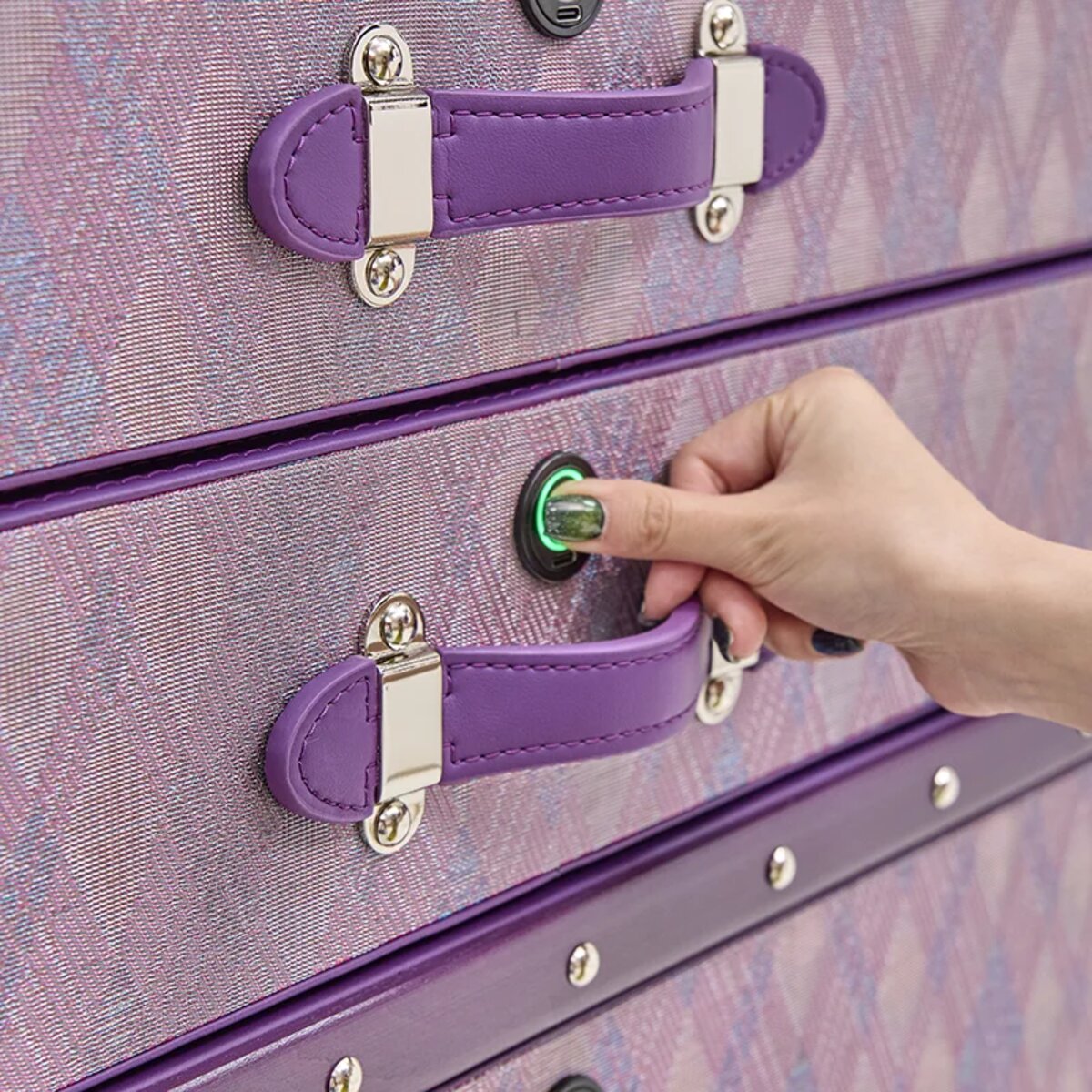
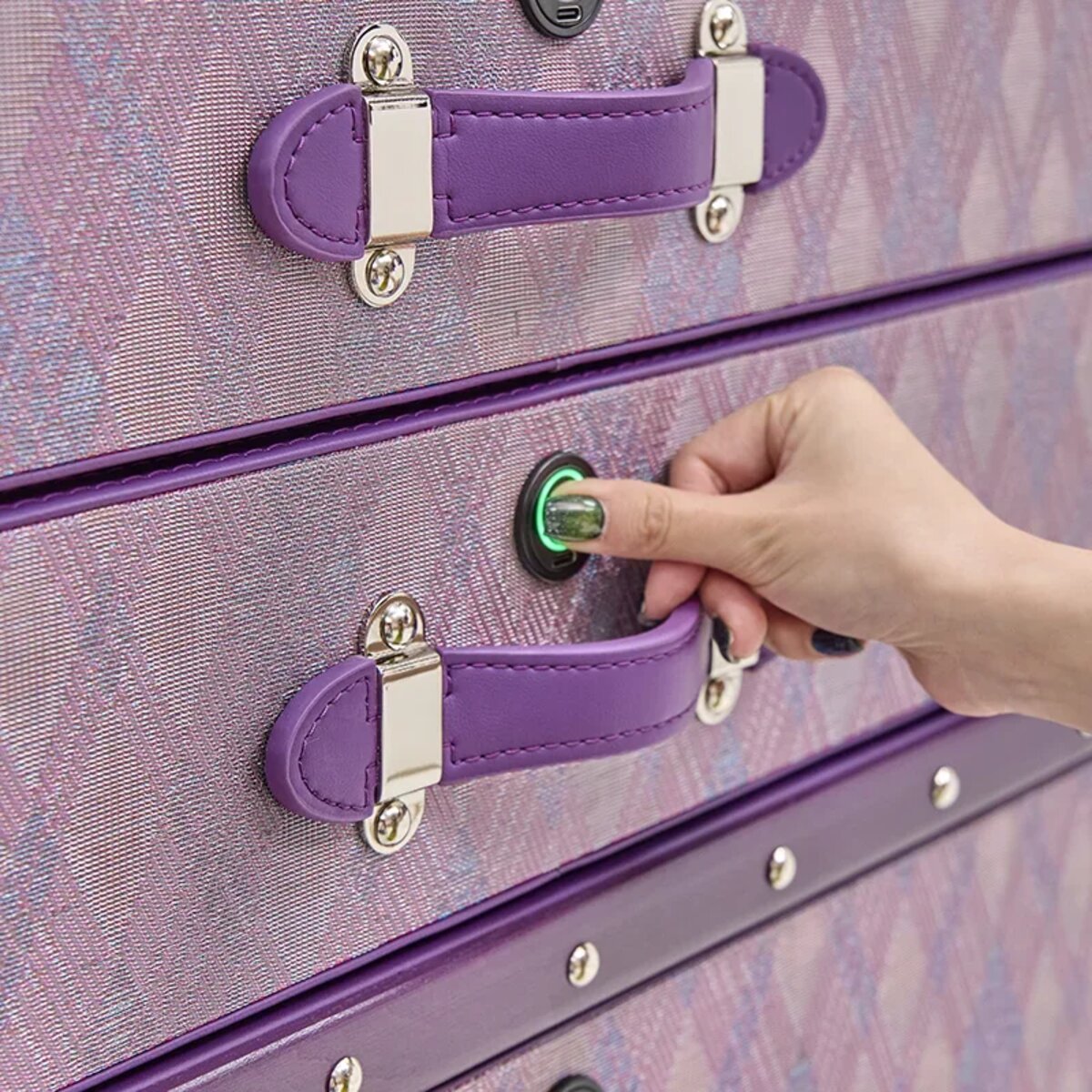
SIRAE builds for exactly this split. The Aurum Wire · The Amber Jewelry Cabinet - Dune Gold integrates a biometric fingerprint lock into a furniture-grade woven cabinet, so daily access and security are no longer in conflict — the piece earns its place in the room while protecting what it holds. For watches specifically, a dedicated organizer such as the Aurum Wire · Signature Watch organizer - Frosted Silver keeps cases cushioned, separated and dust-free.
| Where to keep it | Best for | Trade-off |
|---|---|---|
| Lockable jewellery cabinet (in room) | Daily-wear rings, watches, everyday gold | Furniture-grade security, not vault-grade |
| Fire/burglary home safe (bolted) | Bullion, certificates, rarely worn high-value | Friction for daily access |
| Bank safe deposit box | Irreplaceable heirlooms, items stored for months | No instant access; branch hours |
| Professional vault (e.g. DMCC) | Investment gold, large collections | Storage fees; off-site |
For the full breakdown of home safe versus bank vault, see Home Safe vs Bank Vault in the UAE: Where Should You Keep Fine Jewellery? (2026).
What Is the Best Humidity to Store Valuables at Home in Dubai?
Direct Answer: There is no single ideal humidity, because each valuable wants a different relative humidity (RH). Silver and most jewellery keep best below 50% RH (35–50% is the sweet spot), mechanical watches at 40–60% RH, and cigars at a much wetter 65–72% RH. Dubai's coastal summer pushes outdoor RH to 90% while air conditioning over-dries interiors — so neither raw outdoor air nor blasting AC is correct, and category-specific storage is essential.
The Gulf climate creates a genuine pincer. Outdoors, the UAE National Center of Meteorology records relative humidity reaching 90% in coastal Dubai and Abu Dhabi during summer. Indoors, sustained air conditioning can pull a room down toward 25–40% RH — dry enough to crack cigar wrappers and dry out leather straps, yet a humidity spike every time a door opens to the outside is enough to start silver tarnishing and accelerate corrosion on steel movements.
The result is that a single storage environment cannot serve everything. The table below is the core reference UAE households need.
| Valuable | Target RH | Main risk in UAE | Storage logic |
|---|---|---|---|
| Silver / fine jewellery | 35–50% | Tarnish, humidity spikes | Sealed, dry, anti-tarnish lining |
| Gold (high karat) | Not RH-sensitive | Scratching, theft | Compartmentalised, secure |
| Mechanical watches | 40–60% | Corrosion, strap drying | Cushioned, stable, away from AC blast |
| Cigars | 65–72% | AC drying out wrappers | Sealed humidor, Spanish cedar |
| Spirits (sealed) | Cool & stable | West-sun heat, light | Closed cabinet out of direct sun |
| Documents / cash | Cool & dry | Heat, humidity, fire | Fire-rated, sealed safe |
The single most useful habit is to keep any humidity-sensitive valuable at least one metre from a supply-air outlet, and well away from west-facing windows, where afternoon surface temperatures on dark furniture can exceed 50°C in a Dubai summer. For gold specifically, see How to Store Gold Jewellery in the UAE: Anti-Tarnish (2026).
Is a Home Safe or a Bank Safe Deposit Box Better in the UAE?
The Bottom Line: Use a home safe for valuables you need within minutes and a bank safe deposit box for items you can leave untouched for months. A home safe gives instant, private access but limited insurance and exposure to household fire and theft; a bank box gives institutional security and no household risk but no instant access and an annual fee. Most UAE collectors use both — a home safe for working pieces, a bank box or professional vault for static wealth.
A home safe in the UAE makes sense when access speed and discretion matter: a fire- and burglary-rated safe, bolted into a concrete wall or floor, holds documents, cash, daily gold and a working watch rotation. Entry-level digital safes in the UAE start around AED 710, mid-range fire-rated models run roughly AED 1,300–2,000, and premium biometric or high-security units reach AED 4,800–6,800 and beyond. The critical specification is not the lock but the fire and burglary rating and whether it is anchored — an unbolted safe is a portable safe.
A bank safe deposit box, or a professional facility such as the DMCC Vault in Almas Tower (operated by Brink's, the largest non-sovereign vault in the Middle East), removes household fire and theft from the equation entirely. The cost is convenience: branch hours, no instant access, and an annual rental fee. The deciding question is honest usage — anything you genuinely touch monthly belongs at home; anything you would not notice missing for six months belongs in a vault.
For the complete comparison, see Home Safe vs Bank Vault in the UAE: Where Should You Keep Fine Jewellery? (2026), and for fireproofing logic, Fireproof Safe vs Luxury Cabinet: Protecting Jewellery & Watches in UAE Homes.
Do You Need a Biometric Lock or Is a Key Enough?
Quick Answer: A biometric (fingerprint) lock is worth it where you access valuables daily and want both speed and security — typically jewellery cabinets and bedroom safes — because it removes the friction that makes people stop locking up. A keyed or combination lock is adequate for static storage you open rarely. The real security gain is behavioural: the easier a lock is to use, the more consistently it actually gets used.
Biometric access has matured from a gimmick into the default for daily-use luxury storage in the GCC. The case for it is not that a fingerprint is harder to defeat than a quality keyed lock in absolute terms — both can be specified to a high standard — but that a fingerprint is effortless. The most common cause of loss in UAE homes is not a defeated lock; it is a piece left out, or a cabinet left unlocked, because locking it was a chore. A biometric cabinet collapses the time cost of security to under a second.
This is the logic behind a furniture-integrated biometric piece such as the Aurum Wire · The Amber Jewelry Cabinet - Dune Gold: instant fingerprint access for the morning routine, a hardened lock the rest of the time. For households with staff, drivers or frequent guests, biometric access also creates an audit boundary without the awkwardness of managing physical keys. The trade-off is that biometric units carry electronics — specify a model with a mechanical or battery-backup override so a flat battery never locks you out.
| Lock type | Best use | Watch-outs |
|---|---|---|
| Biometric / fingerprint | Daily-access cabinets & safes | Needs battery/key backup override |
| Electronic PIN / combination | Shared household, rotating users | Code hygiene; reset on staff changes |
| Keyed mechanical | Rarely opened static storage | Key control; offsite spare key |
| Dual-lock (key + electronic) | High-value home safes | Best security, slowest access |
For biometric villa security specifically, see Commissioning the Ultimate Biometric Jewelry Safe for Dubai's Luxury Villas in 2026.
How Do You Store Watches, Cigars and Spirits — and Why Can't They Share?
Direct Answer: They cannot share storage because their humidity needs conflict directly. Watches want 40–60% RH and dryness; cigars want 65–72% RH; spirits want cool, dark stability. A humidor's moisture would corrode a watch and tarnish silver, while AC-dry watch storage would ruin cigars in weeks. Each category needs its own dedicated, climate-appropriate enclosure — never a shared drawer.
This is the single most expensive misunderstanding in UAE valuable storage, because the categories look like they belong together — they are all "the gentleman's collection" — but their physics are opposed. A few rules per category:
Watches. Store mechanical pieces cushioned and separated in a dedicated box at 40–60% RH, away from direct AC airflow that dries leather straps, and away from speakers or strong magnets. A purpose-built organizer such as the Aurum Wire · Signature Watch organizer - Frosted Silver keeps each case isolated and dust-sealed. For the full watch-storage decision, see Watch Box vs Watch Winder vs Watch Case: Which Do You Need? (UAE Guide 2026).
Cigars. A cigar needs a sealed, Spanish-cedar-lined humidor holding 65–72% RH — the hardest target to maintain in an AC-dried Dubai villa, which is why a properly sealed cabinet such as the Aurum Wire · The Connoisseur Cigar Humidor Cabinet - Frosted Silver matters more here than for any other valuable. See Cigar Storage in the UAE: 3 Costly Mistakes & How to Fix Them.
Spirits. Sealed bottles want cool, stable, dark conditions — a closed cabinet out of west-facing sun, not an open shelf baking behind glass. The Aurum Wire · The Sovereign Bar Cabinet - Frosted Silver keeps a collection enclosed and presentable. See The Complete Luxury Bar Cabinet Guide for UAE Homes (2026).
Do You Need to Insure Valuables Kept at Home in the UAE?
The Bottom Line: Yes — standard UAE home contents insurance covers jewellery and valuables only up to a per-item "single article limit," and high-value pieces above that limit must be specified separately with a current valuation certificate. Without an appraisal and an itemised schedule, an expensive watch or jewellery set is effectively uninsured even inside a locked safe. Many insurers also charge a lower premium for items kept in a safe.
UAE insurers including Sukoon, ADNIC and international private-client underwriters such as AXA and Zurich treat valuables on a tiered basis. Ordinary contents cover carries a single-article limit; anything worth more than that limit (and your collection's aggregate jewellery limit) must be "specified" — listed individually with a professional valuation. For claims, you will need a valuation certificate or original purchase receipt as proof of both value and ownership.
This is where storage and insurance connect. A locked, fire-rated safe or a documented biometric cabinet is not just protection — it can reduce your premium and is often a condition of cover for higher-value schedules. Keeping the appraisal certificate, purchase receipts and dated photographs with the valuable (or scanned to secure cloud storage) turns a loss from an argument into a claim.
| Insurance step | Why it matters |
|---|---|
| Get a professional appraisal | Sets value; required to specify high-value items |
| Check the single-article limit | Pieces above it are not covered as standard |
| Specify high-value items | Individually scheduled = actually covered |
| Keep receipts & photos | Proof of ownership for claims |
| Note "in safe" storage | Often a lower premium or a condition of cover |
For the full local guide, see Jewellery Insurance & Valuation in the UAE: A Collector's Guide (2026).
What Are the UAE Customs Rules for Travelling with Jewellery, Gold and Cash?
Quick Answer: Any traveller aged 18 or over entering or leaving the UAE must declare cash, jewellery, gold, precious stones or bearer instruments if their combined value exceeds AED 60,000. Personal jewellery and valuables under that combined threshold are not required to be declared. Declarations are filed through the official Afseh app or website, and failure to declare can lead to confiscation, fines or legal action.
This matters for home storage because the most common moment valuables travel is when you take a set to a wedding abroad, carry inherited pieces into the country, or move a collection between homes. The AED 60,000 figure is a combined limit across cash, cheques, gold, jewellery and precious stones — not a per-item allowance — and it applies on both entry and exit. Travellers under 18 do not file their own declaration; their items are included under a parent or guardian.
Two practical points. First, carry your valuation certificates when travelling with high-value pieces — they double as proof of value for customs and proof of ownership for insurance. Second, for the journey itself, use a structured travel case rather than loose pouches: a piece such as the Heritage Print · The Refined Travel Jewelry Case - Noir keeps a set organised and presentable through security and hotel safes, while a larger Aurum Wire · The Vanguard Storage Trunk - Frosted Silver handles a bigger move between residences.
For the detailed customs walkthrough, see Travelling with Valuables to UAE: Customs Declaration Rules for Jewellery, Gold & Watches. If you are leaving valuables behind for the summer, see Storing Valuables in Dubai While Away: 2026 Summer Guide.
Frequently Asked Questions
How should I store valuables at home in the UAE if I only buy one thing? If you buy a single piece, make it a lockable, climate-stable jewellery cabinet placed inside a dressing room or wardrobe — ideally with a biometric or quality lock. It covers the largest daily-use category (jewellery and watches), removes the friction that leads to pieces being left out, and protects against the UAE's main indoor risks: humidity spikes and casual access. Add a fire-rated home safe later for bullion, documents and rarely worn high-value items that need vault-grade rather than furniture-grade security.
What humidity tarnishes jewellery, and how do I prevent it in Dubai? Silver and many jewellery alloys tarnish faster as relative humidity rises above 50%, and Dubai's summer coastal humidity reaches 90% outdoors. Keep jewellery sealed in a dry, lined cabinet targeting 35–50% RH, away from open windows and bathroom moisture, and at least a metre from air-conditioning outlets to avoid both humidity spikes and over-drying. Anti-tarnish strips and a sealed enclosure are the simplest effective controls; avoid storing silver near cigars, whose high-humidity environment accelerates tarnish.
Is it safe to keep gold at home in the UAE or should it go to a vault? Both are valid, and the answer depends on quantity and access. Wearable gold jewellery and small holdings are practical to keep at home in a fire- and burglary-rated safe or a locked cabinet. Investment-grade bullion and large quantities are better placed in a bank safe deposit box or a professional facility such as the DMCC Vault, which adds institutional security and removes household fire and theft risk. Whatever you choose, insure specified high-value gold and keep purchase documentation with the valuation.
Do I have to declare jewellery when entering the UAE? Only if the combined value of your cash, jewellery, gold and precious stones exceeds AED 60,000; personal valuables below that combined threshold do not require declaration. The rule applies to travellers aged 18 and over, on both arrival and departure, and declarations are made through the official Afseh app or website. Carry valuation certificates for high-value pieces — they serve as proof of value for customs and proof of ownership for insurance — and never under-declare, as penalties include confiscation and fines.
Can I store my watches and cigars in the same cabinet? No. Watches need a dry environment around 40–60% relative humidity, while cigars require 65–72% RH to stay supple — opposite conditions. Cigar-level humidity will encourage corrosion on steel movements and tarnish on any silver nearby, and the cedar and sulphur compounds in humidors actively accelerate tarnish. Always use a dedicated watch box and a separate sealed humidor, each set to its own target humidity, rather than a shared drawer or display case.
Visit the SIRAE Showroom in Dubai
Knowing how to store valuables at home in the UAE is one thing; seeing the difference between a sealed humidor, a climate-stable jewellery cabinet and a biometric safe in person is another. To plan storage across every category — jewellery, watches, cigars and spirits — and to handle the woven copper-wire and leather constructions that hold their condition in the Gulf climate, book a private appointment at the SIRAE showroom, Al Shafar Complex, Umm Suqeim 1, Dubai. Call +971 55 886 6180 or write to info@siraecasa.com, and our team will map a custody-grade plan to your home.
%0AThe%20question%20of%20how%20to%20store%20valuables%20at%20home%20in%20t...)
Leave a comment
This site is protected by hCaptcha and the hCaptcha Privacy Policy and Terms of Service apply.