
Watch Box vs Watch Winder vs Watch Case: Which Do You Need? (UAE Guide 2026)
Watch Box vs Watch Winder vs Watch Case: Which Do You Need? (UAE Guide 2026)
A watch box is the piece most collectors buy first, second-guess most, and confuse with two other things it is not — a watch winder and a watch case. The three solve genuinely different problems, and buying the wrong one is the most common storage mistake we see at the showroom: a motorised winder bought for a collection of quartz pieces that will never use it, or a single travel case standing in for the daily storage of a growing collection that has outgrown it. This guide settles the decision for a Gulf collector — by collection size, by automatic versus quartz movement, by how often you travel, and by the one variable the rest of the internet ignores: how Dubai's humidity swing actually treats a watch left in storage.

Watch Box vs Watch Winder vs Watch Case: The 30-Second Answer
Quick Answer: A watch box stores and protects watches you are not wearing — cushioned slots, a lid, dust and scratch protection, no moving parts. A watch winder is a motorised box that gently rotates automatic watches to keep them wound and running while stored. A watch case is the compact, travel-focused version of a box, built to carry two to six watches safely on the road. Most collectors need a watch box first; a winder only if they own multiple automatics worn infrequently; a case as soon as they travel with watches.
The confusion is understandable, because all three look superficially similar — a lidded container with slots. The difference is entirely in function. A watch box and a watch case are passive: they hold the watch still and protect it. A watch winder is active: it contains a motor that turns the watch a programmed number of times per day so an automatic movement does not wind down. You can think of the box and case as the wardrobe, and the winder as a treadmill that keeps one specific kind of watch exercised.
For a Gulf collector, the decision also carries a climate dimension that an American or European buyer can largely ignore. Indoor air conditioning, summer coastal humidity, and west-facing villa heat all act on a stored watch — particularly its leather strap and its movement lubricants — and the right storage choice is partly about which of these three formats best controls that environment. We will get to humidity in detail below. First, the core comparison.
| Feature | Watch Box | Watch Winder | Watch Case |
|---|---|---|---|
| Primary job | Store & protect at home | Keep automatics wound while stored | Protect 2–6 watches in transit |
| Moving parts | None | Motor (rotates the watch) | None |
| Best for | Any watch, any collection | Multiple automatics worn rarely | Frequent travellers |
| Quartz watches | Yes — ideal | No benefit (quartz needs no winding) | Yes — ideal |
| Manual-wind watches | Yes | No (winders don't wind manual watches) | Yes |
| Typical capacity | 4–12+ slots | 1–8 rotors | 2–6 slots |
| SIRAE offers it | Yes — watch box | Yes — 6-watch winder cabinet | Yes — watch case |
A note on scope: SIRAE offers all three formats — a watch box, a watch case, and a 6-watch winder cabinet. The sections below explain honestly when each one earns its place, so you can decide which you actually need rather than buying the wrong format by default.
Do You Actually Need a Watch Winder?
Technical Verdict: You need a watch winder only if you own multiple automatic watches and individual pieces sit unworn for longer than their power reserve — typically two to five days. If you own one automatic and wear it daily, your wrist winds it; a winder adds nothing. If your watches are quartz or manual-wind, a winder does nothing at all. For most collectors, that narrows the genuine use case considerably.
The mechanics are simple. An automatic (self-winding) watch has a rotor that swings as your wrist moves, winding the mainspring. Take the watch off and it runs on its stored "power reserve" — modern mid-to-luxury movements hold roughly 40 hours, though some run 12 hours and others several days. When the reserve runs out, the watch stops. Restarting it means winding the crown and resetting the time — and on watches with complications (date, day, moonphase, perpetual calendar, GMT), resetting can be fiddly enough that a winder earns its place purely on convenience.
So the winder question is really a frequency question, summarised here:
| Your situation | Winder needed? | Better spend |
|---|---|---|
| One automatic, worn daily | No | A quality watch box |
| One automatic, worn occasionally | No — just hand-wind it | A watch box + a few seconds of winding |
| 2–3 automatics, rotated weekly | Optional / convenience | Box for all + winder only for a complication piece |
| 4+ automatics, some idle for weeks | Genuinely useful | Multi-rotor winder for the idle complication watches |
| Quartz or manual-wind watches | Never | A watch box or case |
There is also a long-running collector debate worth knowing before you spend. A winder keeps movement lubricants distributed and the watch ready to wear — but it also keeps the movement running continuously, which means components and lubricants see more cumulative work than a watch resting in a box. Neither camp is objectively wrong: a winder is a convenience that trades a little mechanical activity for instant readiness. What is not in dispute is that a winder offers zero benefit to a quartz or manual-wind watch, and no protective benefit beyond a good box for an automatic you are happy to hand-wind. Hand-winding the crown 20–40 turns every couple of weeks is the no-cost alternative most collectors with small automatic collections actually use.
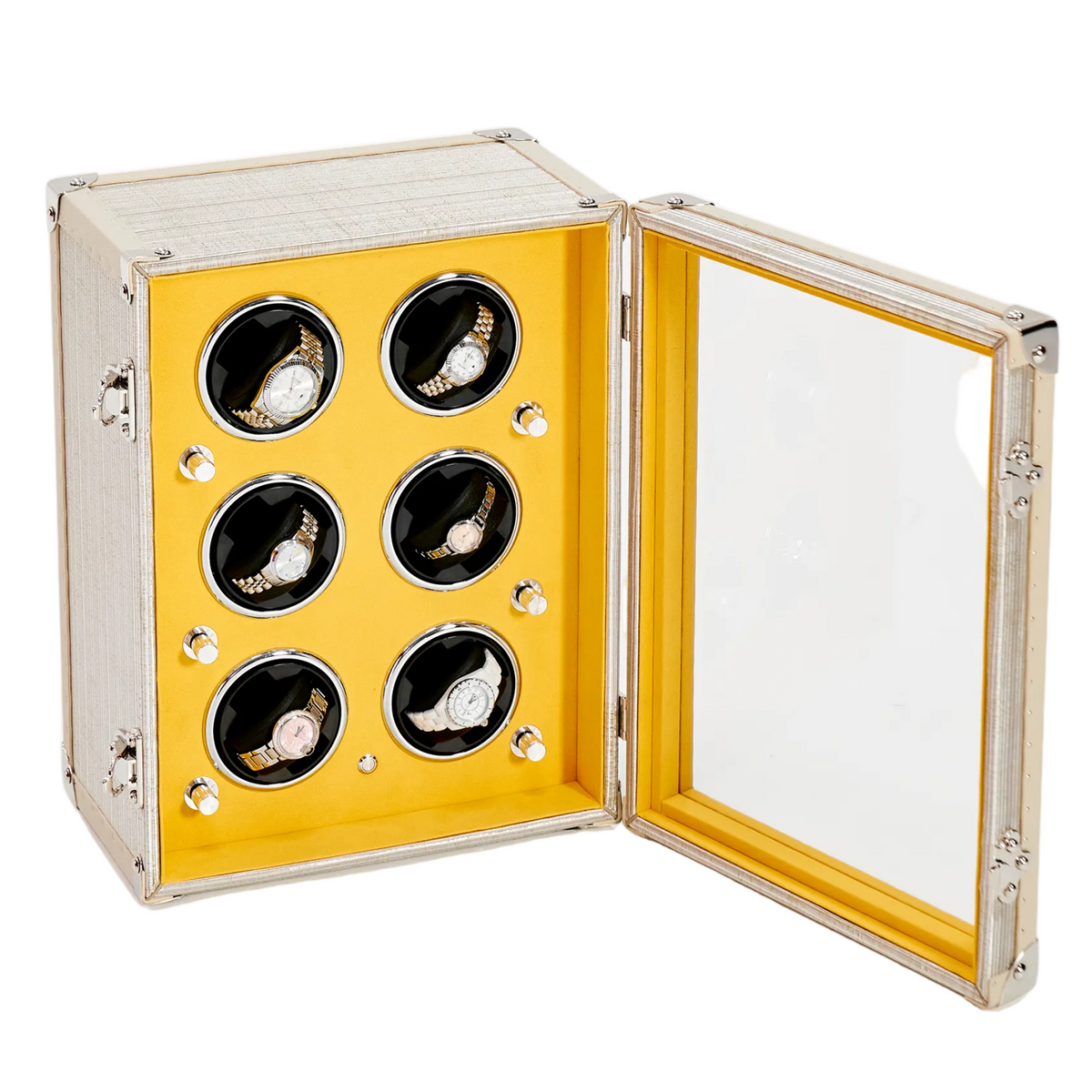
If you do fall into the genuine use case — multiple automatics, some idle for longer than their power reserve, and complication pieces you want always set — a multi-rotor winder cabinet is the right tool. The Aurum Wire · 6 Watch Winder Cabinet - Frosted Silver Edition holds six automatics under programmed rotation, so the pieces you reach for least are still wound and ready when you do.

When a Watch Box Is the Right Choice
The Bottom Line: A watch box is the correct first — and often only — storage purchase for the overwhelming majority of collections: any mix of quartz, manual, and automatic watches, worn often enough that a winder is unnecessary. It protects against the things that actually damage watches day to day — dust, scratches, knocks, UV light, and ambient humidity — and it does so without a motor to maintain or replace.
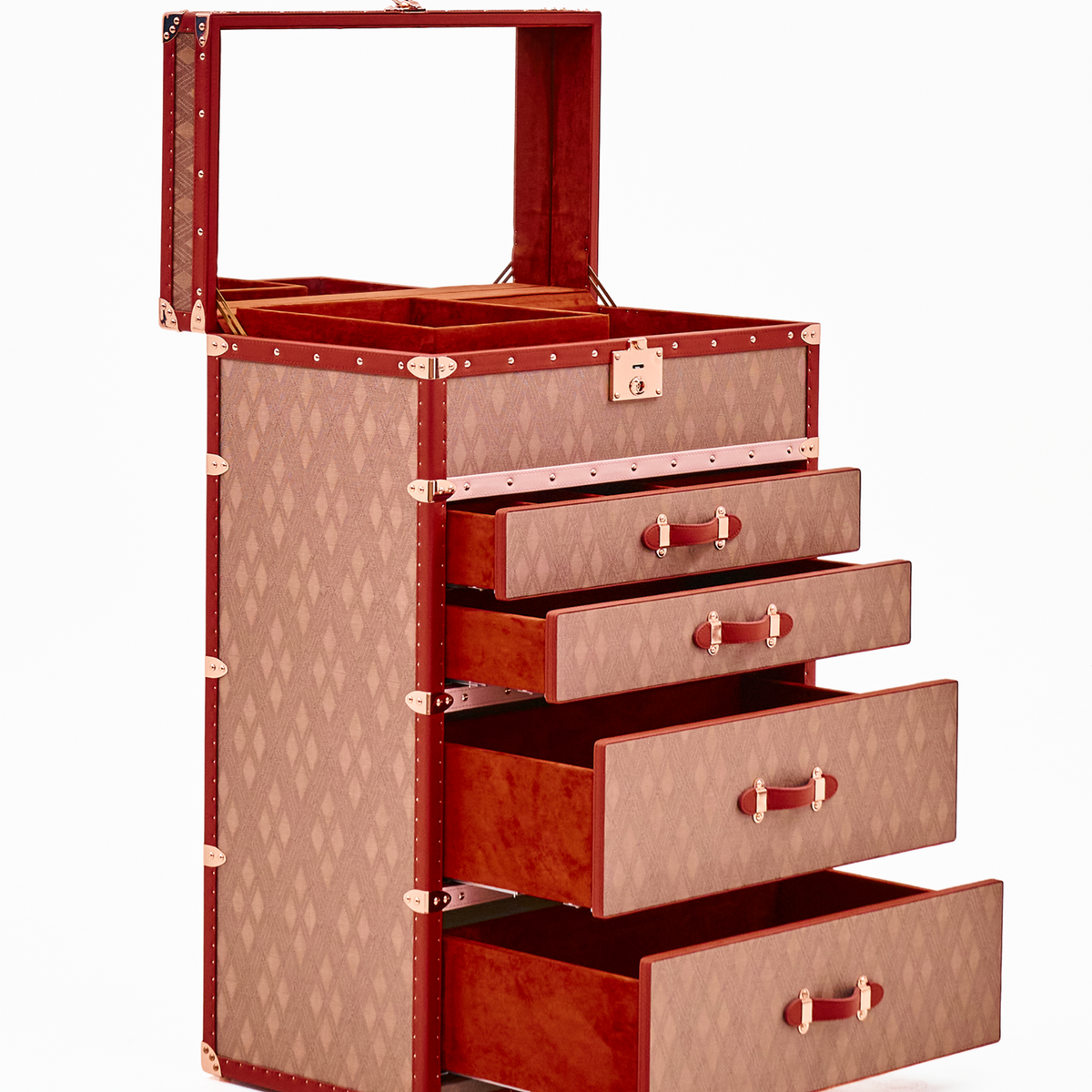
A good watch box does four things. It immobilises each watch on a cushioned pillow so cases and crystals do not contact each other; it closes against airborne dust, which in Dubai means fine construction and desert particulate that scratches polished surfaces; it shades the dials from the UV that fades lume and ages dial finishes; and it presents the collection so you can see and choose at a glance. The Aurum Wire · Signature Watch organizer - Frosted Silver is built around exactly this brief — SIRAE's woven copper-wire construction giving a hard, dimensionally stable case that does not swell or warp as indoor humidity cycles, with cushioned slots that hold each watch secure.
Capacity is the variable to get right. Buy for the collection you will have in three years, not the one you have today — collectors almost always underestimate. A four-slot box fills faster than expected; an eight-to-twelve slot box leaves room to grow and, just as importantly, leaves empty cushions that keep the watches you own from being crammed. If your collection includes pieces with fragile crystals or precious-metal cases that mark easily, prioritise slot spacing and pillow softness over raw count.
When You Need a Watch Case for Travel
Quick Answer: A watch case is what you reach for when watches leave the house — a compact, structured carrier for two to six pieces that protects them in a suitcase, a car, or hand luggage. It is not a replacement for home storage; it is the travel complement to it. If you fly between the Gulf and Europe, drive to Abu Dhabi for the weekend, or simply move watches between a villa and an apartment, a case is the piece that prevents the damage that happens in transit rather than at rest.
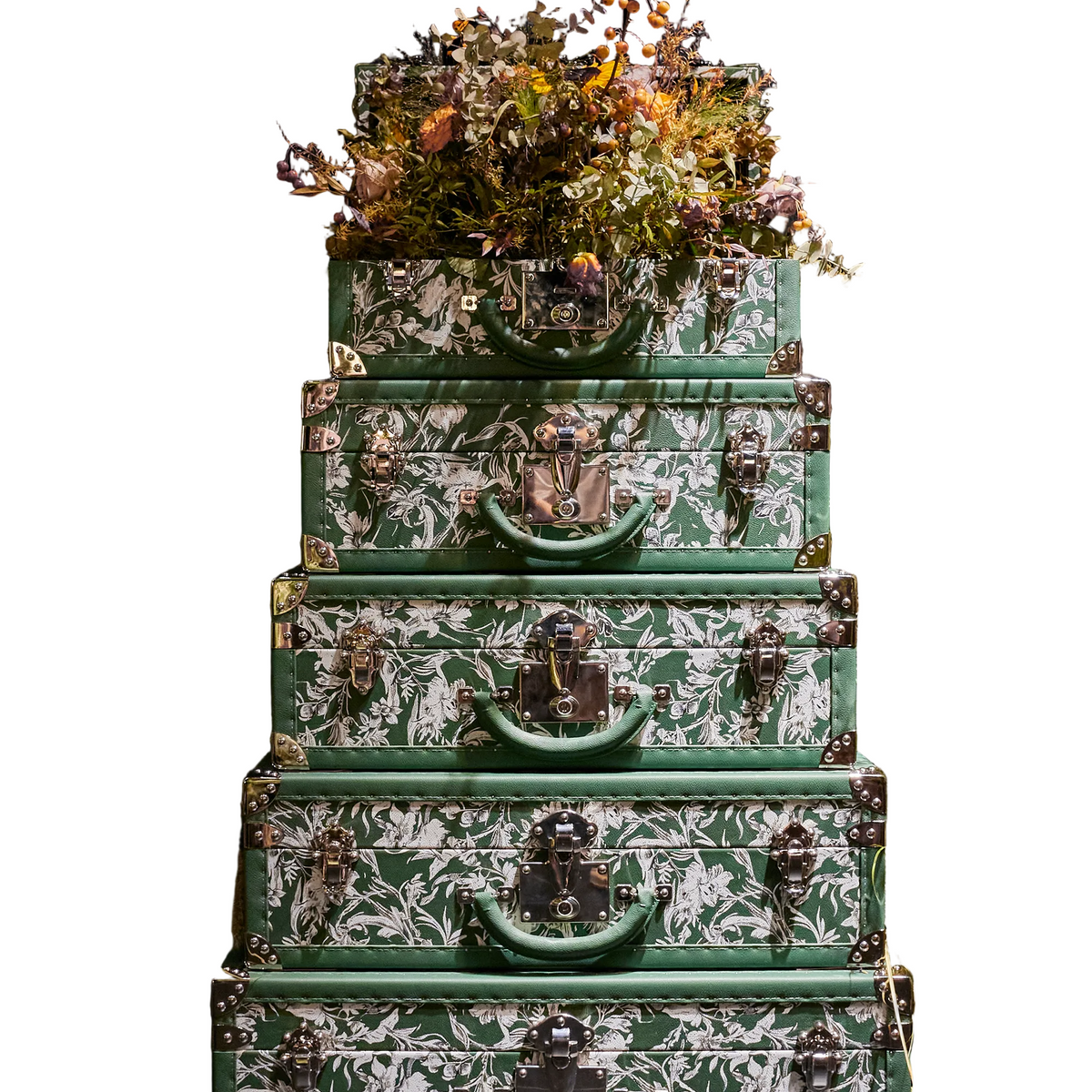
Transit is where most avoidable watch damage occurs — a loose watch in a bag knocks against keys, a hard-sided suitcase compresses soft pouches, airport handling drops things. A purpose-built watch case solves this with individual padded compartments, a structured shell, and a secure closure. The Aurum Wire · Delux 10 Watch Case - Meadow Floral is sized for this role: enough capacity for a short trip's rotation, structured enough to survive the journey, and finished to a standard you are comfortable setting on a hotel dresser.
The travel-versus-home distinction matters for buyers who think they can use one piece for both. A large display box does not travel — it is heavy, the slots are not designed for impact, and it advertises its contents. A small case does not serve as primary home storage — it lacks capacity and the watches are stacked rather than displayed. Serious collectors own both, and most arrive at that conclusion only after a damaged watch teaches them. The table below maps format to use.
| You need to... | Best format | Why |
|---|---|---|
| Store the collection at home | Watch box | Capacity, display, daily access |
| Keep idle automatics running | Watch winder (automatics only) | Motorised winding |
| Carry watches on a trip | Watch case | Compact, impact-resistant, discreet |
| Protect one or two daily watches by the bed | Small watch box or valet tray | Quick on/off access |

Storing Watches in the UAE: The Humidity Problem Nobody Mentions
Technical Verdict: The ideal storage environment for a fine watch is roughly 35–45% relative humidity at a stable 15–25°C — and a UAE home challenges both numbers from opposite directions. Summer coastal humidity in Dubai and the Northern Emirates routinely pushes 80–90% RH outdoors, while air conditioning can pull indoor air below 30% RH and dry leather straps brittle. A watch left in storage here sits in a climate the rest of the world's storage advice simply does not account for. Managing it is partly the box, partly placement, and partly desiccant — and Gulf conditions push all three harder than a temperate climate does.
Three specific UAE risks are worth naming. First, moisture and the movement: persistent high ambient humidity encourages condensation inside a case and, over years, can affect lubricants and promote corrosion on steel components — which is why a sealed box with a desiccant matters more here than in London. Second, leather strap fatigue under AC: air conditioning creates the opposite problem, drying leather straps until they crack and lose suppleness; a strap stored months in over-dried air ages faster than one worn. Third, heat from west-facing windows: dark watch boxes placed in direct afternoon sun behind west-facing villa glass can reach surface temperatures well above ambient, stressing both case finishes and the watch inside. None of these appear in standard storage guides written for Europe.
Practical control comes down to a short checklist that genuinely works in Gulf conditions:
| Risk in the UAE | What to do |
|---|---|
| Summer humidity (80–90% RH) | Keep a renewable silica-gel desiccant in the box; recharge it monthly — it saturates faster here |
| AC over-drying (<30% RH) | Condition leather straps periodically; store the box away from direct AC outflow |
| West-window heat | Never place a watch box in direct afternoon sun; keep it in a shaded interior cabinet or drawer |
| Magnetism | Keep the box away from speakers, subwoofers, and large appliance motors that can magnetise steel parts |
| Dust & desert particulate | A closing lid, not an open tray, for anything left out more than a day |
One honest caveat on desiccants: silica gel helps but has finite capacity, and in the Gulf's summer humidity it saturates faster than the "change it every month" advice written for milder climates. Indicator-bead silica gel that visibly changes colour when spent is worth the small premium, and for a large or valuable automatic collection some Gulf collectors run a small active dehumidifier in the storage cabinet. The watch box's own construction matters too — a dimensionally stable hard case like SIRAE's woven copper-wire build will not itself swell, warp, or off-gas moisture into the interior the way a cheap veneered box can.
Frequently Asked Questions
Do I need a watch winder for my automatic watch? Only if you own several automatics and some sit unworn longer than their power reserve — usually two to five days. If you wear one automatic daily, your wrist keeps it wound and a winder adds nothing. If your watches are quartz or manual-wind, a winder does nothing for them at all. For most small collections, a quality watch box plus the occasional hand-wind of the crown (20–40 turns) does everything a winder would, without the motor or the cost. A winder earns its place mainly for multiple complication watches you want always set and ready.
What is the difference between a watch box and a watch case? A watch box is home storage — larger capacity, cushioned display slots, designed to live on a dresser or in a cabinet and hold the collection. A watch case is travel storage — compact, structured, impact-resistant, built to carry two to six watches safely in a bag or suitcase. The box prioritises capacity and display; the case prioritises protection in transit and discretion. Most serious collectors own both because one piece cannot do both jobs well: a display box is too bulky to travel, and a travel case is too small to be primary storage.
How should I store watches in Dubai's humidity? Aim for a closing watch box with a renewable silica-gel desiccant inside, kept in a shaded interior cabinet away from both direct AC outflow and west-facing afternoon sun. Recharge the desiccant roughly monthly — Gulf summer humidity saturates it faster than temperate-climate guidance assumes. Condition leather straps periodically, because air conditioning dries them brittle, and keep the box clear of speakers or large motors that could magnetise steel components. For large or valuable automatic collections, a small active dehumidifier in the cabinet is worth considering alongside the desiccant.
Can a watch box damage my watch? A well-made watch box protects rather than harms — the risks come from poor construction and poor placement, not from the concept. Avoid boxes with hard, unpadded slots that let cases contact each other, cheap veneer that can swell and off-gas moisture in humid air, and any placement in direct sun or against an appliance that generates a magnetic field. A dimensionally stable hard-case box with soft cushioned pillows, kept in a shaded, climate-moderate spot with a desiccant, is the safest passive storage a watch can have short of a dedicated climate-controlled cabinet.
Visit the SIRAE Showroom in Dubai
A watch box specification only becomes real when you set a watch into it and feel how the cushion holds the case. To compare a watch box against a travel watch case for your own collection — and to see how SIRAE's woven copper-wire construction stays dimensionally stable through the Gulf's humidity swing — book a private appointment at the SIRAE showroom, Al Shafar Complex, Umm Suqeim 1, Dubai. Call +971 55 886 6180 or write to info@siraecasa.com, and our team will help you match capacity, format, and finish to the watches you actually own.
%0AA%20watch%20box%20is%20the%20piece%20most%20collectors%20...)
Leave a comment
This site is protected by hCaptcha and the hCaptcha Privacy Policy and Terms of Service apply.