
How to Store Gold & Fine Jewellery in the UAE: A Guide for the 2027 Buying Season
How to Store Gold & Fine Jewellery in the UAE: A Guide for the 2027 Buying Season
Knowing how to store gold and fine jewellery matters most in the weeks when you actually acquire it — and in 2027, two of the GCC's strongest gold-buying occasions land within a single week of each other: Akshaya Tritiya on Sunday 9 May and Eid al-Adha around Sunday 16 May. For UAE households that buy gold for auspicious dates, gift it at Eid, or add to a family collection, that compressed window means a sudden inflow of high-value pieces arriving home faster than most people have planned to protect them. This guide is the practical companion to that season: how to choose between a custody-grade biometric cabinet and an ordinary box, how to defend gold against Gulf-specific climate threats, when home storage beats a bank vault, and why valuation and provenance records matter before anything goes into a drawer. This is not investment advice — it is storage, security and care.

When Is the 2027 Gold-Buying Peak — and Why It Changes How You Store
Quick Answer: The 2027 UAE gold-buying season has two demand peaks roughly one week apart — Akshaya Tritiya on Sunday 9 May 2027 and Eid al-Adha around Sunday 16 May 2027 (the Eid date follows the official UAE moon sighting and may shift by a day). Because new pieces arrive in a tight cluster, the practical risk is not buying gold — it is having nowhere properly secure, dry and documented to put it the same week.
Akshaya Tritiya is one of the most significant gold-buying days for South Asian communities, who make up a large share of UAE residents; it is traditionally an auspicious day to acquire gold. Eid al-Adha brings its own surge of gifting and family acquisition across the wider Gulf. In 2027 these fall close enough together that many households will receive bridal sets, coins, bangles, gifted chains and inherited pieces inside the same fortnight — often alongside the existing collection that comes out of storage to be worn for the occasions.
That clustering is exactly when storage discipline lapses. Pieces get left in retail pouches on a dresser, mixed loose in a drawer where they scratch each other, or pushed into a domestic safe never designed for jewellery. The fix is to decide your storage plan before the season — so every new acquisition has a documented, climate-stable, access-controlled home from the day it arrives.
Custody-Grade Cabinet vs an Ordinary Jewellery Box: What's the Real Difference?
Technical Verdict: An ordinary jewellery box organises pieces; a custody-grade cabinet protects, separates, climate-buffers and access-controls them. For occasional pieces the box is fine. For a season's worth of high-value gold and fine jewellery — especially bridal sets, coins and heirlooms — a biometric, lined, dimensionally stable cabinet is the appropriate tier, because it addresses theft, tarnish and damage in one piece of furniture rather than none.
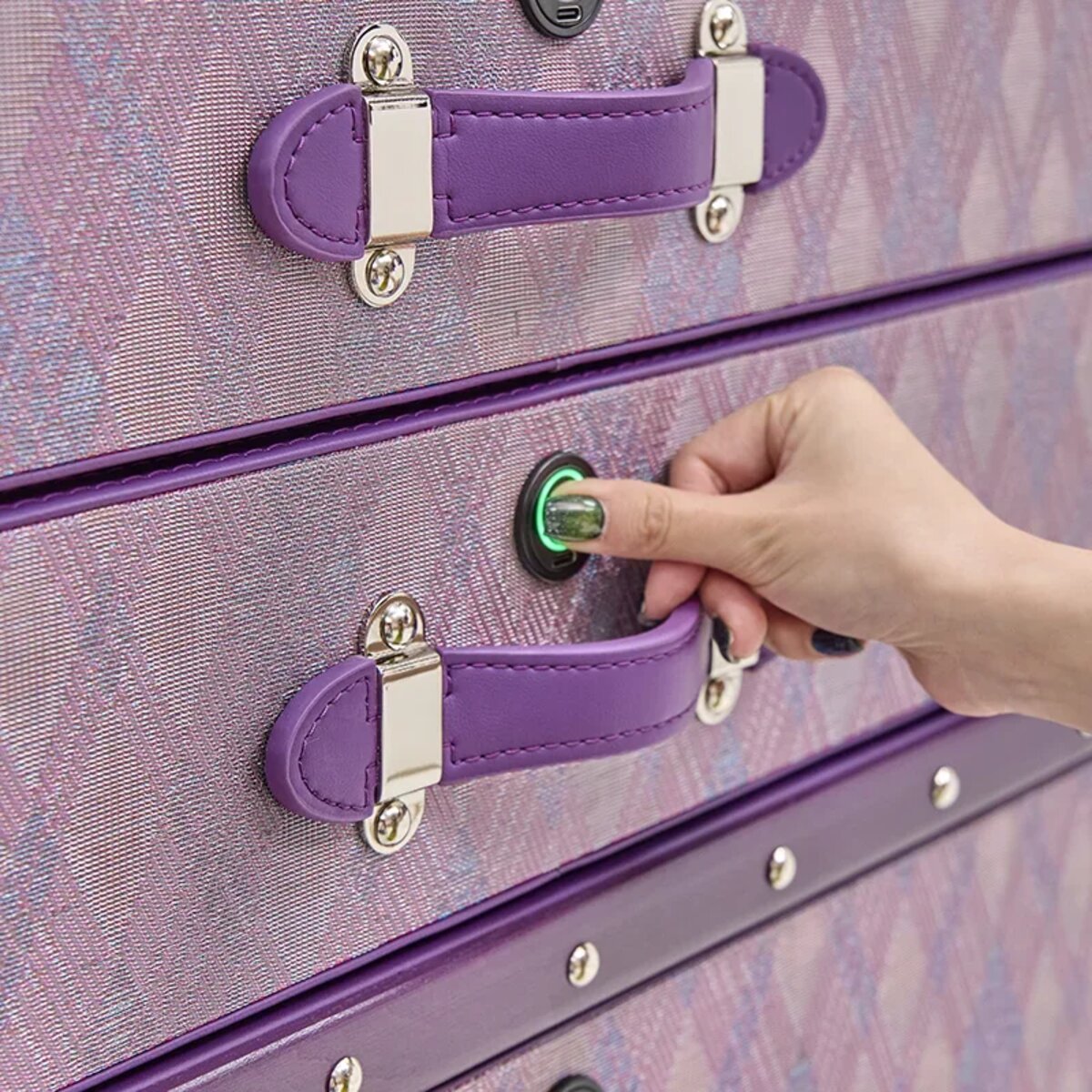
The distinction is not luxury for its own sake; it is a difference in what each object is engineered to do. A retail jewellery box is built around presentation: soft compartments, a mirror, a lid. It does nothing for security and little for the Gulf's humidity swings. A custody-grade cabinet — the category SIRAE builds — starts from a different brief: a dimensionally stable hard case that does not warp in AC dryness or coastal humidity, lined compartments that keep pieces separated so they cannot abrade one another, and, in the security tier, biometric access.
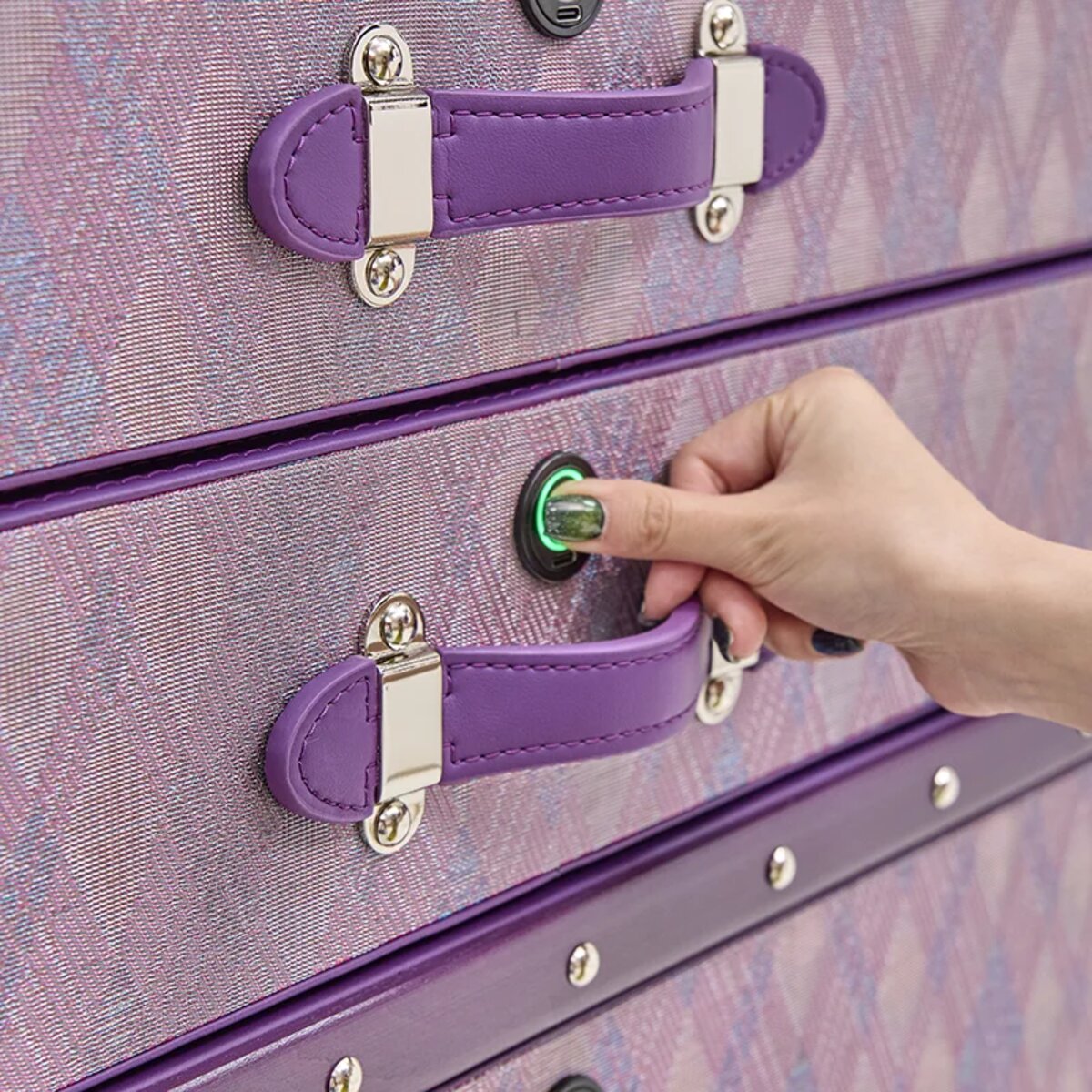
For the security and custody point specifically, a biometric piece such as the Aurum Wire · The Amber Jewelry Cabinet - Dune Gold is the relevant tier: fingerprint access means a gifted bridal set or a stack of coins is not protected by a lid anyone can lift, while the woven copper-wire construction stays dimensionally stable across the indoor humidity cycling described later. Where the priority is graceful in-room storage rather than a hidden safe, the Aurum Wire · The Celeste Jewelry Cabinet - Diamond Mist Blue and the Aurum Wire · The Pearl Jewelry Cabinet - Pearl White deliver the same separation and climate stability in a dressing-room-facing form. For bulkier holdings — boxed sets, larger pieces, items rotated seasonally — the Aurum Wire · The Vanguard Storage Trunk - Frosted Silver extends custody-grade construction to trunk scale.

The table below maps the realistic options against the three things that actually matter when you store gold and fine jewellery in the UAE.
| Storage option | Security | Climate/tarnish defence | Daily access |
|---|---|---|---|
| Retail jewellery box | None — lift-off lid | None — open to room humidity | Easy, but pieces unseparated |
| Domestic combination safe | Good for cash; built for documents | Poor — steel box sweats, no lining | Slow; jewellery scratches inside |
| Custody-grade lined cabinet | Good — lined, organised, dedicated | Good — stable case, separated compartments | Excellent — every piece visible |
| Biometric custody-grade cabinet | Highest at-home — fingerprint access | Good — stable case, separated compartments | Excellent and access-controlled |
| Bank safe deposit box | High — off-site | High — controlled facility | Limited to branch hours |
For the deeper home-versus-off-site analysis, see our dedicated guide to the home safe versus bank vault decision in the UAE — this piece synthesises; that one goes section by section.
Purpose-built pieces from our jewellery cabinets and armoires collection are engineered precisely for this custody-grade standard.
How Do You Protect Gold From Gulf Climate at Home?
The Bottom Line: Three Gulf-specific threats degrade gold and its settings at home — coastal humidity that drives tarnish on alloys and fittings, air-conditioning dryness that cracks organic and gem-set components, and fine sandstorm dust that scours soft surfaces and lodges in claw settings. The defence is a dimensionally stable, lined, low-dust enclosure kept away from bathrooms and AC outflow, with silica desiccant managed as the humidity buffer.
Pure 24-karat gold does not tarnish, but almost nothing in a real collection is pure gold left alone. The alloys in 18k and 21k pieces, the clasps and findings, the silver in mixed settings, and the organic materials in fine jewellery — pearls, certain gemstones, leather, thread — all react to the environment. The UAE National Center of Meteorology (ncm.gov.ae) records summer coastal humidity routinely reaching 80–90% RH, while interiors held under constant air-conditioning can sit near 25–35% RH. Pieces cycle between these extremes every time they leave a cool bedroom for a humid evening outdoors, and that cycling is harder on settings than either extreme alone.
Each threat has a distinct countermeasure, summarised below as a care checklist by climate threat.
| Climate threat | What it damages | Defence |
|---|---|---|
| Coastal humidity (80–90% RH) | Tarnish on alloys, clasps, silver-mixed settings | Sealed-feel lined enclosure; silica desiccant; never store in bathrooms |
| AC dryness (25–35% RH) | Cracks pearls, dries leather, loosens glued settings | Keep cabinet 1 m+ from AC outflow; avoid direct cold-air blast |
| Sandstorm / fine dust | Scratches soft gold surfaces; lodges in claw settings | Closed cabinet, not open trays; wipe pieces before storing |
| West-facing sun / heat | Fades gemstones; degrades organic materials | Store away from west windows; dark, stable interior |
| Skin oils, perfume, chemicals | Dulls finish; accelerates discolouration | Wipe with soft cloth before storing; apply scent before jewellery |
Two practical habits close most of the gap. First, manage humidity actively: a few silica-gel sachets inside a closed cabinet hold a stable micro-climate far better than the open room, and they cost almost nothing — replace or recharge them each season. Second, wipe every piece with a soft, dry cloth before it goes back into storage; skin oils and perfume residue are a slow, invisible cause of dulling that a thirty-second habit prevents. For the full anti-tarnish protocol — cloth types, separation, desiccant cycles and metal-by-metal care — our evergreen guide on how to store gold jewellery in the UAE to prevent tarnish goes considerably deeper than this seasonal overview.

A sealed luxury jewellery box with a stable microclimate is the first line of defence for individual sets worn through the season.
Home or Bank Vault? A Decision Matrix for the 2027 Season
Quick Answer: Keep at home what you wear and access often — the pieces that come out for occasions, gifts in active rotation, and everyday gold — provided you have custody-grade, ideally biometric, storage. Move to a bank safe deposit box or professional vault the long-hold, rarely-worn and highest-value items: investment coins, bullion, heirloom sets you do not wear, and anything whose loss you could not absorb. Most UAE households end up with both.
This is not a single choice but an allocation, driven by access frequency, total value at risk, and how documented and insurable each piece is. Gold you wear for Akshaya Tritiya and Eid, or gift within the season, has to be reachable on the day — a branch-hours-only safe deposit box defeats the purpose, and repeatedly removing pieces from a vault adds handling risk. Conversely, an inherited set worn once a decade, or coins held purely as a store of value, has no reason to sit in a home where the marginal security of a vault is meaningfully higher.
| Decision factor | Lean home (custody-grade cabinet) | Lean bank vault / professional vault |
|---|---|---|
| Access frequency | Worn or gifted often, especially in-season | Rarely or never worn |
| Value concentration | Spread across many wearable pieces | Single very high-value item or bulk bullion |
| Item type | Bridal sets in rotation, everyday gold, gifts | Investment coins, bars, dormant heirlooms |
| Insurance status | Covered under contents/specified-items policy | High-value items insurers may prefer off-site |
| Travel/absence | Home occupied most of the year | Long absences, e.g. leaving Dubai for summer |
Two UAE-specific notes. There is no local equivalent of a deposit-insurance scheme covering the contents of a bank safe deposit box, so what protects off-site jewellery is still your own insurance policy, not the bank — read the box terms carefully. And if you travel for the summer, the calculus shifts: an empty villa changes the home-storage risk profile, which is why we treat departure separately in our guide to storing valuables when leaving Dubai for the summer. For investors weighing dedicated bullion security rather than jewellery, the regional commissioning guides for gold bar safes in Saudi Arabia and safeguarding bullion in Doha cover that adjacent decision.
Before You Store It: Valuation, Provenance and Insurance
The Bottom Line: Storage protects the object; valuation and provenance protect its value if the object is ever lost, stolen or contested. Before a single new piece from the 2027 season goes into a cabinet, photograph it, keep the certificate and receipt, and record karat, weight and any hallmark. Without that record, even insured jewellery can be hard to claim, and inherited gold can be impossible to value fairly later.
A well-stored collection with no paperwork is only half-protected. The pieces acquired in a busy season are exactly the ones whose documentation goes missing — receipts discarded, certificates filed loosely, gifts arriving with no paper trail. Build the discipline into your storage routine: for each item, capture a clear photograph, note the karat and weight, retain the purchase invoice and any gemmological or hallmark certificate, and store those records separately from the gold itself, ideally with a digital copy.
This record does three jobs. It establishes provenance, which matters for heirlooms and any future sale. It gives an insurer the evidence to set a sum insured and settle a claim without dispute. And it makes a future valuation honest — gold acquired in May 2027 can be assessed properly years later only if its specification was captured at the time. The custody-grade cabinet and the document file are two halves of the same protection. For UAE-specific guidance on appraisal certificates, sums insured, specified-item cover and the local insurance landscape, our jewellery insurance and valuation guide for the UAE is the detailed companion to this overview.

Frequently Asked Questions
What are the 2027 UAE gold-buying peak dates? The two main 2027 gold-buying occasions fall close together in May: Akshaya Tritiya on Sunday 9 May 2027, an auspicious gold-buying day for many South Asian residents, and Eid al-Adha around Sunday 16 May 2027. The Eid date depends on the official UAE moon sighting and may move by a day. Because new pieces arrive within roughly a week, plan your storage — a custody-grade cabinet, climate care and documentation — before the season rather than scrambling afterwards.
Is it safe to store gold at home in the UAE? Yes, for pieces you wear and access often, provided the storage is appropriate. The risk is not the country but the container: a retail box offers no security and no climate defence, while a custody-grade, ideally biometric, lined cabinet addresses theft, tarnish and damage together. Keep the highest-value, rarely-worn items — investment coins, bullion, dormant heirlooms — in a bank safe deposit box or professional vault, and insure everything, because home-stored gold is not automatically covered against loss.
How do you keep gold jewellery from tarnishing in Dubai's humidity? Store it in a closed, lined cabinet rather than open trays, kept away from bathrooms and at least a metre from air-conditioning outflow. Add silica-gel desiccant inside the cabinet to buffer humidity and recharge it each season. Wipe every piece with a soft, dry cloth before storing to remove skin oils and perfume, and keep pieces separated so clasps and settings cannot abrade one another. Pure gold does not tarnish, but the alloys, clasps and gem settings in real pieces do react to moisture.
Should jewellery go in a home safe or a bank vault for 2027? Allocate rather than choose. Keep at home, in custody-grade storage, the gold you actually wear and gift during the May 2027 peaks — it must be reachable on the day. Move to a bank safe deposit box or professional vault the long-hold, rarely-worn, highest-value items whose loss you could not absorb. Note that the UAE has no deposit-insurance scheme covering safe deposit box contents, so your own insurance policy, not the bank, is what protects off-site pieces. Most households use both tiers.
Visit the SIRAE Showroom in Dubai
The right way to store gold and fine jewellery becomes obvious only when you handle the cabinet — the weight of a biometric lock, the separation between lined compartments, the way a dimensionally stable case holds steady against the Gulf's humidity. Before the 2027 buying season arrives, book a private appointment at the SIRAE showroom, Al Shafar Complex, Umm Suqeim 1, Dubai. Call +971 55 886 6180 or write to info@siraecasa.com, and our team will help you match custody-grade storage to your collection, your dressing room and your access needs.

Leave a comment
This site is protected by hCaptcha and the hCaptcha Privacy Policy and Terms of Service apply.